Red sky at morning

 . . . Sailor take warning.

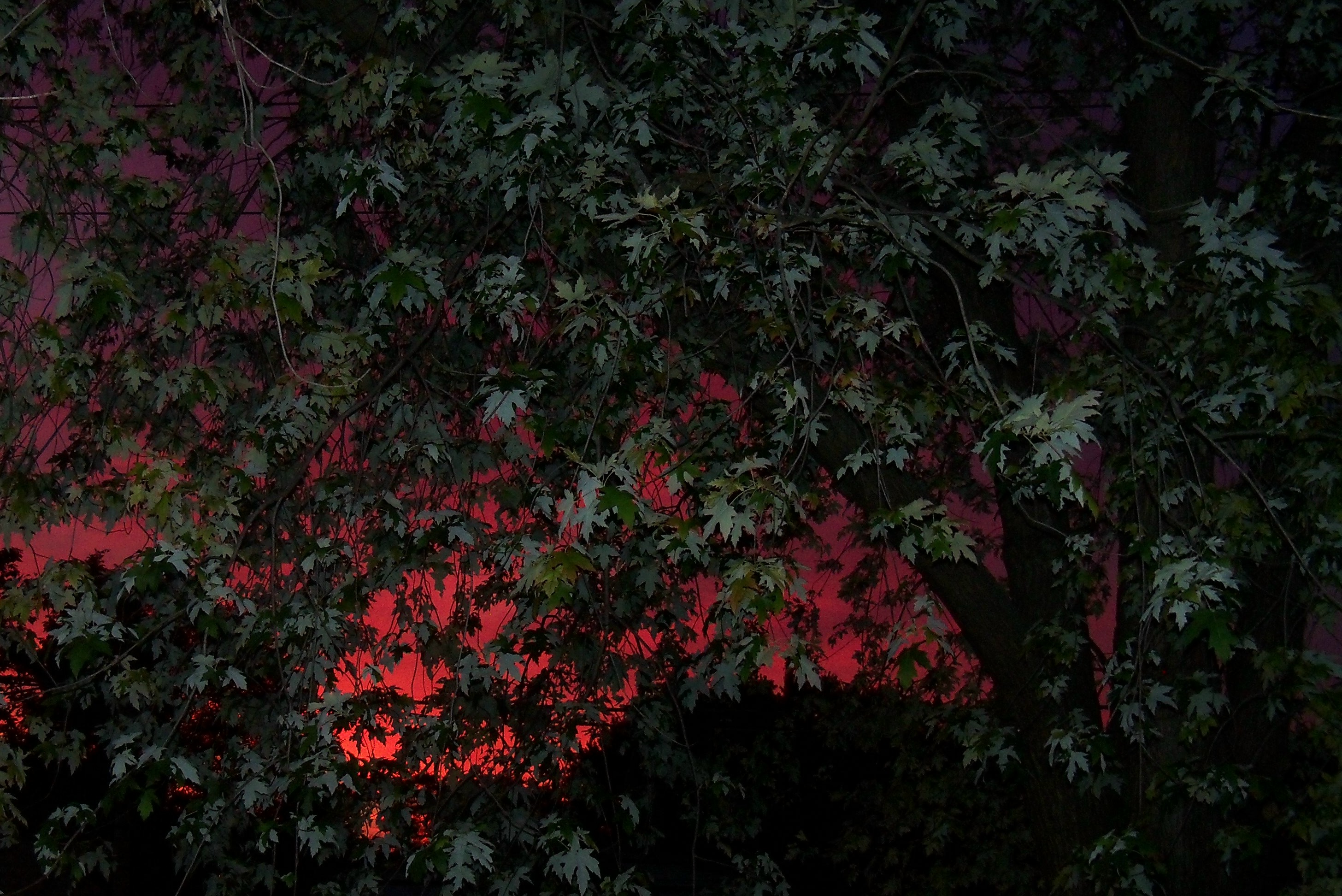
I’m not sure whether Milwaukee will be feeling the effects of Hurricane Isaac’s weather system soon or not.  But sunrise this morning was VERY red.  The sky looked almost like the glow of a wildfire out West, except there is nothing to our east but Lake Michigan.  So if a storm arrives within the next day or so, I guess it won’t be a complete surprise.

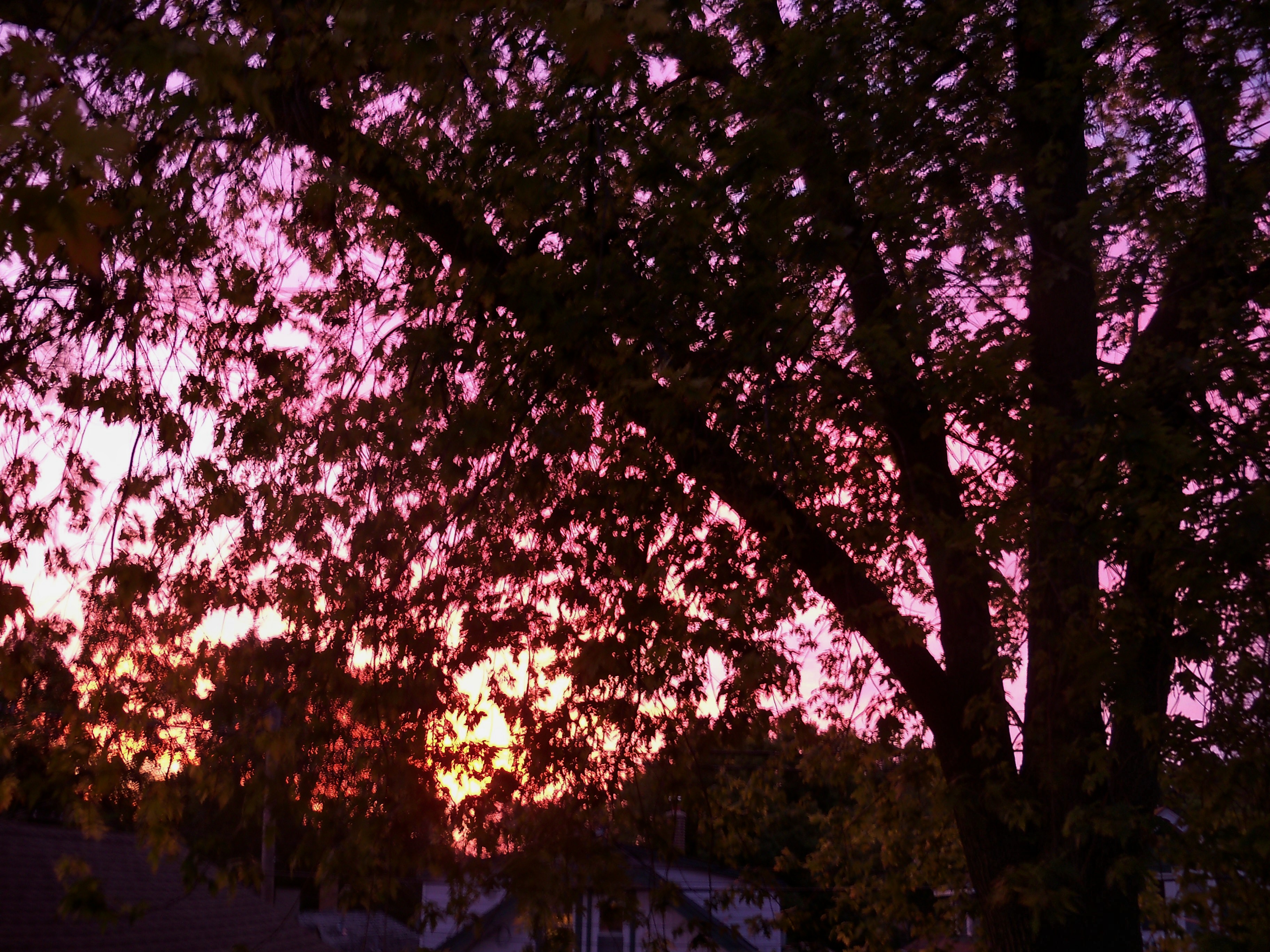
A few minutes later the red glow had faded to a strange light pink.  Normally sunrise is tinged the yellow-orange color seen at the lower left corner of the sky in the photo below.

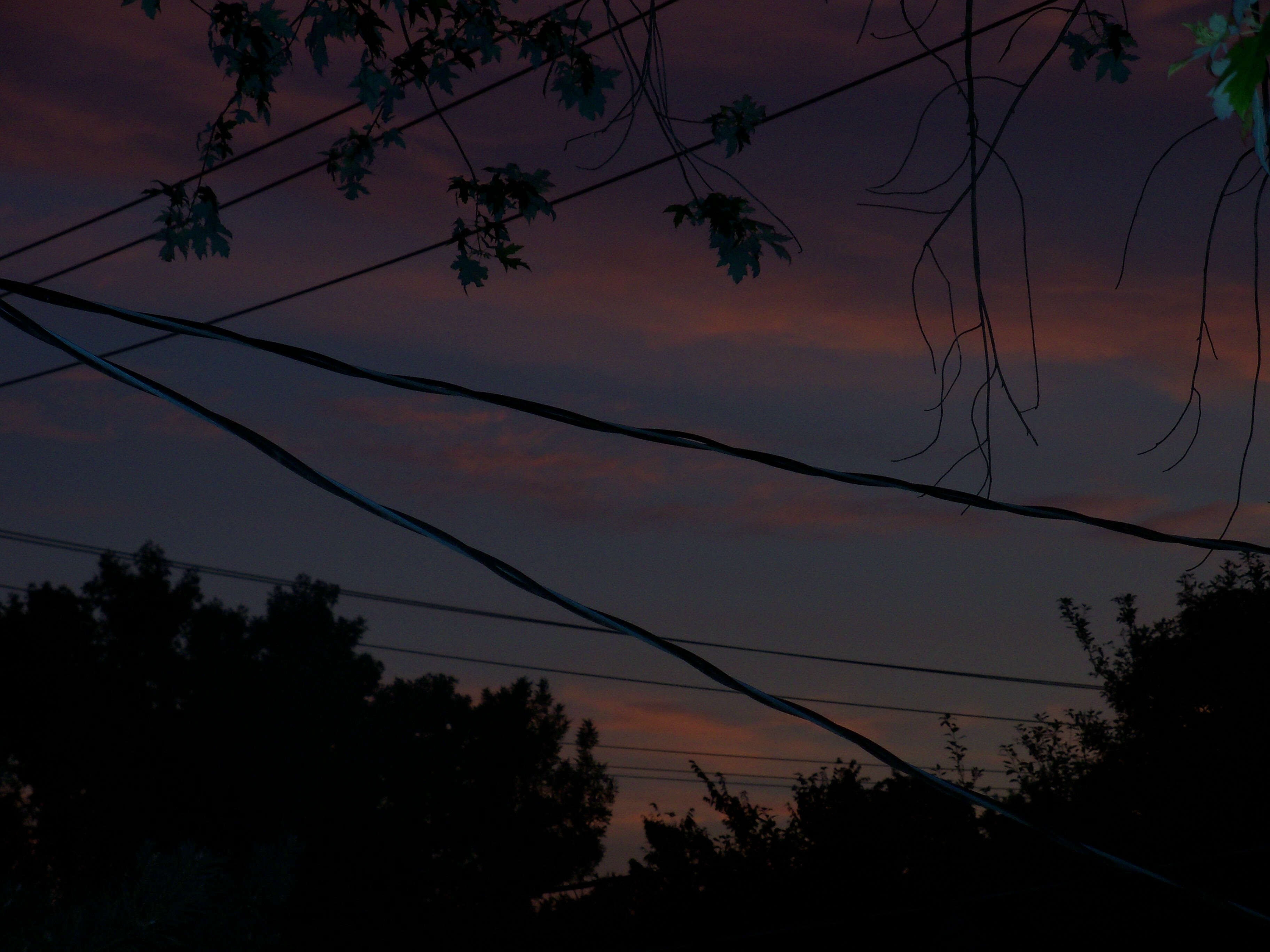
After taking the photo above, I faced north and slightly east to take another, just for fun, so I could get the contrast between the pinkish sky and swooping, criss-crossed black power lines.

Have a great Labor Day weekend!

Posted in Milwaukee | Tagged , | Leave a comment

“May” versus “Might”

There is a difference between “may” and “might.”  I don’t think the distinction is taught in school, and because neither is the kind of word that would call attention to itself when used incorrectly in conversation, it’s not usually a recognizable grammar deficiency.  However, I see the two confused in newspaper articles all the time.  Because even most journalists don’t know the difference (see this New York Times “After Deadline” blog/column on the topic by Philip B. Corbett, the deputy news editor in charge of the newspaper’s style manual), perhaps “may”/“might” is a helpful topic to blog about today.         

“May” and “might” are a special type of helping verb called a “modal.”  “May” goes with present-tense verbs; “might” goes with past tense.  Similar examples of past/present modal pairs include will/would, can/could, and shall/should.

If I read a newspaper article with a sentence like, “The toddler may have drowned,” I assume we don’t know yet if that’s what actually happened.  The toddler is missing and was last seen near a body of water, so it’s possible he may have drowned.  But if the story ends with a photo of the smiling toddler in his mother’s arms, I’m confused to discover not only that he is alive but also that everyone has known it all along. 

The reporter should have written, “The toddler might have drowned, but an alert teenager saved him.”  (Thank goodness! 🙂 ) 

Here’s a sentence with another scenario: “Rescue workers say the toddler, who slipped into the drainage ditch during yesterday’s storm, may still be alive if the sewer grate at Smith Road was intact.”  The situation sounds hopeful.  We need to check the status of that sewer grate.  If it was intact at the time the child was swept away, then he may have survived and we’ll find him wandering nearby, frightened but okay.

But suppose the story does not have a happy ending?  Suppose the child has already been found dead in a creek fed by that drainage ditch, and the missing sewer grate has been identified as contributing to the tragedy.  In this case, using “may” instead of “might” not only conveys the wrong impression but, worse, also raises false hopes. 

One word can make all the difference between accurate and inaccurate reporting.

Posted in Grammar, punctuation, usage, mechanics | Tagged , , , , | 4 Comments

Where a lone dinosaur roams

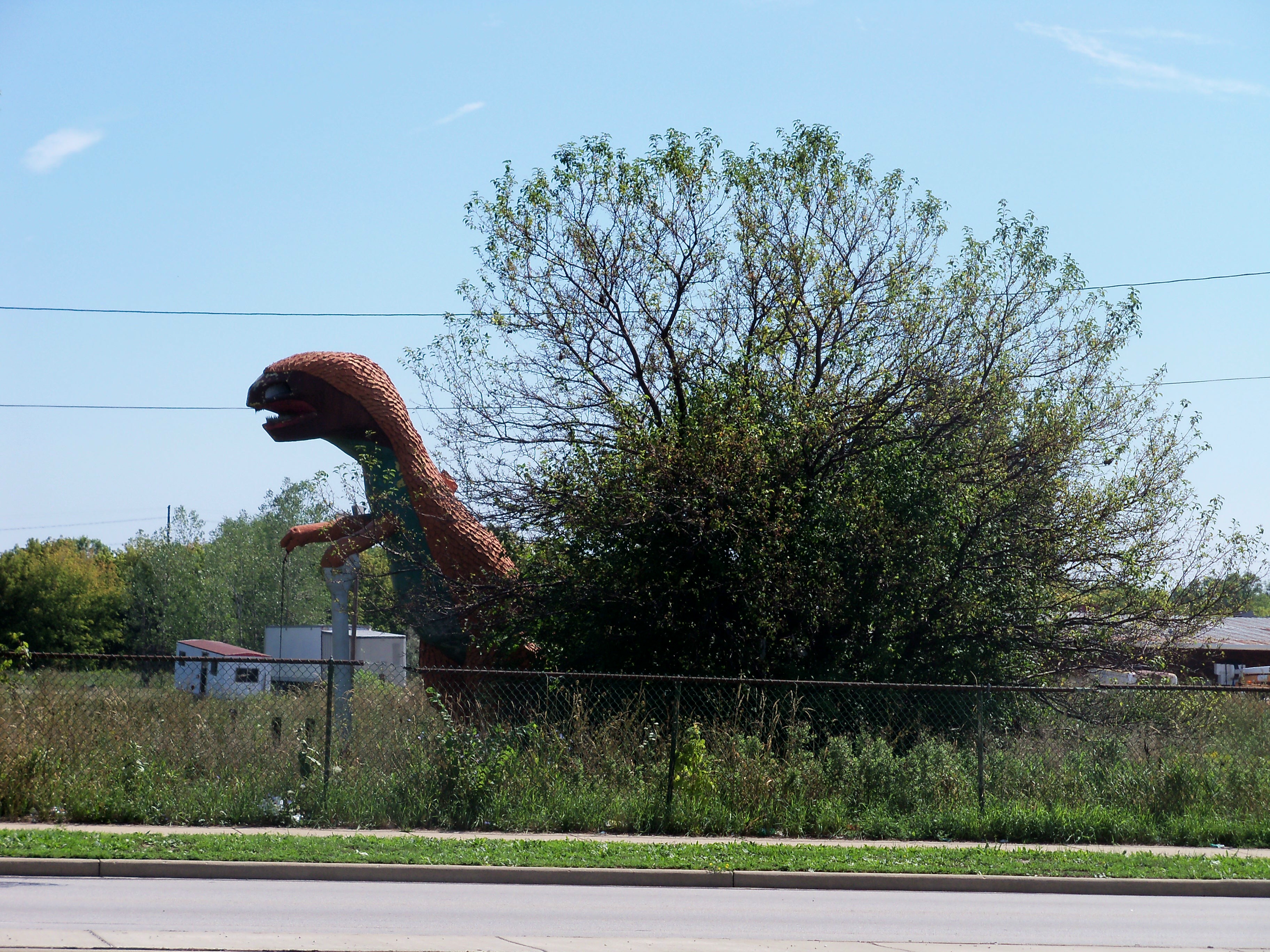
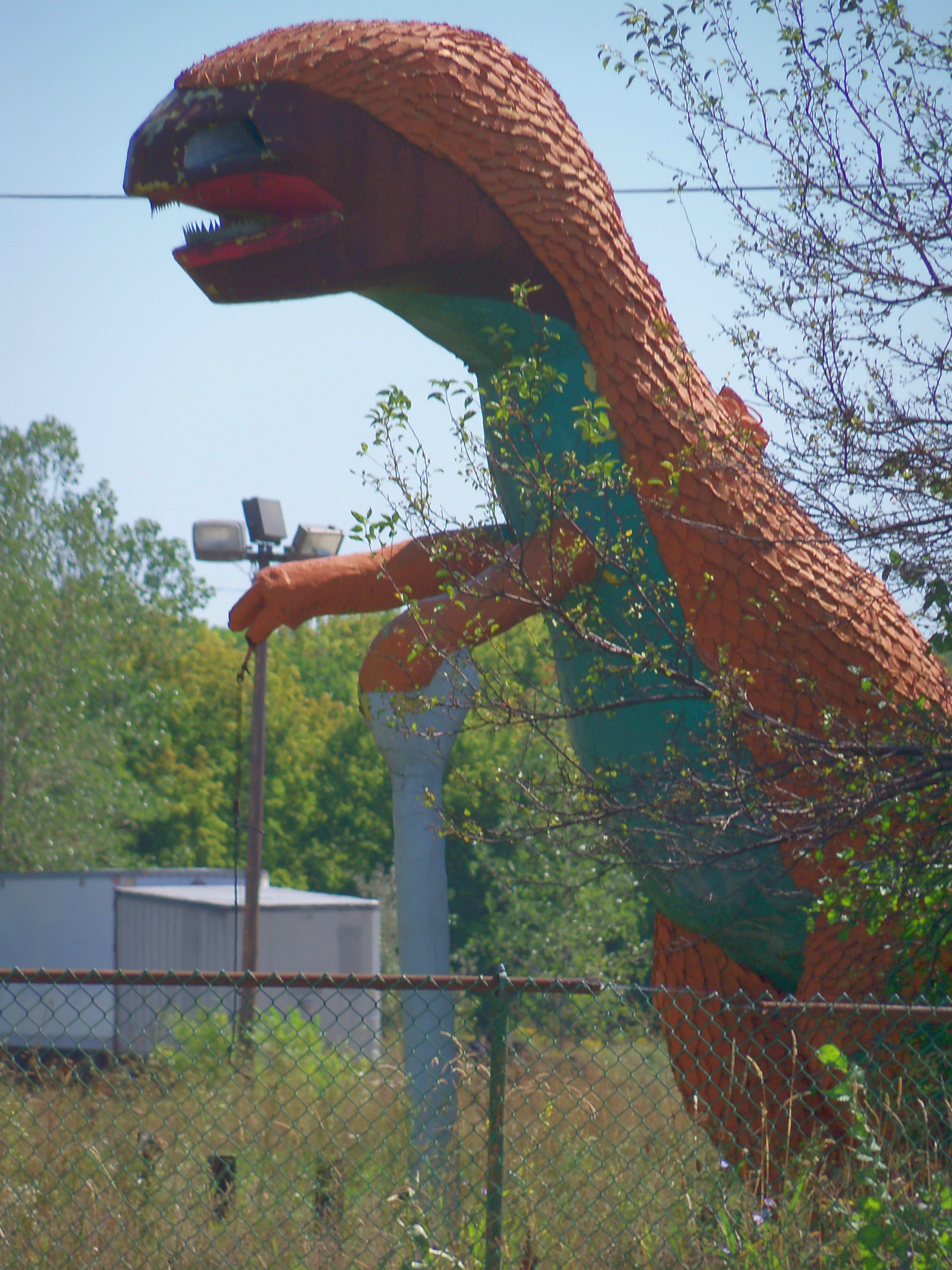
I have intended to photograph this dinosaur for years.  A couple of decades, actually.

The colorful, scaly reptile is a denizen of a long-closed amusement park on the northwest side of Milwaukee – once a roadside attraction featuring miniature golf, possibly go karts, and a giant wave slide of the sort ubiquitous in the early 1970s.  I have vague, distant memories of driving past at night and seeing the darkness brightly lit, which means it must still have been in business as late as the early 1980s, when I moved to the city.

In searching for more information online, I came across this photo on Flickr that shows the orange dinosaur in its original setting.  And here’s another Flickr photo showing the dino from the opposite angle, a rear view pointing out toward the street, with the original (but by then greatly deteriorated) “Johnson’s Park” sign beyond. 

The park remained intact for many years after it shut down, but eventually the slide disappeared and slowly the rest of its installations were also dismantled, until all that was left behind were some dinosaurs and other remnants of the miniature golf course hidden in the encroaching brush.

Demolition of the property started in earnest maybe a year ago.  Bulldozers and heavy equipment moved in, and soon it appeared nothing remained.  I had waited too long to take my photo.  With all traces of this kitschy park erased, there would be no tangible reminder of Milwaukeeans’ cheesy entertainment of an era past.

Then my daughter recently spotted this guy lurking in the bushes.  He’s nearly invisible to motorists driving north on 76th Street because of the overgrowth.  Because I needed to be on the northwest side of the city today anyway, I took along my camera – finally!

The site of this former amusement park exists in a swath of empty history: abandoned auto dealerships and weedy parking lots along N. 76th Street in Milwaukee.  Half a century ago this area was freshly built, the newest construction on the outer edges of the city abutting the countryside.  Now it has lapsed into ruin.

Whatever shape this property assumes in its next phase of life, wouldn’t it be wonderful if somehow the dinosaur could be incorporated into its design as a physical link connecting us to who we used to be?

Posted in Milwaukee | Tagged , , , , , , , , , , | 16 Comments

El Greco sky

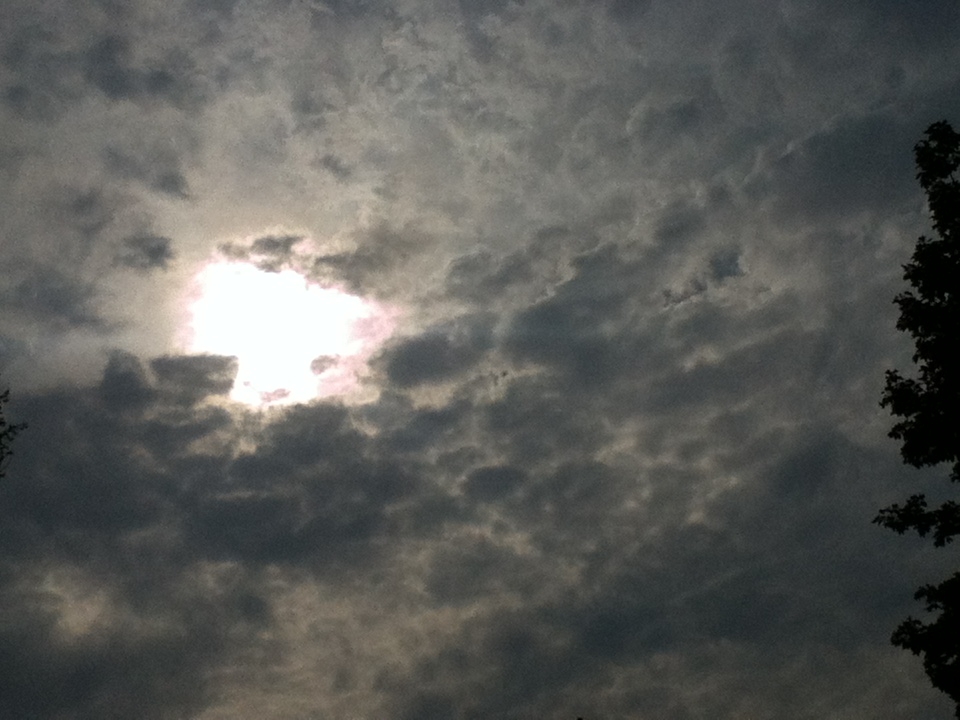
The sky this afternoon was a giant mass of clouds, with just one hole where the sun burned through.  Doesn’t it remind you a little of El Greco’s View of Toledo?

Posted in Uncategorized | Tagged , , , | Leave a comment

Recording Academy pushes for digital songwriter credits

A couple weeks ago I wrote a post about how I’d noticed that iTunes doesn’t give credit to songwriters. 

It looks like I’m not the only person who wishes things were different.  According to an AP story by Mesfin Fekadu this morning, today the Recording Academy has announced a campaign, called “Give Fans the Credit,” to include “liner notes” and songwriter credits with digital music. 

To me, this seems like a no-brainer. 

Surely the people who were smart enough to develop the amazing technology that makes digital music possible, surely they can figure out a way to attach a little extra information to each song floating around out there in the cloud. 

It’s the right thing to do.  We need to recognize the artists who create the music we love.  I also posted a couple of weeks ago about how in the afterlife of Greek mythology, poets got to hang for eternity with the gods and warriors in the Elysian Fields.  Greeks clearly venerated their creative workers, and a culture that values its creative workers endures.

Posted in Uncategorized | Tagged , , , | Leave a comment

E-books versus print – a false dichotomy?

I’ve seen some really interesting articles in the last few days appearing to indicate that, regardless of the zeitgeist’s general consensus, print is NOT dead. 

Here are links to three articles – two from Publishers Weekly and one from The Telegraph – that seem to offer a vision of the future contrary to the usual predictions of a paperless, print-is-doomed, brickless/mortarless publishing industry.  I think the links below will remain live, but in case they don’t, I’m also providing enough info that you should be able to find them with an online search.

1. “BISG Report Finds More E-book Buyers Buying Print Books,” Publishers Weekly, August 2, 2012. 

2. “Bookstore Sales up in First Half of 2012,” Publishers Weekly, August 20, 2012.

3. “Amazon to deliver parcels to UK cornerships,” The Telegraph, August 17, 2012.  (I can’t get this direct link to The Telegraph to stick, so I’m sending you to a Publishers Weekly roundup page, where this article is the second link from the top on the list of stories.)

The future of publishing suggested by these articles is fascinating: a hybrid that blurs the lines between e-books and traditional bookselling, combining the best features of each.  This month is the first time in years that I’ve noticed so many hints of good news regarding the future of books (print), bookstores, and non-virtual storefronts in general. 

I love Amazon, and if I’m looking for a specific title, it’s my go-to place.  Why waste time wandering around a bookstore looking for a book when I can complete that transaction instantly online?  Nor do I like to waste gas driving to a bookstore only to discover that the book I want is currently out of stock.

On the other hand, Amazon comes nowhere close to matching the tactile experience of a bricks-and-mortar bookstore.  It’s not that I never discover new titles on Amazon, because I do, but an entirely different type of serendipty arises from browsing the stacks.  You pick up books, feel their weight, and page through them – an experience bearing little resemblance to Amazon’s “Click to LOOK INSIDE!” feature (which remains nonetheless a great way for online shoppers get to acquainted with a book).  Unless I am zeroing in on one particular book, I greatly prefer just wandering though my local bookstore to clicking through images on a screen.

Besides, I can also sip a Starbucks latte if I’m shopping at a Barnes & Noble bookstore 🙂

In the end, all the forecasts about changing technologies and new modes of delivery tend to obscure this most important fact:  We just want good things to read.  Content is everything.  The format we select doesn’t matter beyond the context in which it is used.  In some cases we want a print edition of a text, and in others, we want the audio or electronic version. 

Wouldn’t it be nice if purchasing a print copy of a book included the option of getting the electronic version for free?  That way you could have the actual book as your primary reading experience, but you could also have the portability and searchability of the e-book.  Or maybe you could have the audio version to listen to in the car or during your workout.  I hope in the end we’ll continue to have many choices among formats instead of getting stuck with whatever technology “wins” and subsequently dominates the marketplace.  

Technology should not shape the way we read.  The way we read should shape the technology.  (Actually, each greatly influences the other, but you know what I mean 🙂 )

Posted in Books and reading | Tagged , , , , , , , , | 2 Comments

The Power of “Freshly Pressed”

. . . and peril of the paralysis that follows.

At least for me, anyway.

If you are a blogger, you know that WordPress features 19 blogs daily on its home page, continually updating and rotating them out as the day goes on.  This feature is called “Freshly Pressed.”  Last week I got an email from one of the WordPress editors saying that my essay on Jonah Lehrer had been selected to appear in the Freshly Pressed feature. 

Although I was surprised and excited by this news, I was also distressed and ashamed that my good fortune should stem from the troubled circumstances of someone I admired.  Much of life seems to turn out this way, so very bittersweet. 

My blog post entered the queue sometime early last Sunday morning, probably between 5:00 and 8:00 a.m. CDT.  What a shock I got Sunday afternoon when I logged on and saw that my site had already received 373 views that day!  I’ve only been blogging for about four months, and so far I’ve been lucky to get maybe 10-25 page views per day.  By the end of that Freshly Pressed day, my blog had gotten nearly 600 views. 

Small potatoes compared with the thousands of views other bloggers have reported from being Freshly Pressed. 

But that’s okay.  Those other writers have usually been blogging much longer than I have.  They have already built up a relationship with readers, so they are starting from a stronger position in the first place.  Plus, my topic (plagiarism) was a real downer compared with the intriguing, upbeat, useful, or humorous topics that are often featured. 

At first I felt disappointed that my blog occupied its most visible postition in the queue during those early-Sunday-morning hours.  That’s not a time I would normally be online myself, so my immediate thought was that no one else would be, either.  However, because many of the page views came from people in Asia, Africa, Australia, and Europe, it appears the time of day wasn’t necessarily a detriment . . . and may actually have allowed the post to be exposed to a broader, more diverse audience than it otherwise might have been. 

Here’s what surprised me most about my Freshly Pressed experience: how overwhelmed I was by the ever-rising number of views on my site stats page.  The comments also came in steadily.  Although I approved and posted them as quickly as I could, I was too dazed to reply until the next morning.  Given the nastiness of most comments I’ve read on Twitter lately regarding both Lehrer and Fareed Zakaria, I had braced myself in advance for hostile remarks.  Didn’t happen.  Everyone who commented on my post offered up only the most thoughtful, insightful of responses.  (Thank you!)

Despite all of the positive outcomes of my Freshly Pressed moment in the sun, I felt curiously unable to write any new blog posts last week.  Authors call this phenomenon the second-book syndrome; I have also heard it called the sophomore slump.  I despaired of ever again writing something as good as the Jonah Lehrer piece, and all the people who subscribed to my blog after reading my Freshly Pressed post would find my next effort gravely disappointing.  

Thank goodness I had the wits to subtitle my blog “Ideas on creativity, innovation, lifelong learning, and OTHER RANDOM STUFF.”  The Jonah Lehrer essay took me a week to write – and it was hard writing.  I would have dilly-dallied quite a bit longer after its appearance on Freshly Pressed if I hadn’t felt free to follow up that substantial post with some “random stuff.”  Yesterday I was able to string together the photos I took Friday and call it a day.  Boom.  Post done.  I was back!     

Here is the most unexpected – and funny – consequence of my Freshly Pressed experience.  A blog’s site stats page shows which search engines and search terms have been used to direct people to your site.  A few days ago I began noticing that Google Images searches for “power lines” and “insulators” were leading people to my blog. 

Odd.  After doing a duplicate search myself, I made an interesting discovery.

My photo of power lines and porcelain insulators that I took last Saturday is now the #1 result returned in a Google Images search for either “power lines and porcelain insulators” or “porcelain insulators and power lines.”  I can only assume it’s because I posted that photo last Sunday – the same day my blog was “Freshly Pressed” and therefore had lots of traffic. 

I do feel a little guilty over the prospect of power-industry professionals clicking on my photo, thinking that I’m a legitimate supplier of porcelain insulators, only to discover their error after being lured into reading about my dogs and depleted camera batteries. 

But, oh well . . .

Posted in Writing, blogging | Tagged , , , , | 9 Comments

Securely anchored

I have no idea what is going on with these ropes.  Probably something to do with window washing.  But don’t you immediately begin to imagine they might serve a more fanciful purpose?  Like securely anchoring the building so it doesn’t float away like a balloon . . . or perhaps providing a venue for zip-line races down from the top of the building?

Isn’t it also cool how the distance perspective makes the building seem to enlarge and zoom toward you as you scroll down the page?  I never dreamed that would happen.  I was just trying to fit the entire length of rope into one shot.  You don’t get that effect when you look at the stationary photo, but when you scroll . . . WHOA!

After weeks of heat, we finally had a typical Milwaukee summer day.  And what a beautiful day it was!

Yesterday I had business to take care of over on the Lower East Side of Milwaukee, where Brady Street meets the lakefront.  I love this neighborhood.  It’s where my husband lived before we were married, and we spent many happy times walking to movies (at the Oriental and the now-defunct Prospect), to bars/restaurants, and to the lakefront.  It was fun having an excuse to spend some time there again.

I took a few pictures, just to share Milwaukee’s beautiful day.

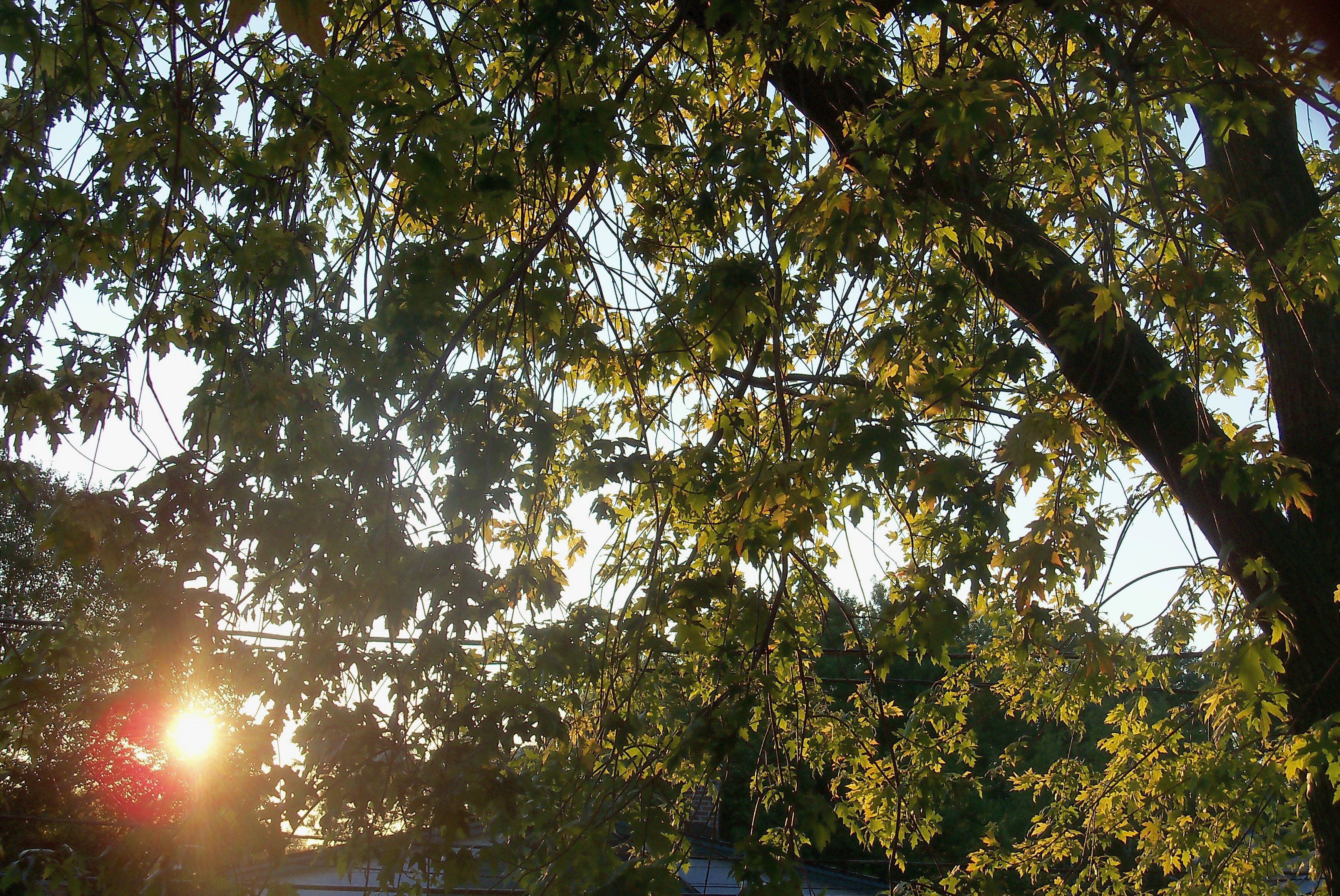
Sunrise brightened the leaves of our silver maple first thing in the morning.

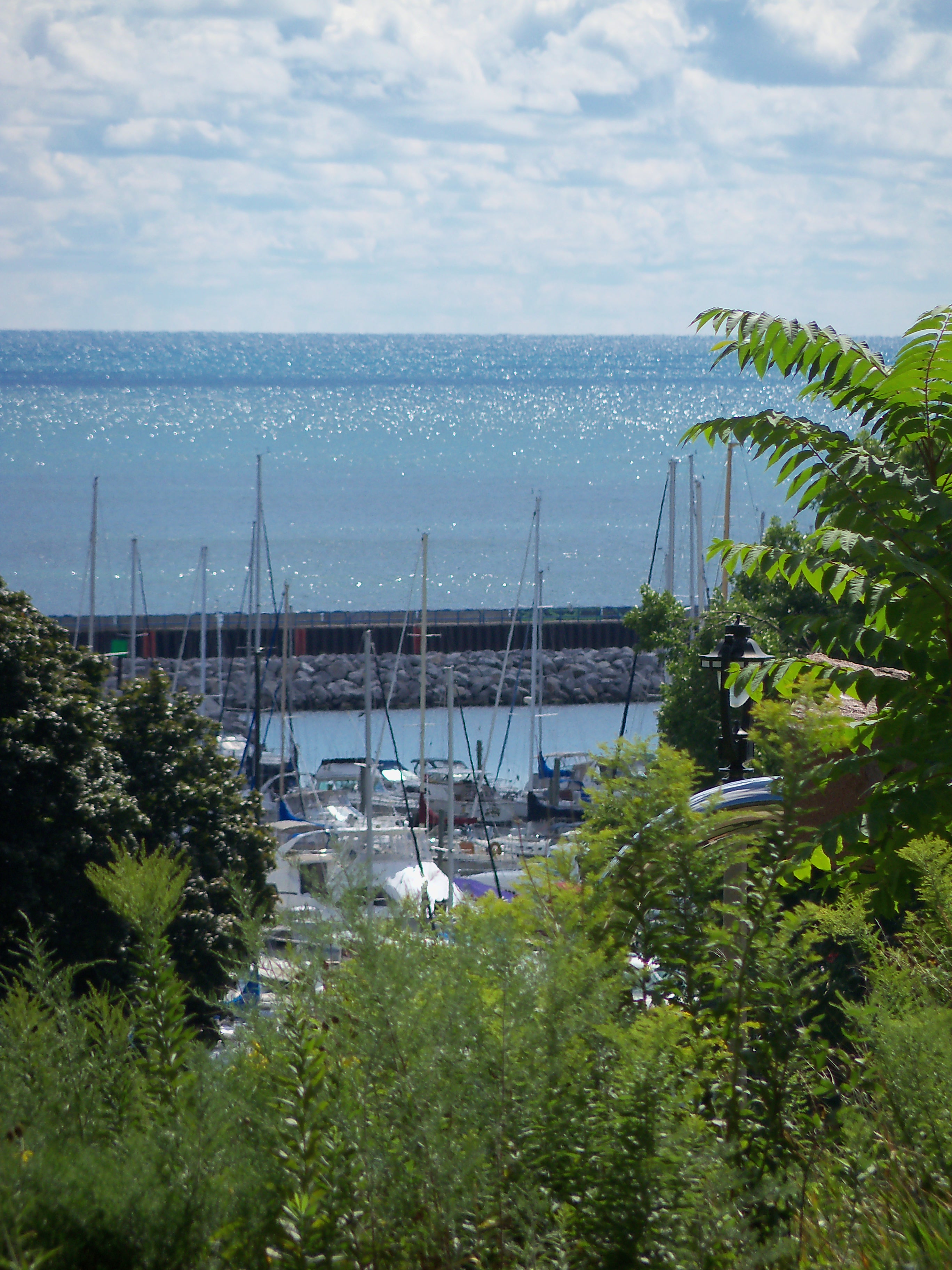
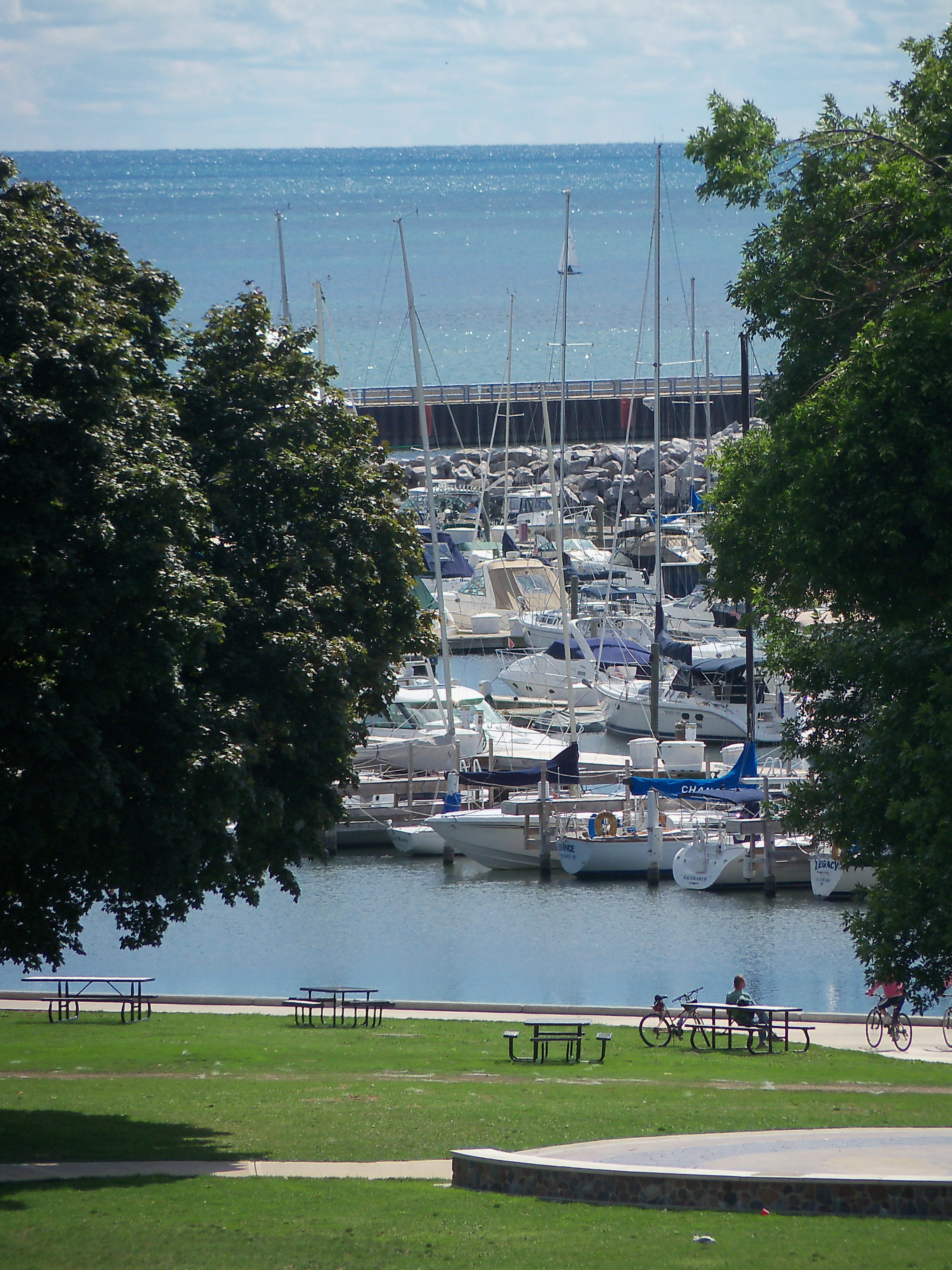
Here are two views of Lake Michigan and McKinley Marina from the top of the bluff where Brady Street dead-ends at the lakefront.


The bike path runs along the line of the old railroad tracks.  The harp light in the foreground is a distinctive style of lamp used historically in old Milwaukee.

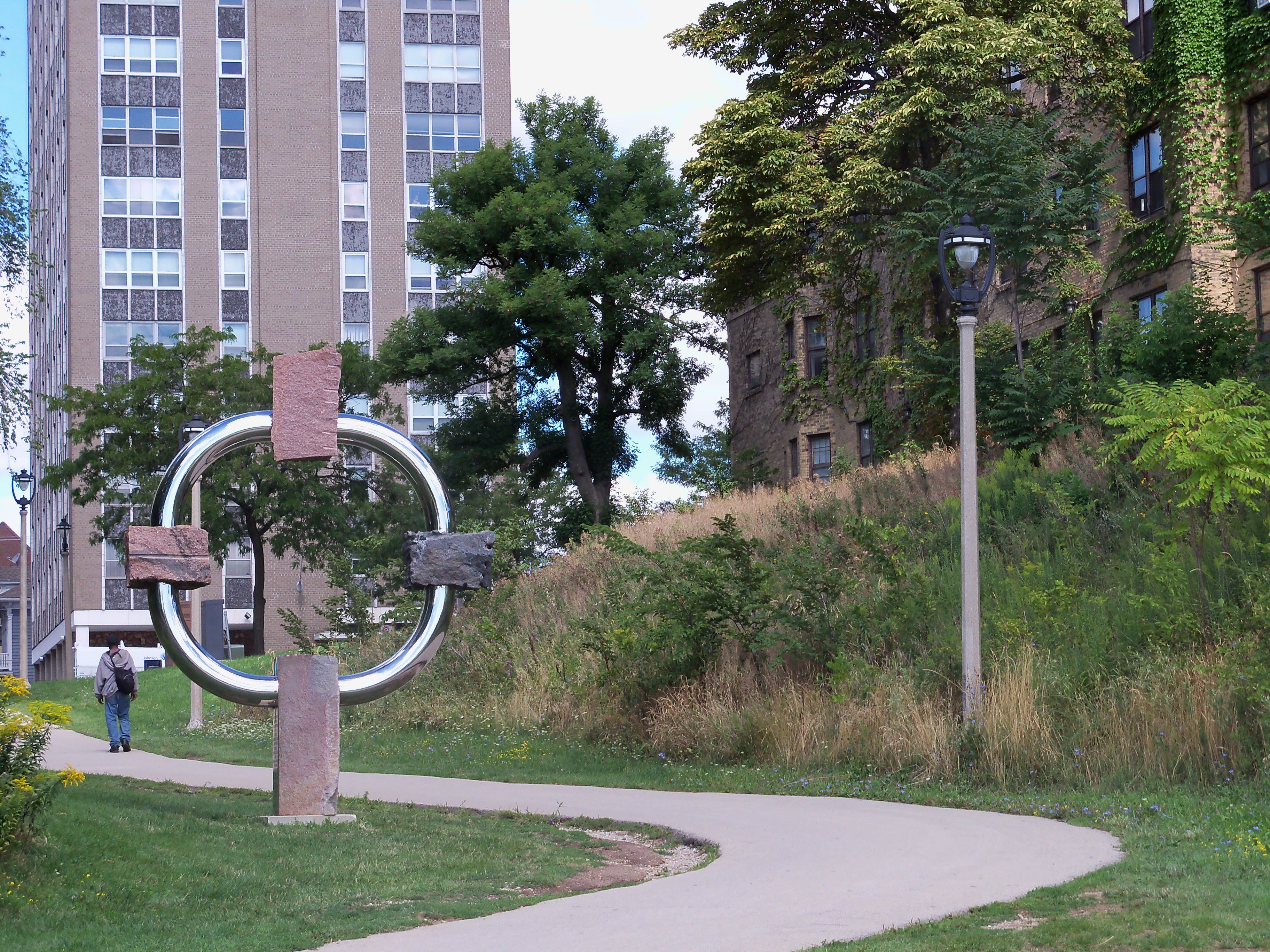
I like the correspondence between the harp light and the “Compass” sculpture on the path leading to the Brady Street Pedestrian Bridge that crosses the bike path and Lincoln Memorial Drive going down to the lakefront.

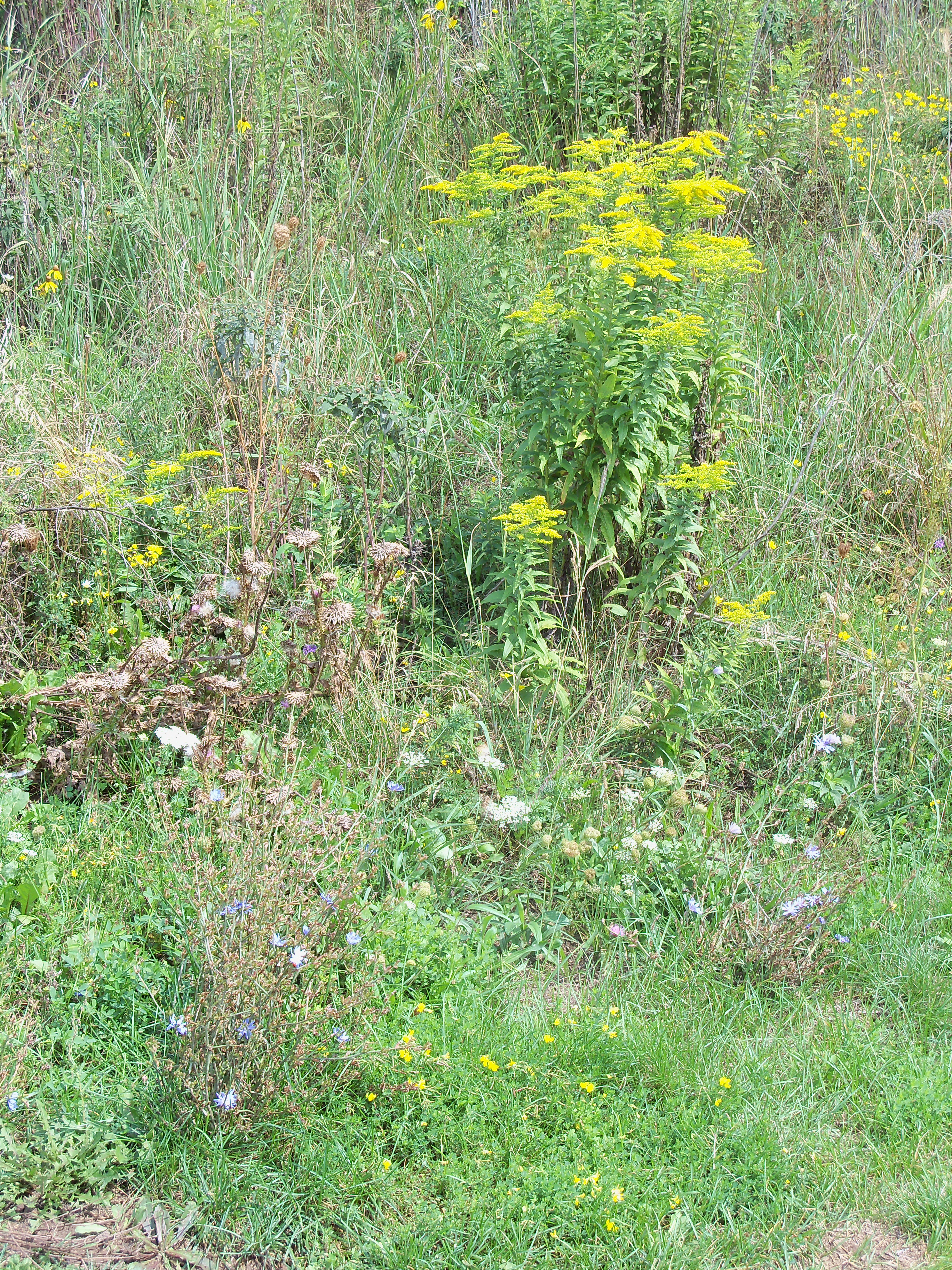
And finally, here are some weeds on the bluff path.  My younger daughter says that if you cross your eyes or let them go slack, it looks like something Monet might have painted.  I tried it and think she’s right!

Although I wasn’t born and raised in Milwaukee, I’ve lived in this city my whole adult life.  Like the “securely anchored” building at the beginning of today’s post and the wildflower weeds at the end, I feel pretty firmly rooted.

Posted in Milwaukee | Tagged , | 5 Comments

Power lines and porcelain insulators against an August sky

I was outside yesterday doing the daily yard cleaning (two large dogs) when I looked up and saw the sun reflecting off the porcelain insulators carrying the power lines overhead.  By the time I ran inside for my camera . . . and changed the batteries 😦 . . . the porcelain had lost a bit of its glossy sheen.  But still, it’s a nice photo, so I wanted to share it.

Posted in Uncategorized | Tagged , | 3 Comments

Jonah Lehrer, and the “marvellous Boy”

Well, the sad news last week was that Jonah Lehrer, one of my favorite writers, admitted to fabricating quotes from Bob Dylan in his recently published book Imagine

I intended to purchase Lehrer’s book but hadn’t gotten around to it yet because I’ve been teaching an in-house technical communication class the past few weeks at a local manufacturing company.  When I saw the article about Lehrer’s fabrication, along with the statement that Amazon, Barnes & Noble, and other retailers would be pulling the book from their shelves, I immediately logged on to Amazon to see if I could buy Imagine before it was gone.

It was already too late.  Imagine had disappeared from Amazon’s website – poof! – without a trace.  Then I remembered how Amazon erased copies of 1984 from people’s Kindles a few years ago.  Have they done the same thing now to people who had purchased a digital edition of Imagine?  Probably not, as I’m sure everyone would be talking about it.  I can’t find anything online about the current state of the e-book, in fact, except for people asking how they can get a refund. 

Ironically, the quotes Lehrer made up are strikingly similar to something Bob Dylan actually did say in a 2004 interview, as pointed out by Los Angeles Times writer Randy Lewis in an article last Tuesday.  I’m guessing Lehrer read that 2004 interview at some point, remembered the gist of Dylan’s remarks, but then couldn’t find it again when he went to write the book. 

What seems most puzzling to people commenting on Lehrer’s literary larceny is how unnecessary it was.  Lehrer is a talented writer.  He knows how to do research.  Tracking down some Bob Dylan quotes about songwriting shouldn’t have been so difficult. 

The thing is, though, Lehrer is not alone in commiting such an error in judgment.  People commit plagiarism and literary forgery for many reasons – laziness, desperation, greed, etc.  Often the culprit’s own deficient writing skills may be explanation enough to understand the deed.  But when someone like Lehrer (or Nobel-winner Dr. Martin Luther King, Jr., or Vice President Joe Biden, or biographer Doris Kearns Goodwin, or journalist/biographer Gail Sheehy, or disgraced 1981 Pulitzer Prize winner Janet Cooke) stands accused of cutting corners and misrepresenting sources in their work, we shake our heads in bewilderment and wonder: Why?

As it happens, I wrote my dissertation on plagiarism.  Partly my interest arose from my general curiosity about creativity; partly it resulted from my work as a freshman composition instructor.  As a writing teacher, especially working with basic writers enrolled in remedial courses, I became intrigued by the possibility that an act of textual appropriation might be a normal part of a writer’s growth.  Not cheating exactly, but definitely something other than a student’s “original” work – and clearly exhibiting little knowledge of how to cite and document other voices, especially expert sources, within papers that were supposed to reflect his own original ideas.

Greatly influencing me was an essay by David Bartholomae, who teaches at the University of Pittsburgh.  His important article, “Inventing the University,” first published in 1985 (and reprinted and much discussed after that), points out what a difficult task it is for students to use academic language with authority as they begin writing papers in college:

Every time a student sits down to write for us, he has to invent the university for the occasion – invent the university, that is, or a branch of it, like History or Anthropology or Economics or English.  He has to learn to speak our language, to speak as we do, to try on the peculiar ways of knowing, selecting, evaluating, reporting, concluding and arguing that define the discourse of our community. . . .  

The students have to appropriate (or be appropriated by) a specialized discourse, and they have to do this as though they were easily and comfortably one with their audience, as though they were members of the academy, or historians or anthropologists or economists; they have to invent the university by assembling and mimicking its language, finding some compromise between idiosyncracy, a personal history, and the requirements of convention, the history of a discipline.  They must learn to speak our language.  Or they must dare to speak it, or to carry off the bluff, since speaking and writing will most certainly be required long before the skill” is “learned.”

Poet T.S. Eliot is famous for saying that “Immature poets imitate; mature poets steal,” meaning that they transform another poet’s work into something so new and fresh that it becomes almost impossible to recognize it as a copy of the original.  Because student writers (like immature poets) are apprentices, their essays are somewhat akin to the imitations of Old Masters painted by art students during their apprenticeships.

But back to Jonah Lehrer, who is neither student nor apprentice.  Some of my other dissertation research may apply to his case.  In particular, I’m thinking of a really brilliant article, “Plagiary,” written by Peter Shaw and published thirty years ago – American Scholar 51.3 (Summer 1982): 325-37, the complete citation, in case you’d like to find it. 

Shaw likens plagiarism to the psychological disorder of  kleptomania, in that literary theft for most plagiarists involves stealing items/texts they do not need.  It’s like a compulsion of sorts, says Shaw, or perhaps a need to be “honest” in their dishonesty: 

As it develops, giving the game away proves to be the rule rather than the exception among plagiarists.

A strange pathology underlies the act of plagiarism, some inexplicable force that attracts plagiarists to each other, according to Shaw.  Plagiarized texts often involve other plagiarized texts; that is, the “original” text that a plagiarist has stolen and passed off as his own is subsequently discovered to have been stolen itself from some other, earlier source.  Likewise, the most vehement accusations of plagiarism tend to be issued by people who later end up being exposed as plagiarists themselves.  (Similar perhaps to that well-known maxim of strategic deflection practiced by society’s more immature members: He who smelt it, dealt it.)

Because writing about plagiarism meant dipping a toe into those murky waters myself, the first sentence of my dissertation acknowledged my fear of being tainted by its subject matter.  Even the idea of posting this blog entry unnerves me.  If I find plagiarism fascinating as a subject of academic study, what does that mean? 

But I do think Shaw was right.  In 1997 romance novelist Janet Dailey, the first American to write for Harlequin in the mid-1970s, was sued by fellow romance novelist Nora Roberts after an alert reader noted plagiarized passages in at least two of Dailey’s novels.  Both writers were incredibly talented and astonishingly prolific.  There was no logical reason for Dailey to steal from Roberts, so it wasn’t surprising that, when she admitted to the plagiarism, Dailey cited mental health issues. 

I don’t know what Lehrer’s story is, but my speculation is that he felt driven/pressured to meet quotas/deadlines for delivering “creativity” beyond his physical and emotional capabilities. 

Just 31 years old, Lehrer has been called a wunderkind.  The title of today’s blog post refers to a similarly gifted young man who lived in the 18th century, Thomas Chatterton.  The “marvellous Boy” appelation comes from these lines in a poem by William Wordsworth, “Resolution and Independence“:

I thought of Chatterton, the marvellous Boy, / The sleepless Soul that perished in his pride

Thomas Chatterton was a gifted, prolific young writer/poet, but poor and fatherless – two serious handicaps in 18th-century England.  He hoped to support his mother but found it difficult to earn a good living with his writing.  Upon discovering a remunerative market for antiquities, he invented a 15th-century monk-poet named Thomas Rowley and wrote pseudo-medieval manuscripts that he hoped could be sold for substantial sums.  They could not, at least not during his short lifetime.  Chatterton’s talent and ambitions exceeded the thin living he was actually able to earn from his work, and he committed suicide at age 17 (although some speculate that his death could have been a case of accidental poisoning as a result of self-medication with arsenic.) 

I don’t know why Lehrer’s admitted fabrication put me in mind of Thomas Chatterton, but that was the first phrase that came to mind when I read the news about Imagine last week: the “marvellous Boy.”  My first reaction was sadness and worry for Lehrer.  It has been interesting to note in everything written about the incident since last week how many other people’s first reactions have ranged from disillusionment to insulted outrage.  None of these is an uncommon reaction to plagiarism; it’s a very strange phenomenon.

Plagiarism is all about character.  It is primarily a moral issue, and unlike copyright infringement, plagiarism itself is not a crime.  However, it often bleeds over into economics, at which point it becomes fraudulent in terms of intellectual property issues similar to copyright infringement.  

For example, academic dishonesty cannot be tolerated within universities because it undermines the integrity of the institution and destroys the value of its degrees.  Plagiarism thus becomes a “crime” within the academic environment because it threatens the public good of everyone connected with that community.  Likewise, publishers cannot tolerate the fudging or fabrication of quotes by authors like Lehrer because it damages the trustworthiness of the entire publishing enterprise – something which that struggling industry can ill afford.

It’s a matter of economic survivial.

Lehrer’s confession seemed remarkably candid and matter-of-fact.  It reminded me a bit of Hugh Grant’s admission (on the Jay Leno show) of wrongdoing back in in 1995 when he was arrested for having oral sex with a prostitute:

I think you know in life what’s a good thing to do and what’s a bad thing, and I did a bad thing.  And there you have it.

Others have committed similar errors of character and recovered from them.  Following her plagiarism scandal, Doris Kearns Goodwin went on to publish a bestselling book about Abraham Lincoln, A Team of Rivals, which Steven Spielberg is reportedly making into a movie.  Joe Biden survived at least two accusations of plagiarism.  He failed a class in law school for submitting a paper that contained extensive passages of text copied verbatim from a law review article with no quotation marks and only one footnote to acknowledge the original text.  Then in 1987 he was forced to end his Presidential campaign when he was accused of plagiarizing a British politician’s speech.  Yet Biden kept his Senate seat for thirty years and is currently Vice President of the United States.

It’s not completely clear to me why some plagiarists/forgers/doers-of-bad-things are forgiven and others are not.  Ironically, even as we may appreciate and feel gratified by a confession, we appear to respect a denial more, even when the evidence renders that denial untenable.  Perhaps a denial makes it easier for us to pretend that the distasteful lapse in character never occurred?

There are many curious dimensions associated with these puzzling acts of literary impersonation, and some of the most confusing of these reach beyond the perpetrators to the rest of us.  We often seem to forgive wrongdoers quite readily, almost eagerly. 

Except when we don’t.

Posted in Books and reading, Teaching, WPLongform (posts of 1000 words or longer), Writing, blogging | Tagged , , , , , , , , , , | 32 Comments