
Yes, I know it’s the end of August. But couldn’t we wait just a little longer for the autumn colors to arrive???
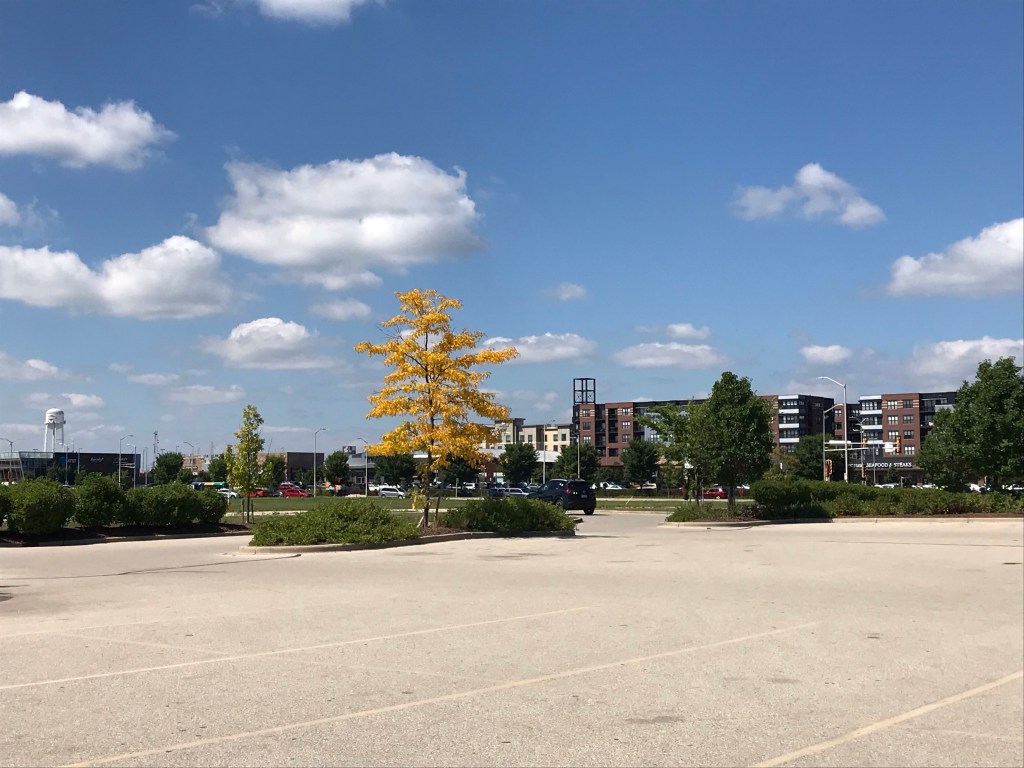
Yes, I know it’s the end of August. But couldn’t we wait just a little longer for the autumn colors to arrive???
This is not a food blog, but . . .
My daughter just made some fabulous rice that I want to share with you. The recipe only, that is. The rice itself will be long gone before anyone has time to make it over to my house 😀
Here are the ingredients you need.
First of all, be sure to use basmati rice. It has a unique, nutty flavor, and you won’t get the same result if you use a different kind of rice.
Sauté the garlic in the olive oil in a medium saucepan. Add the rice, stir around in the oil (medium heat) for maybe five minutes. Add the water and bring to a boil. Lower heat, cover, and cook for about 10-15 minutes until rice is fluffy. Keep heat low so rice does not burn. Stir now and then. When it looks like all the water is absorbed, stir in the lime juice. (You can add more lime juice if you prefer a more pronounced lime flavor.) Salt to taste. Stir in the cilantro immediately before serving.
That’s it! And OMG, it is delicious.
Would you like new posts delivered to your inbox? To subscribe, click here.
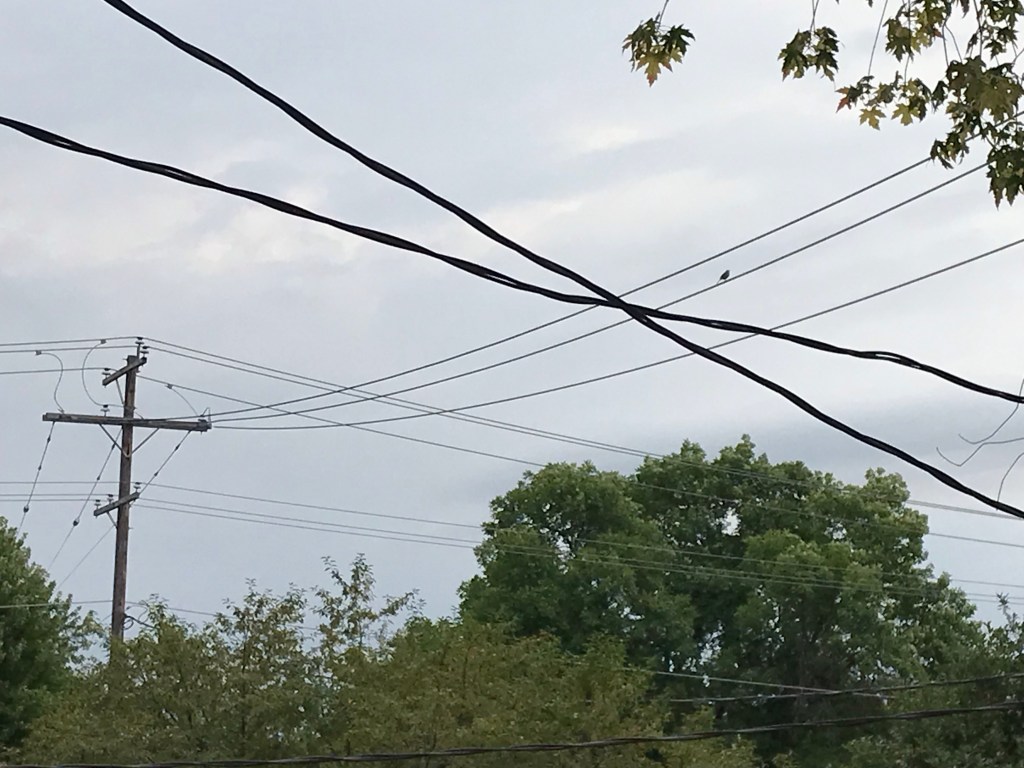
The sky is overcast in Milwaukee this morning. For some reason this bird and all the crisscrossed lines caught my eye when I stepped out onto our back porch with my cup of coffee to supervise our dog. She had just chased a chipmunk up our crabapple tree and was sitting patiently at the trunk watching it. She would sit there all day waiting that poor little critter out if left to her own devices. So we usually call a merciful halt to the standoff before too much time passes. Anyway, the bird and all the various powerlines caught my eye. I liked the balance between the utility pole and that bird on opposite sides of those long, sweeping dips of intersecting sets of parallel lines.
I wrote this essay as my exercise for this week’s writing group meeting. The prompt was “looking in the rearview mirror.”
When I was in high school, one of my friends used to pull out a little compact with a mirror from her purse every day in the high school lunchroom after she’d eaten so she could check her teeth and make sure they were clean and free of food particles. When I was in college, I once walked to my first class of the day in a heavy snowfall. Only after stopping in the restroom after class before heading to my next one did I realize that my mascara had given me Alice Cooper eyes, thanks to the snowflakes melting on my eyelashes. I had no clue until seeing myself in the bathroom mirror.
Mirrors are useful that way. They allow us to see things from a perspective we otherwise never could have.
The rearview mirror was one of the automobile’s earliest safety features. According to Wikipedia (yay, Wikipedia! Click here for info on how to donate to this very worthy nonprofit: https://wikimediafoundation.org/support/), mirrors were being installed on cars as early as the 19-oughts and 19-teens. Apparently, their main purpose was to help drivers be more aware of other vehicles that might overtake them from behind. This was an era, of course, when we barely had actual roads in much of America, much less any significant traffic. As driving became a more complex undertaking, additional mirrors were added to the sides of the vehicle, and the rearview mirror became important for many reasons. Can you imagine trying to change lanes or merge without the benefit of mirrors in heavy, fast-moving traffic on an interstate highway? How about parallel parking in crowded urban streets?
One of my favorite movie scenes involves a rearview mirror. I still experience a shivery thrill every time Steve McQueen’s dark green Ford Mustang materializes in the rearview mirror of that Dodge Charger driven by those Chicago hitmen in Bullitt (1968)—an iconic moment of reversal in which the hunted becomes the hunter. In this particular instance, the mirror is more used as a dramatic device than serving any functional necessity. In fact, when Steve McQueen overshoots a corner during the subsequent high-speed chase, he doesn’t use his rearview mirror to assist in backing up. Instead he sticks his head out of his open window and eyeballs it, making for far more interesting and compelling action nicely complemented by clouds of exhaust flying out of the rear tire wells as he quickly reverses course and peels out in the right direction to catch up with the bad guys.
In another movie I really like, Smoke Signals (1998), which is set in part on the Coeur d’Alene Indian reservation in northwestern Idaho, there’s a young woman who drives her car backwards throughout the film, the assumption being that the car has only two gears working, “park” and “reverse.” Interestingly, this young woman never uses her rearview mirror. Instead she drives forward/backward twisted around in her seat so that she can look out her rear window while also conversing with the car’s passengers.
Which brings me to my main point about rearview mirrors. Although they’re a great safety feature as an add-on to your main focus, they become an impediment if you stop fully seeing the reality in front of you because you’ve shifted attention instead to the image in your rearview mirror.
That’s kind of a nice metaphor.
Mirrors are useful for gaining a larger perspective and avoiding tunnel vision. Sometimes looking in the figurative “rearview mirror” of your life provides excellent insights for understanding yourself and making better decisions in high-stakes situations. As Santayana said, after all, “Those who cannot remember the past are condemned to repeat it.” So a good rearview mirror is exactly the right tool for remaining aware of your surroundings—both spatial and temporal, both literal and metaphorical.
But if you spend too much time ruminating on the past, it becomes difficult to move forward safely and purposefully to your intended destination.
Would you like new posts delivered to your inbox? To subscribe, click here.
It has been a while since a collection of geometric shapes caught my eye, but I really liked the patterns of light and shadow seen here in the dark vertical, light horizontal, and even-lighter slanted lines created by sunlight filtering first through the leaves of our magnolia tree and second through the blinds on our dining room windows.
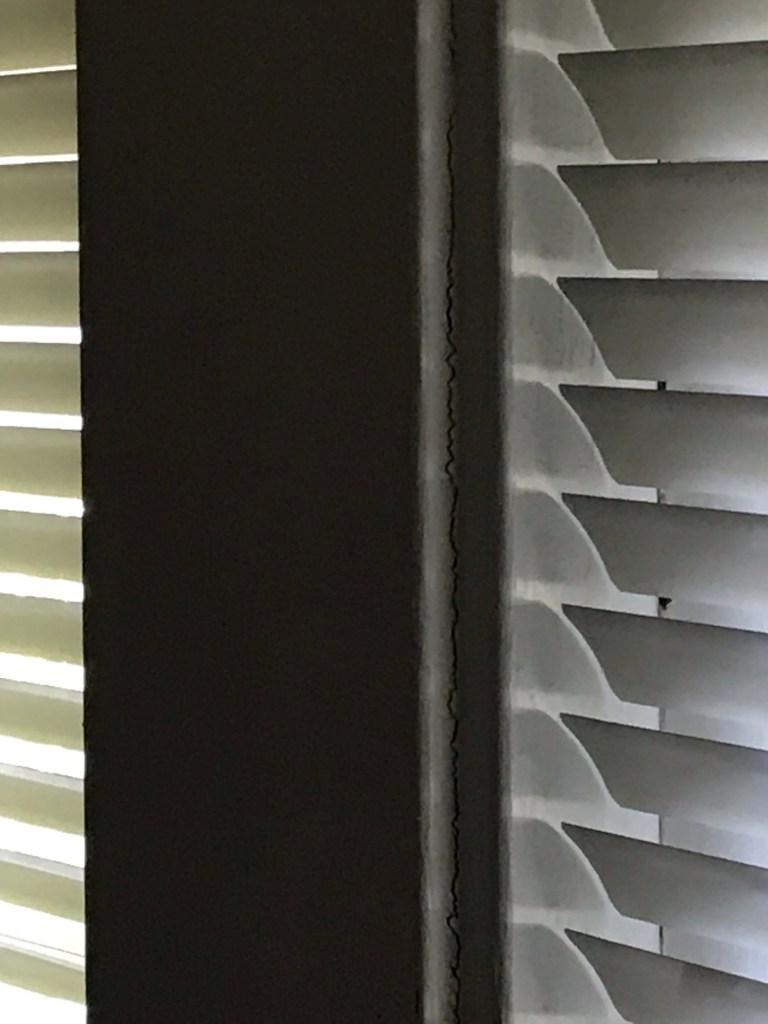
There’s something very restful about these colors and lines. Today has been such a beautiful day in Milwaukee! Sunny and much cooler than the extremely high temperatures and humidity we had earlier in the week.
These mid-June days in the run-up to the longest day of the year are my favorites. It’s almost 6:30 PM right now and we have at least three hours of daylight ahead of us. Even approaching 9:30 PM, there may still be the tiniest amount of light left in the sky.
A week from now the days will have begun shortening again. Sigh. I think I need to move somewhere closer to the equator since these long, long days of sunlight make me so very happy.
On the other hand, if this was the norm maybe I would not appreciate it quite as much.
Would you like new posts delivered to your inbox? To subscribe, click here.
Have you played the online game of Heardle? It’s obviously similar to the smash hit Wordle in that a new short puzzle appears daily. At some point in the last several months I began playing both of those games plus a similar daily game for movie fans called Framed. (One of my film studies students introduced me to Framed this spring. Thanks, Jonathan!)
Here are links to all three games in case you’re interested.
Heardle: https://www.heardle.app
Wordle: https://www.nytimes.com/games/wordle/index.html
Framed: https://framed.wtf
Anyway, yesterday I got the Heardle in one second. The song was “Bridge over Troubled Water,” and I’d guess everyone of a certain age would be able to recognize those opening piano notes instantly, as I did. Hearing it brought a smile to my morning.
It also reminded me of this old Dick Cavett interview with Paul Simon in which Simon talks about his creative process and how he composed this beautiful song. It was really interesting to hear his songwriting influences.
I found the interview clip on YouTube and I’m sharing it in case you might also find it intriguing.
Would you like new posts delivered to your inbox? To subscribe, click here.

Or in plainer text: Diversity = Variety, Biodiversity (including gut/diet), Social diversity, Cultural diversity And is associated with: Resilience, …
Two lists
I really like this! So many things to think about related to creativity, the environment, social/political contexts, etc. Very succinct, with excellent clarity, thanks to its poem/list form. I’m sharing via my own blog in hope (and expectation) that anyone who likes the stuff I usually post will also appreciate the insights here.
I haven’t posted one of these exercises in a while. In fact, to my surprise, it has been well over a year!
To recap: My longtime writing group (we’ve been together since 1991!) does short exercises to share each time we meet, and in December 2020 I decided it might be fun to start sharing some of mine here on my blog. After about five posts I must have gotten busy in real life and forgotten to post, or maybe we cut back on exercises to make more time to talk about our own ongoing writing projects. In any case, my last “Writing Exercise” blog post was dated March 14, 2021.
Fast-forward to today. This week’s exercise prompt was the phrase “You left something behind.” I always enjoy seeing the very different responses we all bring to our meeting based on the same prompt. I had a lot of trouble thinking of something to write this time.
I’ve been working on an article about creativity and design that focuses on what has been lost by the shift toward psychology and the more linear, “scientific” process of “design thinking.” But that’s a really complex topic. I was overwhelmed thinking about doing something for writing group related to that, even though it would fit the “left behind” idea. It’s a lot of work to produce clear, simple text about a complex subject.
I then started thinking about a short story I’ve been working on. Some of my exercises have been snippets I eventually intend to stitch into that story’s overall “whole.” But I couldn’t think of anything at all related to my story to fit with this “left behind” exercise prompt.
I was starting to get desperate. Time was running out, and I had not yet begun to write anything.
Suddenly at the last minute (pretty literally), I was inspired to try my hand at poetry. Specifically something super short, like maybe haiku.
Now, I know that haiku is far more complex than just its form (three lines of five syllables, seven syllables, and five syllables). I also know that its subject matter is traditionally nature related, which my poem is not. I did, however, try to approximate the little thought break at the end of the second line that’s supposed to help you gain new insight on the relationship between the first two lines’ subject and the last line’s image or action. Amazingly, once I had the form of haiku, I was able to generate a response to this week’s prompt very quickly.
Everyone at writing group was very kind and said they liked my poem. Karen (who is a poet herself) told me I should post it on my blog.
So I am. And here it is.
Regrets
Pieces of myself
Severed by fate, now useless
Breadcrumbs left behind.
(Sort of my own, lesser version of Robert Frost’s brilliant “The Road Not Taken” 🙂 )
Would you like new posts delivered to your inbox? To subscribe, click here.
I don’t know what kind of tree this is, but I have to admire the tenacity with which it continually regrows branches/suckers that have been cut off.
You can see scarred burls from years of pruning all along the length of the trunk in the photo of the whole tree.
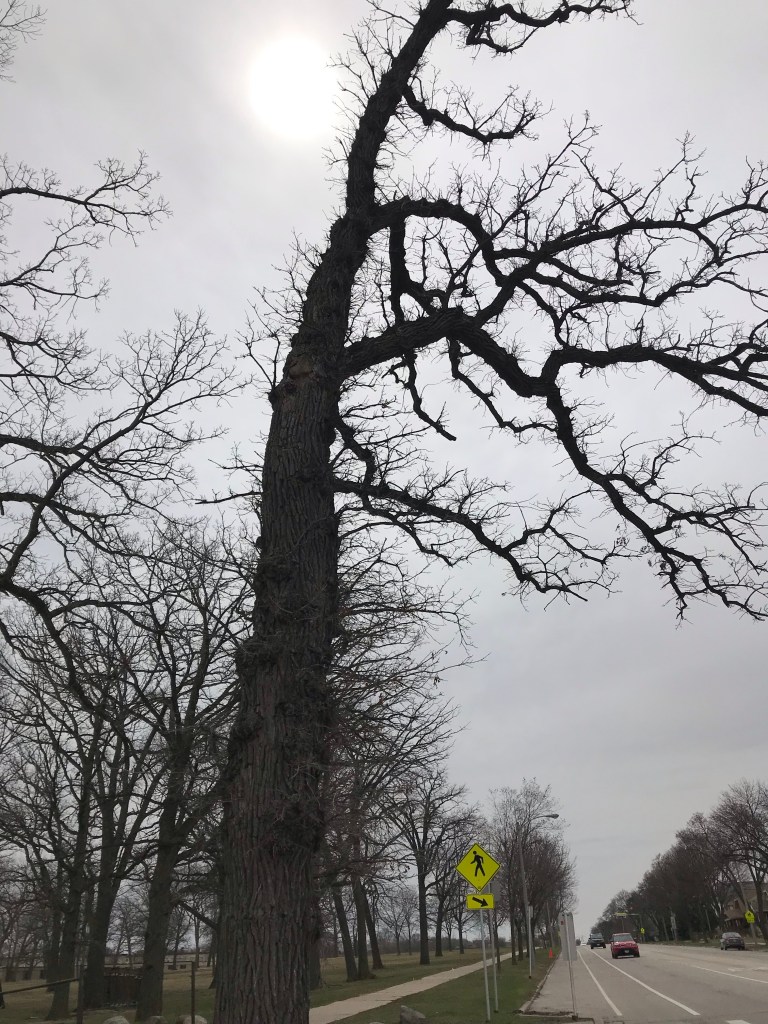
When you take a closer look, you can see the tiny beginnings of larger future growths, where skinny little twigs have emerged from the mounded remains of the first round or two of pruning.
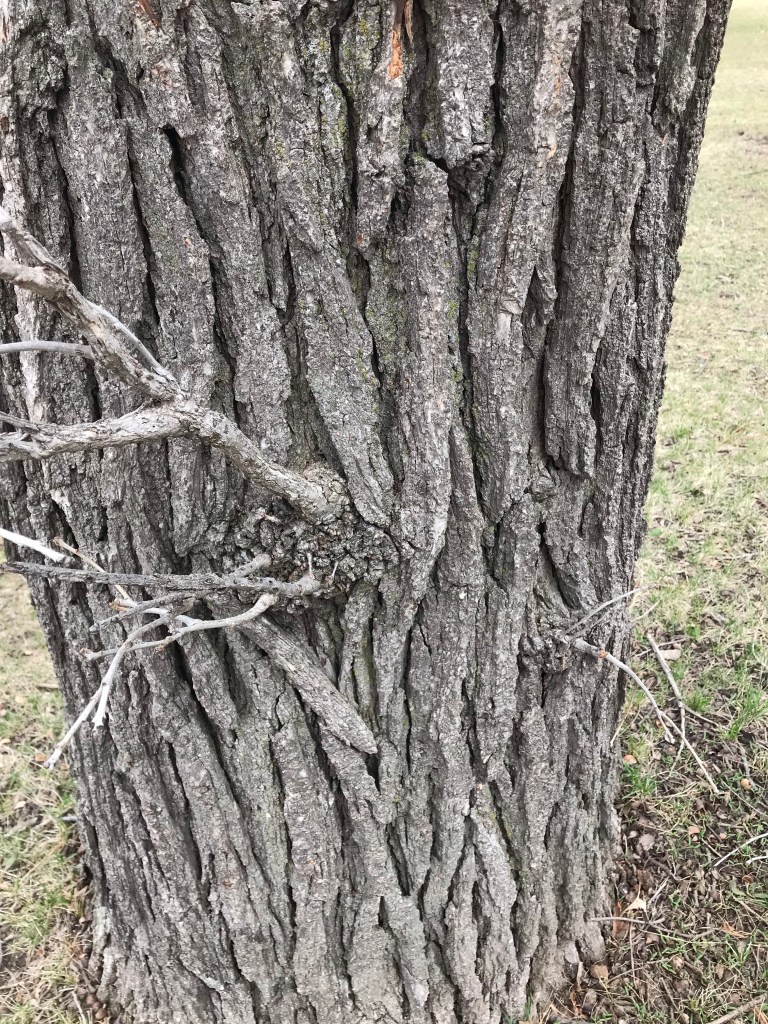
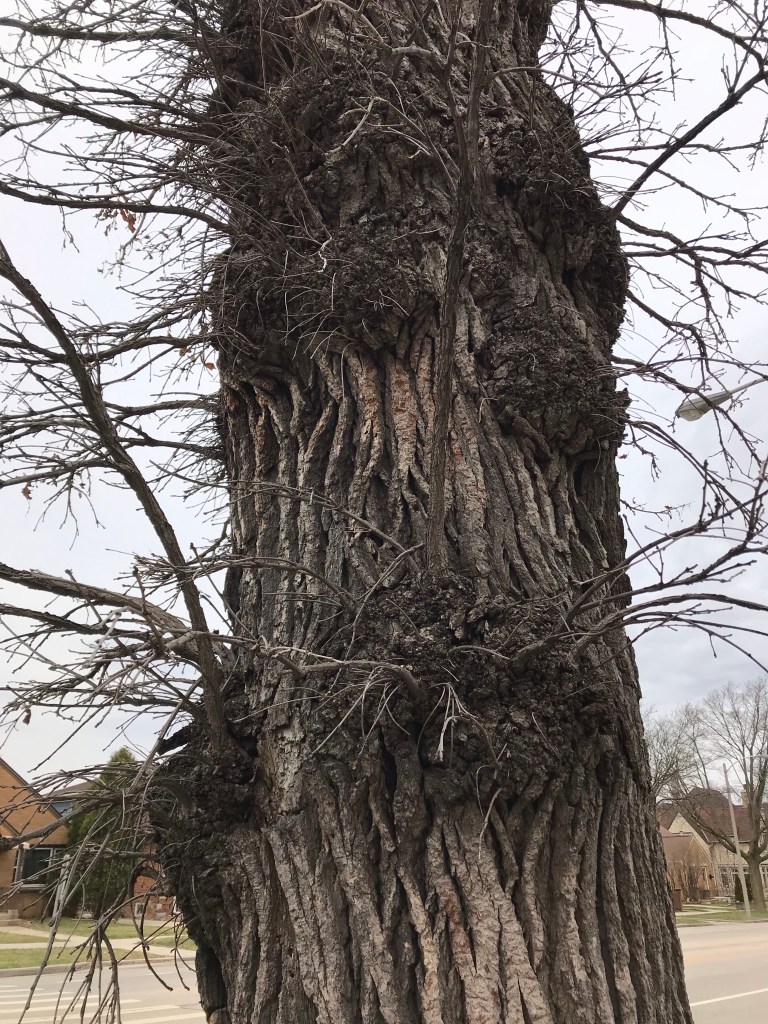
The tree’s continual sprouting reminds me of the Hydra, that serpentine monster of Greek mythology that grew back two heads for every one that was cut off. Just a relentless life force.
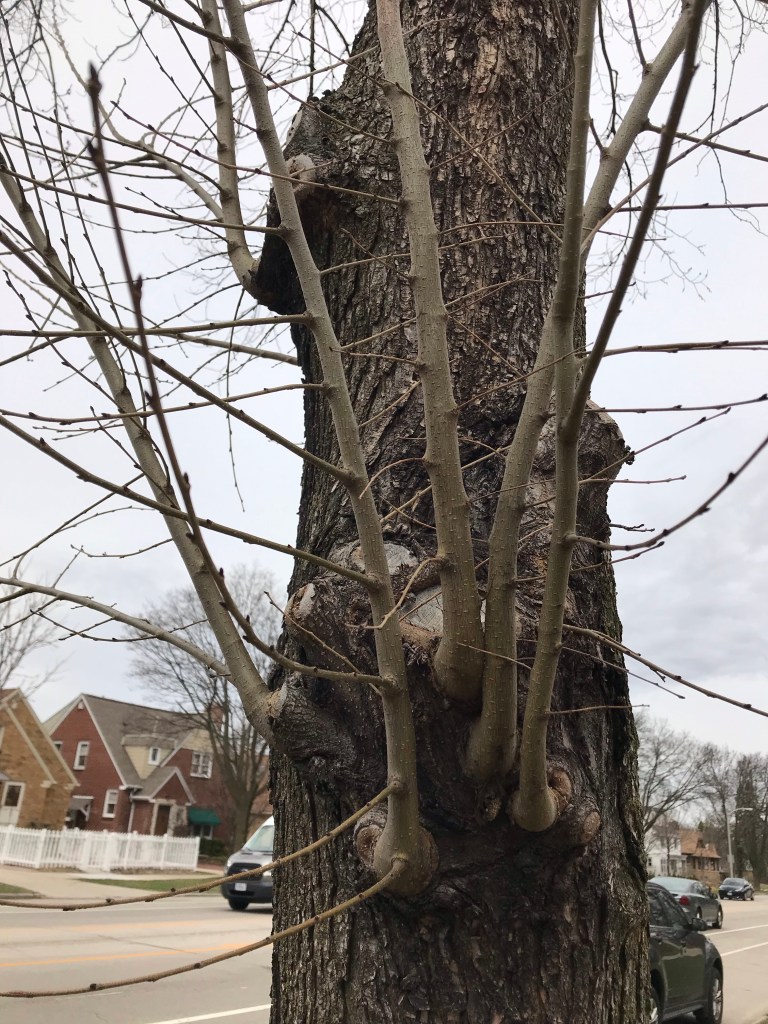
Which, now that I think about it, makes me wonder: Shouldn’t we all be taking a few pointers from this tree? 😀
Would you like new posts delivered to your inbox? To subscribe, click here.

An Ironing man at work in his mobile cart by the street side, Virudhunagar, Tamil Nadu, India
An Ironing man at work in his mobile cart by the street side, Virudhunagar, Tamil Nadu, India
I love—absolutely LOVE!—the colors in this photograph!!!


 Katherine Wikoff