Every time I drive past this burnt-out house, it serves as a stark reminder that bad things can happen to any of us at any time. It’s too easy to focus on what’s not going right in my life. Seeing this helps me think instead about what’s not going wrong!
I’m teaching a mass media course this quarter, and while doing class prep recently, I needed to look at something in the internet archive, aka the “Wayback Machine.” (Wikipedia article here)
Have you used this super cool site before? You can enter any URL, and the Wayback Machine will take you there . . . transported back in time to the way it was at some point in the past.
Anyway, because I’m also teaching my film studies course this term, I’ve been using YouTube a lot for film clips. And suddenly I wondered: What did YouTube look like when it started?
The answer: a lot like the old personal ads you used to find in those free tabloid-style newspapers on the giveaway racks near the front doors of hip businesses in happening areas of town. You know, “men seeking women,” “men seeking men,” etc.
It was an easy click to find the first-ever archived version of YouTube’s website. You can do it, too, with any website. Just go to the Wayback Machine and plug in the URL of the site you’re looking for, as if you were doing a Google search. And presto! You’re transported back in time to the cheesiness that was once a state-of-the-art website 🙂
Here is what YouTube looked like in the beginning, on April 28, 2005.
The first thing you were supposed to do once you got there was log in (or create an account) that was geared to set you up . . . with something that looks a lot like a date.
I am a Male/Female seeking Everyone/Males/Females between [ages] 18 and 99.
No videos on the landing page. Just these boxes/menus to log in and indicate your preferred sex and ages for online YouTube friends. Looks like YouTube also allowed you to save your “favorites” and check for “messages” from your new online friends, too.
And look at what happened when I hovered my cursor over the URL bar.
That little slogan, “YouTube – Broadcast Yourself,” intrigued me. I skimmed through the archived site to see how long it hung around. It remained in place for several years, but by the end of 2012 it was gone. I’m glad I noticed this because it helps me to understand why the site is named “YouTube.”
The logo itself clearly refers to television, right? TV was once known as “the tube” (still is) because of the vacuum tubes (that used to be) inside.
Affixing “You” to “Tube” turns the user into a broadcaster. It’s not two words (You + Tube) but one. “You Tube” as two words might have prompted associations with the derogatory “boob tube,” with “You” being an adjective similar to “boob” in describing “Tube.” But “YouTube” as one word becomes an entity in and of itself. And kind of a hip entity, at that, creating a compound word that keeps its separateness intact. Kind of like “iTunes” and “iPod” (no iPhone yet, though, LOL) and fitting right in with the new-media, new-millennium 2000s.
So isn’t it kind of interesting to see that in the beginning YouTube was trying to be a truly social network, like a Facebook or Myspace (which is still around, by the way, but now part of the People / Entertainment Weekly Network)? A place where you went to meet new friends online, yet also a creative space where you were encouraged to express yourself and “broadcast yourself” out over the internet airwaves?
I looked at some other snapshots of the YouTube site in 2005 and 2006, and indeed it looks like the main content is home-movie type videos that people are uploading primarily for their real-life friends but also for their online friends, and not to mention for the novelty of knowing their video might be seen by a worldwide audience.
Although I just randomly stumbled across all this by virtue of getting distracted while doing my actual work, I think I’ll take the time to work through more of the archived YouTube site, just to see how it’s changed over time. If I do, I’ll write about what I find here to keep you posted 🙂
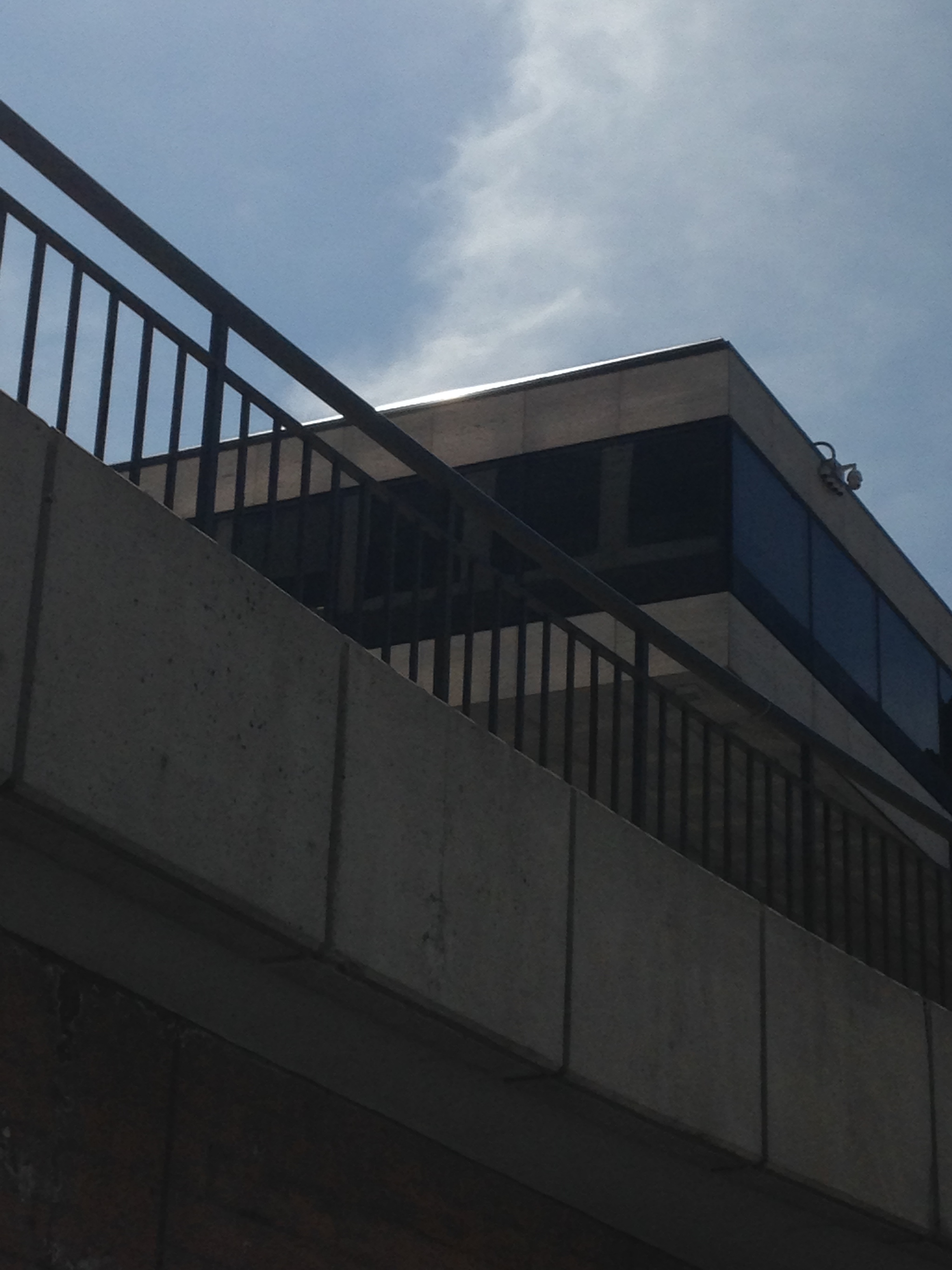
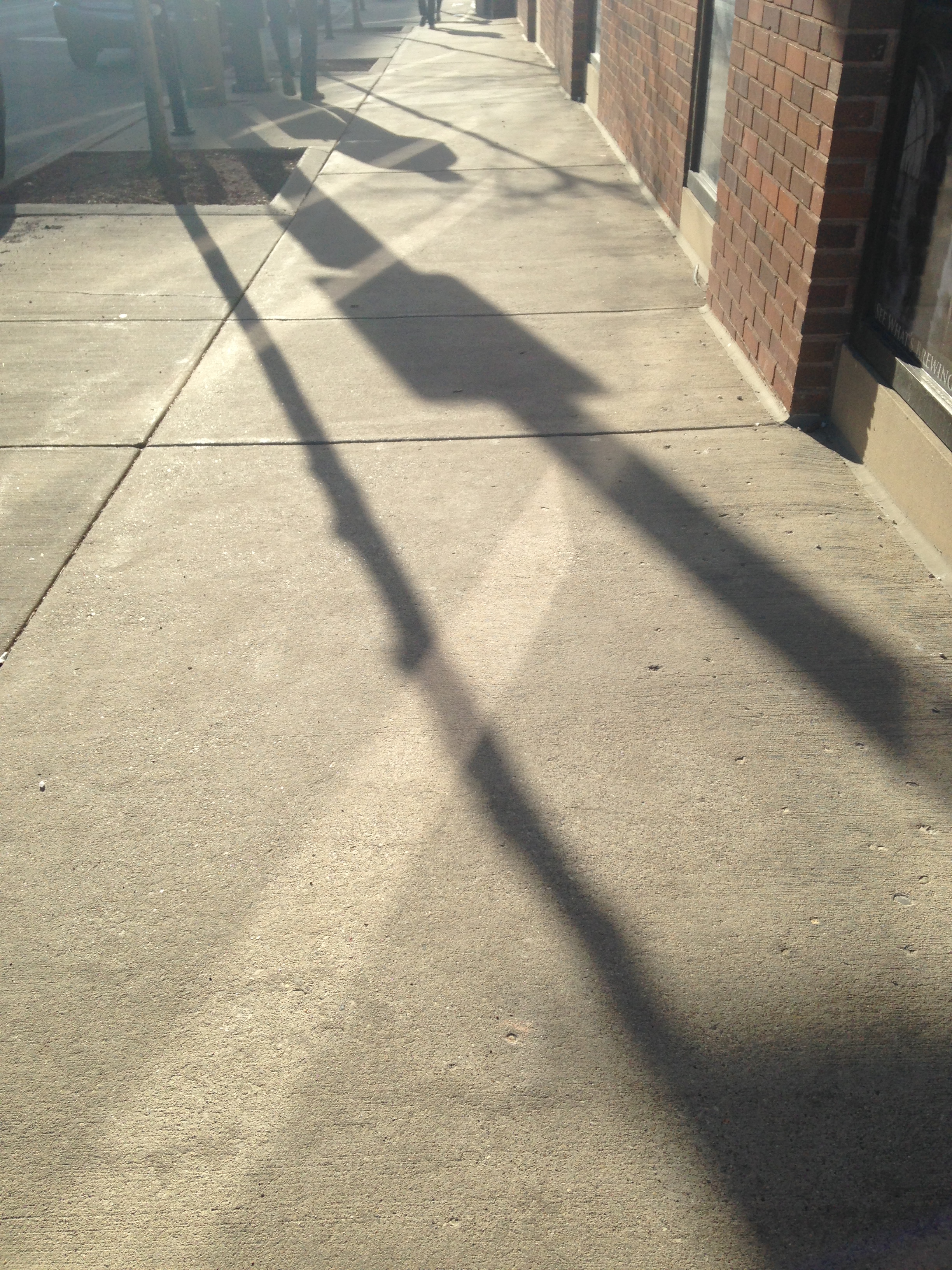
I couldn’t think of a good title for this post (“Cement and Metal”???) until I circled back to the one detail that had caught my eye in the first place and made this a photo worth snapping.
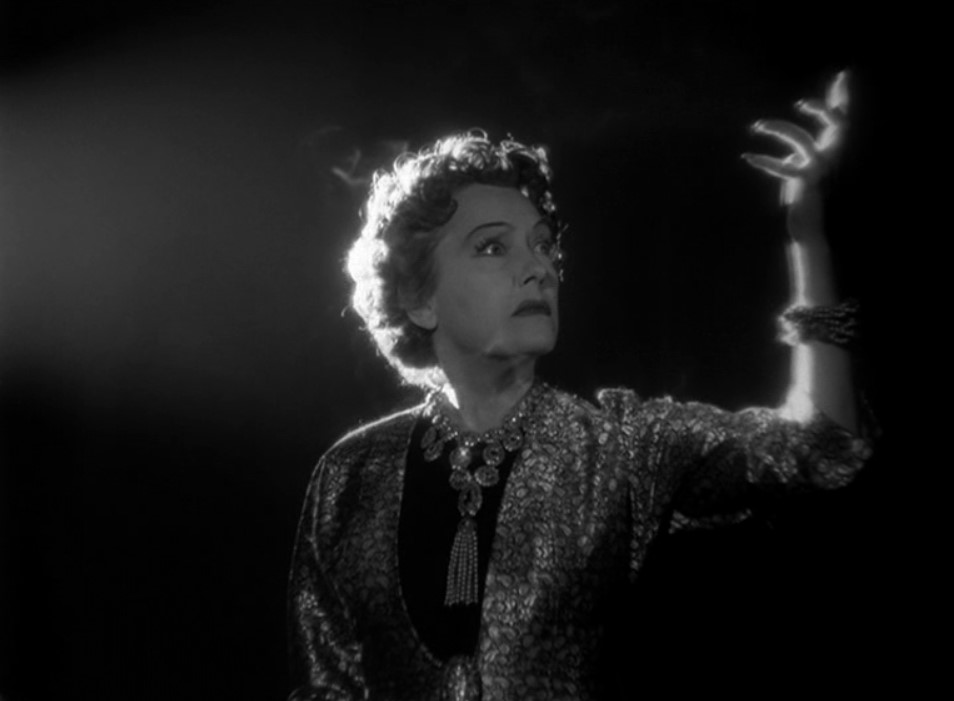
Because I’m teaching the Film Studies course this quarter, all of the cinema-related vocabulary I know is near the surface of my brain right now. A “kicker” is a light placed behind the subject to add definition, often in the form of “edge” or “rim” lighting.
Below is an example of rim lighting from my fave campy film-noir movie, Sunset Boulevard. What do you think? Was “The ‘Kicker'”a good title? 🙂
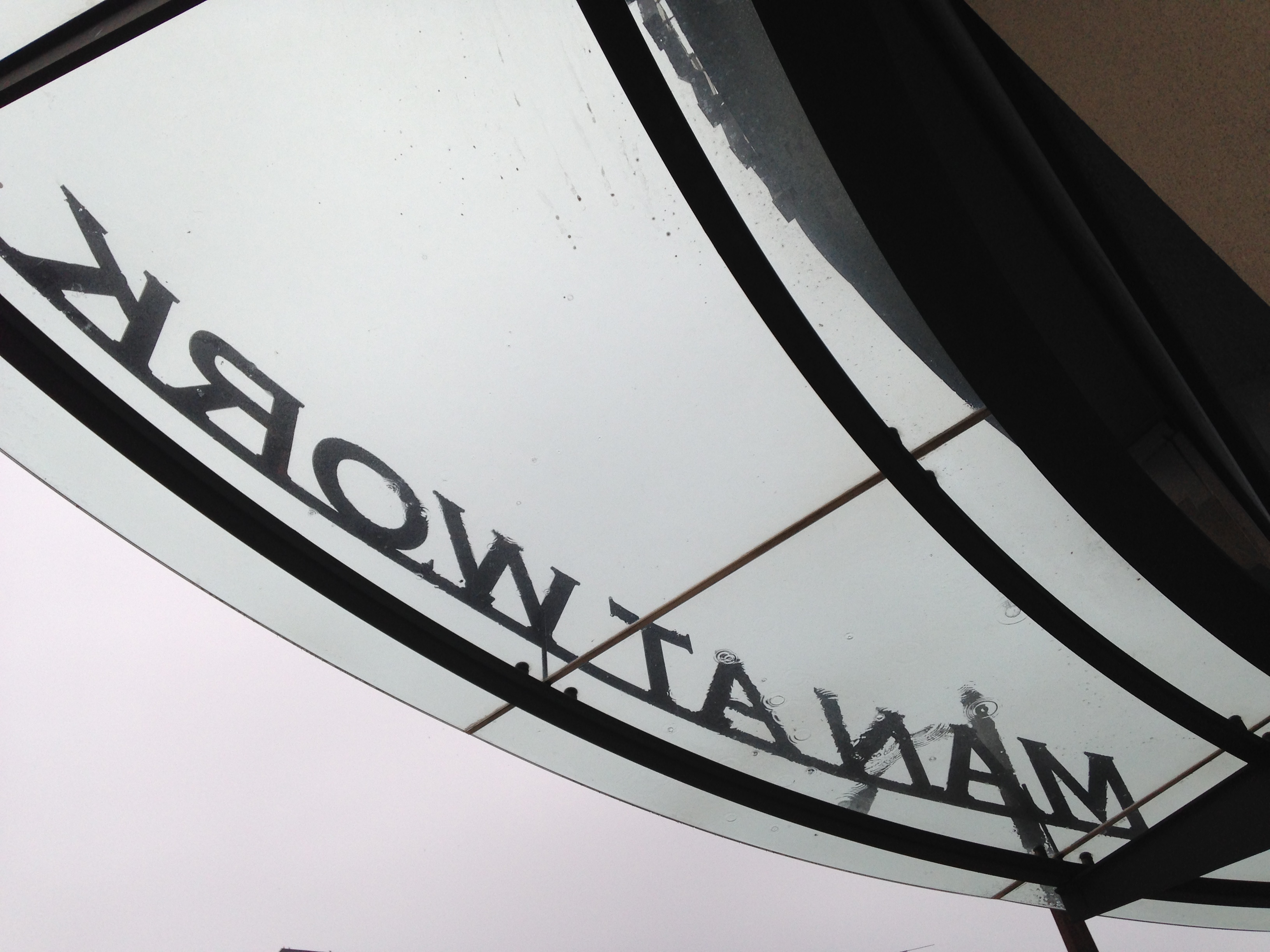
Came across this photo of the Grohmann Museum’s entrance (taken from just inside the front door on a rainy day) as I was going through my phone to find good pictures for a slideshow I’m putting together of the new Milwaukee Bucks arena’s construction over the past couple years. I liked this random pic from May 2017 and realized I’d never done anything with it, so thought I’d share in a blog post, even though it’s sunny in Milwaukee today and therefore sort of erroneous.
Oh well. I have a cool blog post coming tomorrow or Thursday, whenever I have time, so if posting an irrelevant picture is the worst thing I do this week, we can let that weather-related discrepancy slide 😄
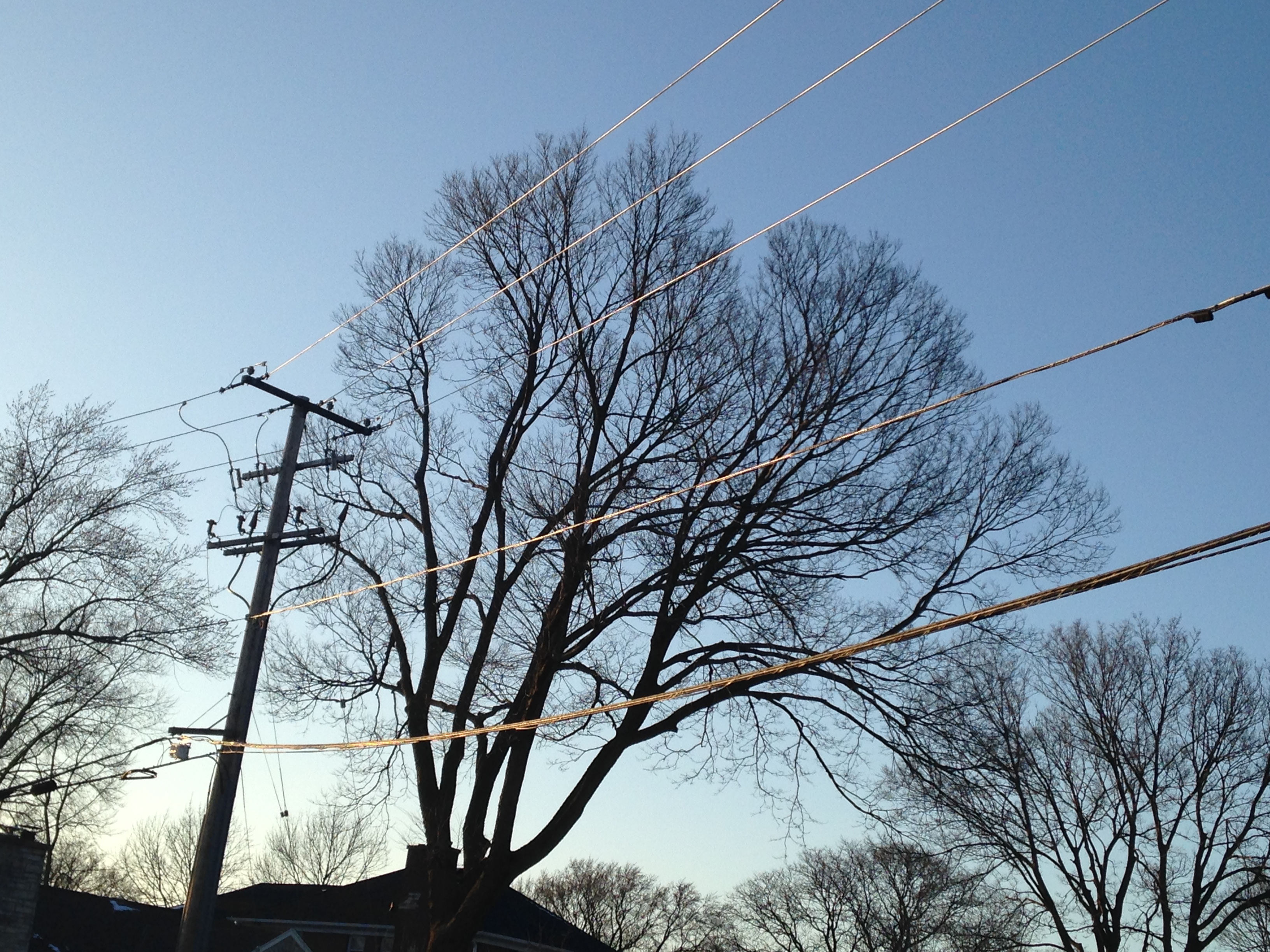
I loved the gleam of evening sunlight along these overhead wires, so I snapped this picture and then went searching for a poem on power lines to see if I could find something more evocative than “Evening sunlight on power lines” to make a good title for this post. All I could find were poems about “power,” though. So I went with a line from one of my faves 😄
Everyone posting on Twitter during the show said they finally got the live musical thing right. Maybe because I’d never seen any of the other live efforts, I didn’t realize there was a danger that Jesus Christ Superstar was ever at risk of meeting a similar fate. I expected greatness and it was delivered. From the opening guitar solo (wow!) to the blinding light at the end (wow!), it was just about as perfectly staged and performed as it possibly could have been.
What amazed me most, though, was how many of the lyrics I remembered and could sing right along with the actors. It’s been almost fifty years since the album was released, but last night I could still hum the overture and segue right into Judas’s opening rumination. Funny how music helps to store and then (much) later retrieve memory.
It wasn’t just the music I remembered, though. Jesus Christ Superstar constitutes a distinct memory of childhood experience. About the time the album came out (1970) my parents belonged to some sort of ecumenical group, which I perceived to be rather avant-garde of them. My impression was that interfaith spiritual connection at that time was something not really done. So I felt sort of proud when my mom and dad invited people from the group over to our house to listen to the album.
Here is how they listened to it: Furniture arranged in a circle, with extra folding chairs usually reserved for bridge club brought in, our living room filled with Lutherans, Catholics, Presbyterians, Methodists, etc., who sat with mimeographed copies of the libretto in their hands for like TWO HOURS listening to the music. With refreshments and discussion after.
I was also aware back then that Jesus Christ Superstar was considered scandalous, even blasphemous for some reason. I assumed it was because rock music was disrespectful to God. Plus even the name, the very idea of trivializing God by calling Jesus a “superstar.” However, after watching last night’s show, I think it more likely people were upset because in many ways Jesus Christ Superstar belongs to Judas. His is the show’s opening number, and his is the climactic closing number. Or rather, what the audience feels in the moment should be the show’s climactic closing number.
At the end of which we remember: oh yeah, the Crucifixion.
I thought last night’s production did that really well. We had the “BIG FINISH,” at which point many audience members probably felt an urge to give a standing ovation (similar to that almost irresistable impulse to applaud during the moment of silence near the end of the “Hallelujah” chorus), but then all the cast members silently turned their gazes and bodies toward where Jesus was going up on the cross.
That contrast really hits us in the gut. Our attention is drawn to the loud, shiny secular stuff until, in the unlooked-for quietness, we realize we’ve forgotten what we should have been paying attention to all along.
And they nailed the Crucifixion last night. (I know, I know. Truly, no pun is intended. I just can’t think of a better way to say it.) The staging was incredibly beautiful. Simple, symbolic, pure.
I was going to talk a lot more about everyone’s performances, but I don’t really feel in a theater-critic mood right now. Plus it seems really churlish to nitpick such a brilliant production. Let me just say that a certain high note was not hit, and in my opinion it was a crucial high note. Everything important to know about the character who sings it is captured in that one note. That raw, anguished high note so impossibly out of range and so infused with despair. And it didn’t happen, at least not in the way I believe it needed to, which was a disappointment.
So there, I said it but didn’t exactly say it. If you agree with me, you’ll feel validated in your own reaction, and if you don’t, you can pause a moment to wonder what the heck I’m talking about and then just brush it off and go on with your day 🙂
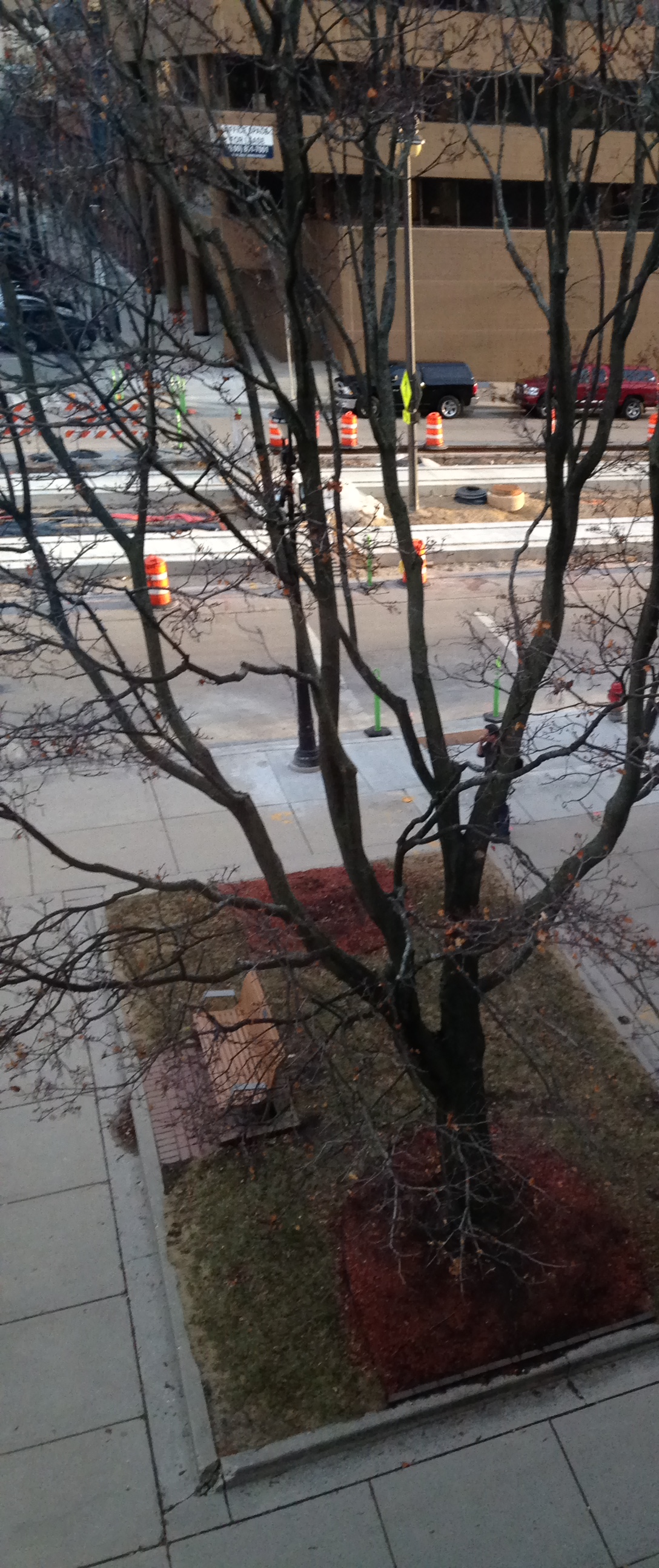
The orange barrels looked so striking in the evening sunlight as I walked across the “Bridge” between the Science and Library buildings (yes, they do have more official names; see the campus map here 🙂 ) that I had to pause and take some pictures.
I don’t know how I managed to get the photo above to have such a long, skinny shape. I didn’t do anything special; it just came out that way. I’m glad (and lucky), so let’s just pretend I planned it and then used all my skills to capture this exact image 🙂
Once construction is complete, there will be a stop right here at MSOE, basically immediately below where I’m standing. In fact, that square of orange barrels around the rectangular hole in the ground looks to me like it might end up being the exact location eventually.
NOTE: This post is under reconstruction because a) the YouTube account that I originally took my clips from has been shut down and b) WordPress doesn’t seem to be working correctly to allow me to play clips to and from particular start & stop points. It’s time consuming to fix this, so I’ll do it as soon as I can.
Meanwhile, you can find the entire movie here on YouTube. (UPDATE: No you can’t. I’m not sure why this movie keeps disappearing. Maybe, like Triumph of the Will, this film is on YouTube’s verboten list and gets taken down whenever they notice someone has put it up. I’ll see if I can find it on Vimeo. Or maybe I’ll record it myself and use my own clips. Yes, this is a racist film. But it’s also a historically significant film that analysis of can add depth to our understanding of each other and the shared unpleasant past experiences that have shaped America. It does no good to pretend it never happened. Censorship in the form of burning books or taking down video clips doesn’t create a healthy society, even if some of us apparently feel better for having removed them from our collective sight. Rant over 😄)
I’m teaching my film studies course this quarter, and this post was actually prompted by the utilitarian need to have a couple of neatly-cut film clips for efficient class use. But because it might also be interesting for people outside my class to see, I’m going to publish it as a post.
So tonight we’re doing some film history, and I want to show (and share with you 🙂 ) a few quick things about The Birth of a Nation.
First of all, it was the first feature film; that is, it was the first film to resemble what we think of today as a “movie.” There were no “movie theaters” as we think of them today because there also was no real film industry yet. Prior to this point, films were short and had only for a decade or so begun containing any sort of story narrative (like a person being rescued from a house fire or a kid playing a prank by standing on a hose and then stepping off again as soon as the hapless gardener holds the nozzle up to his face to see why no water is coming out). More commonly movies just documented interesting things like a train moving toward the viewer or people walking along a street or a woman performing a dance. The film industry was only slowly becoming aware of what movies could be.
The Birth of a Nation was released in 1915, timed to coincide with the fiftieth anniversary of the end of the American Civil War. Although the film was widely distributed to cities all over the United States, it did not show in “movie theaters” per se. Instead it showed at whatever venues a community had available: civic centers, auditoriums, and theaters. People attending communal remembrances at cemeteries and marking long-deceased relatives’ graves with flowers also assembled to watch this epic tale of America’s struggle between North and South and their ultimate union in a newly (re)constituted United States (i.e., the “birth” of a new “nation”).
Interesting fact number two: the Ku Klux Klan was largely a phenomenon confined to the American South prior to the release of The Birth of a Nation. However, following the heroic portrayal Klan’s supposed origins in the film, Klan membership numbers across the country soared. You may be aware that this film has received extensive criticism for its racism, from its stereotyped portrayals of African-Americans (see the clip below for depictions of formerly-enslaved lawmakers on the floor of the South Carolina state legislature wearing clown suits, eating fried chicken, sneaking booze from a flask, and propping bare feet up on their desks) to its use of white actors in blackface to play many of the black characters.
Aside, however: “black face” was not uncommon during this era, and The Birth of a Nation merely reflected this shameful fact of American culture. The “minstrel show” was a common form of entertainment in America throughout the 1800s and well into the 20th century. See here, for example, Al Jolson singing his signature tune, “Mammy,” in The Jazz Singer, his 1927 smash hit famous for being the first “talkie” (the first motion picture with synchronized sound).
The main reason I show clips from The Birth of a Nation, though, is to demonstrate two things.
First, I want students to see how stationary the camera was and how tied to live theater cinema as an art form still was.
The second is to show how Hollywood used natural sunlight (with film sets open to the sky above) to take advantage of Los Angeles’ Mediterranean climate (lots of sunshine, very little rain) and become the center of the film industry worldwide. Here are some clips in which you can see clear visual evidence of this.
In the first, look at the top of dancers’ heads, especially the couple in the foreground. Can you see that rim of bright light crowning their hair?
Here’s another example. Again you can see the rims of sunlight atop the actors’ heads. Watch the floor of the stage as the curtain rises. Bright sunlight floods the set and casts dark shadows from directly overhead. Also, wait a few more seconds for the clip to show a “spotlight” simulation that appears to be a resourceful additional use of that bright overhead sun. Doesn’t it look as though they’ve rigged up a mirror to throw a reflection onto the stage in mimicry of a spotlight’s circle?
I also find this clip interesting for its recreation of Lincoln’s assassination. Just think, at only fifty years after it happened, there were people still alive who would have remembered reading about it in the newspapers and maybe even standing alongside the tracks as Lincoln’s funeral train rolled past. Seeing Lincoln’s assassination in the movie makes me realize how much living memory the scene must have encompassed at the time it was filmed and first viewed.
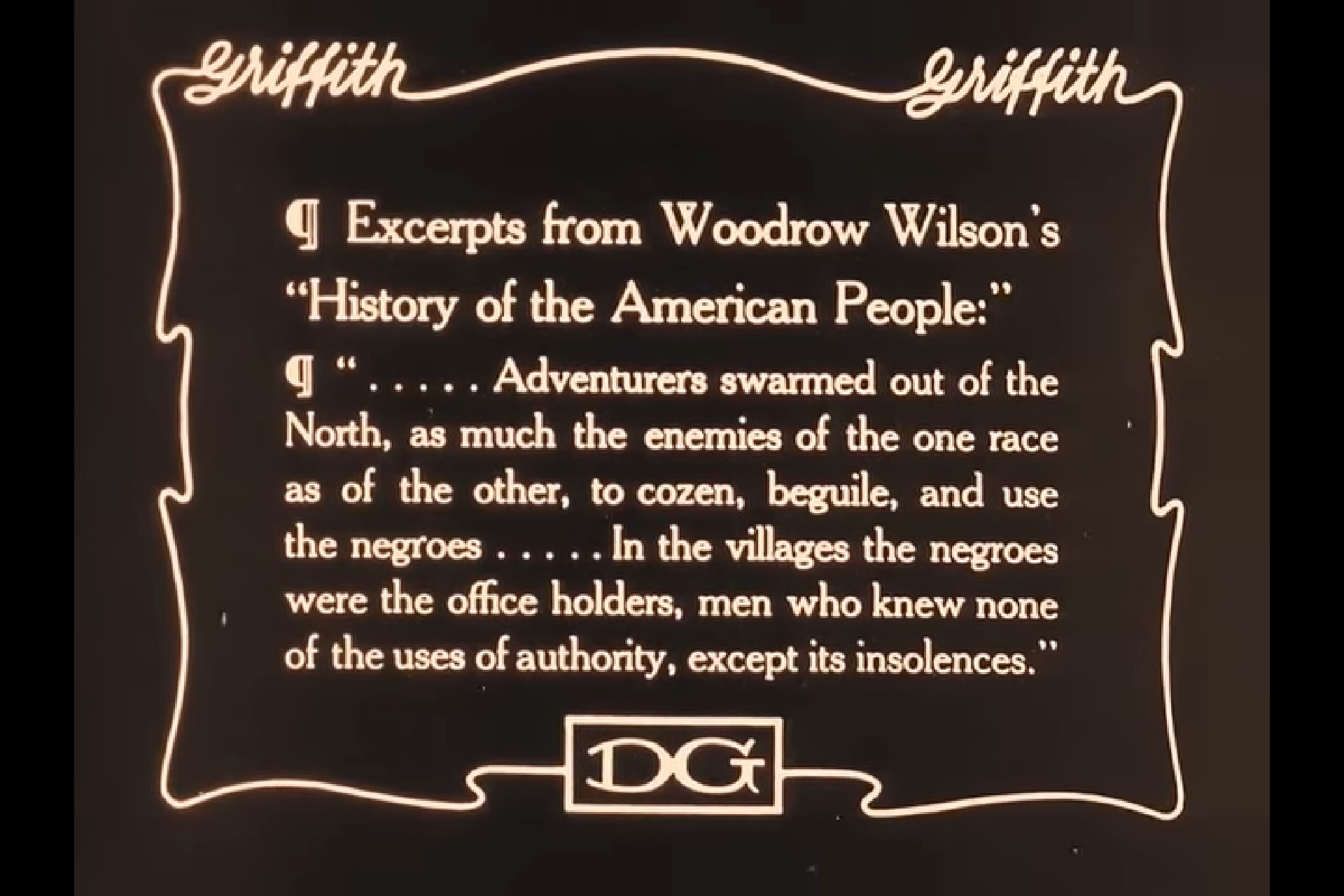
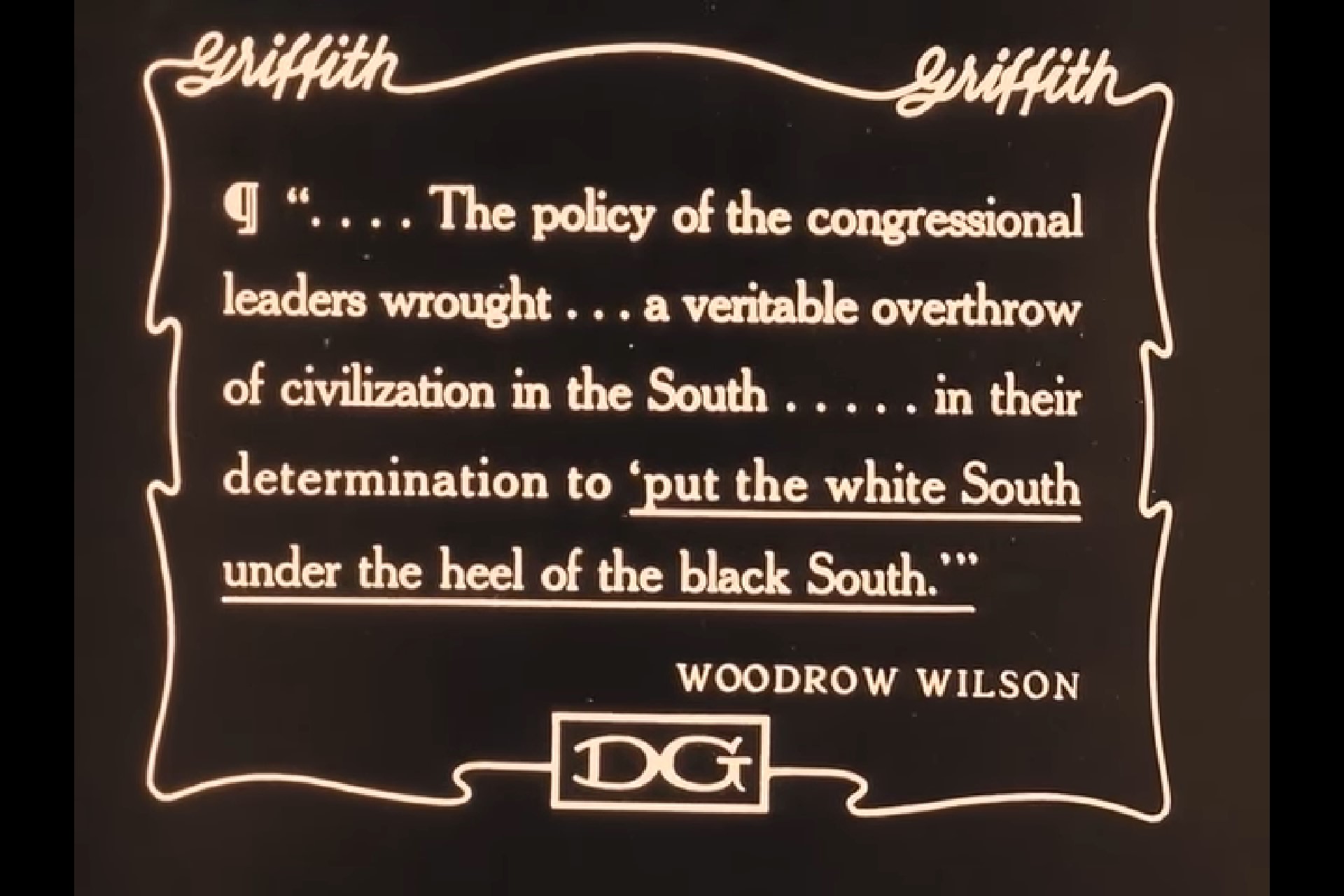
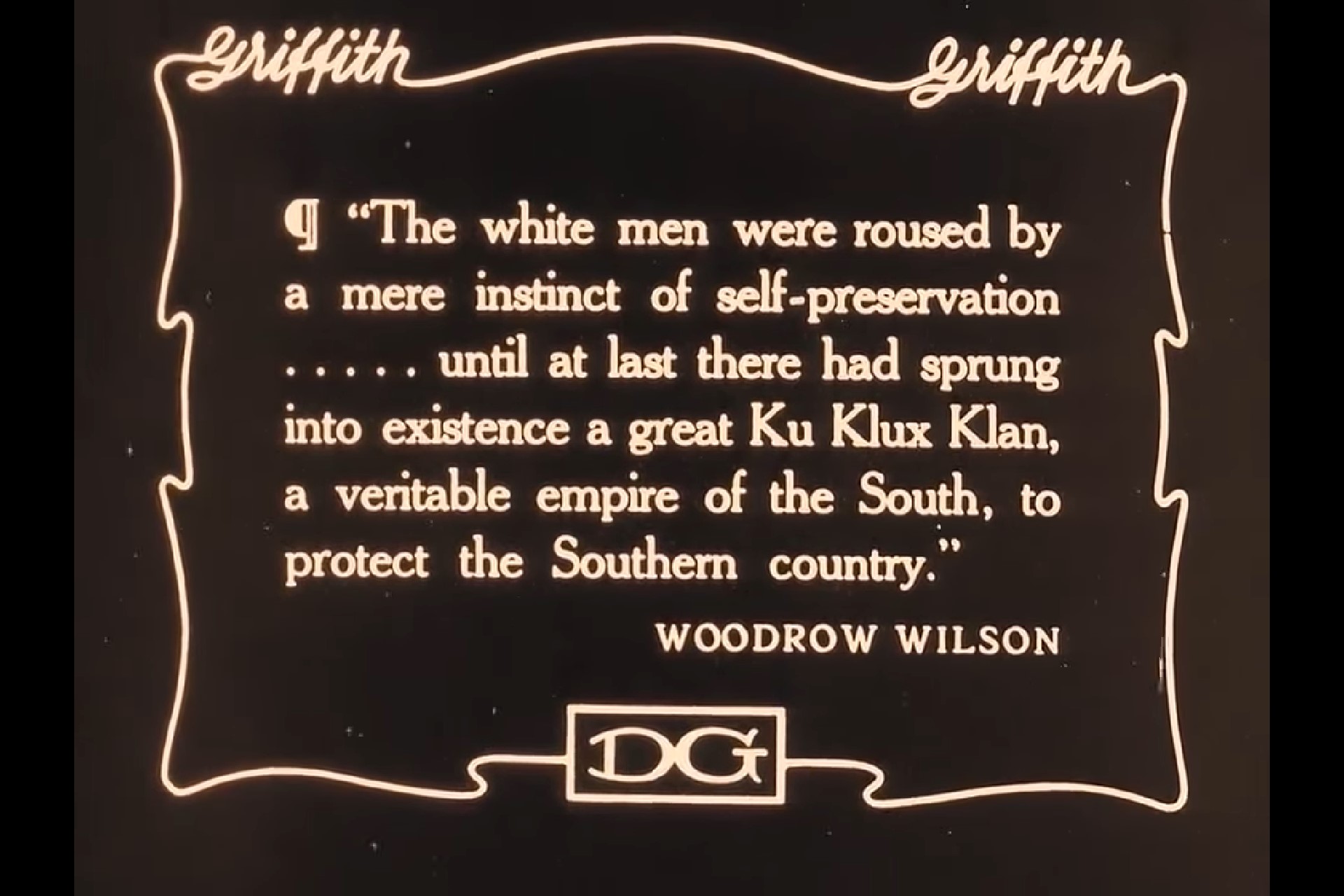
Here’s something that I find a little disturbing: these excerpts from a book by Woodrow Wilson, who had previously been the president of Princeton University and was, in fact, the sitting President of the United States at the time of this movie’s release.
I’m still not sure of exactly what I think about this quote in terms of its accuracy and its original context, but I do think that having it in this film—following very closely the scene of Lincoln’s assassination—gave the approval of the U.S. Presidency to racist messages embedded in a movie that pretty blatantly (and melodramatically) attributed all the troubles of Reconstruction to scheming bad guys in the North and newly-freed African-Americans in the South.
No wonder the Ku Klux Klan, which re-founded itself in 1915 after having largely died out decades earlier, grew so rapidly in the years following The Birth of a Nation‘s release that by the mid-1920s its members numbered around 85,000.
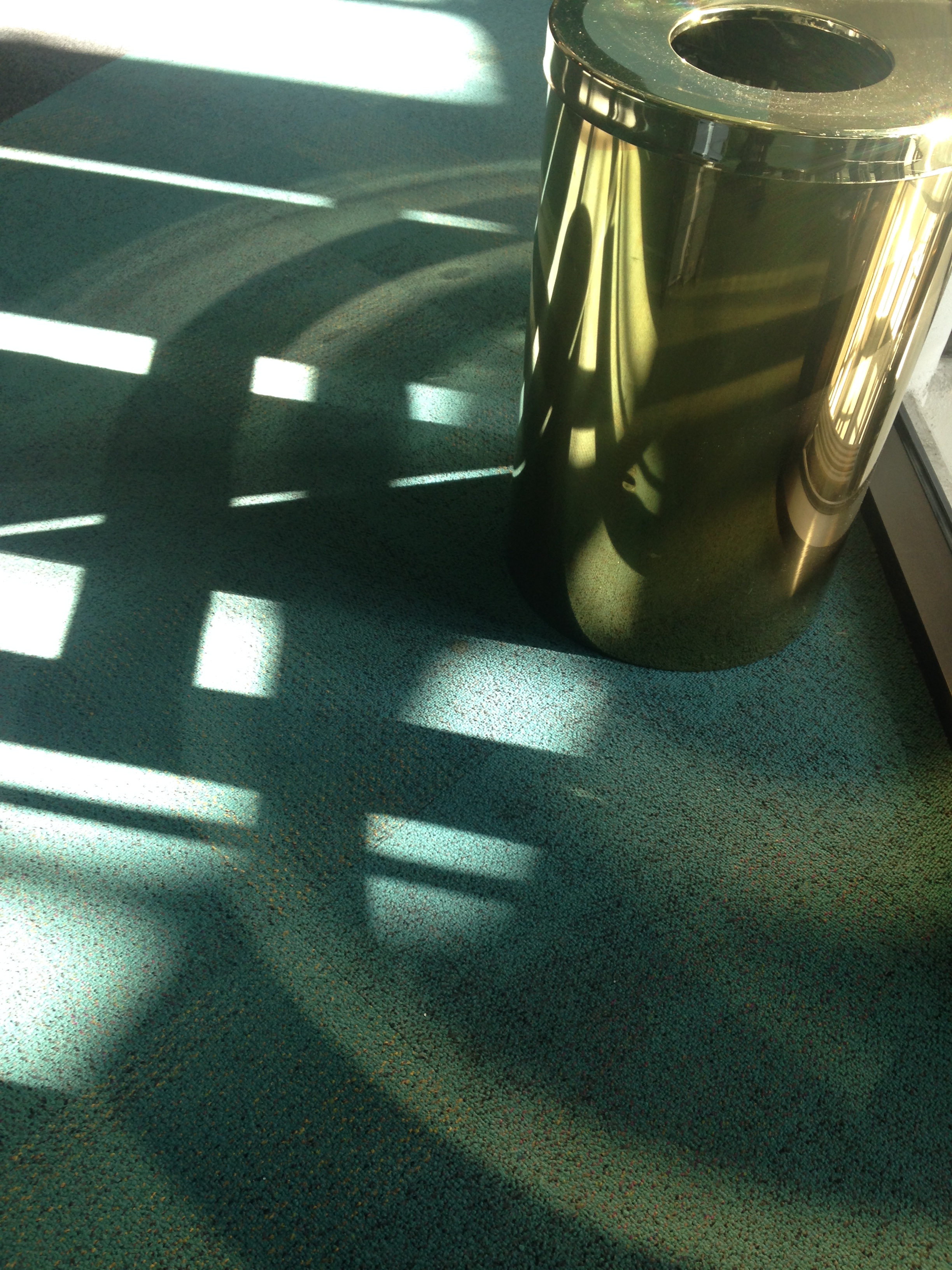
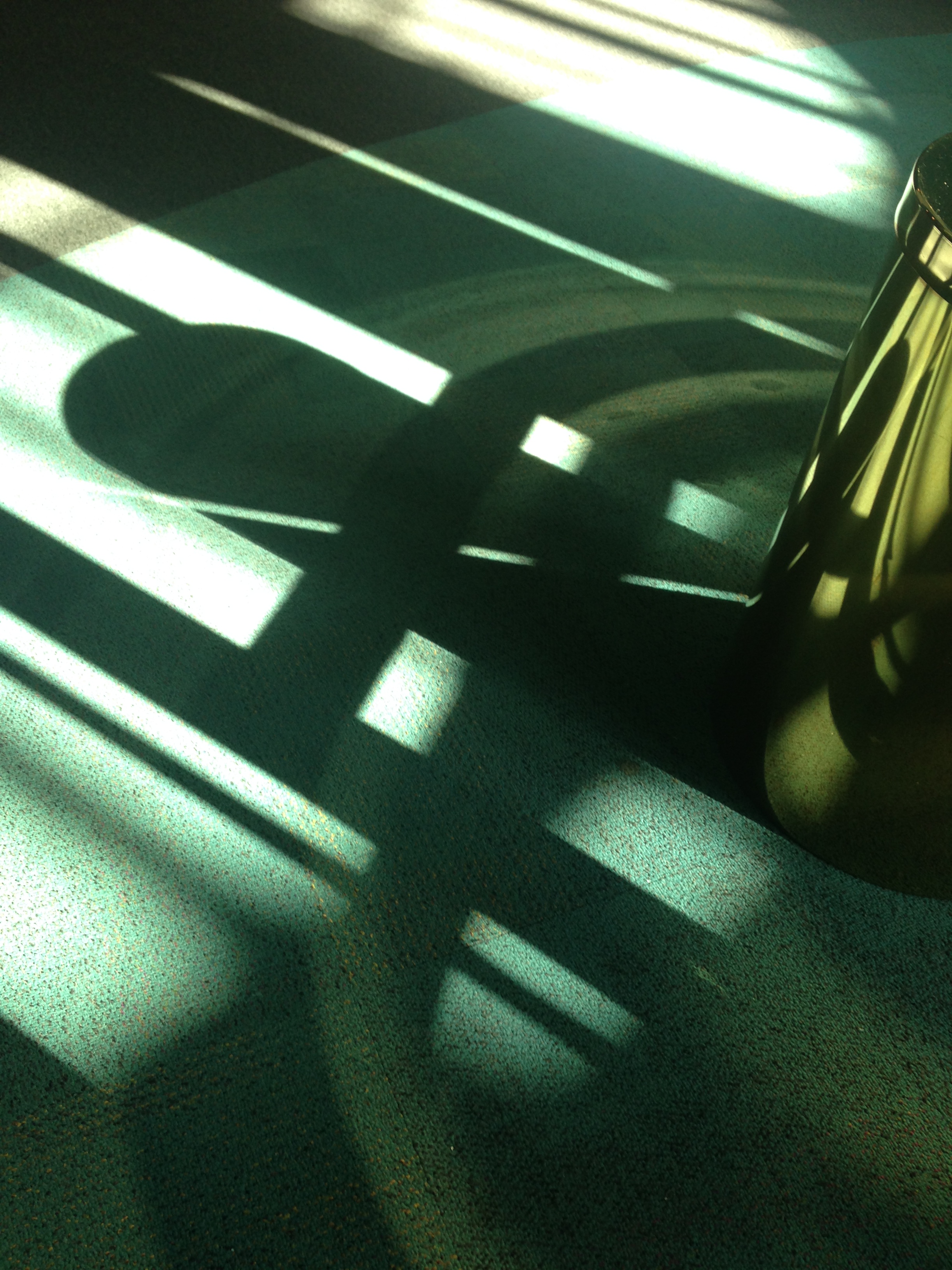
Just some random photos of light/shadow that caught my eye today.
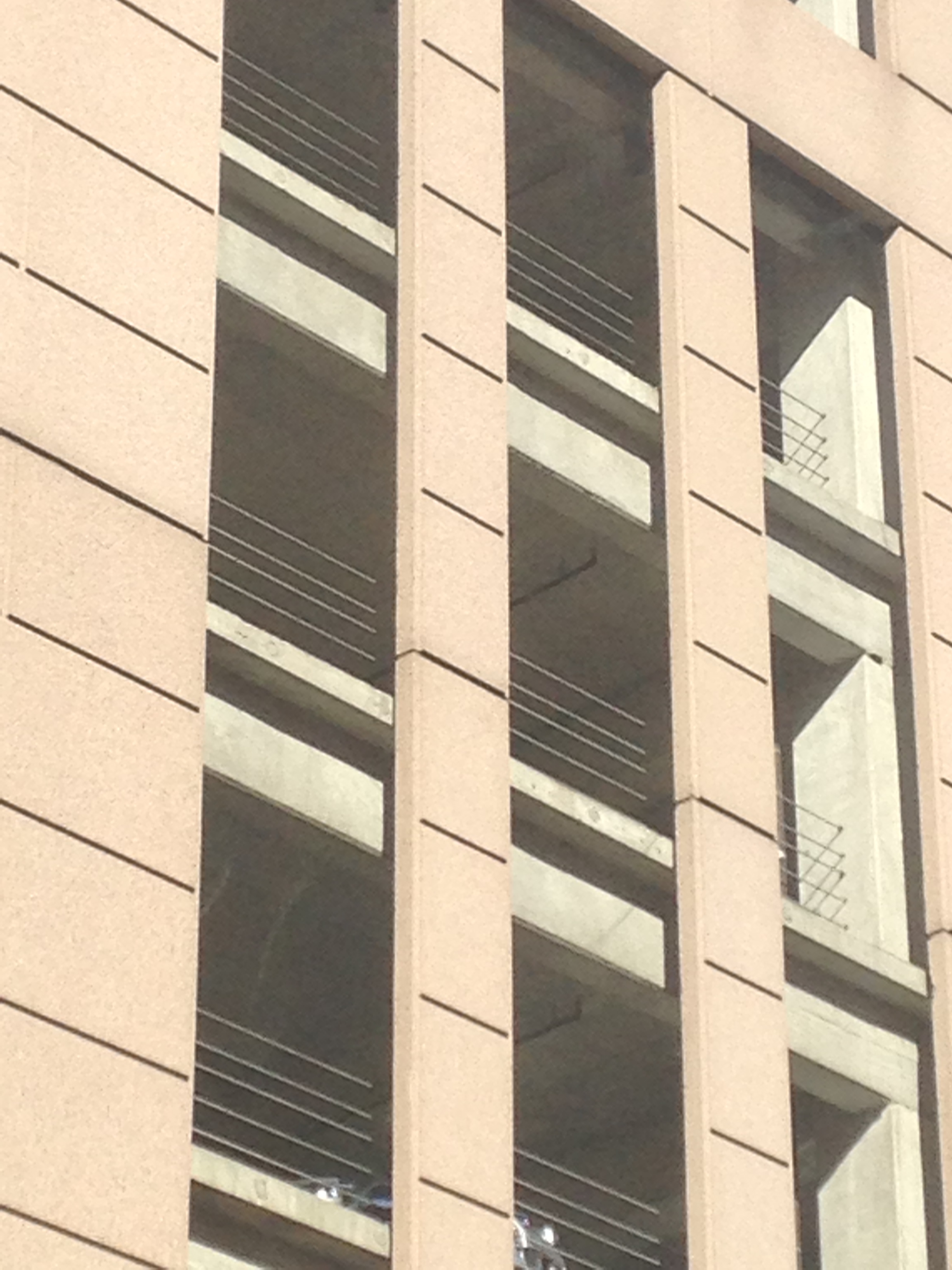
First this one, of a parking garage, that I saw on my way back from a mid-morning Starbucks run.
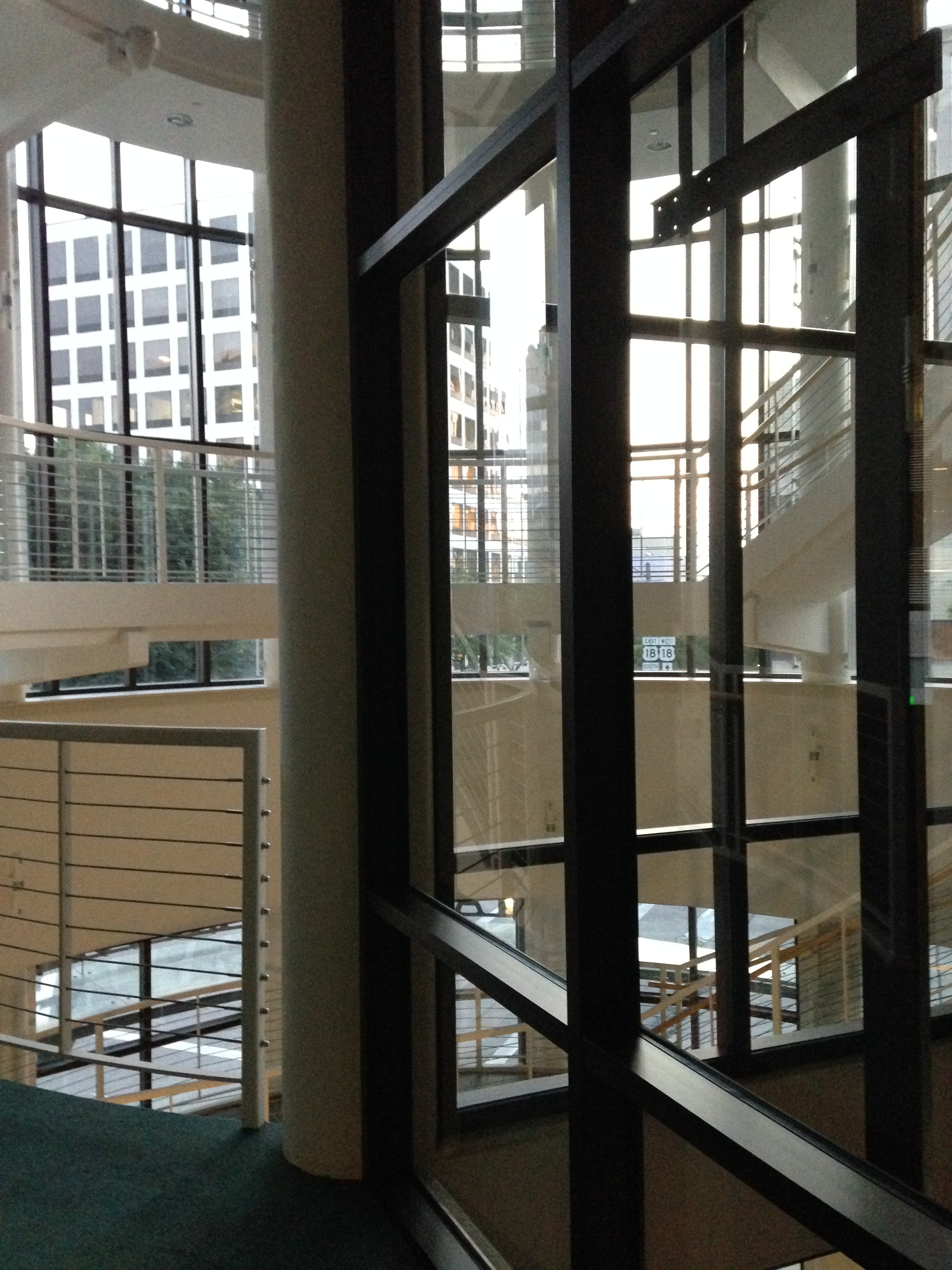
Then this one (actually two slightly different photos in quick succession, just in case 🙂 ) on my way out of the building for class late this afternoon, which is sort of a variation on one I took several weeks ago (same subject, different light). The light comes in through the atrium and glass elevator shaft, so I had about two seconds to grab the shot(s) before the elevator arrived and blocked the light.
And finally this one of criss-crossed stripes of light and shadow that I noticed on the way back to my office in MSOE’s Grohmann Museum from the other side of campus at the end of the day.
If you wanted to get philosophical, it’s interesting to think about how the concept of yin and yang intersects with the vernal equinox this week marking an end to winter’s darkness and the coming of summer’s light 🙂

 Every time I drive past this burnt-out house, it serves as a stark reminder that bad things can happen to any of us at any time. It’s too easy to focus on what’s not going right in my life. Seeing this helps me think instead about what’s not going wrong!