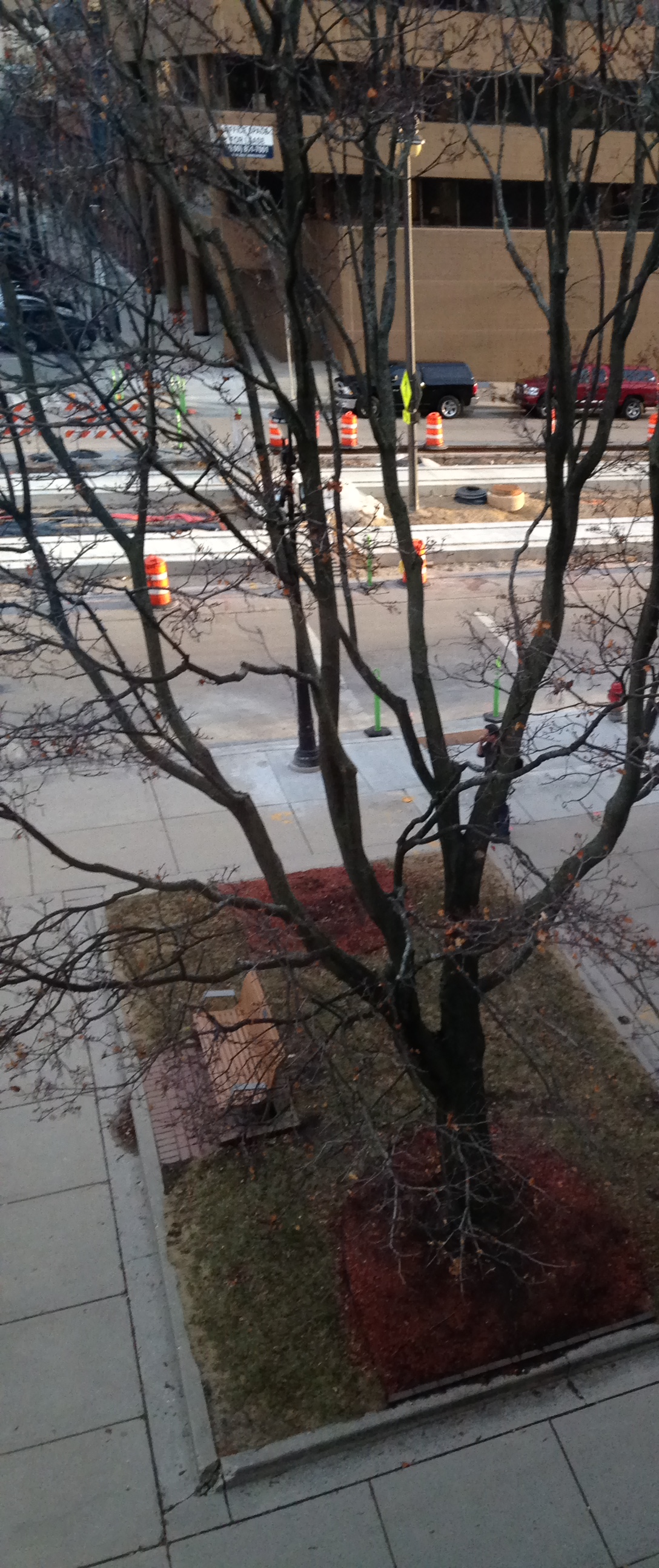
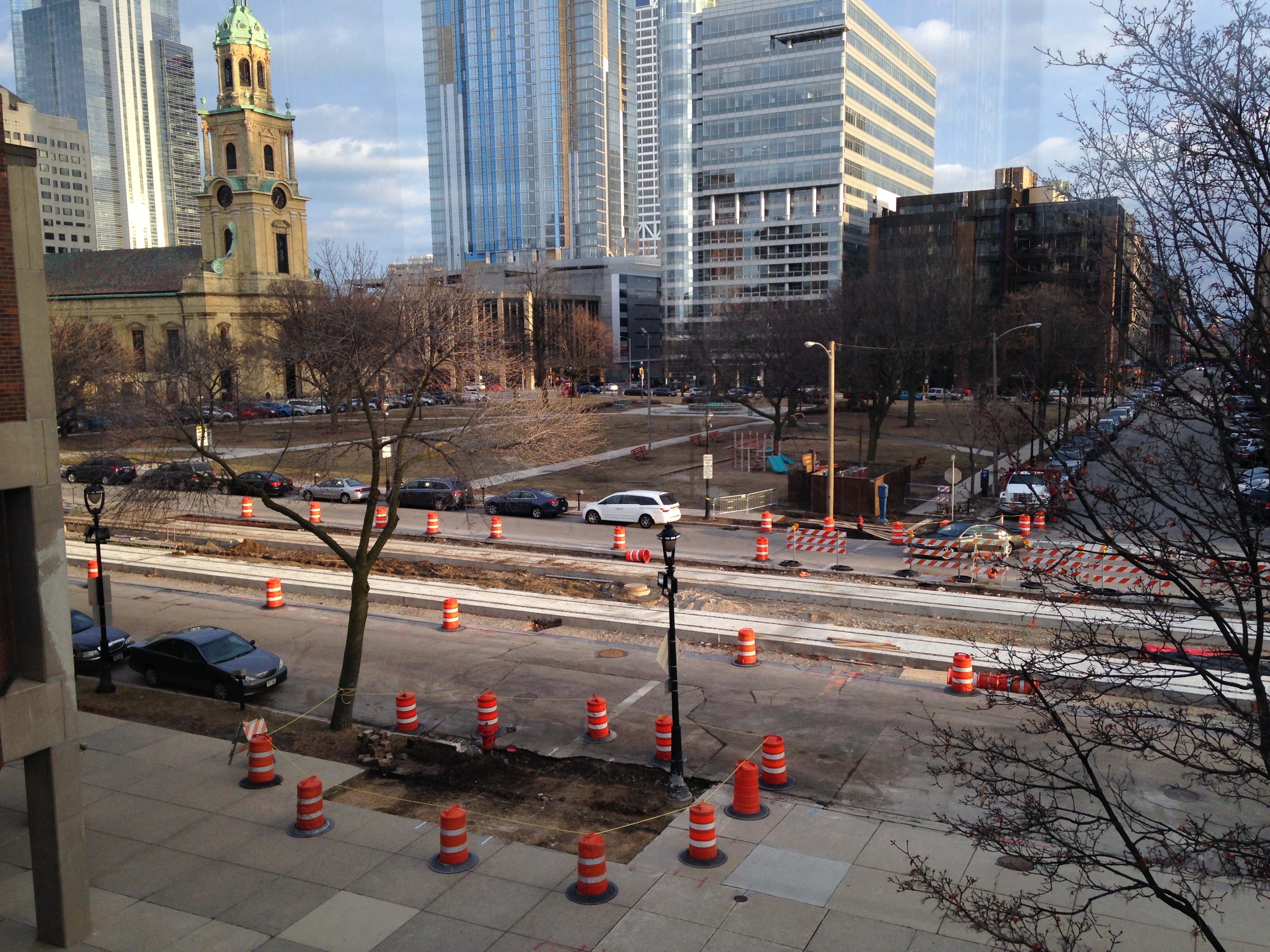
The orange barrels looked so striking in the evening sunlight as I walked across the “Bridge” between the Science and Library buildings (yes, they do have more official names; see the campus map here 🙂 ) that I had to pause and take some pictures.
I don’t know how I managed to get the photo above to have such a long, skinny shape. I didn’t do anything special; it just came out that way. I’m glad (and lucky), so let’s just pretend I planned it and then used all my skills to capture this exact image 🙂
Once construction is complete, there will be a stop right here at MSOE, basically immediately below where I’m standing. In fact, that square of orange barrels around the rectangular hole in the ground looks to me like it might end up being the exact location eventually.
NOTE: This post is under reconstruction because a) the YouTube account that I originally took my clips from has been shut down and b) WordPress doesn’t seem to be working correctly to allow me to play clips to and from particular start & stop points. It’s time consuming to fix this, so I’ll do it as soon as I can.
Meanwhile, you can find the entire movie here on YouTube. (UPDATE: No you can’t. I’m not sure why this movie keeps disappearing. Maybe, like Triumph of the Will, this film is on YouTube’s verboten list and gets taken down whenever they notice someone has put it up. I’ll see if I can find it on Vimeo. Or maybe I’ll record it myself and use my own clips. Yes, this is a racist film. But it’s also a historically significant film that analysis of can add depth to our understanding of each other and the shared unpleasant past experiences that have shaped America. It does no good to pretend it never happened. Censorship in the form of burning books or taking down video clips doesn’t create a healthy society, even if some of us apparently feel better for having removed them from our collective sight. Rant over 😄)
I’m teaching my film studies course this quarter, and this post was actually prompted by the utilitarian need to have a couple of neatly-cut film clips for efficient class use. But because it might also be interesting for people outside my class to see, I’m going to publish it as a post.
So tonight we’re doing some film history, and I want to show (and share with you 🙂 ) a few quick things about The Birth of a Nation.
First of all, it was the first feature film; that is, it was the first film to resemble what we think of today as a “movie.” There were no “movie theaters” as we think of them today because there also was no real film industry yet. Prior to this point, films were short and had only for a decade or so begun containing any sort of story narrative (like a person being rescued from a house fire or a kid playing a prank by standing on a hose and then stepping off again as soon as the hapless gardener holds the nozzle up to his face to see why no water is coming out). More commonly movies just documented interesting things like a train moving toward the viewer or people walking along a street or a woman performing a dance. The film industry was only slowly becoming aware of what movies could be.
The Birth of a Nation was released in 1915, timed to coincide with the fiftieth anniversary of the end of the American Civil War. Although the film was widely distributed to cities all over the United States, it did not show in “movie theaters” per se. Instead it showed at whatever venues a community had available: civic centers, auditoriums, and theaters. People attending communal remembrances at cemeteries and marking long-deceased relatives’ graves with flowers also assembled to watch this epic tale of America’s struggle between North and South and their ultimate union in a newly (re)constituted United States (i.e., the “birth” of a new “nation”).
Interesting fact number two: the Ku Klux Klan was largely a phenomenon confined to the American South prior to the release of The Birth of a Nation. However, following the heroic portrayal Klan’s supposed origins in the film, Klan membership numbers across the country soared. You may be aware that this film has received extensive criticism for its racism, from its stereotyped portrayals of African-Americans (see the clip below for depictions of formerly-enslaved lawmakers on the floor of the South Carolina state legislature wearing clown suits, eating fried chicken, sneaking booze from a flask, and propping bare feet up on their desks) to its use of white actors in blackface to play many of the black characters.
Aside, however: “black face” was not uncommon during this era, and The Birth of a Nation merely reflected this shameful fact of American culture. The “minstrel show” was a common form of entertainment in America throughout the 1800s and well into the 20th century. See here, for example, Al Jolson singing his signature tune, “Mammy,” in The Jazz Singer, his 1927 smash hit famous for being the first “talkie” (the first motion picture with synchronized sound).
The main reason I show clips from The Birth of a Nation, though, is to demonstrate two things.
First, I want students to see how stationary the camera was and how tied to live theater cinema as an art form still was.
The second is to show how Hollywood used natural sunlight (with film sets open to the sky above) to take advantage of Los Angeles’ Mediterranean climate (lots of sunshine, very little rain) and become the center of the film industry worldwide. Here are some clips in which you can see clear visual evidence of this.
In the first, look at the top of dancers’ heads, especially the couple in the foreground. Can you see that rim of bright light crowning their hair?
Here’s another example. Again you can see the rims of sunlight atop the actors’ heads. Watch the floor of the stage as the curtain rises. Bright sunlight floods the set and casts dark shadows from directly overhead. Also, wait a few more seconds for the clip to show a “spotlight” simulation that appears to be a resourceful additional use of that bright overhead sun. Doesn’t it look as though they’ve rigged up a mirror to throw a reflection onto the stage in mimicry of a spotlight’s circle?
I also find this clip interesting for its recreation of Lincoln’s assassination. Just think, at only fifty years after it happened, there were people still alive who would have remembered reading about it in the newspapers and maybe even standing alongside the tracks as Lincoln’s funeral train rolled past. Seeing Lincoln’s assassination in the movie makes me realize how much living memory the scene must have encompassed at the time it was filmed and first viewed.
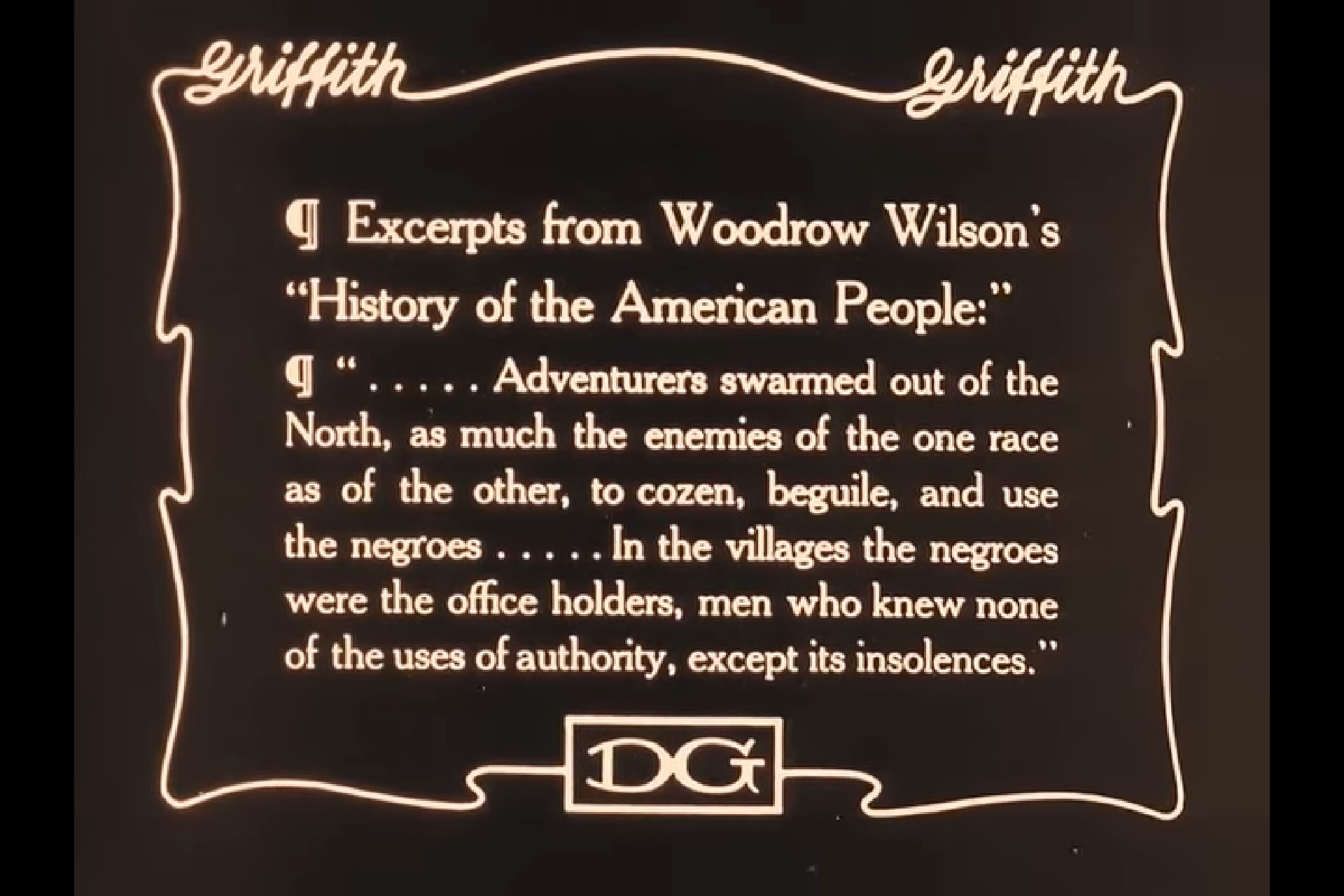
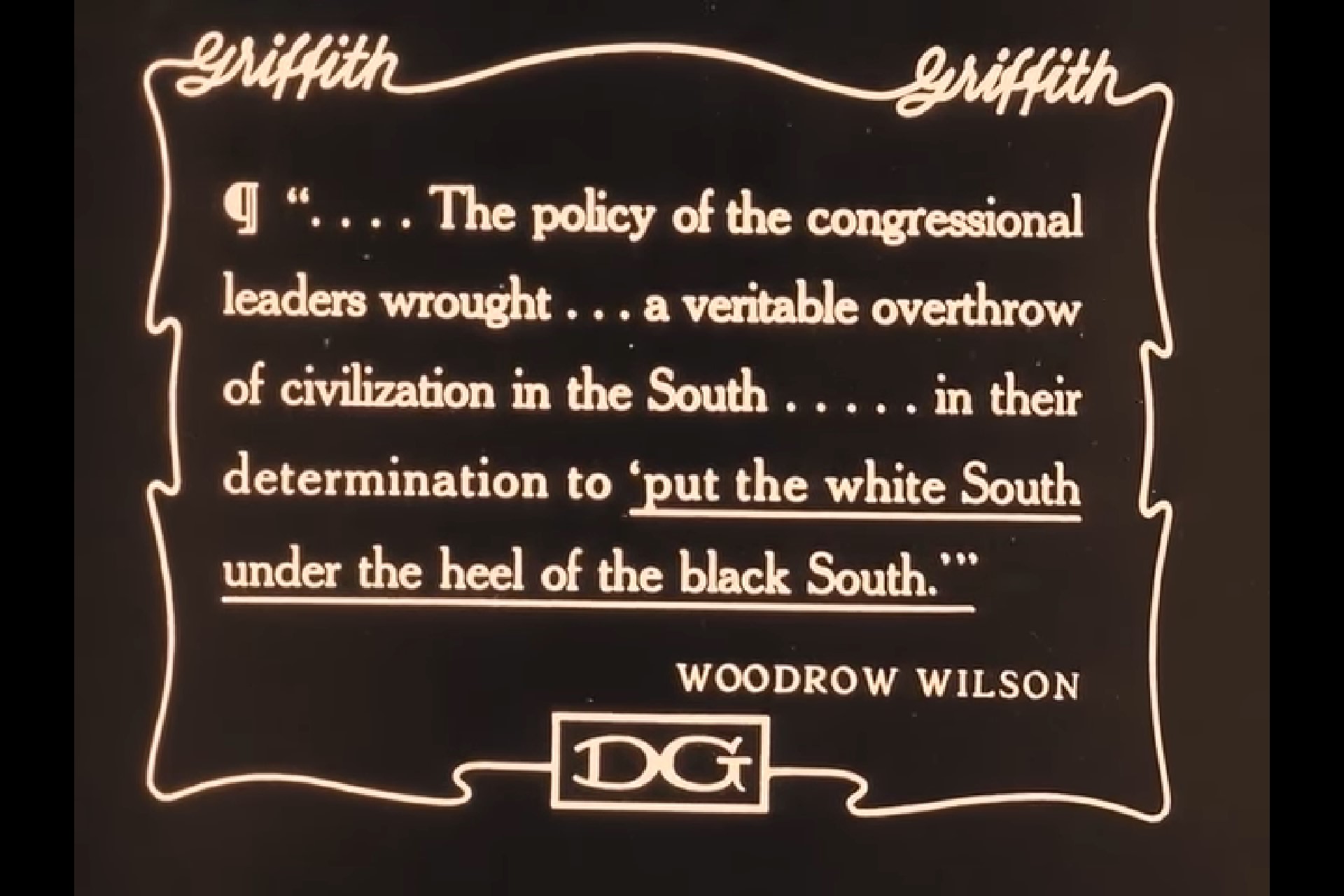
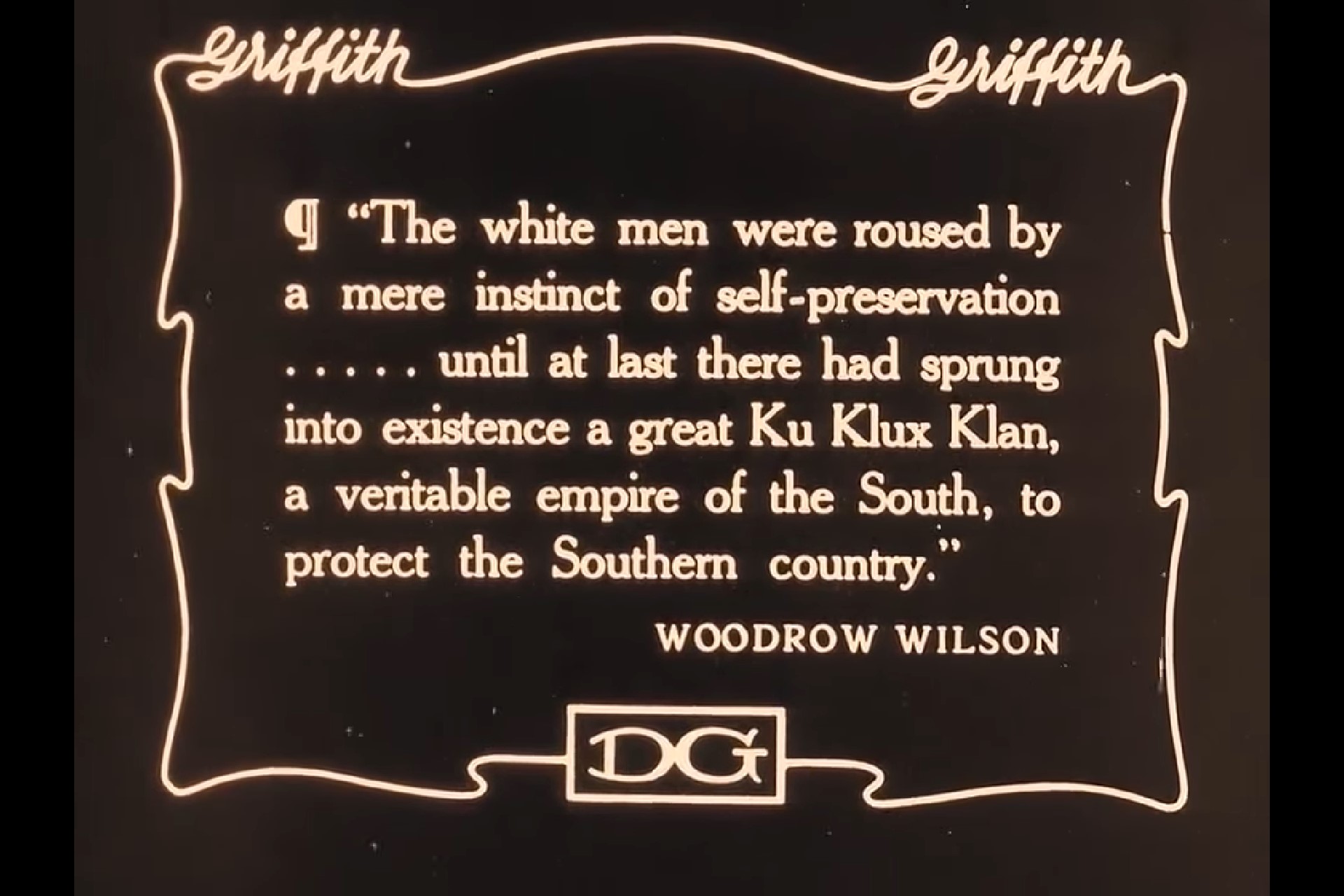
Here’s something that I find a little disturbing: these excerpts from a book by Woodrow Wilson, who had previously been the president of Princeton University and was, in fact, the sitting President of the United States at the time of this movie’s release.
I’m still not sure of exactly what I think about this quote in terms of its accuracy and its original context, but I do think that having it in this film—following very closely the scene of Lincoln’s assassination—gave the approval of the U.S. Presidency to racist messages embedded in a movie that pretty blatantly (and melodramatically) attributed all the troubles of Reconstruction to scheming bad guys in the North and newly-freed African-Americans in the South.
No wonder the Ku Klux Klan, which re-founded itself in 1915 after having largely died out decades earlier, grew so rapidly in the years following The Birth of a Nation‘s release that by the mid-1920s its members numbered around 85,000.
Just some random photos of light/shadow that caught my eye today.
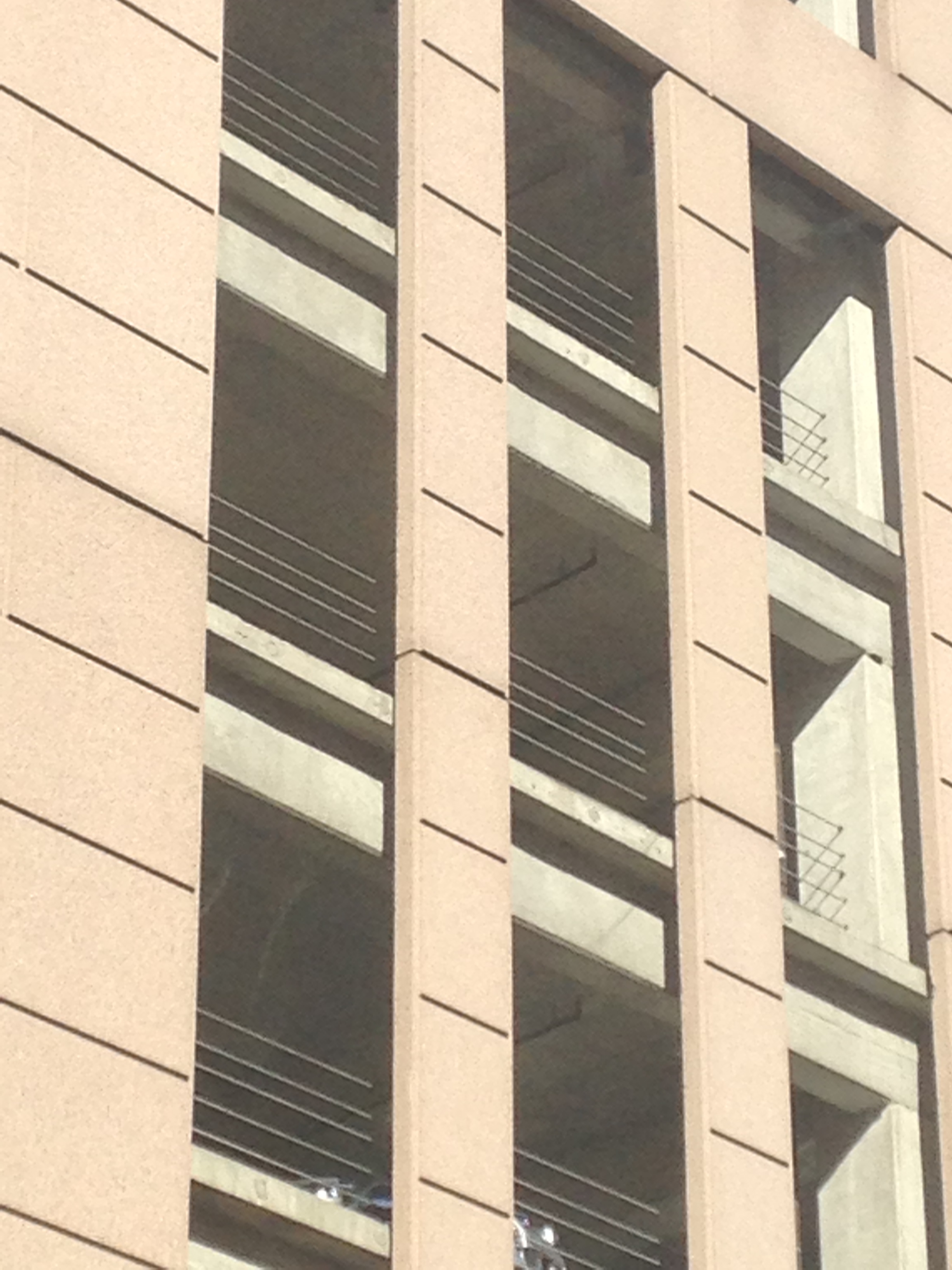
First this one, of a parking garage, that I saw on my way back from a mid-morning Starbucks run.
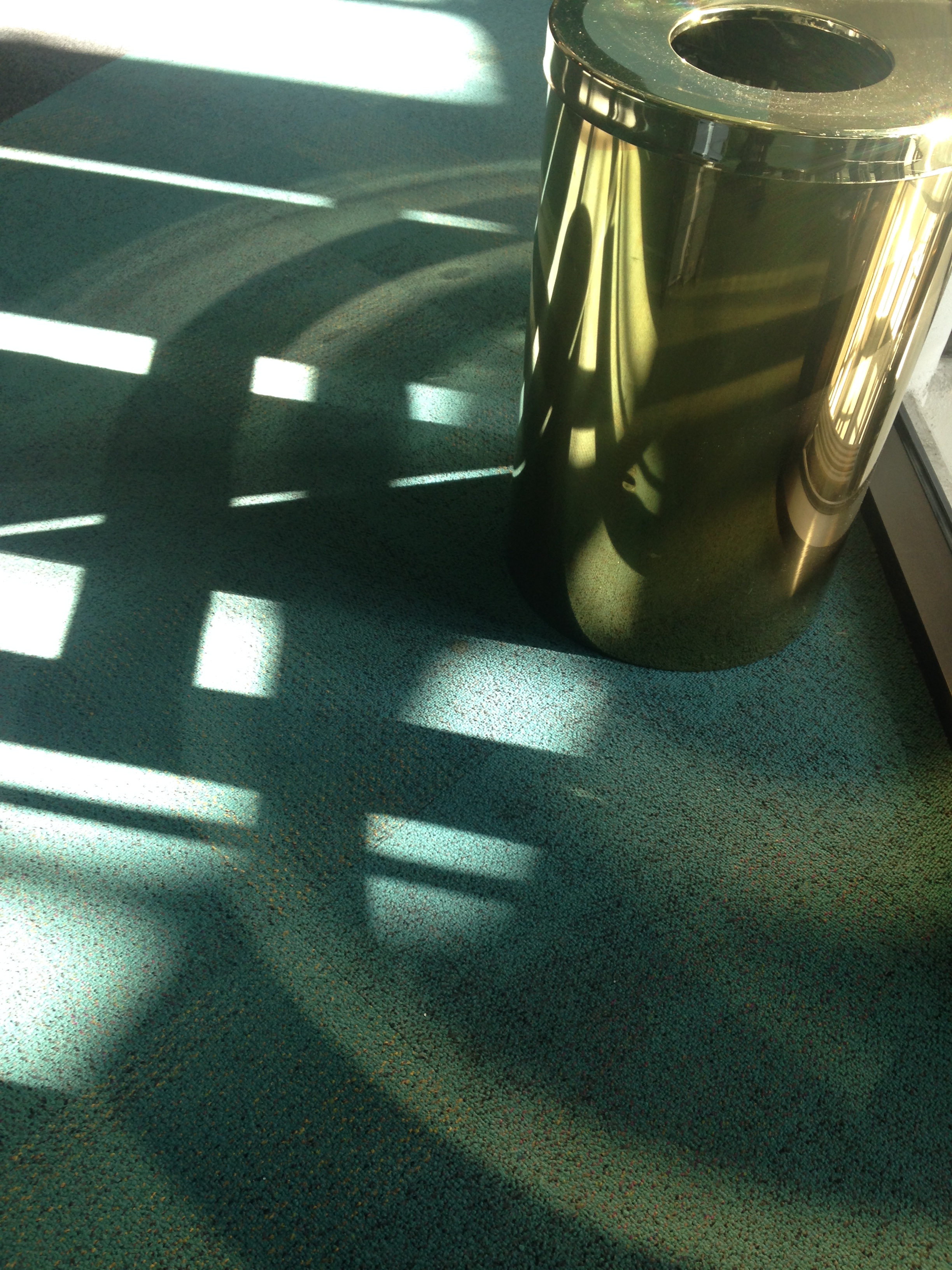
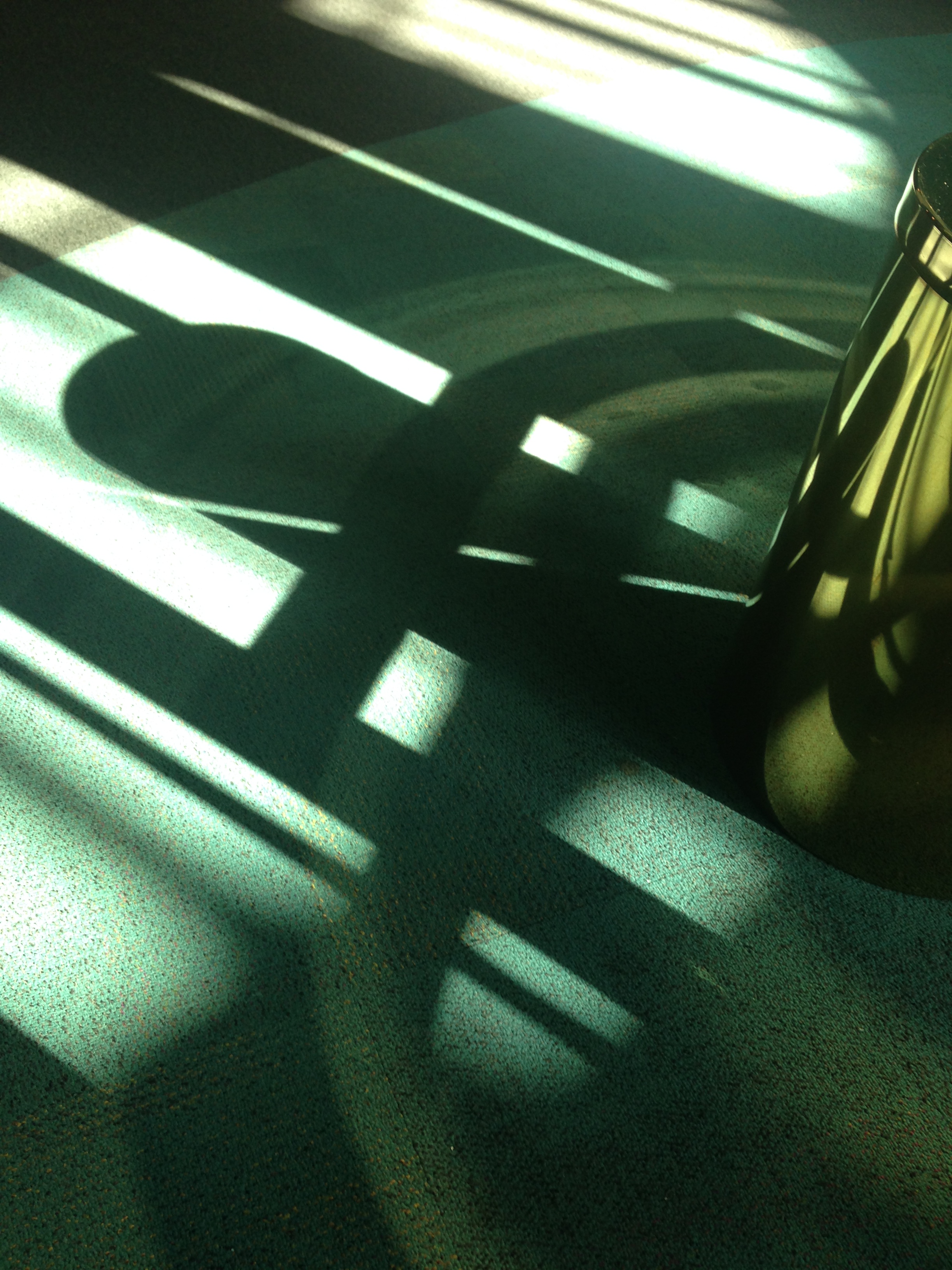
Then this one (actually two slightly different photos in quick succession, just in case 🙂 ) on my way out of the building for class late this afternoon, which is sort of a variation on one I took several weeks ago (same subject, different light). The light comes in through the atrium and glass elevator shaft, so I had about two seconds to grab the shot(s) before the elevator arrived and blocked the light.
And finally this one of criss-crossed stripes of light and shadow that I noticed on the way back to my office in MSOE’s Grohmann Museum from the other side of campus at the end of the day.
If you wanted to get philosophical, it’s interesting to think about how the concept of yin and yang intersects with the vernal equinox this week marking an end to winter’s darkness and the coming of summer’s light 🙂
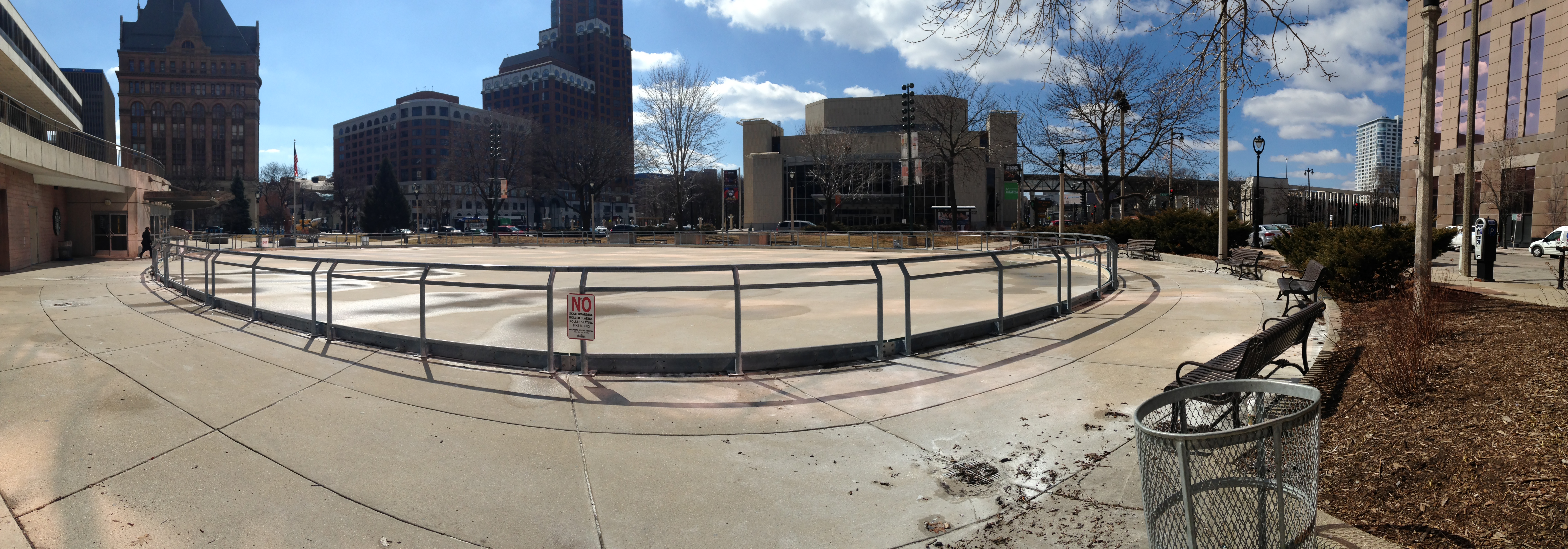
Workers hosed out the remaining ice yesterday, and today the rink at Milwaukee’s Red Arrow Park looks like its summer self. It still feels like winter, even if sunny and mid-March mild, but here is a hint of warmer days to come.
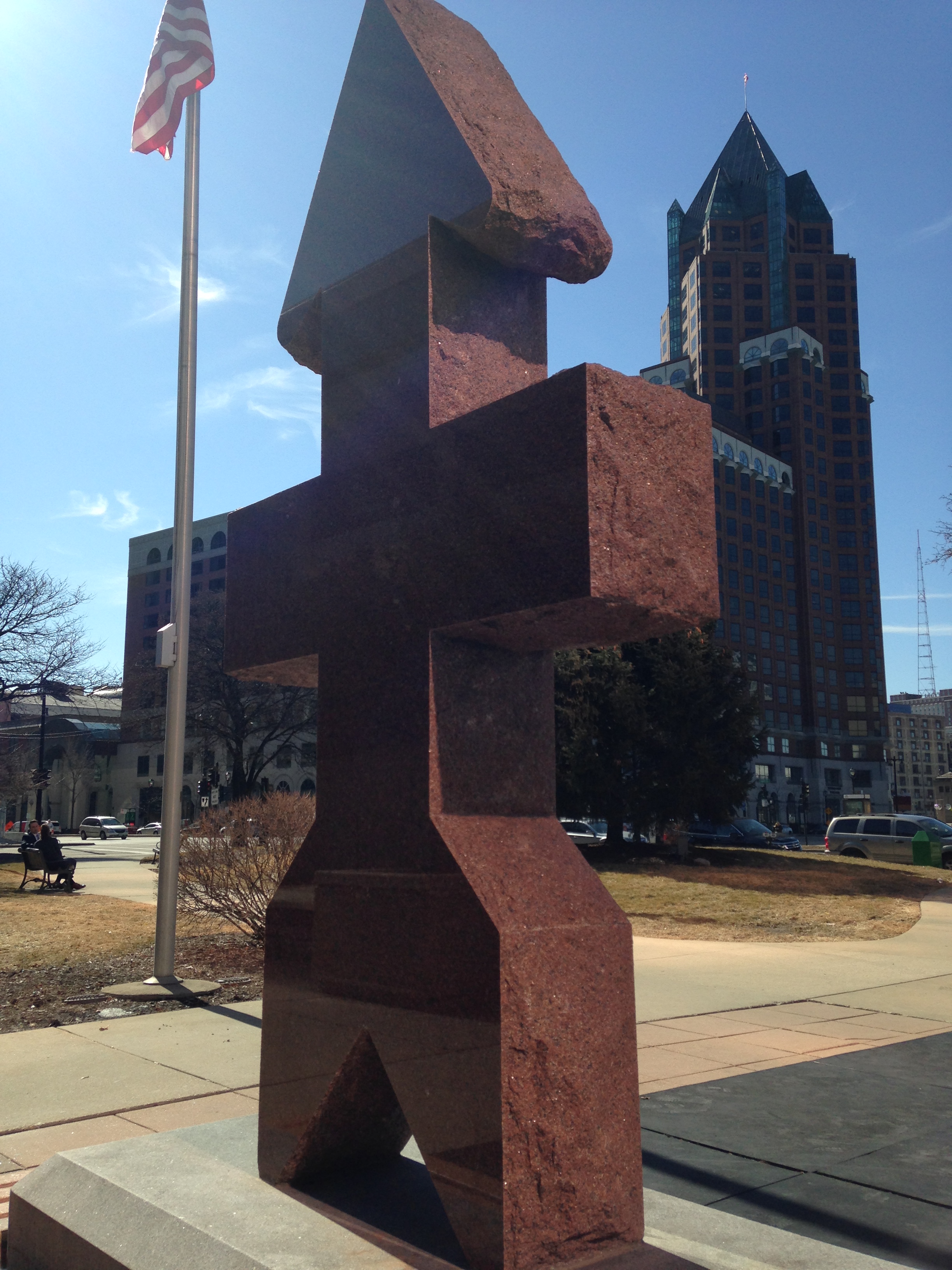
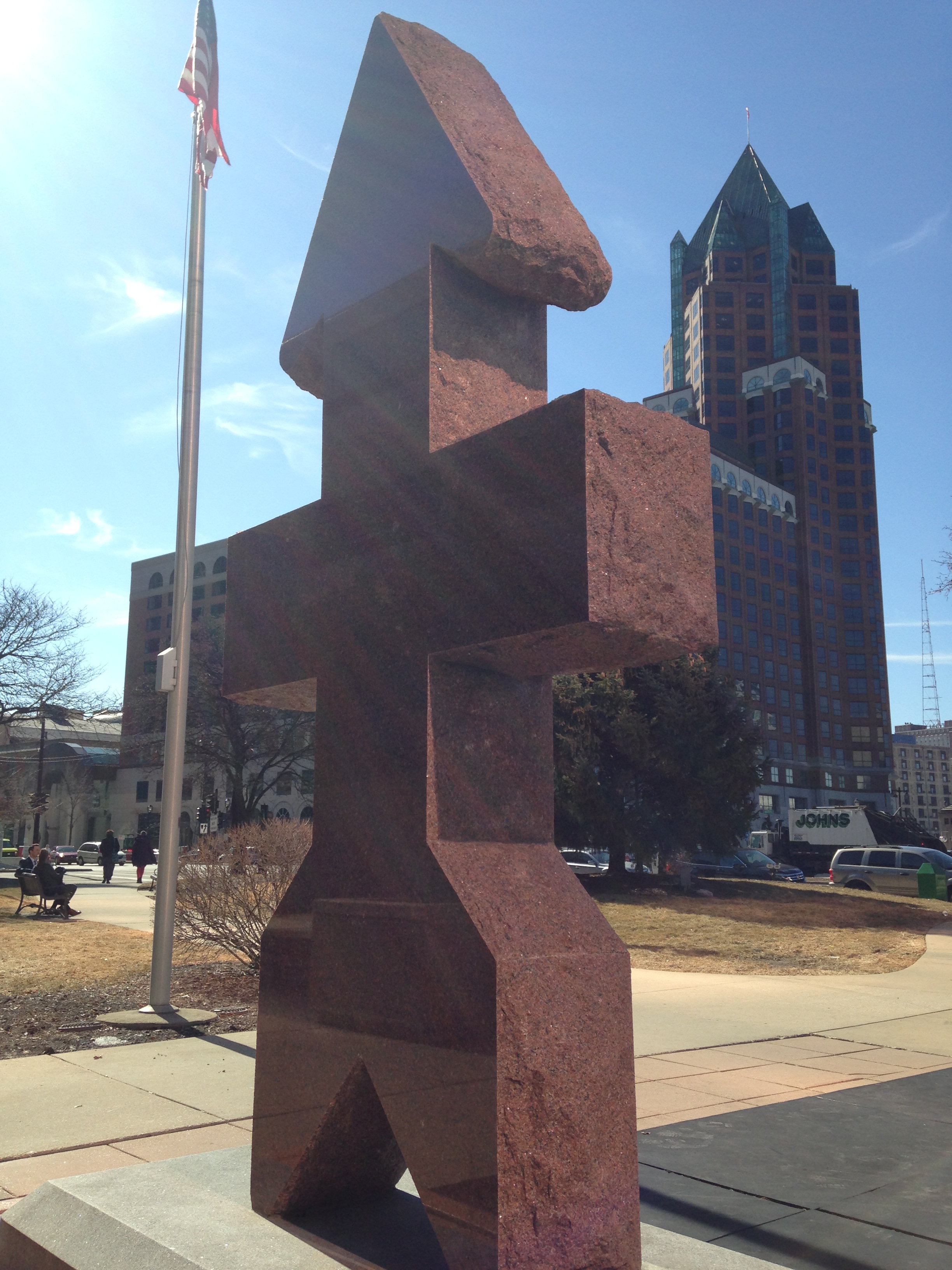
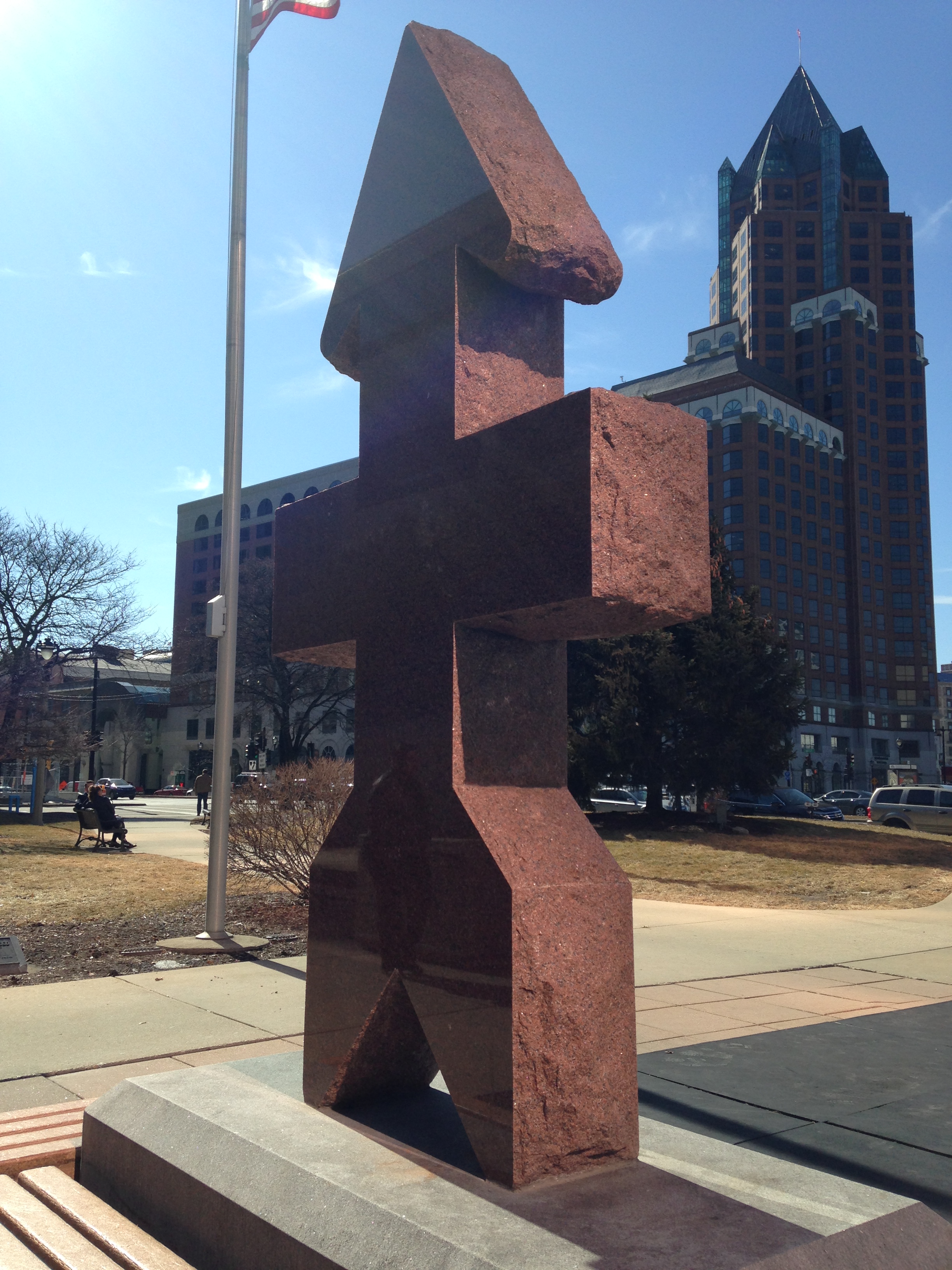
Days like this I wish I had a better camera. Or maybe I should say: I wish I had a better phone, because I actually do have a better(ish) camera at home that is never handy for spur-of-the-moment shots. Here I really liked the high contrast between shadow and brightness on the Red Arrow granite memorial. I tried to capture those dark and light surfaces today but didn’t quite succeed.
It was so sunny that I couldn’t even really see what my pictures looked like on my phone until I got inside and could view them out of the direct sunlight. Although disappointed that the image I’d been trying to create eluded me, I did like the rays of sunshine that showed up in my final attempt.
Also, check out the bystander’s reflection in the photo below.
To me that reflection suggests a murder-mystery scenario similar to Blow-Up, where a photographer takes a picture and accidentally records what may have been a murder. Have you seen that film? Or the John Travolta movie called Blow Out with the same general premise except that he’s a sound guy working on a low-budget film who accidentally captures audio evidence of an assassination? The trailers for both movies are below, along with the “blow up” scene from Blow-Up, because you’d never guess from the trailer’s scenes of swinging “mod” London that Blow-Up‘s title has anything to do with photo enlargement 🙂
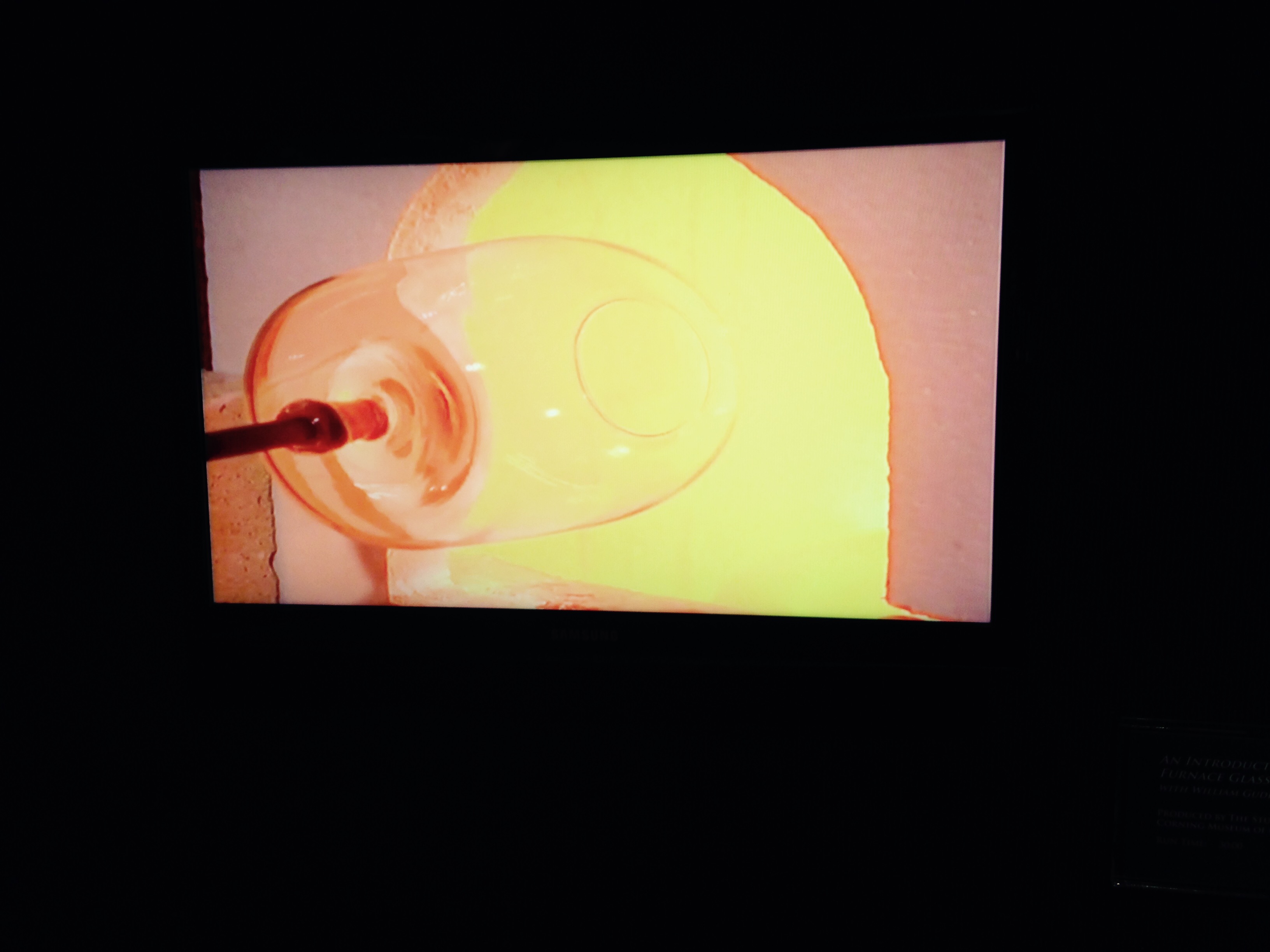
I was walking through the third floor of the Grohmann Museum today, when this section of a wall-mounted video display caught my eye.
My phone camera could not do justice to the video’s vibrant colors, but doesn’t it still remind you a little anyway of Mark Rothko’s Orange and Yellow? (which I was privileged to see in a Milwaukee Art Museum exhibit a couple of years ago; click here to read my post about the photo below 🙂 )
Fifty years ago today “Mr. Rogers’ Neighborhood,” the most caring children’s television show ever, made its debut. You’ve probably seen this before, but it’s worth watching again: Fred Rogers testifying before the Senate Subcommittee on Communications in 1969 in support of public television funding. As the self-described Senate “tough guy” gets “goosebumps” and is persuaded to approve the $20 million, you really do get a sense that LOVE is the answer. To everything. This hopeful glimpse of possibility is exactly what I need when the world and cable news and social media churn with anger.
More snow Friday and Sunday, but Milwaukee is getting lots of sunshine today.
So often bright sun in winter means bitter cold, but today it’s pretty warm outside. I didn’t even need my scarf or gloves walking between buildings, although I wore them anyway out of habit 🙂
Monday’s Google Doodle honored revolutionary Russian filmmaker Sergei Eisenstein. Here is a cool video I found that provides a little biographical info along with the actual Google Doodle.
Sergei Eisenstein was the first “modern” filmmaker. He basically invented modern film editing. Before Eisenstein, cinema was far more similar to theater than what we think of as “movies” today.
For example, check out this short (less than a minute; it just seems long because it’s so static) scene from The Birth of a Nation, which was the first feature-length film (D.W. Griffith, 1915, a film released to coincide with the 50th anniversary of the end of the Civil War and constituting the first movie “event,” playing in civic centers and auditoriums across the country to mark the occasion). Notice how the camera is completely stationary. In other scenes, too, the camera remains fixed as the actors enter and exit the set via those stairs in the back just like they would in a play. Not only does the camera not move, but you’ll note that there are no cuts whatsoever. We don’t see one person’s face as they speak and then cut away to a different person’s face as they speak. Just the fixed stare of the camera, even as the family moves en masse to console each other (over the battlefield death of the younger son) on the couch upstage and far left. (Or, from the viewer’s perspective, to the far right side of the frame and from foreground to middle ground.)
Eisenstein changed all that with his fast cuts and montages in Battleship Potemkin. The scene below is the cinematic equivalent of the invention of the light bulb or something. Or maybe a better comparison might be with the Beatles’ film A Hard Day’s Night, which pretty much created the music video format and the entire genre of “music film” (including documentaries, which the Beatles’ movie sort of is, in the same way that “Keeping up with the Kardashians” is a documentary television series by way of the reality-show sub-genre 🙂 ).
Aside: Phil Collins was an extra in A Hard Day’s Night. Cool to know, right? (By the way, sorry about any ads that may show up in the clips below. I brought them all in from YouTube, and sometimes I can’t get rid of them. GRRR . . .)
But back to Sergei Eisenstein and his contribution to cinematic history. The “Odessa Steps” / “Odessa Staircase” (depending on your translation) sequence is well known to all movie buffs and probably, actually, to anyone who’s ever taken a film studies course.
This movie scene is SO famous and groundbreaking! No wonder it’s so widely alluded to in other films.
For example, this scene from The Untouchables, with several elements of homage (pronounced oh MAHZH, by the way, because it’s a French term from cinema’s early days in that country): the baby carriage, the sailors caught in the crossfire, the outstretched hand with the silently voiced “my baby!” (a counterpart to the original’s “Mama!”).
That four-wheeled pram/buggy vintage baby carriage shows up again during the chase scene in The French Connection.
Additional (non-baby-carriage) allusions to the “Odessa Staircase” can be seen in these short clips from The Hunger Games and its sequel Catching Fire. From the relentlessly advancing line of Peacekeepers to the batons held at the same angle as the guns, even to the same direction of movement (left side of screen to the right), these shots clearly mirror the soldiers from the original Eisenstein sequence.
At a certain point allusions such as these will enter the “language” of film so ubiquitously that they become the way of conveying information and emotional nuance, and to the point where the established form sheds its association with the original source to become a “trope.”
Consider, for example, the “assembly line” trope. We begin with Charlie Chaplin in Modern Times (1936).
And follow up about fifteen years later with Lucille Ball in “I Love Lucy” (1952).
Until finally we arrive at “Drake & Josh” working the sushi line on the Nickelodeon channel (2006), in a scene that imports elements from both the Modern Times and the “I Love Lucy” versions. (Sorry for the subtitles and poor video quality; this was the best clip I could find on YouTube.)
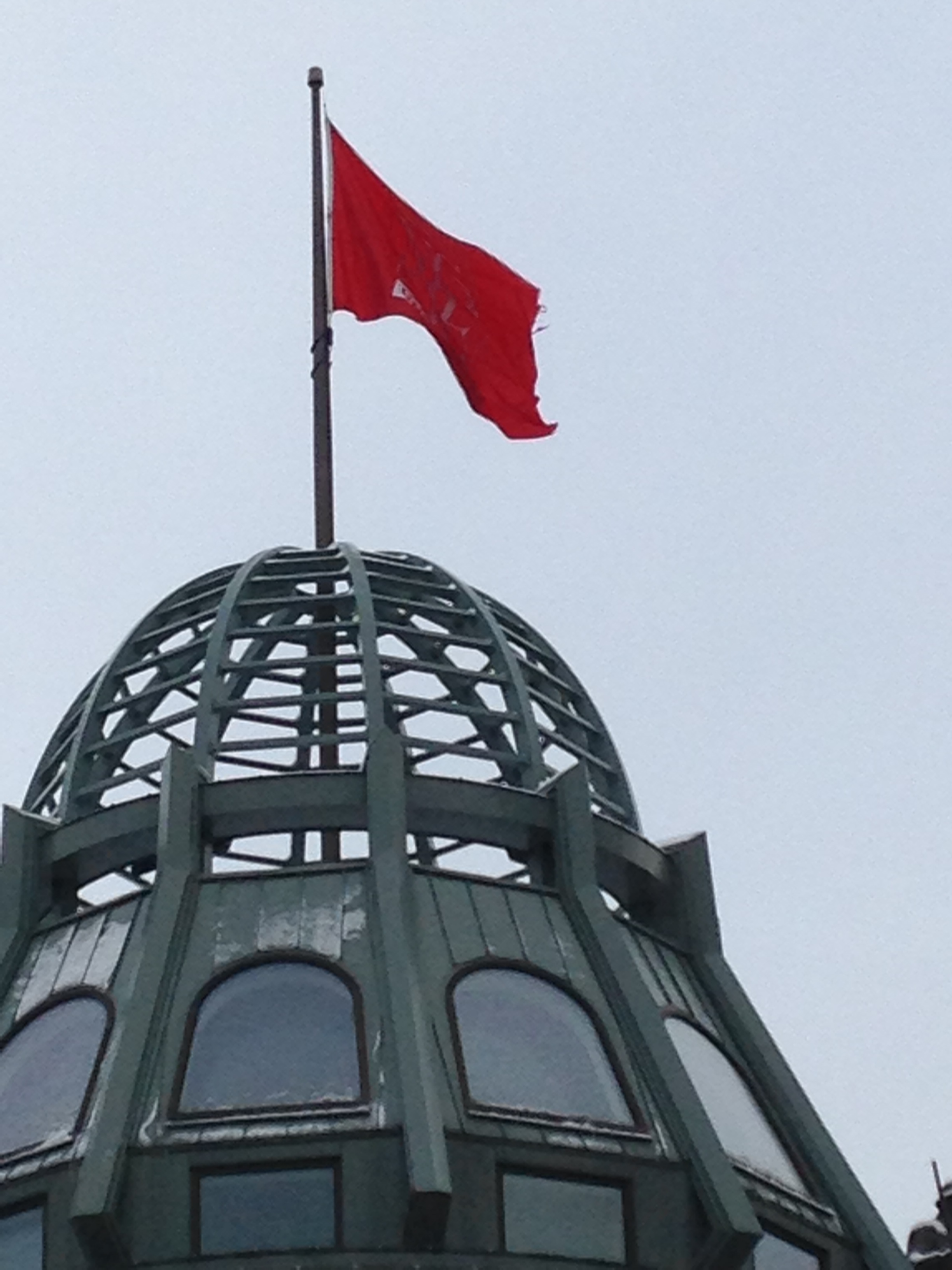
I noticed the Sergei Eisenstein Google Doodle on Monday but probably wouldn’t have posted on it except that while returning to my office from a Starbucks run this morning, I noticed the red MSOE flag flying atop the Grohmann Museum (where my office is located).
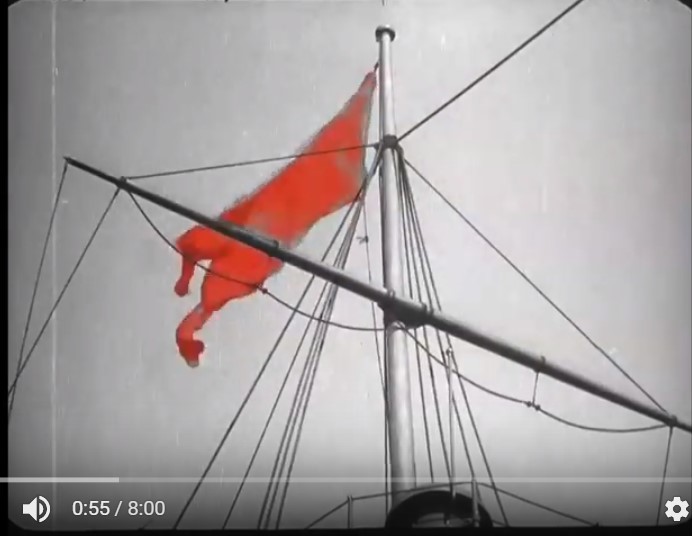
Doesn’t it remind you of the hand-tinted red flag in Eisenstein’s Battleship Potemkin just a little? 🙂
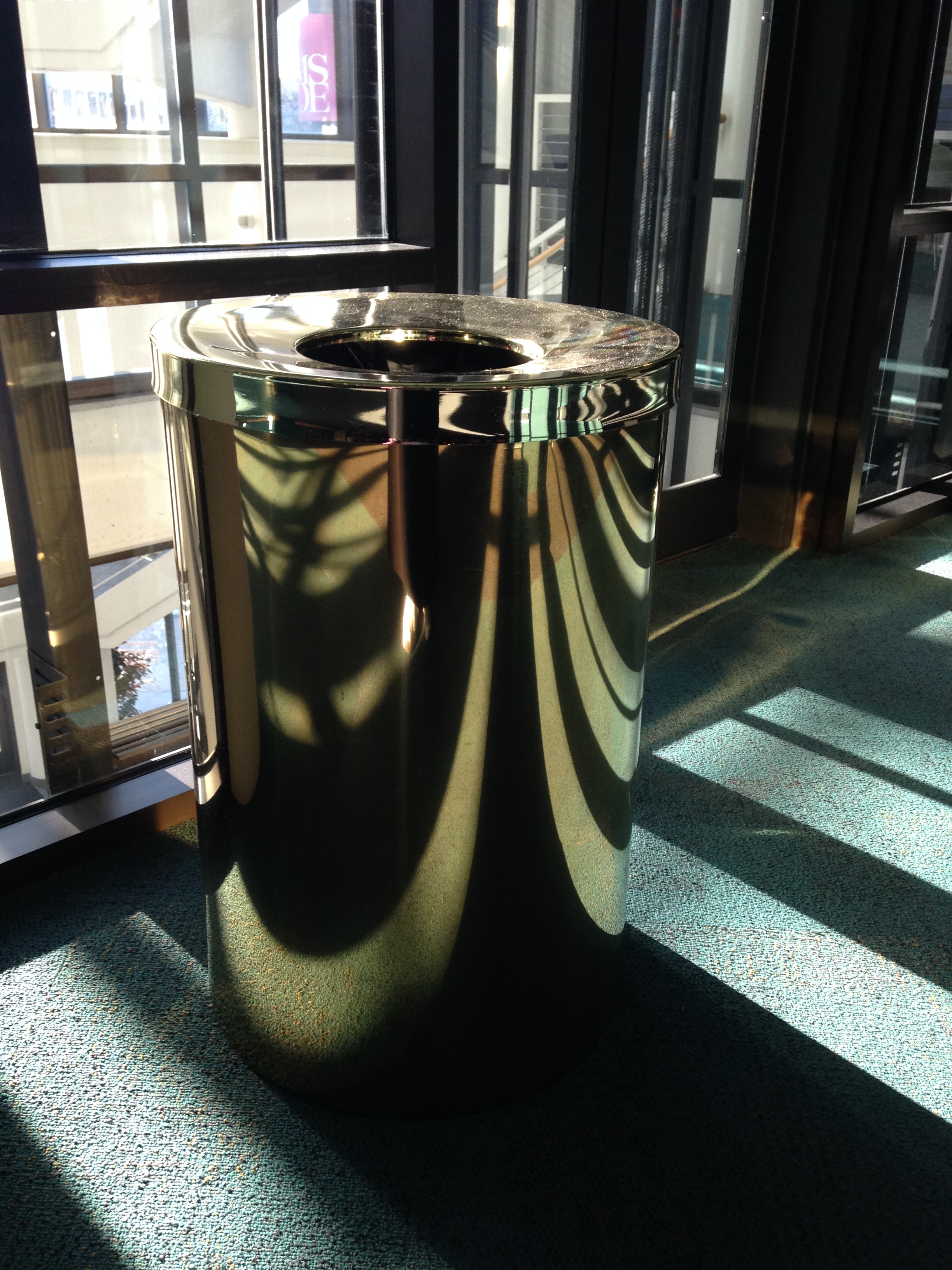
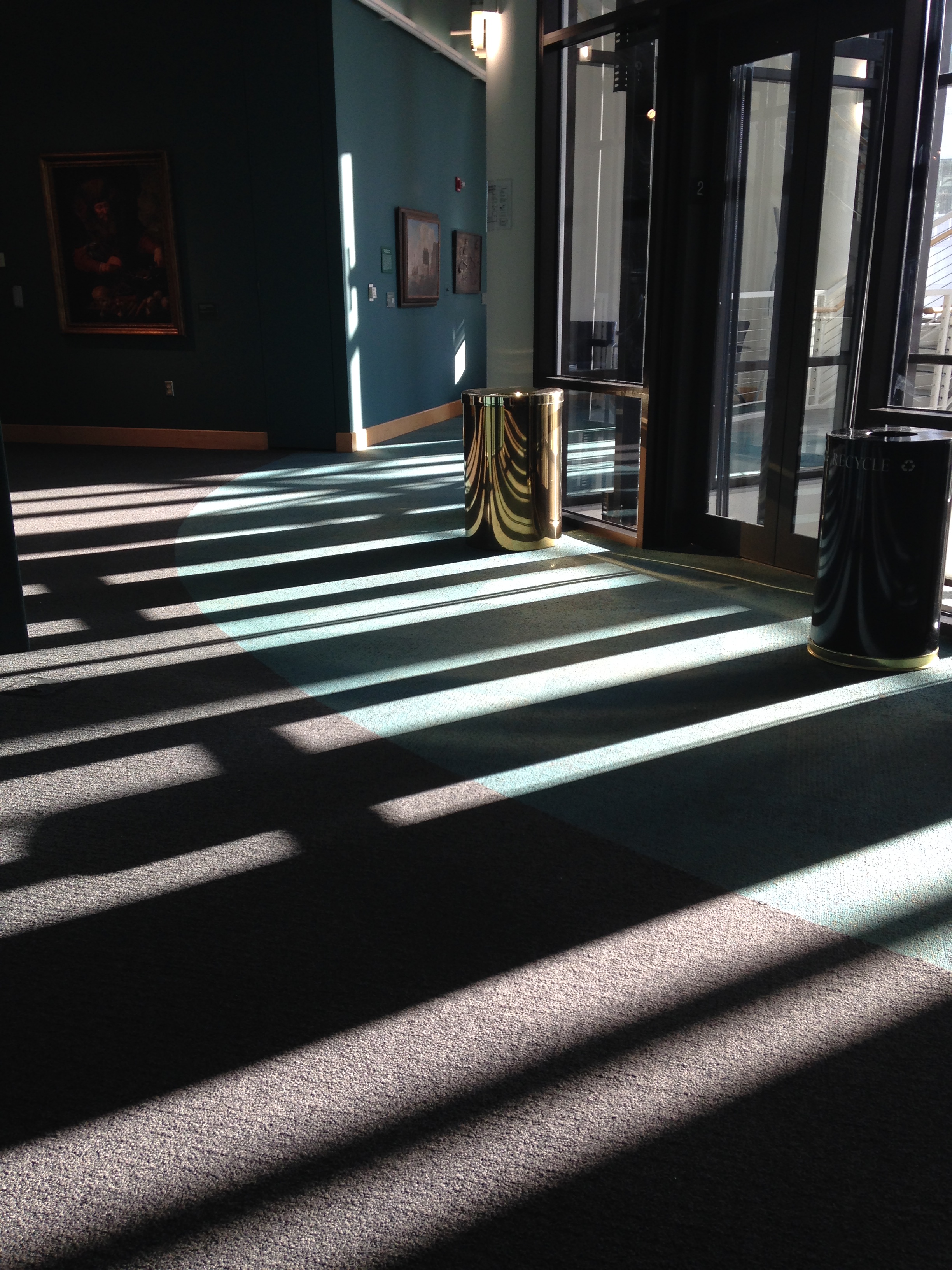
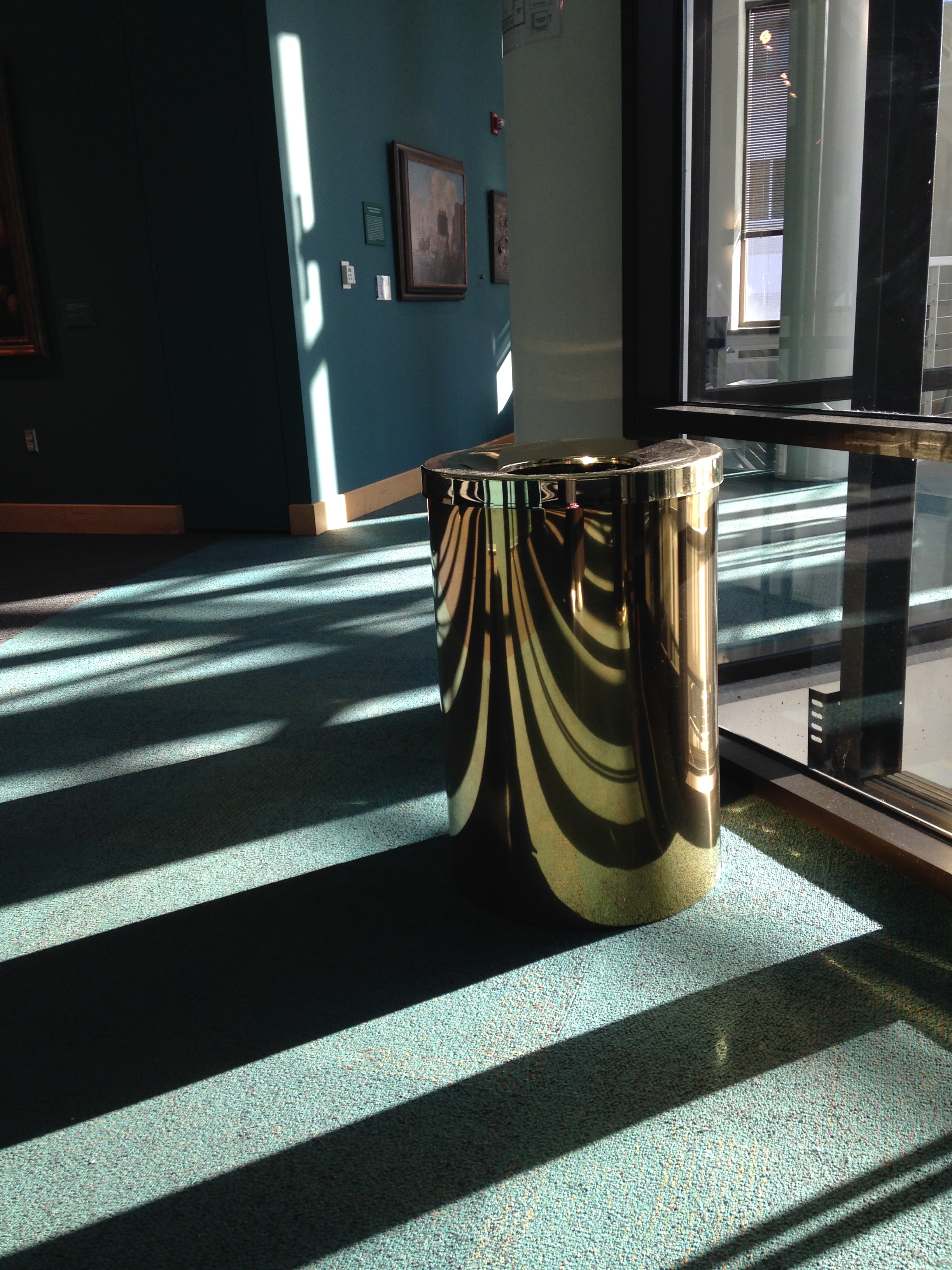
Like a zebra or tiger, this garbage can’s “disruptive coloration” stripes allow it to blend in with its environment . . . at least during the time of day that afternoon sun pours into the Grohmann Museum via its four-story atrium, casting shadows like long fingers stretching into the galleries.
I had to look up “protective coloration” to make sure it was the correct term, and it was, although “disruptive” is more accurate. Both are forms of camouflage, which itself is a word with an interesting etymology.
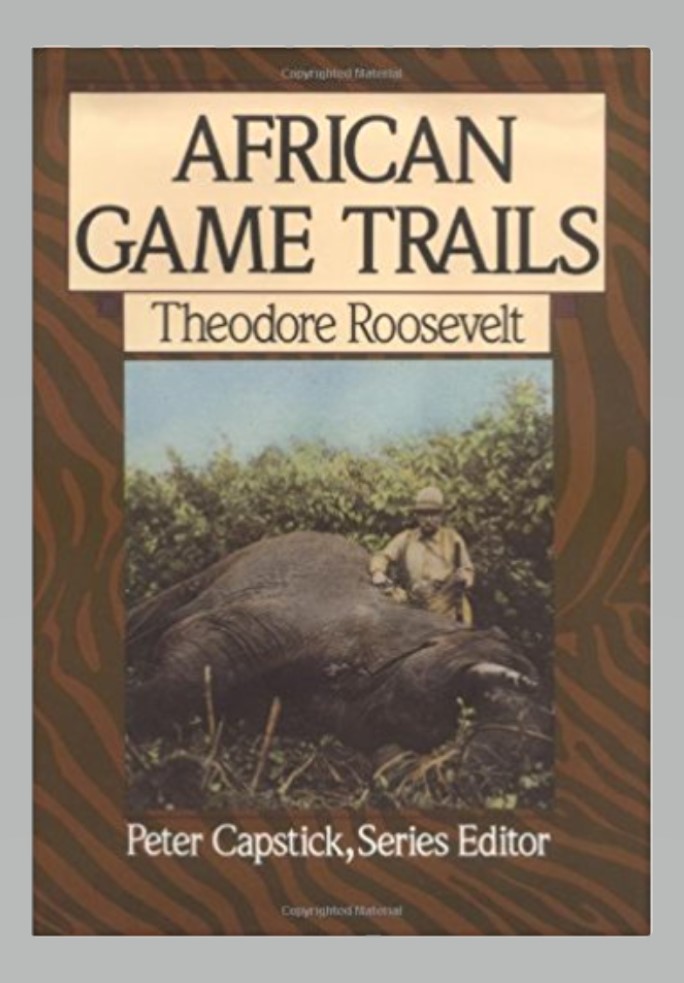
Did you catch the author’s name? Theodore Roosevelt? In March 1909, shortly after leaving the Presidency, Roosevelt made an extended visit to Africa to “collect specimens” (I’m not sure what kind, although as you can see from the book’s cover, he also shot at least one elephant) for the Smithsonian.
Very interesting! I’m putting this book on my “to read” list.
(I wonder what the world would have to say if a modern-day former President were to put out a book with a similar cover? 🙂 )