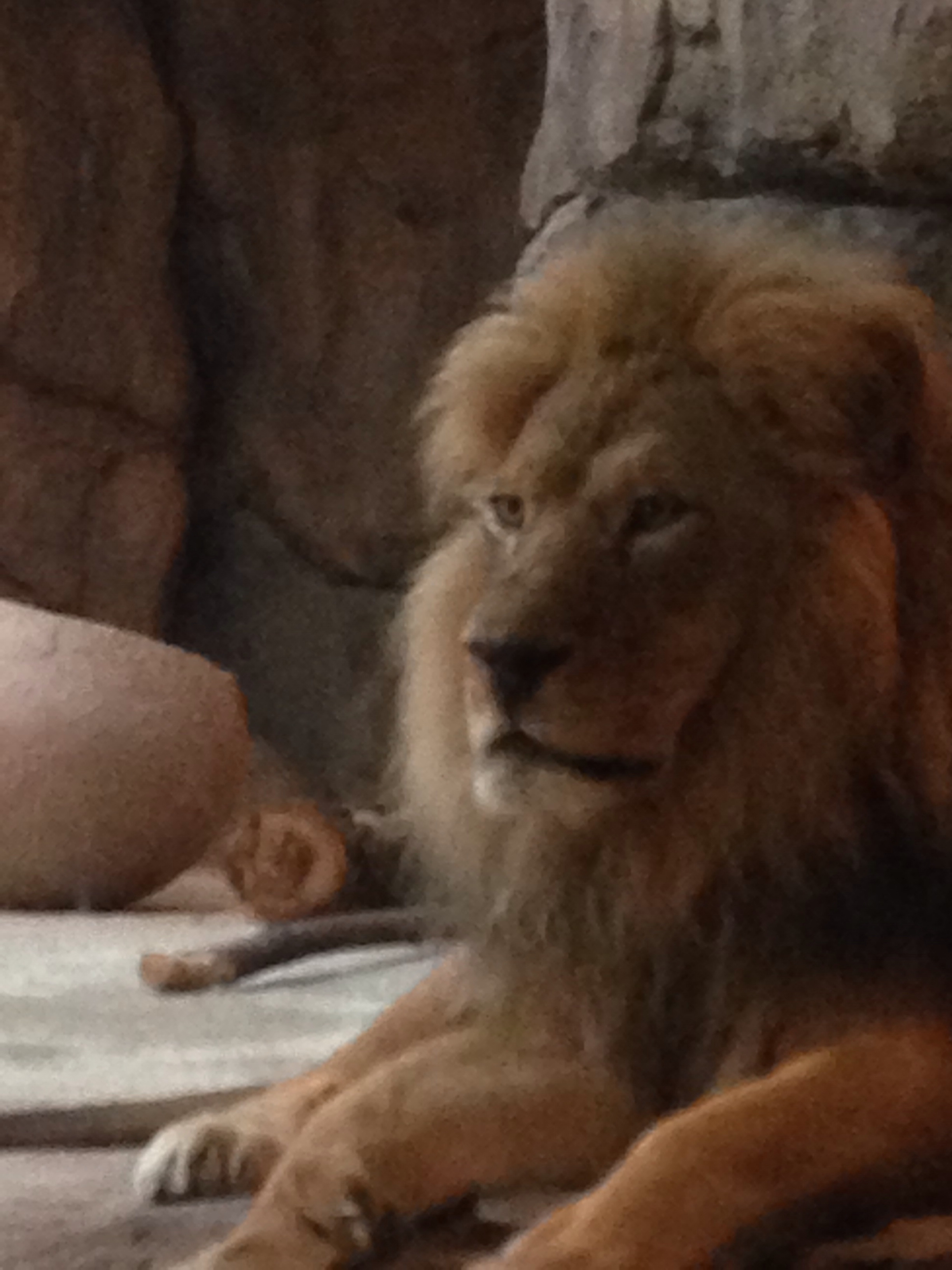
I shot these photos over the weekend in the big cat house at the Milwaukee County Zoo. Pretty amazing how close you can get to the animals in modern zoos! Maybe too close? Although the King of the Beasts was too aloof to acknowledge the presence of mere humans, I found the jaguar’s cool, assessing eye contact with me sort of thrilling and unnerving simultaneously. Just how thick is that glass?
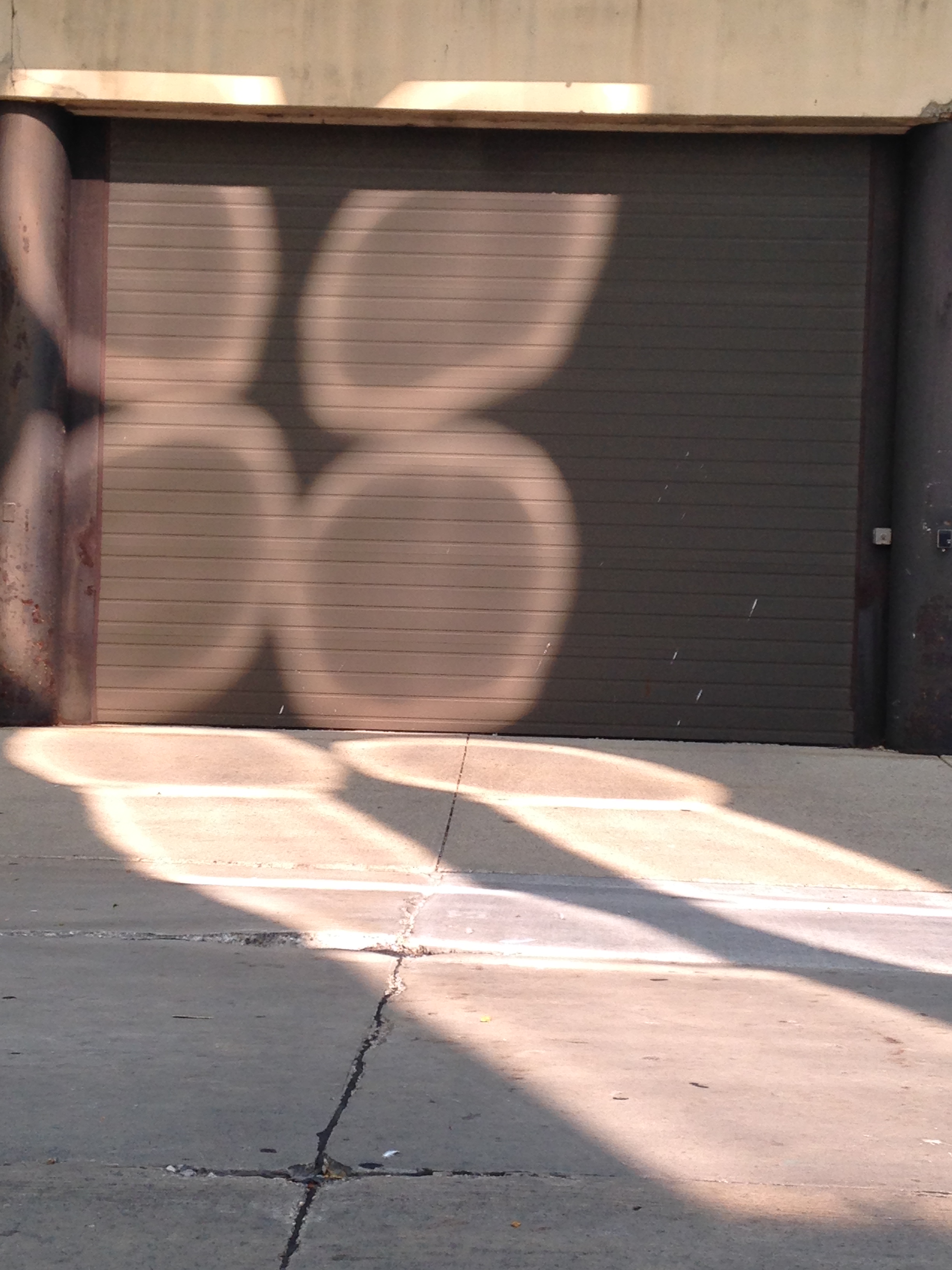
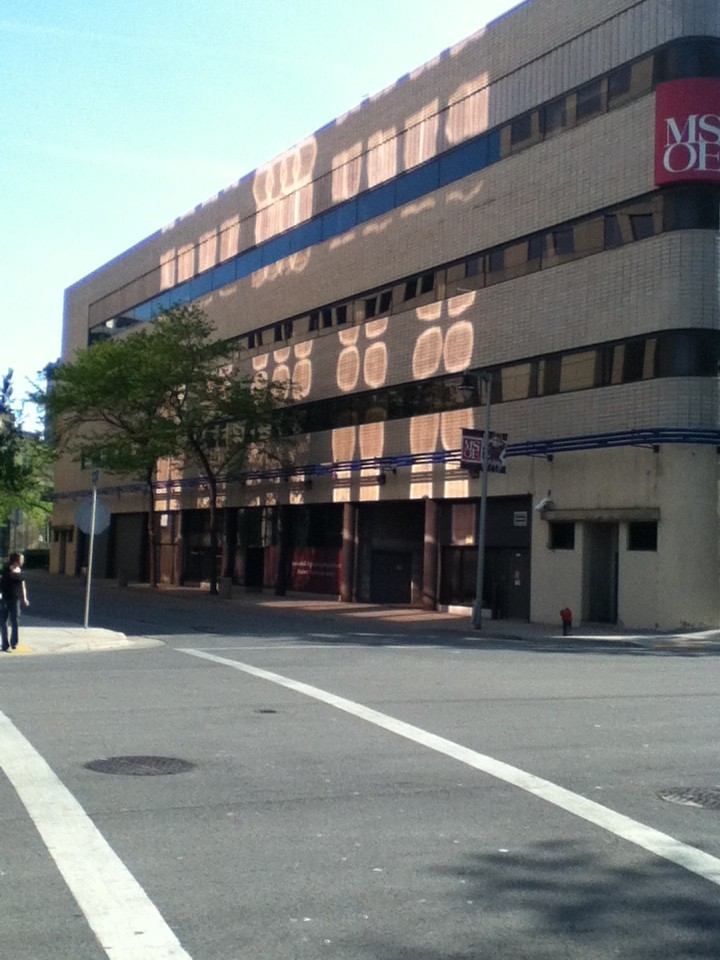
Sunlight reflecting off of an office building’s pinkish windows was the source of these awesome “shadows” cast down on the street and loading docks below.
One of my very first blog posts a few years ago was a similar photograph, which I titled “Light Shadows” (below). You don’t see these shimmering spots of light every day. The sky has to be clear, and the sun in the right position. Even then, they aren’t always as distinctly defined as they were on these two days. It’s fun to see when everything aligns to put on this show.
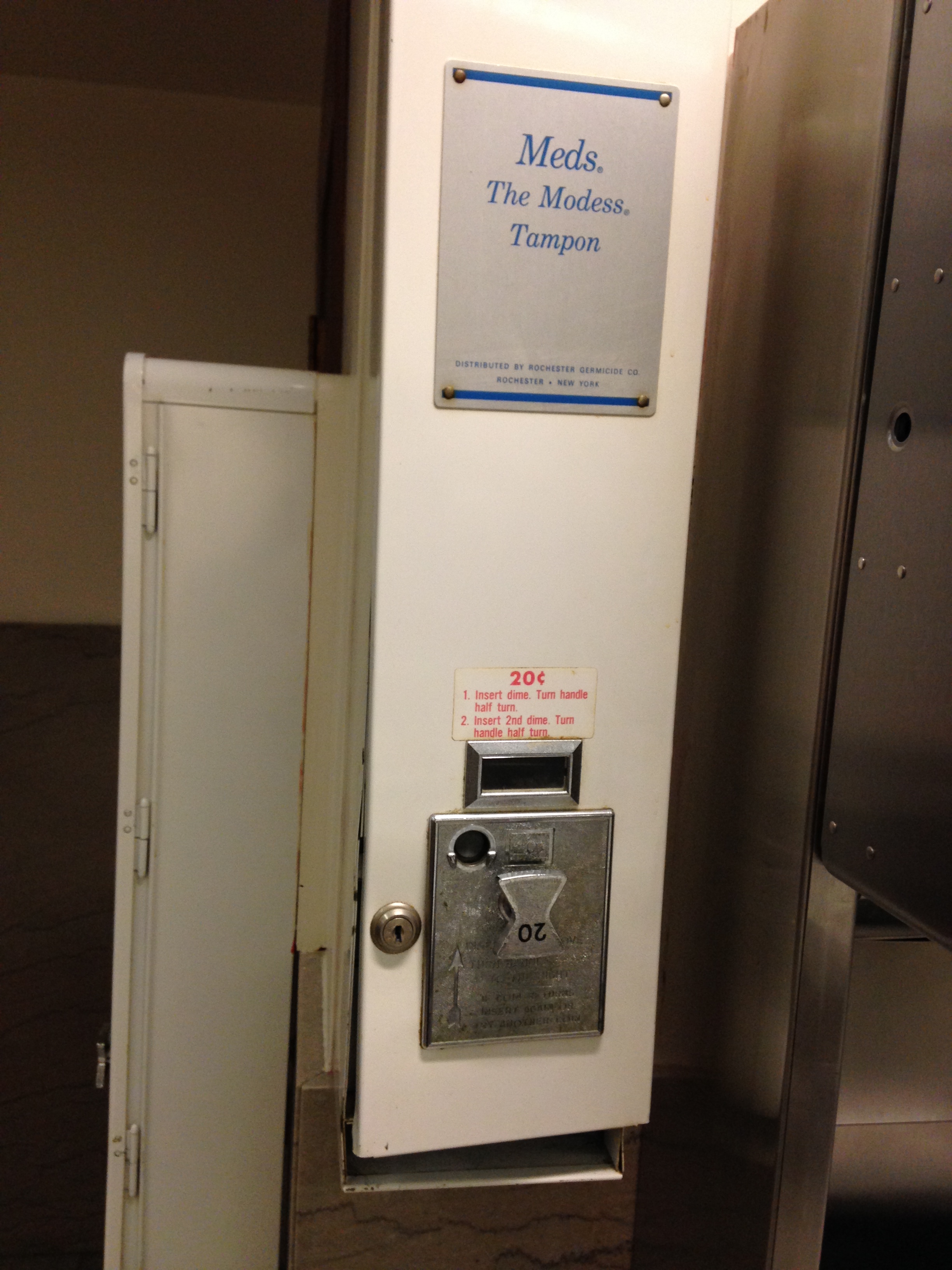
I had an appointment in an older downtown Milwaukee office building yesterday and stopped in the women’s room on my way out. While washing my hands, I noticed this old machine for dispensing “feminine hygiene” products hanging on the wall.
Meds Tampons were a Modess product available from the 1930s till sometime in the 1970s, according to the Museum of Menstruation and Women’s Health, which apparently actually was a museum once but is now a website maintained by the man who single-handedly ran the museum until it became too much work in addition to his job—and, more to the point, why shouldn’t there be a museum about such a significant topic?
Anyway, it’s odd to realize that this machine was presumably installed a minimum of 40 years ago. And here it is, still.
Kind of off topic here, but related in both its possible inappropriateness (i.e., connection to sexuality) and its connection to the idea of “history.” When I was in college I watched Last Tango in Paris in a film class. What has always stuck with me from that movie (no pun intended) was the moment at the very end, when Marlon Brando takes his chewing gum out of his mouth and presses it to the underside of the balcony railing outside the apartment window just before he dies after his mistress (girlfriend? anonymous sex partner? rape victim?) shoots him.
Of all the overwhelming images in that film, seriously, that was the only one that made a deep enough impression that I can still picture it vividly all these years later.
Why? Because to me that piece of gum is a witness. A testimony to the fact that—like “Kilroy“—Paul (Brando’s character) was here. That gum is the one thing to save him from the nothingness he seemed to crave before. It’s the only thing to ensure that his existence won’t be entirely erased. Remaining behind in the world is this chewing gum that was once in his mouth, taken with his fingers and placed intentionally beneath the railing by him in those final seconds of life.
Sticking that gum under the railing is kind of disgusting and could be viewed as a final act of aggression/rape in Paul’s relationship with Jeanne. The tango was such a good metaphor for what was going on with those two. It’s such a highly sexual dance form, but the two partners basically never acknowledge each other. That connection as a motif was probably made explicit in the film; it certainly seems obvious to me now, in retrospect, but I don’t know if I realized it then. Doubtful. I was a political science major and didn’t really develop a grasp of literary/artistic intellectual concepts like “metaphor” until well into my studies for the Ph.D. in English.
In any case, my 20-year-old self’s experience of that final image was visceral and intuitive. It was like Paul was redeeming himself as a human being. Where he was kind of dead before, numbed by his wife’s suicide, he has finally—in death—become aware of life’s value.
By leaving his chewing gum behind as an artifact of his time on earth, he has also left his “mark” on history. A declaration that he was here. That he was alive.
Very existential reflections/ramblings today, and all prompted by an old tampon dispenser hanging in an even older (marble walls!) women’s room 🙂
Sometimes the field of history is classified as a social science discipline, but I think it belongs firmly in the humanities. After all, the whole point of history is to hold up a mirror that makes us aware of ourselves as humans. Who are we? Why are we here? What is the purpose of life?
I’ve been meaning to follow up that post with another documenting the many, varied library boxes in my neighborhood. But the tiny book houses have been proliferating like mushrooms after weeks of heavy rain. Far too many to photograph all at once—and WAY too many to include in one blog post.
So instead I’ve decided just to post photos of individual Little Free Library boxes here and there. Maybe you’ve never seen these boxes before, or maybe you have but would like some additional inspiration before taking the plunge and installing one in your own front yard. Either way, I hope you’ll enjoy the photos 🙂
This Little Free Library echoes several key architectural features of the home that it stands in front of—the gables, the brick, the chimney, etc. The entire front lower section, including the bump out, serves as the door for the box. (You can see the hinge along the left side and the knob handle just to the right of the window.)
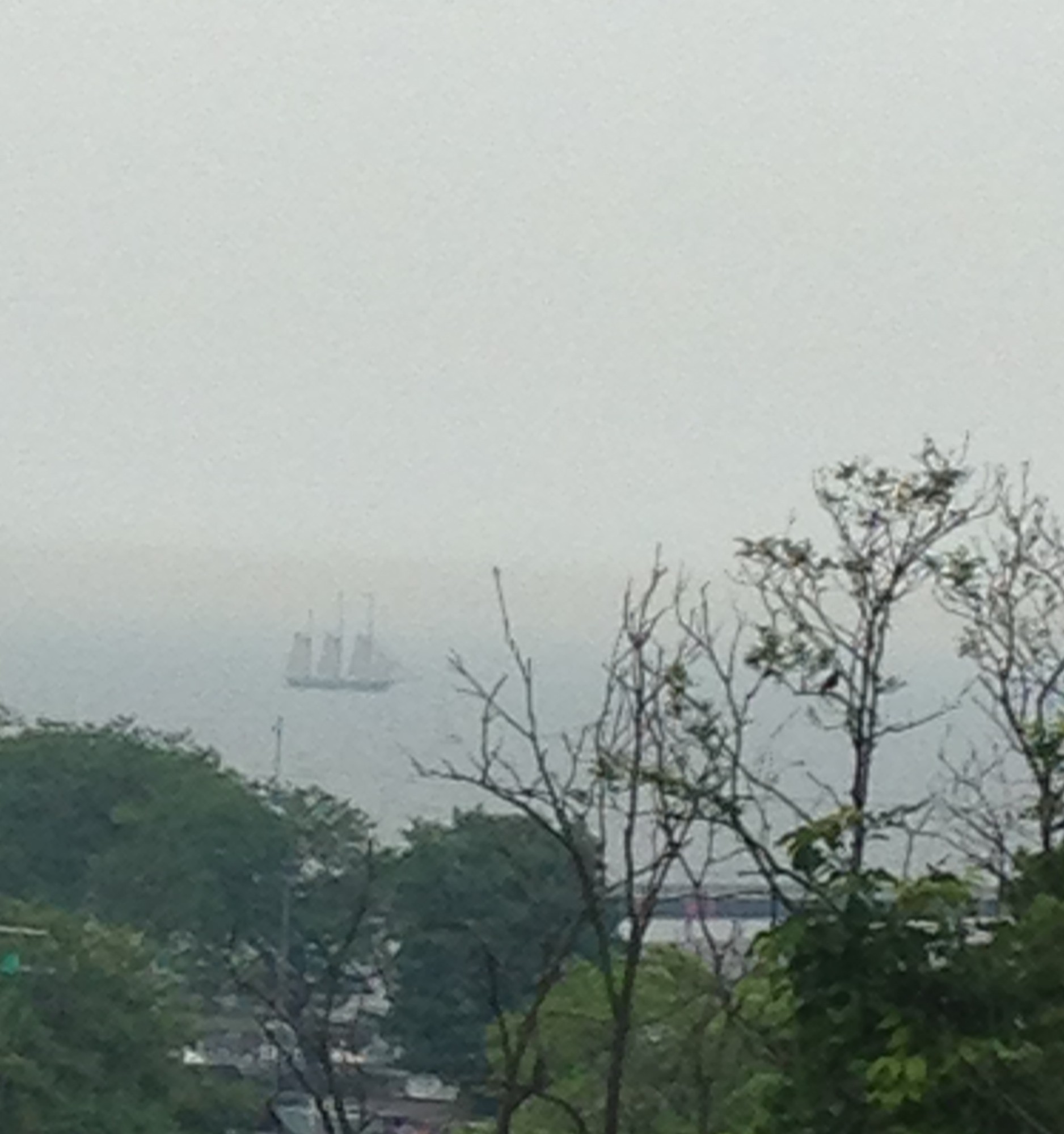
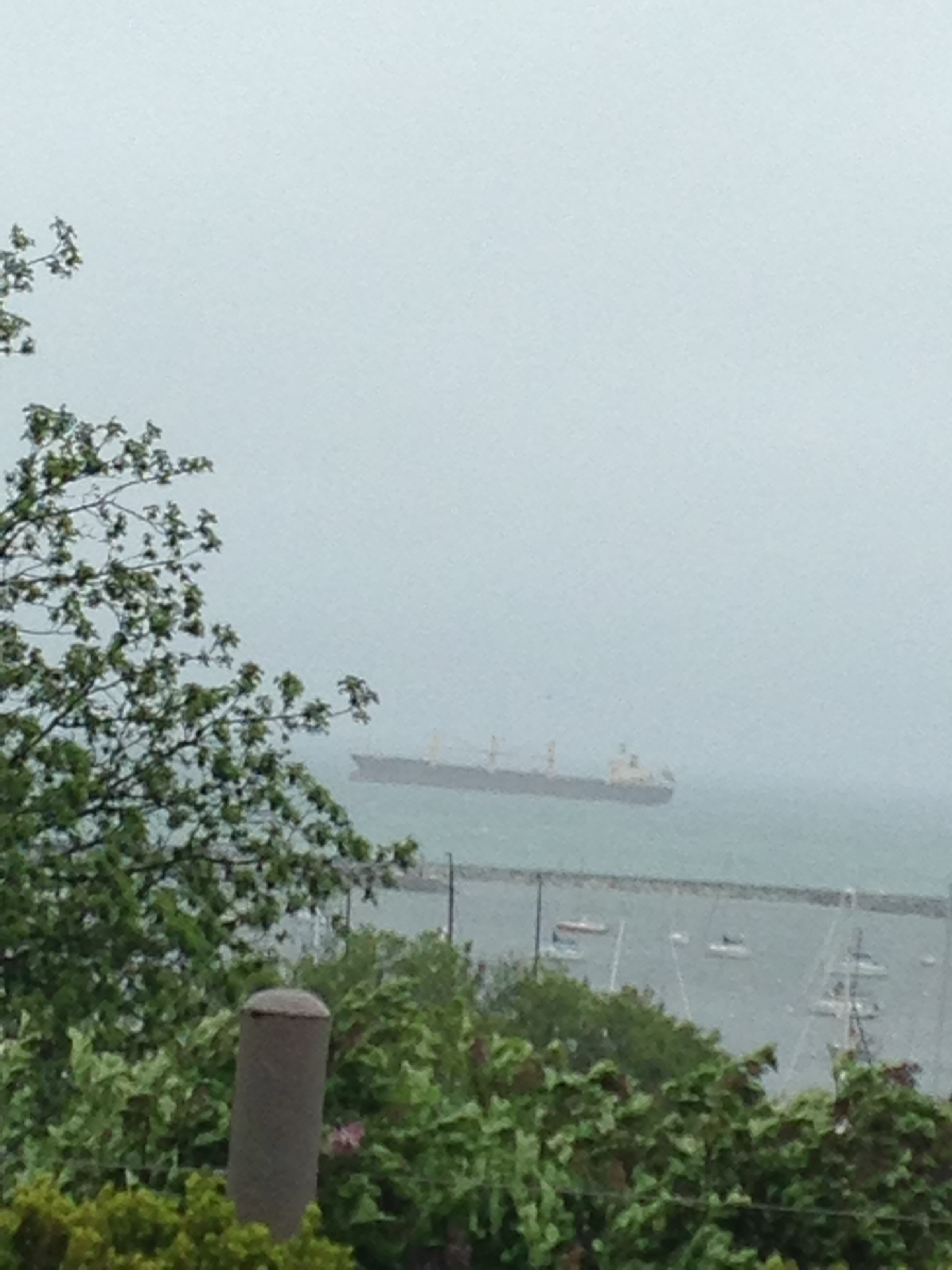
Whereas that photo (below) was snapped on a cool, blustery day (complete with a cargo ship that had been mysteriously anchored offshore all that week) . . .
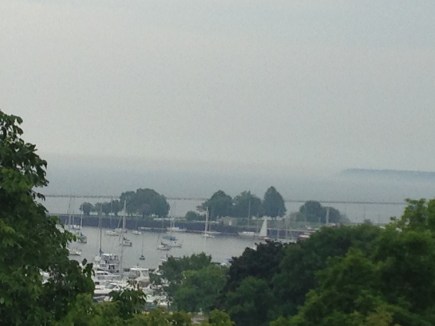
. . . today’s photo actually depicts a more typical summer day in Milwaukee. Temperatures were in the low 70s, the sky was overcast, and there was no breeze at all. You can see in the photo of McKinley Marina below how still everything was.
That’s the suburb of St. Francis out there in the distance, jutting into Lake Michigan .
The schooner in the first photo on this page is the Denis Sullivan (the S/V prefix stands for “Sailing Vessel”), a reproduction of a 19-century Lake Michigan ship that is docked— moored? berthed? I’m a little unclear on the finer points of difference in those terms’ definitions 🙂 —at Discovery World down on Milwaukee’s lakefront. You can sail on the Denis Sullivan for $45, with special deals for members and for families.
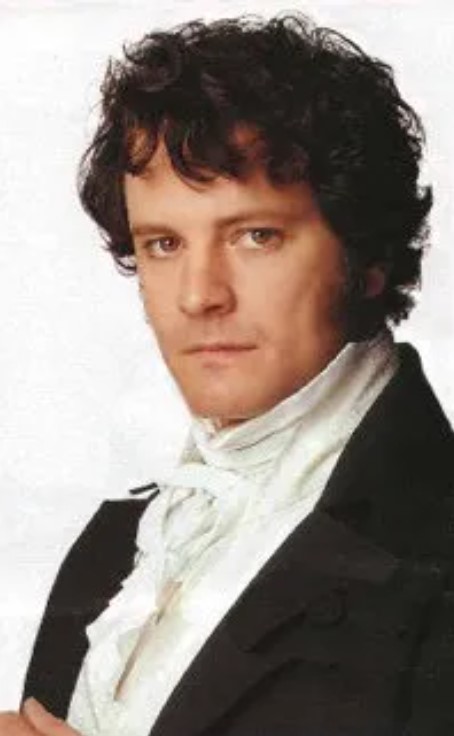
This is not Mr. Bennet. It’s Mr. Darcy, as portrayed by Colin Firth.
You’re welcome 😄
About 17 years ago I had to read Jane Austen’s Pride and Prejudice for a Great Books event I facilitated at Milwaukee School of Engineering. “There’s a movie,” one of my friends told me. Actually there were several, she corrected herself. “You need to get the one starring Colin Firth.” Every time I told anyone about my upcoming event they unfailingly asked whether I’d seen the movie and, upon learning I hadn’t, urged me to watch it—as long as it was “the one with Colin Firth.”
Colin Firth, Colin Firth, Colin Firth. Who the heck was Colin Firth? And why was everyone insisting I watch ONLY the film that had him in it?
As I put together my booklet of discussion questions and background info to give the evening’s participants, I came across the above photo, the first I’d ever seen of the actor. Light bulb moment; I finally got it.
If you’ve never seen the BBC production of Pride and Prejudice, you really ought to. Yeah, it’s the one with Colin Firth. And it really is the best (although I also really love ITV’s Lost in Austen, a very funny 3-hour, 4-episode series that takes everything you think you know about Pride and Prejudice and turns it on its head).
But back to Mr. Bennet and his “Gooseberry Fool.” In one of the BBC Pride and Prejudice DVD’s bonus features, Allison Steadman (who plays Mrs. Bennet) laughs about a scene at the dinner table in which the actors got to request which desserts they’d like to eat during the filming. She wisely chose fruit, which required her to eat only a few grapes at a time. Benjamin Whitrow (Mr. Bennet) foolishly (no pun originally intended😄) asked for his favorite dessert, a “fool” (pudding/custard) made with a gooseberry sauce and lots of whipped cream. Take after take he had to eat the rich dish, and by the time they finished shooting two days later, he said he could never eat it again.
Luckily for the rest of us, who didn’t have to gorge ourselves for the camera, Benjamin Whitrow’s gooseberry fool recipe is included in this bonus feature. Even luckier, I happen to have a gooseberry bush in my yard, so I can pick all the fruit I want to each summer without needing to rely on grocery stores—which rarely carry gooseberries anyway.
An aside: gooseberry bushes are extremely hardy, super easy to maintain, and incredibly bountiful. If you can find a bush, just dig a hole in your yard and stick it into the dirt. The berries grow on old wood, similar to raspberries, so in autumn cut the bush back to about half its summertime size. At least that is what has worked well for us; we have a relatively small amount of yard given over to the bush but LOTS of fruit. If you can’t find a bush but can get your hands on a single gooseberry, just dig a shallow hole and plant it. Or toss the gooseberry onto the ground in the general area where you’d like your bush to be. That’s about all there is to it. As I said, very low maintenance!
In southeastern Wisconsin our gooseberries are usually ready to pick by the end of June. They stay in pretty prime condition (tart-flavored and pale green with paler-shade stripes) throughout July. By August and September the fruit has reddened and sweetened. Although my daughters used to pick the berries and eat them straight from the bush in whatever state of ripeness, the early, tart-tasting ones remain our favorite. We leave the red ones for the birds, and by the time we’re ready to cut the bush back for the winter, all the gooseberries have been eaten.
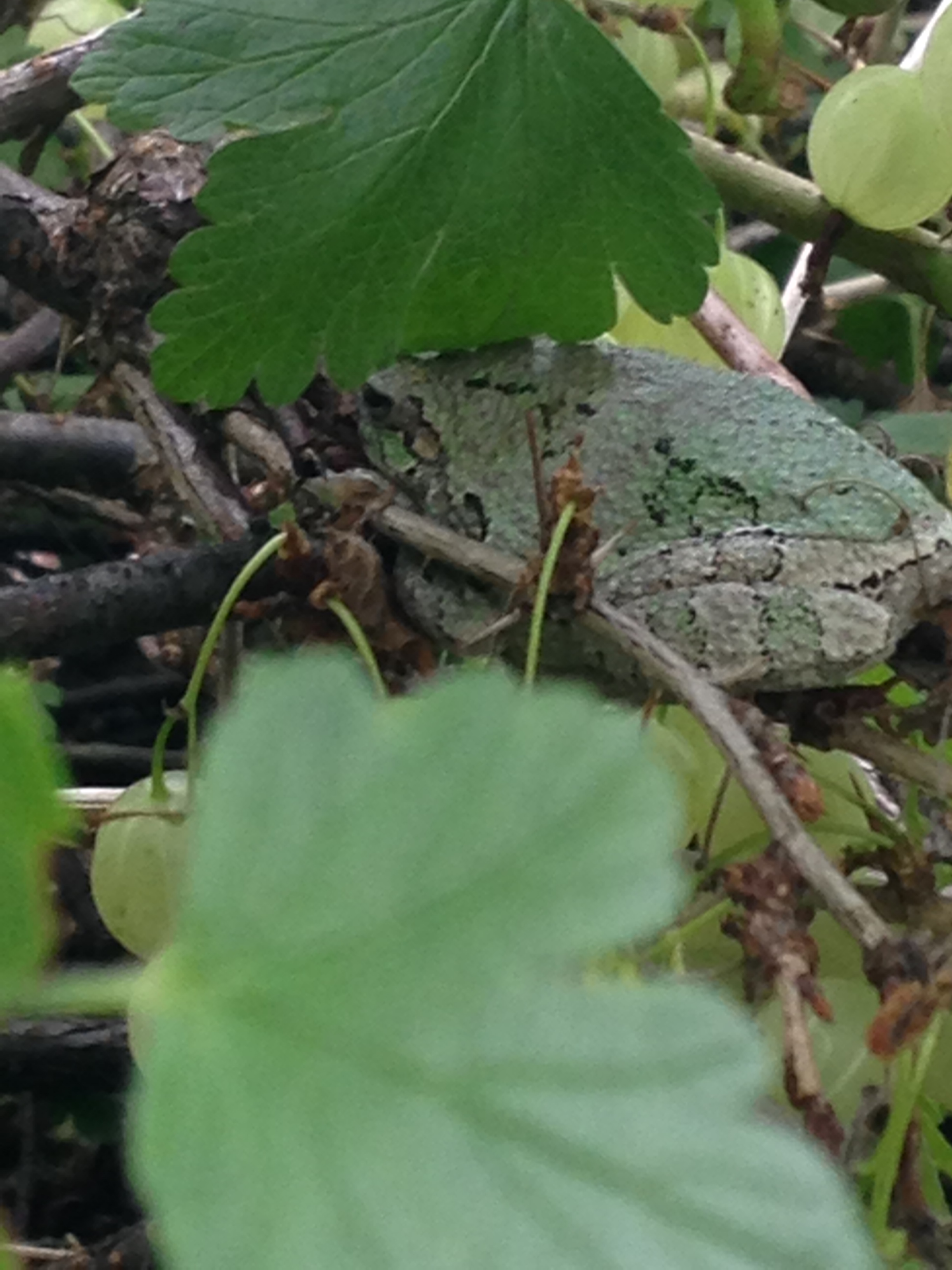
Again, back to Mr. Bennet’s gooseberry fool, which I plan to make later this week. Today I picked gooseberries from our bush, and no sooner had I started when I found this little frog (toad? I’ve never seen a green one though) sitting on a branch inside the bush, partially hidden under a leaf. He hung on despite the bouncing around that accompanied every tug of berries from the branches.
Being that the Colin Firth Pride and Prejudice is a BBC production, Mr. Bennet’s gooseberry fool recipe is written in metric units. I had to translate them into standard American measurements, which I include here in case you’d like to try making this dessert yourself (and you live in America, like me; to make the recipe with metric measures, you need 500 g gooseberries, 30 g butter, 30 g sugar, and 350 mL cream.)
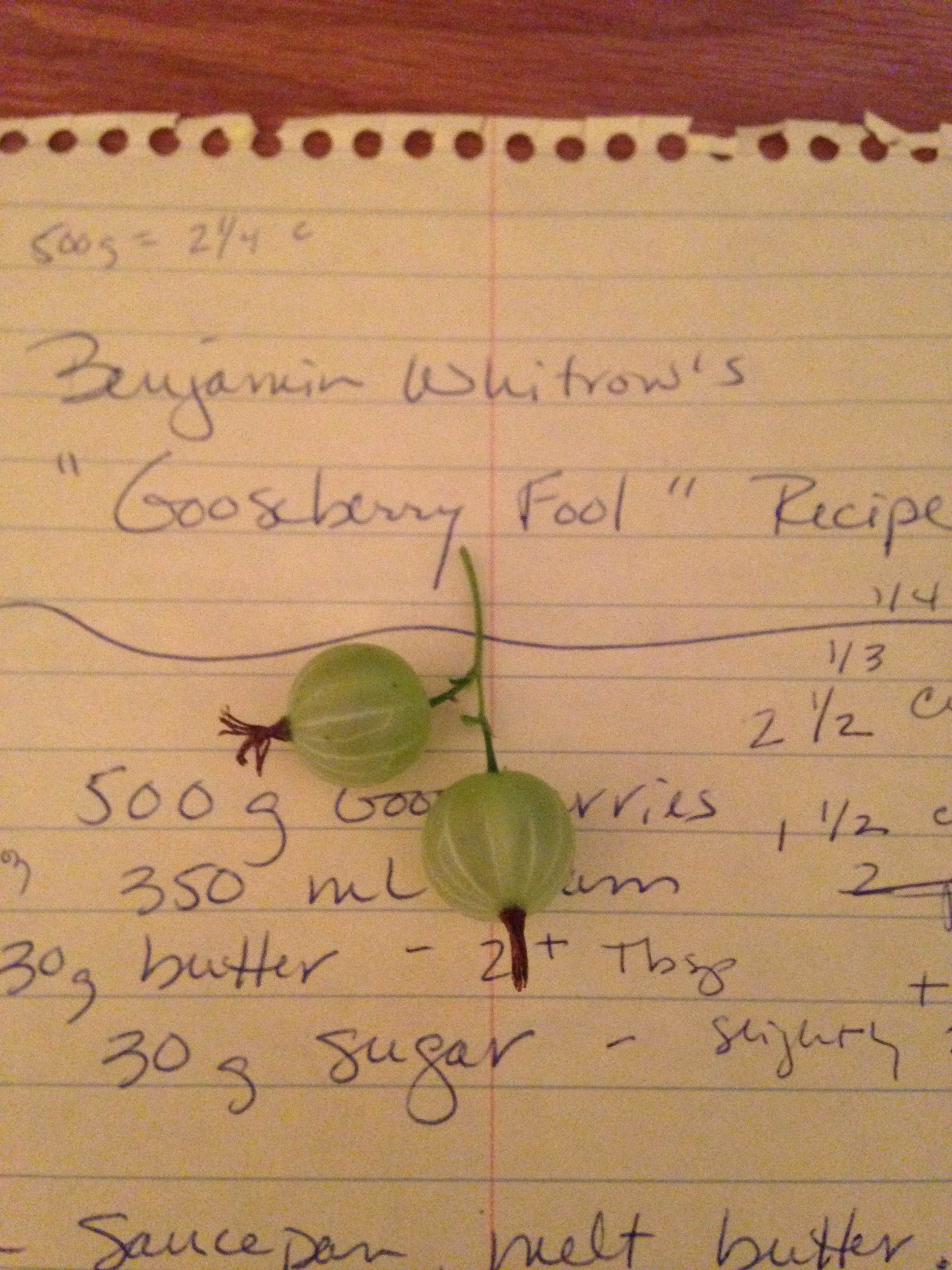
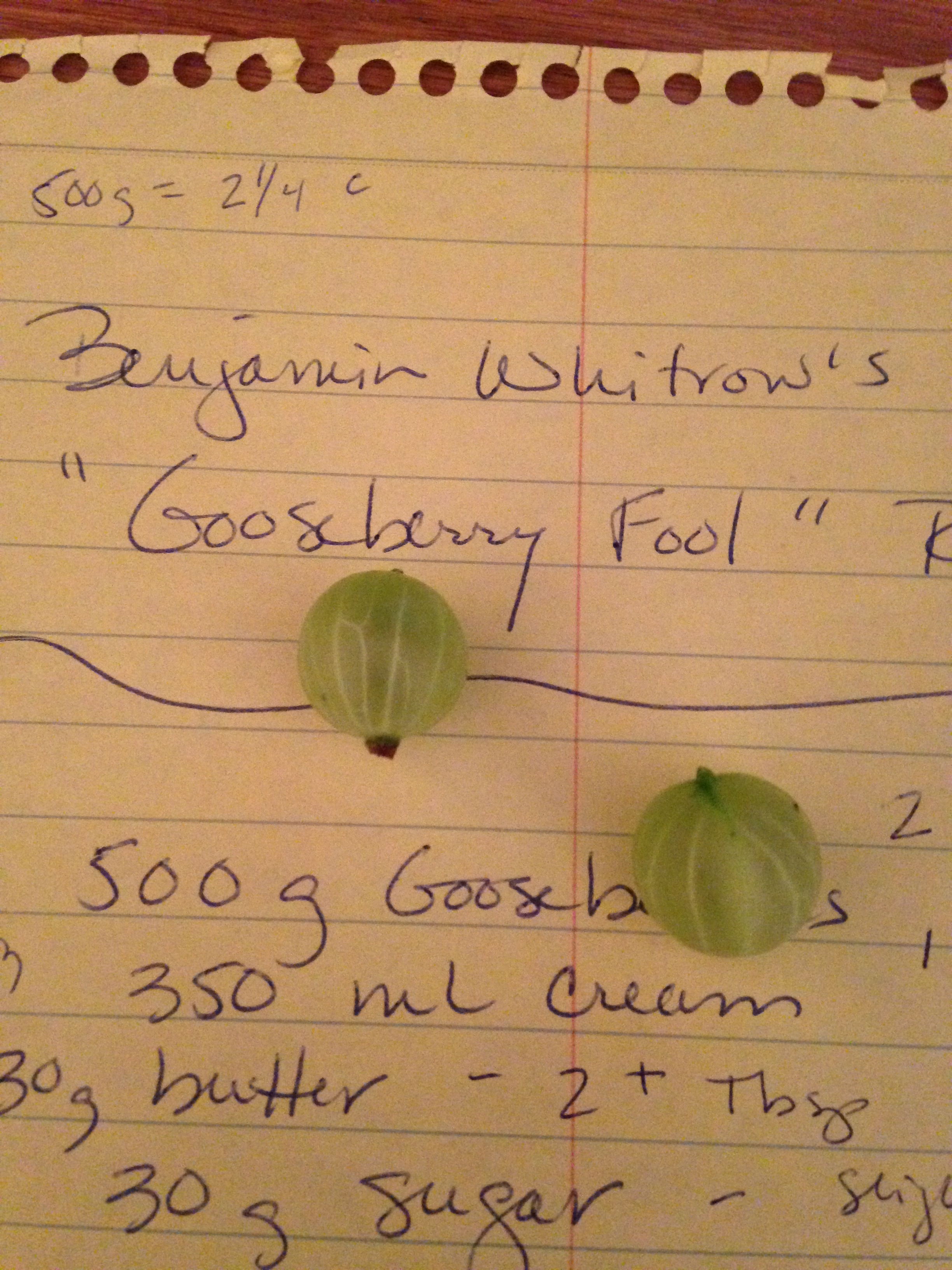
Before starting, wash the gooseberries and remove their stems and “tails.” See the before-and-after photos below. (Excuse my messy handwriting; I was in a hurry when I jotted this recipe down 🙂 )
Before After
To prepare the “Gooseberry Fool”:
Melt 2½ Tbsp butter in a saucepan. Add 2½ cups gooseberries and 2½ Tbsp sugar. Simmer until gooseberries are soft.
Press the sweetened pulp through a sieve. Some people like the crunch that comes with leaving the seeds in. Just as some people don’t mind eating grapes with seeds. If you prefer seedless grapes, you’ll no doubt also prefer seedless gooseberry fool.
Cool pulp (in the fridge).
Whip 12 ounces (about 1½ cups) of heavy cream (preferably not ultra-pasteurized) until not-quite stiff peaks form.
Fold (very gently, minimally stir) chilled pulp into the whipped cream.
I’m going to try some variations I found online, in which you fold in a touch of plain, unsweetened Greek yogurt to the cream after it’s whipped, and then layer the whipped cream, gooseberry pulp, and crushed almond or shortbread cookies in the serving glass, like a parfait.
I’m not really a “food blogger,” so there’s no photo of the finished product here. But I hope you like it if you’re inspired to give this recipe a try. I think I’m going to make the fool on Friday—and have it as an end-of-week treat while watching Pride and Prejudice.
Found this photo just now while cleaning out the “Camera Roll” in my iPhone. I don’t remember taking this picture and have no idea why I did. But I like it, so thought I’d share it with you 😄
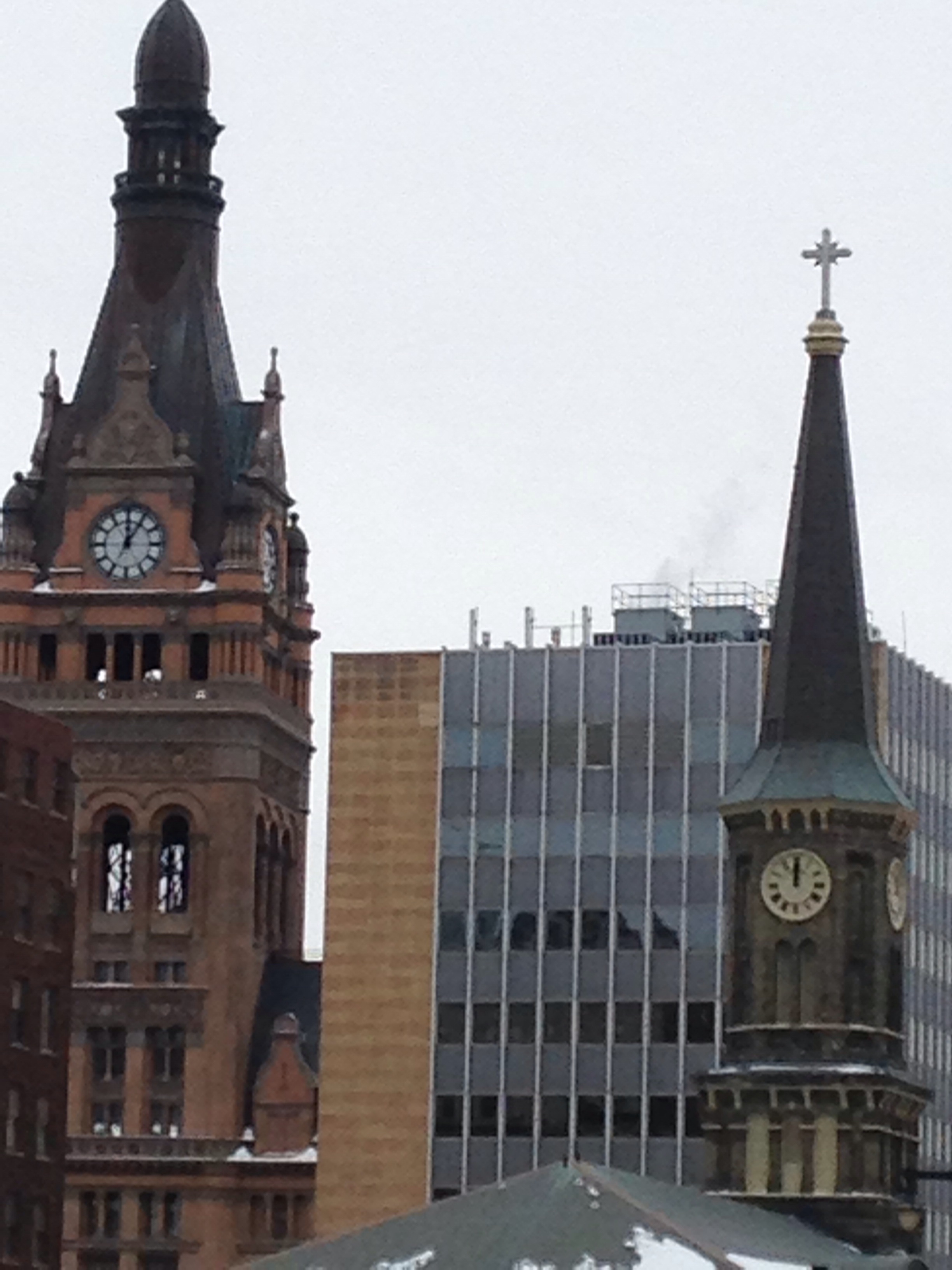
I had a conference to attend in Seattle last week, and since my daughters were able to come along this time, we made a bit of a vacation out of the trip.
Some pics:
A view of Puget Sound from our hotel room. LOTS of construction throughout Seattle! Hence the cranes.
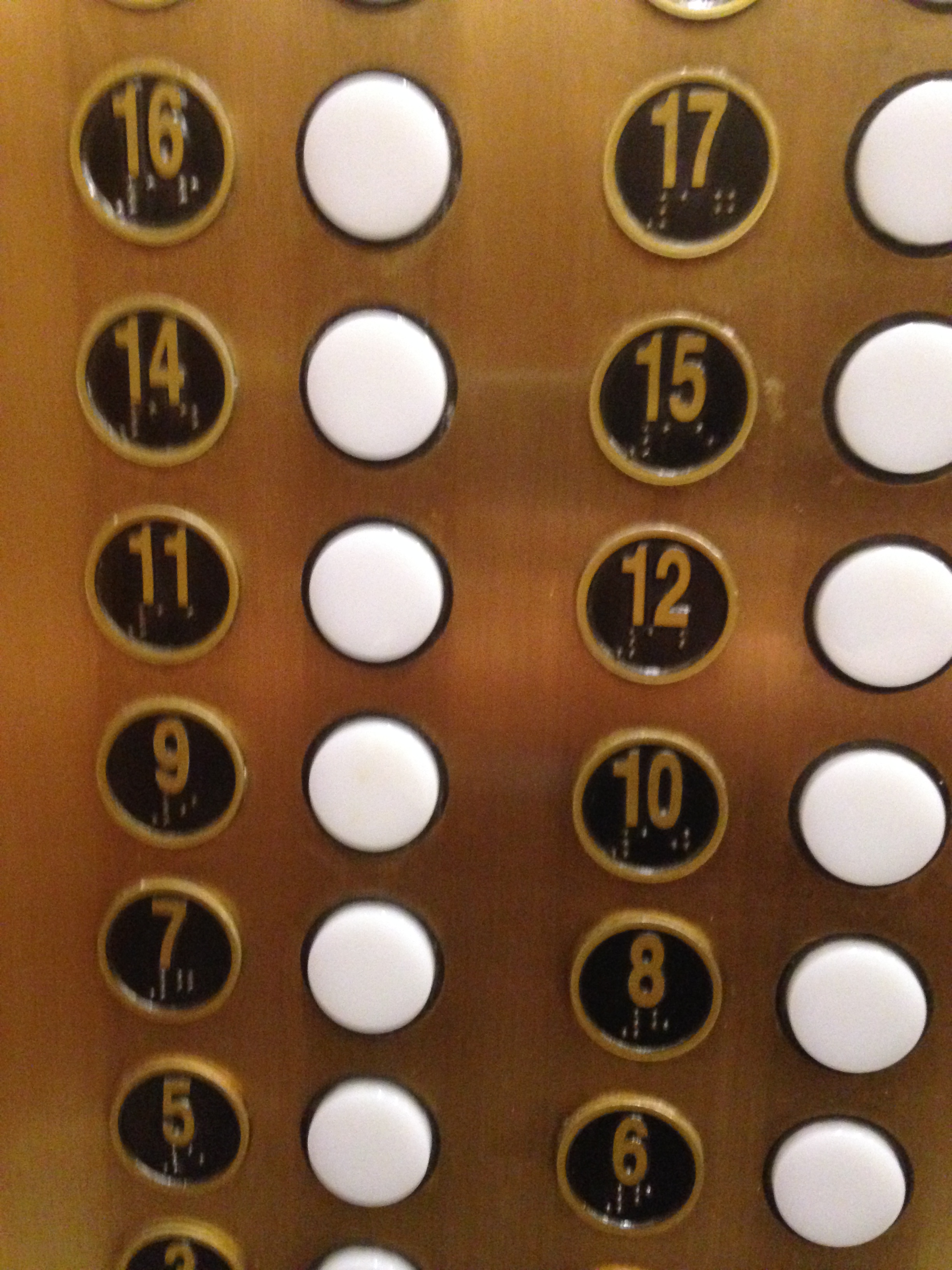
No 13th floor in our hotel.
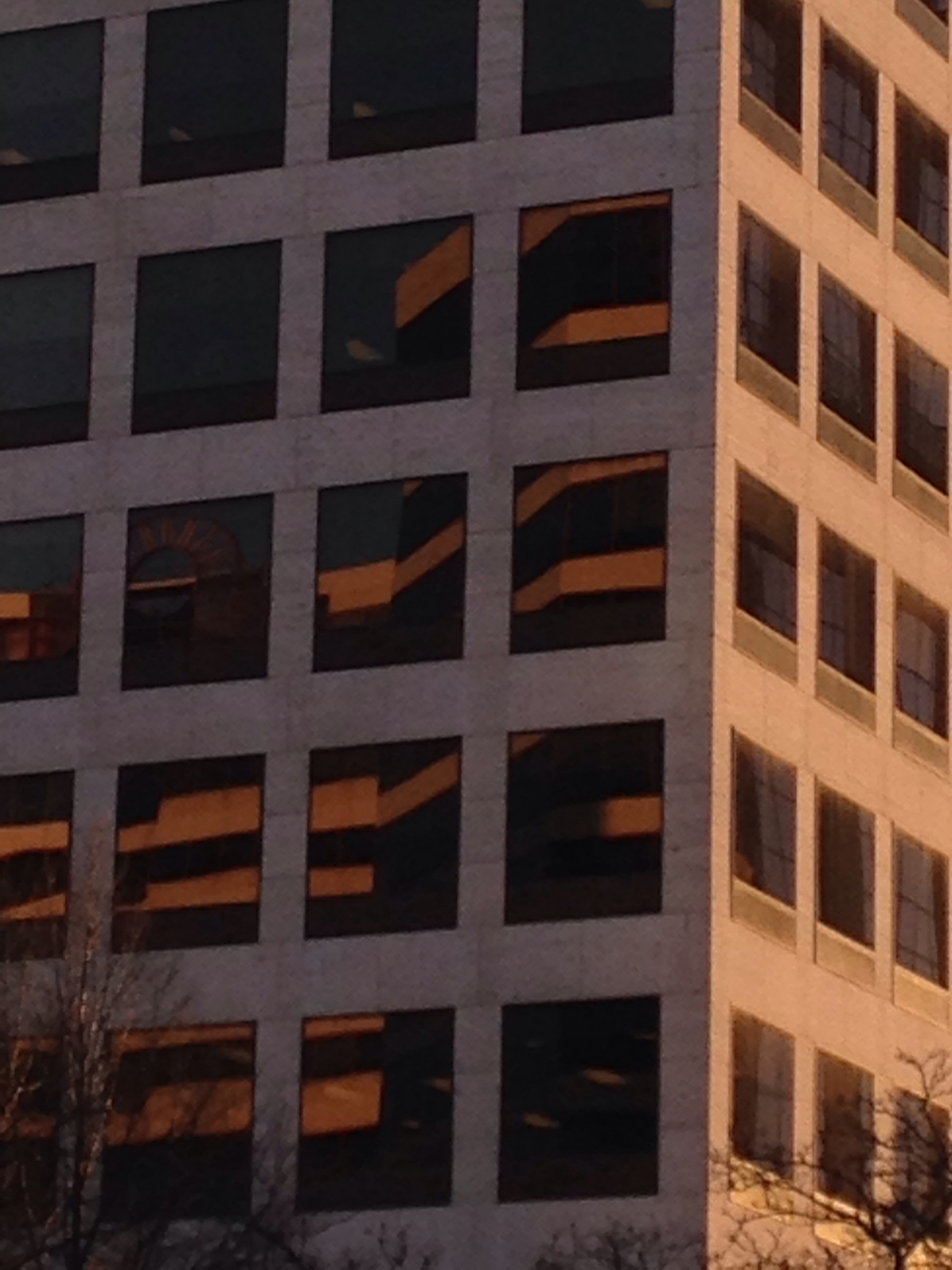
I don’t know why I love reflections so much, but I do. Here is a cool “windowscape” I shot from our hotel room.
And another, same building, but later in the day.
And sunset reflected in the glass of a building.
And a few minutes later . . .
And a few minutes after that . . .
Until finally . . .
Of course, no trip to Seattle is complete without a monorail ride to the Space Needle. Both monorail and Space Needle were constructed for the 1962 Seattle World’s Fair.
The Space Needle is located in the Seattle Center, a 74-acre park that served as the grounds for the World’s Fair. Once we arrived there, we decided to forego a trip up inside the Space Needle in favor of two other things we decided were higher priorities.
First, my younger daughter had her “portrait” drawn by a really great caricature artist named Max (“like Mad Max”). We waited a long time in line, but it was worth it. The caricature is my daughter’s favorite souvenir of our trip, and she kept it closely by her side throughout the journey back home, awkwardly carrying it (framed in a matte about 18″ x 24″) through the airports, while also dealing with her bags, and stowing it on the plane in the narrow space between her window seat and the cabin wall.
After getting the caricature drawn, we went into a fabulous museum located at the foot of the Space Needle: Chihuly Garden and Glass, containing glass sculptures by the famed Dale Chihuly.
What an incredible experience!
Inside, the museum was a fairyland of glass and color and light and darkness.
You probably noticed the reflections in the pictures above. Chihuly is famous for hanging his glass chandeliers above water. For a wonderful intro to his work if you’re not familiar with Chihuly, see Chihuly Over Venice, a 90-minute documentary about his 1996 installation of chandelier sculptures over the canals of Venice (you can view a sample/trailer here, at Chihuly’s website). Once you see the glass reflected in the dark water, you’ll understand as I did why his work in museums always seems to be placed above a polished, black reflective surface. The mirror image is as important to the viewer’s experience as the sculpture itself.
The photo below is a panorama I shot of two canoes laden with glass bounty—seemingly gliding through still waters at night.
Sometimes the larger sculptures are impressive but kind of meh from a distance—revealing their intricate beauty only upon closer examination of the details.
Outside the museum was a garden to rival Monét’s home in Giverny—except with lots and lots of glass.
With a couple of very tall, sculptural-glass “plants.”
One of which rivals—but will never match 🙂 —the height of the Space Needle.
Dale Chihuly was born in Tacoma and is now based in the Seattle area, so maybe it’s no surprise that the bath in our hotel room was graced with this photograph bearing Chihuly’s handwritten caption: “Cobalt Blue & Green Chandelier over Black Rock, Nuutajävi Finland Part I, June 1995.”
All in all, a very good trip (sigh of contentment).
So now we’re back. And I have all my usual post-conference stuff to do (not to mention a mountain of laundry 🙂 ). But I wanted to get this post up before jumping back into Milwaukee life.
Long title, but bear with me 🙂 I came across this clip of Fred Astaire dancing at the 1970 Academy Awards ceremony the other day—and marveled that one could have watched the Oscars broadcast that year and witnessed such entertainment. (If you want to cut straight to the chase, you can zip ahead to where Astaire starts dancing, around the 3:20 mark.)
Several things in this clip stand out to me.
For one, Fred Astaire and Bob Hope, presenters of the Academy Awards for Best Documentary Feature and Best Documentary Short, actually talk with each other instead of reading some lame “joke” off the teleprompter.
For another, the winners of these Oscars actually get a chance to make little speeches and thank people instead of being given the bum’s rush to get off the stage ASAP.
Third, everyone in this clip, even the guy in a tux who hands the Oscar statuette off to to the winners, seems like an adult to me. Being a “grown-up” meant something quite different in 1970 than it does today. There’s something juvenile about the Oscars shows now, from the incomprehensible “in” jokes to the pseudo-impromptu moments of product-placement (as apparently Ellen’s “selfie” was—although I love Ellen and everyone who was in that photo 🙂 ).
One last point: that melody Fred Astaire dances to is pretty jazzy. It reminds me of the jazzy scores that hip movies or television shows had back in the late 1960s, early 1970s. Like the theme from Ironside, by Quincy Jones.
Apparently jazz had a moment around that time and could have become as dominant as rock in popular culture. At least according to what I read in Clive Davis‘s memoir, The Soundtrack of My Life (a really good book, by the way).
Davis, a legendary figure in the music industry, was once president of Columbia Records and founded (and was president of) Arista records. Davis discovered all kinds of talent; I mean he has sort of been the man behind American popular music for decades. I truly admire his talent.
At one point in his book, Davis talks about discovering Janis Joplin at the Monterey Pop Festival and describes her performance as mesmerizing, something you couldn’t take your eyes off of. I was quite skeptical reading this. Janis Joplin was before my time, but all I could think of was this drugged-out woman with bushy, long hair hiding her face as she screamed out lyrics in a coarse, hoarse voice.
But out of curiosity I looked up the video of Joplin’s Monterey Pop Festival performance. Yep, mesmerizing. Something you can’t take your eyes off of.
Back to the original clip of Astaire dancing, that’s Elmer Bernstein down in the orchestra pit, FYI. Yes, Elmer Bernstein of The Magnificent Seven‘s musical score, not to mention many, many other films’ musical scores. And he’s the musical director for the 1970 Oscars show. That would be like, I don’t know, Howard Shore or John Williams turning in a stint at this event, which I’m pretty sure neither of them ever has. I found this clip of Bernstein talking about his work that year.
Every song he mentions that was nominated for Best Original Song is one that I’ve heard of and even sort of know well enough to sing—and I’ll bet you do, too. (I can’t say the same for any of the lists of nominees in recent years.)
On YouTube I found this homage compilation of someone’s favorite scenes in The Magnificent Seven, complete with Elmer Bernstein’s score. Enjoy!




![IMG_0673[1]](https://katherinewikoff.com/wp-content/uploads/2015/06/img_06731.jpg)
![IMG_0676[1]](https://katherinewikoff.com/wp-content/uploads/2015/06/img_06761.jpg)
![IMG_0691[1]](https://katherinewikoff.com/wp-content/uploads/2015/06/img_06911.jpg)
![IMG_0693[1]](https://katherinewikoff.com/wp-content/uploads/2015/06/img_06931.jpg?w=640&h=852)
![IMG_0694[1]](https://katherinewikoff.com/wp-content/uploads/2015/06/img_06941.jpg)
![IMG_0695[1]](https://katherinewikoff.com/wp-content/uploads/2015/06/img_06951.jpg)

![IMG_0720[1]](https://katherinewikoff.com/wp-content/uploads/2015/06/img_07201.jpg)
![IMG_0721[1]](https://katherinewikoff.com/wp-content/uploads/2015/06/img_07211.jpg)
![IMG_0727[1]](https://katherinewikoff.com/wp-content/uploads/2015/06/img_07271.jpg)
![IMG_0728[1]](https://katherinewikoff.com/wp-content/uploads/2015/06/img_07281.jpg)
![IMG_0729[1]](https://katherinewikoff.com/wp-content/uploads/2015/06/img_07291.jpg)
![IMG_0730[1]](https://katherinewikoff.com/wp-content/uploads/2015/06/img_07301.jpg)
![IMG_0732[1]](https://katherinewikoff.com/wp-content/uploads/2015/06/img_07321.jpg)
![IMG_0743[1]](https://katherinewikoff.com/wp-content/uploads/2015/06/img_07431.jpg)
![IMG_0741[1]](https://katherinewikoff.com/wp-content/uploads/2015/06/img_07411.jpg)
![IMG_0738[1]](https://katherinewikoff.com/wp-content/uploads/2015/06/img_07381.jpg)
![IMG_0745[1]](https://katherinewikoff.com/wp-content/uploads/2015/06/img_07451.jpg)
![IMG_0758[1]](https://katherinewikoff.com/wp-content/uploads/2015/06/img_07581.jpg)
![IMG_0766[1]](https://katherinewikoff.com/wp-content/uploads/2015/06/img_07661.jpg)
![IMG_0772[1]](https://katherinewikoff.com/wp-content/uploads/2015/06/img_07721.jpg)
![IMG_0780[1]](https://katherinewikoff.com/wp-content/uploads/2015/06/img_07801.jpg)
![IMG_0775[1]](https://katherinewikoff.com/wp-content/uploads/2015/06/img_07751.jpg)
![IMG_0777[1]](https://katherinewikoff.com/wp-content/uploads/2015/06/img_07771.jpg)
![IMG_0784[1]](https://katherinewikoff.com/wp-content/uploads/2015/06/img_07841.jpg)


 Katherine Wikoff