Better Than Brownies (#tbt)

In the “First Course” column of yesterday’s Milwaukee Journal Sentinel food section, editor Nancy Stohs ran a story about a brownie recipe from “Miss Petey” that was so popular with readers that it was published several times over the years, its first appearance being April 10, 1958.

The recipe originated with Eleanore Peters, longtime cook and kitchen manager at the Lakeside Children’s Center (formerly the Milwaukee Orphans’ Asylum), who was profiled in a feature article that day. Known as “Miss Petey” to the boys who lived there, she was loved not only for welcoming the children into her kitchen to help peel potatoes or perform other tasks but also for making delicious desserts—especially her brownies, which were always the boys’ first choice when asked what they’d like to have.

The photo that accompanied the recipe in yesterday’s paper caught my eye and sparked a memory. Those brownies looked exactly like the ones my mother used to make from scratch, a childhood favorite.

But they weren’t Milwaukee’s Miss Petey’s brownies. My mom’s recipe came from my great-grandmother, a tiny Baptist schoolteacher I can barely remember, who lived in Newcomerstown, Ohio. I’ve written about her before. She was the one who made hot cocoa in a pan on the stove for her husband every winter’s evening before bed (including weekends) after he returned from feeding the coal furnace at the elementary school where he was the janitor. I was very young when we’d go to visit my great-grandparents, so I have only fragments of memories associated with them.

My great-grandfather was an ardent amateur photographer who kept his camera and gear in the trunk of his car so that if he saw a photograph-in-the-raw, he’d be ready to pull over, set up his tripod, and capture that fleeting image.  Once when my mother was visiting them as a girl, my great-grandfather caught wind of the fact that hanging around with reporters in the local newspaper office was none other than Cy Young! (The great baseball player after whom the award was named. His hometown, as a matter of fact, was Newcomerstown—just as it was also hometown to legendary Ohio State football coach Woody Hayes. Go figure 🙂 ) My great-grandfather grabbed my mom and hustled right over so that she could meet him. Then, of course, he also took Cy Young’s picture and asked for his autograph. My parents still have both photo and autograph, framed and mounted in a side-by-side matting, on display in their home.

My great-grandparents’ Newcomerstown house was as ancient as they were. I remember a huge brass bed in their upstairs bedroom and heavy, velvet curtains hanging in all the doorways. These curtains must have been the fashion in the mid-twentieth century, judging from what I see in old movies  The light switches on the walls, next to dark woodwork, had little push-buttons, one higher than the other, in place of the usual lever you flip up and down. Under the stairs in the basement was a “root cellar,” where they actually did store “root vegetables” like carrots, potatoes, and onions in bins all winter long. (I didn’t understand the concept back then; I pictured a space under the stairs where twisted roots of some sort, maybe from nearby trees, poked their way out of the seemingly bare earthen walls and into the house.) There was also one of those evil-looking wringer washers down there, and a washboard, too.

There were chicken coops out back. My great-grandparents lived in town, but the backyards on their block bordered a farmer’s field, so there was a bit of a rural feel. Plus lots of people kept their own chickens then. My mom remembers my great-grandmother picking out a chicken for Sunday dinner and then chopping off its head. Have you ever heard someone with too much pointless energy described by the expression “running around like a chicken with its head cut off”? Apparently chickens really do just that. (I’ll spare you additional details.)

My great-grandfather wore dentures, so when we had corn on the cob for dinner, my great-grandmother would stand the ear of corn on end and then slice down each side, producing long strips of kernels that hung together in their gridded array instead of falling apart into separate pieces like you’d find in cans of corn. I was fascinated. Now I make a BLT salad in the summers (bacon, lettuce, tomato, with a mayonnaise dressing) that I top with squares of corn-on-the-cob kernel grids just like the ones my great-grandmother used to slice off for my great-grandfather.

But, finally, back to my great-grandmother’s brownies. Her recipe’s title is “Better Than Brownies,” and the frosted, fudgy squares truly live up to their name.  I compared her recipe with “Petey’s Brownies” in yesterday’s Journal Sentinel and found they are very similar. If I wanted to make a project out of it, I could bake both and conduct a taste test. But I think I’ll just stick with our old family recipe—tried and true, and full of memories.

Here it is, my great-grandmother’s “Better Than Brownies” recipe, slightly revised in format and incorporating modern technology (i.e., a microwave instead of a double boiler).

Throwback Thursday’s “Better Than Brownies”

  1. Melt 4 Tbsp cocoa (or 2 squares of unsweetened chocolate) with ½ cup shortening in a large, microwave-safe bowl. Let cool slightly.
  2. Beat in 1 cup sugar and 3 eggs (1 egg at a time).
  3. Add ¾ cup CAKE flour and 1 tsp baking powder (NOT baking soda), sifted together. If you don’t have a sifter, stir the flour and baking powder together thoroughly in a separate bowl first before adding to the brownie batter. (Note: CAKE FLOUR is sold in BOXES labeled as such and is found in the baking aisle somewhere near the regular all-purpose flour. Swans Down is a widely-known brand.)
  4. Add 1 cup chopped nuts (walnuts or pecans), if desired.
  5. Pour batter into greased pan (9 x 13 inch) and bake at 325º for 35 minutes.
  6. Remove from oven and let cool completely.

To make the frosting:

  1. Melt together 2 or 3 Tbsp cocoa with 3 Tbsp butter in a microwave-safe bowl.
  2. Add ½ tsp vanilla.
  3. Mix in powdered sugar (approx. 1 pound) and enough cream (or milk) to produce the desired consistency.
  4. Spread over cooled pan of brownies.
  5. Refrigerate in the pan until nearly ready to serve. Then slice into squares and remove individual brownies onto serving plate.

Would you like new posts delivered to your inbox? To subscribe, click here.

Posted in Food, History, Life | Tagged , , , , , , | 5 Comments

The Magic of Light (on Porcelain Insulators)

porcelain insulators against dark clouds

As every photographer knows, the key to capturing beautiful images is light.

Even more important, also as every photographer knows, is having your camera ready at all times. This is the second time I’ve noticed a really stunning display of light on porcelain insulators and rushed for my camera—only to discover dead batteries 😦  The first time was a couple of years ago, and I still managed to get a nice photo.

The second time was yesterday (or maybe the day before?). We’ve been having very overcast skies with no rain. As I let the dogs out the back door, I glanced up and noticed that a flash of unexpected sunlight had brightened the porcelain insulators, which positively glowed. The effect was stunning, that gleaming white against a backdrop of dark clouds.

I ran inside, got my camera . . . and then had to fool around with changing the batteries. By the time I got back outside, the light had faded quite a bit.

So much for my fabulous photo opportunity.

I snapped another couple of pictures, but it was largely a lost cause.  On the other hand, I later found it very instructive to compare the first photo (above) with another I shot less than a minute later (below).

100_1552[1]

While there was still a small amount of direct sunlight in that first photo, look at how flat and uninteresting that utility pole is once the light has vanished.

Below are the same two photos, smaller this time so you can compare them more easily.

porcelain insulators against dark clouds

100_1552[1]

I still appreciate the lines and all  in the second picture, so I don’t hate it. In fact, you can actually see the dark wires better in the second. But don’t you agree that the first is the better photograph?

If only you could have seen the one that got away 🙂

Posted in Photography | Tagged , , , | 2 Comments

Old Basement Stairway

100_1549[1]

Posted in architecture, Photography | Tagged | 2 Comments

Morning Sunlight: Wall Opposite a Window

100_1548[1]

Posted in Photography | Tagged , , , | Leave a comment

The American West or What I did on summer vacation (Take 2)

A wonderful post by my friend Sally, in which she visits an old-time saloon in a small Montana town, left behind to vanish almost completely when the railroad abandoned its tracks, to report a cow on the road separated by a fence from its bawling calf.

Posted in History, Life, Travel | Tagged , , , | Leave a comment

After the line went dead

imageIt took only a few seconds for me to figure out what function this alcove most likely used to serve. But a few years from now, there will be young adults who have no memory of pay phones.

Posted in History, Life, Technology | Tagged , | Leave a comment

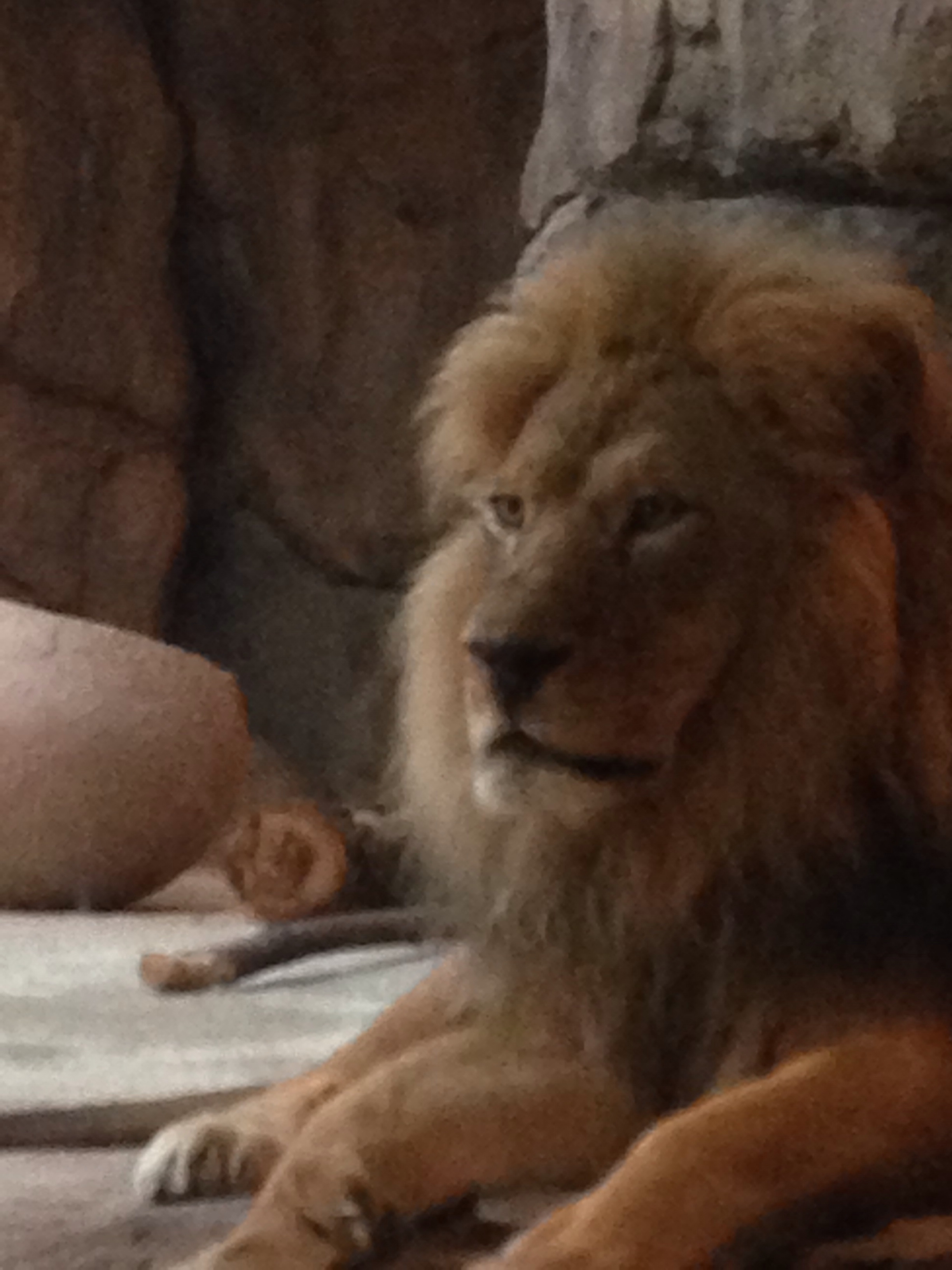
(Not) The Milwaukee Lion

But definitely “a” Milwaukee Lion 🙂

image

I shot these photos over the weekend in the big cat house at the Milwaukee County Zoo. Pretty amazing how close you can get to the animals in modern zoos! Maybe too close? Although the King of the Beasts was too aloof to acknowledge the presence of mere humans, I found the jaguar’s cool, assessing eye contact with me sort of thrilling and unnerving simultaneously. Just how thick is that glass?

image


Posted in Milwaukee, Nature, Photography | Tagged , , , | 1 Comment

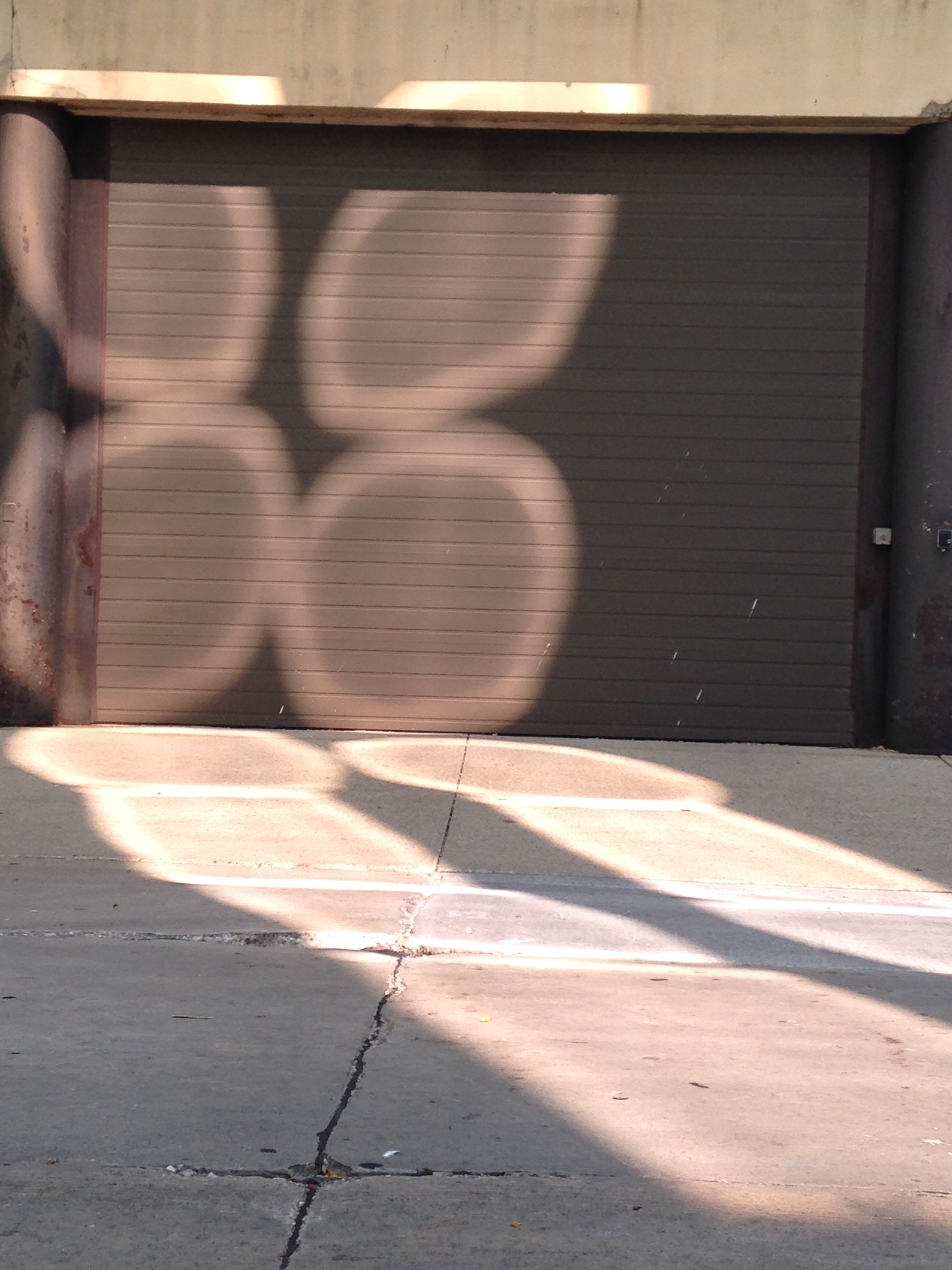
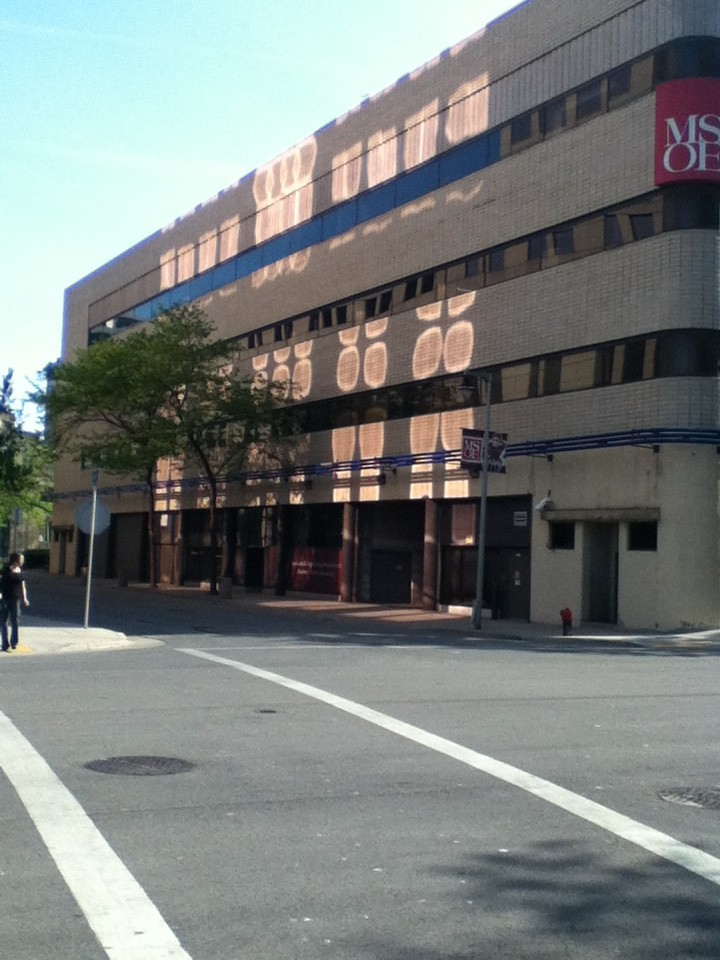
Light Shadows (#2)

Light Shadows (#2)

Sunlight reflecting off of an office building’s pinkish windows was the source of these awesome “shadows” cast down on the street and loading docks below.

One of my very first blog posts a few years ago was a similar photograph, which I titled “Light Shadows” (below). You don’t see these shimmering spots of light every day. The sky has to be clear, and the sun in the right position. Even then, they aren’t always as distinctly defined as they were on these two days. It’s fun to see when everything aligns to put on this show.

light shadows

Posted in Art, Milwaukee, Photography | Tagged , , , , , | 1 Comment

History in the Women’s Room

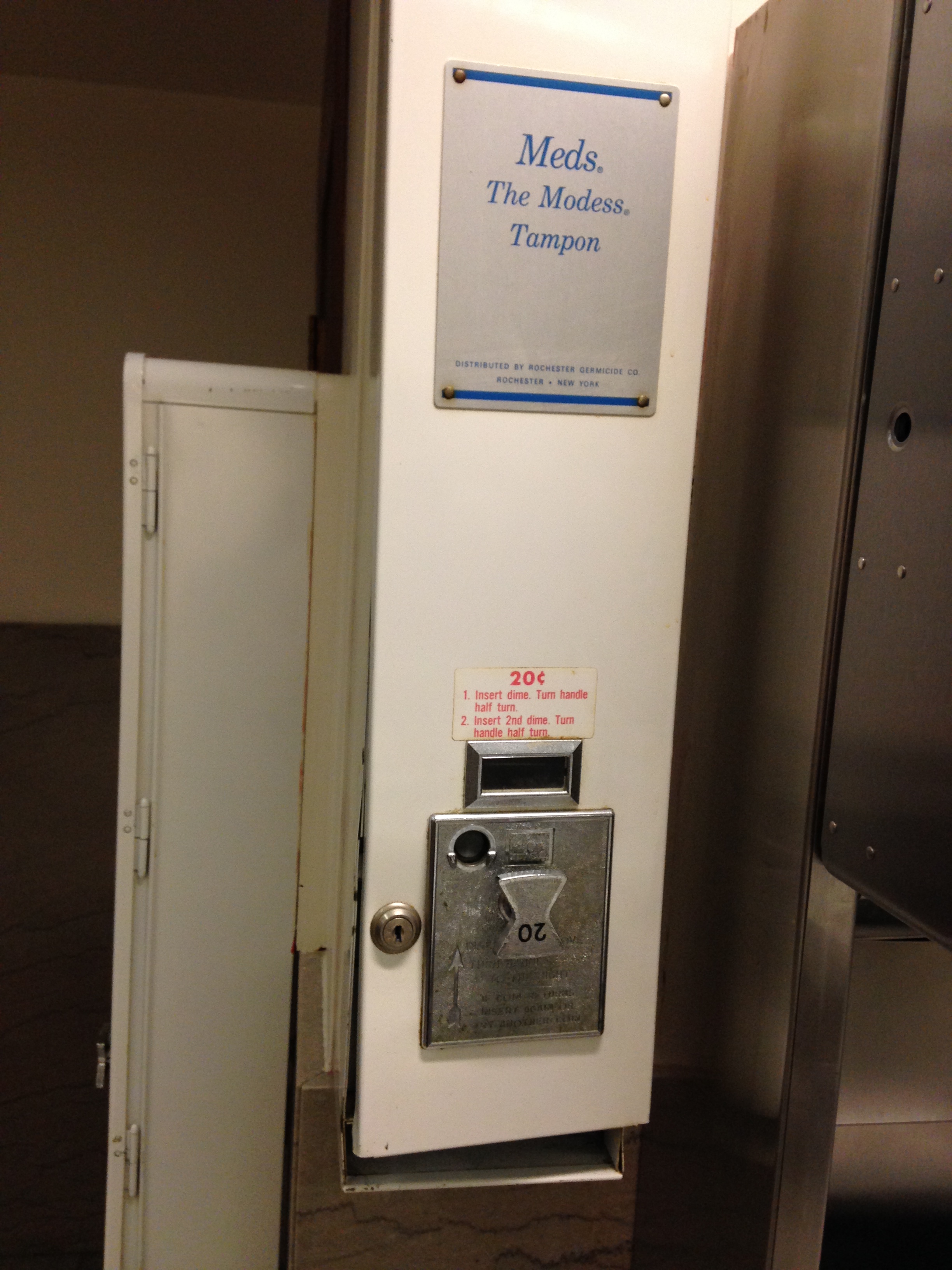
I had an appointment in an older downtown Milwaukee office building yesterday and stopped in the women’s room on my way out. While washing my hands, I noticed this old machine for dispensing “feminine hygiene” products hanging on the wall.

IMG_0874

Meds Tampons were a Modess product available from the 1930s till sometime in the 1970s, according to the Museum of Menstruation and Women’s Health, which apparently actually was a museum once but is now a website maintained by the man who single-handedly ran the museum until it became too much work in addition to his job—and, more to the point, why shouldn’t there be a museum about such a significant topic?

Anyway, it’s odd to realize that this machine was presumably installed a minimum of 40 years ago. And here it is, still.

Kind of off topic here, but related in both its possible inappropriateness (i.e., connection to sexuality) and its connection to the idea of “history.” When I was in college I watched Last Tango in Paris in a film class. What has always stuck with me from that movie (no pun intended) was the moment at the very end, when Marlon Brando takes his chewing gum out of his mouth and presses it to the underside of the balcony railing outside the apartment window just before he dies after his mistress (girlfriend? anonymous sex partner? rape victim?) shoots him.

Of all the overwhelming images in that film, seriously, that was the only one that made a deep enough impression that I can still picture it vividly all these years later.

Why? Because to me that piece of gum is a witness. A testimony to the fact that—like “Kilroy“—Paul (Brando’s character) was here. That gum is the one thing to save him from the nothingness he seemed to crave before. It’s the only thing to ensure that his existence won’t be entirely erased. Remaining behind in the world is this chewing gum that was once in his mouth, taken with his fingers and placed intentionally beneath the railing by him in those final seconds of life.

Sticking that gum under the railing is kind of disgusting and could be viewed as a final act of aggression/rape in Paul’s relationship with Jeanne. The tango was such a good metaphor for what was going on with those two. It’s such a highly sexual dance form, but the two partners basically never acknowledge each other. That connection as a motif  was probably made explicit in the film; it certainly seems obvious to me now, in retrospect, but I don’t know if I realized it then. Doubtful. I was a political science major and didn’t really develop a grasp of literary/artistic intellectual concepts like “metaphor” until well into my studies for the Ph.D. in English.

In any case, my 20-year-old self’s experience of that final image was visceral and intuitive.  It was like Paul was redeeming himself as a human being. Where he was kind of dead before, numbed by his wife’s suicide, he has finally—in death—become aware of life’s value.

By leaving his chewing gum behind as an artifact of his time on earth, he has also left his “mark” on history. A declaration that he was here. That he was alive.

Very existential reflections/ramblings today, and all prompted by an old tampon dispenser hanging in an even older (marble walls!) women’s room 🙂

Sometimes the field of history is classified as a social science discipline, but I think it belongs firmly in the humanities. After all, the whole point of history is to hold up a mirror that makes us aware of ourselves as humans. Who are we? Why are we here? What is the purpose of life?


Posted in History, Life, Milwaukee | Tagged , , , , , , , , , , , , | 5 Comments

Evening Reflection

image

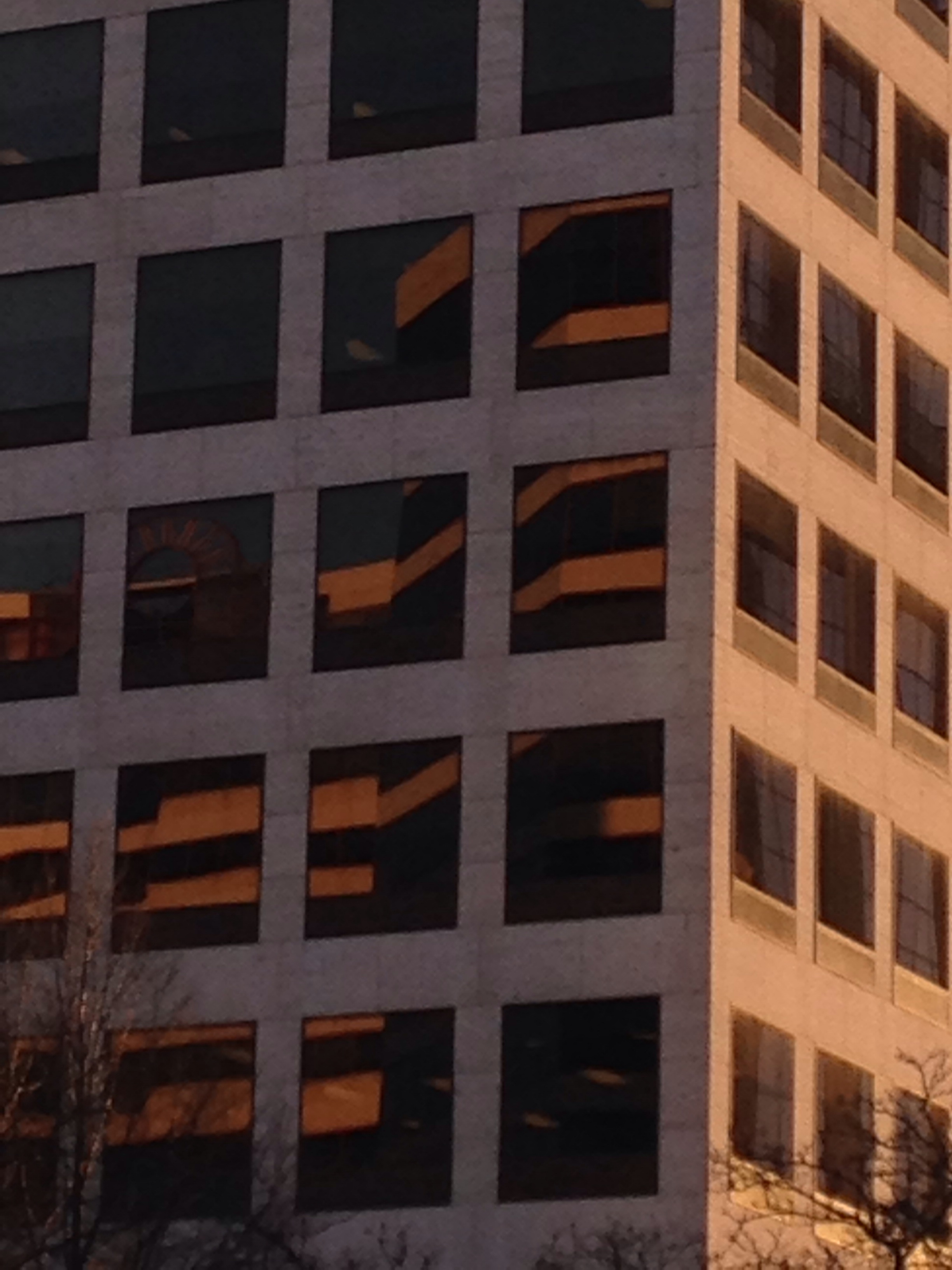
MGIC reflecting the Plaza East at sunset in downtown Milwaukee.

Posted in architecture, Milwaukee, Photography | Tagged , , , | Leave a comment