The truth about statues

I wrote this very short memoir/essay as an exercise at my writing group’s meeting yesterday.  Because I haven’t posted in over a week, I decided to share it today.

The Truth About Statues

When I was very young, I thought that statues were actually dead people encased in concrete.  It made sense, as every statue I’d ever seen appeared to be a well-known dead person.  But one statue greatly troubled me.  It was a child with wings, an angel gazing down into a dark pool of water.

“Mommy,” I asked once.  “Was that a real little boy they made that statue from?”

“Probably,” she said.

“Did his parents want him to be a statue?” I persisted.

“Probably so.”

The thought appalled me.  “Would you ever let me be a statue?”

“I suppose,” my mother replied.  She was busy ironing and watching her soap opera on television.  “Would you like to be a statue?”


Posted in Life | Tagged , , , , | 21 Comments

Standing Up to Violence

Emily January Peterson has an excellent post today, “Girls’ Studies: Violence,” over on her blog The Bookshelf of Emily J.  I was going to leave a comment there, but I realized there was so much I wanted to say that it might be better to respond with a post of my own.

Emily J.’s essay analyzes a song, “He Hit Me,” originally performed by The Crystals.  In it a girl sings about how her boyfriend hit her when he thought she liked someone else.  It “felt like a kiss” to her because that’s when she knew he truly loved her.  If he hadn’t, she tells herself, he wouldn’t have gotten so angry.  At the song’s happy ending, the boyfriend takes the girl in his arms “with all the tenderness there is” and kisses her.  That’s when she knows she “is his.”

After discussing the song and all it implies about power and ownership historically in relationships between men and women, Emily J. mentions her own first boyfriend.  They were fifteen and in high school.  He constantly did things to make her look stupid or hurt her, but she had thought his behavior was normal, if immature.  Before doing this assignment for her “Girls’ Studies” course (she is in graduate school, working on a Ph.D. in English), she had never heard this song before.  Now, after analyzing the song’s lyrics, she realizes that her boyfriend was actually violent rather than immature.

Reading Emily J.’s blog post sparked a memory of my own, something I haven’t thought of in years.  There was a couple in my high school who had an abusive relationship.  Actually he was the violent one; she just continued dating him.  He was captain (or one of the captains) of our football team.  In a small town like ours, where nearly every adult had graduated from the local high school and the whole town turned out for the Friday-night games, football players were a pretty big deal.  All the guys in our school liked him.  When we told them how mean he was to his girlfriend, they just said they had never seen that side of him.

One day in our senior year, the couple was walking down the hall in front of us between classes.  They must have been arguing because suddenly she cried out and ran into the girls’ bathroom, where presumably she thought she’d be safe.  He followed her inside.

My friends and I exchanged stunned glances.

And then something happened that thrilled me.  Our newly-hired girls basketball and track coach must have seen what happened.  Next thing we knew, she had rushed into that girls’ bathroom, pulled him out by the arm, shoved him up against the wall, and gotten her face right up in his.  I don’t remember what she said, only that she was yelling at him.

Finally.  Finally, someone was taking action and standing up to this bully.  And it was a woman!  Not the principal, not the football coach, not the other guys on the team.

Except we didn’t think of him as a “bully,” exactly.  We didn’t even really have adequate language back then to define him or describe his abusive behavior.  The phrase I recall us using was that he “treated” his girlfriend “badly.”

One edition of the “Chicken Soup” series of books for kids has an essay by a girl who was being molested by a family member.  She didn’t know that’s what was happening, though.  She felt very uncomfortable about the way the men in her immediate and extended family treated her but couldn’t express herself in a way that would make them stop.  Then one Sunday a visiting preacher at her church gave a sermon that used the word “incest.”

Suddenly everything became clear to her.  Once she had a word for it, she understood the concept.  By naming the acts, she gained power over her circumstances for the first time.

It has been a long time since I read this incest essay, but I’m pretty sure it is in Chicken Soup for the Kid’s Soul.  Pretty disturbing stuff.  The comments on Amazon include several 1-star reviews from parents unhappy that their kids were unwittingly exposed to such graphic subject matter in a book that promised on its front cover “101 Stories of Courage, Hope and Laughter for Kids ages 8–12.”  That age range seems quite young for stories of incest and sexual predation.  Hardly the uplifting tales one expects from this feel-good franchise.

Yet, on the other hand, maybe kids shouldn’t be too sheltered.  Without exposure to ideas and language, you don’t recognize what you’re seeing when faced with it for the first time.  You feel helpless to act because you can’t articulate why something is wrong.  And absent that articulation, you feel vaguely guilty yourself, like maybe somehow you’re at fault for the thing that makes you uneasy.

You confuse conflict and drama with romantic passion.  You think anger is an expression of love.  Getting hit feels like a kiss.

It’s confusing.  I acknowledge the irony  of my awed reaction to the girls basketball and track coach’s somewhat physical (violent?) response to the bully’s violence.  Sadly, there’s even more irony to this story.  This guy had multiple abusive relationships, and in the end he was shot and killed by the brother of a woman he was dating.  Sounds like justice to me.  What goes around comes around.  But the brother went to prison.

Gandhi and Martin Luther King, Jr., are both credited with turning around the old Code of Hammurabi to say that an eye for an eye leaves everyone blind.  Christians are supposed to turn the other cheek, literally offering the other side of their face to be struck after someone has hit them.

I’m awed by the courage required for that response to violence, too.

Posted in Books and reading, Life, Writing, blogging | Tagged , , , , , , , , | 2 Comments

Art -vs- Science: An Artificial Divide

I was paging through the weekend Wall Street Journal this morning and practically jumped out of my chair when I saw Walter Murch’s face looking out from the “Review” section.

Murch is an Oscar-winning film editor who has worked on movies like Apocalypse Now, The Godfather, The English Patient, and Cold Mountain.  I know his face so well because he is featured prominently in an excellent documentary about film editing called The Cutting Edge that is on the extra-features disc of my DVD of Bullitt.  (Wikipedia entry on this documentary is here.)

And I just found it on YouTube, so here is the entire documentary. I HIGHLY recommend it!

The interview/profile in today’s Wall Street Journal, “From ‘The Godfather’ to the God Particle,‘” is occasioned by the upcoming release of a new film, opening next month across the country, called Particle Fever.  (If you’re not a WSJ subscriber and you are prompted to log in after you link to the article from my blog, try opening a new tab and doing a search for the article’s title and the date, March 22, 2014.  You may be able to get the entire article that way, without needing to log in.)  Particle Fever is a documentary directed by Mark Levinson (The English Patient).  The film recounts the 2008 launch of the Large Hadron Collider and the experiments done there leading to confirmation of the Higgs boson, or “God particle.”

So interesting!  I love this Don Lincoln TED video illustrating physicist David Miller’s cocktail-party explanation of how the Higgs boson works.

Today’s WSJ article also describes Murch’s longstanding interest in science.  He is very interested in and knowledgeable about physics, particularly string theory.  He also appears to be a real Renaissance man.  I just took a look at his Wikipedia profile, and in addition to his film work, he has translated short stories by the Italian writer Curzio Malaparte.

Given a tape recorder as a 10-year-old, Murch was fascinated with sound.  His first work in film was actually in editing and mixing sound for Francis Ford Coppola, whom he met in film school (along with George Lucas, with whom he would also go on to work).  If you’ve seen Apocalypse Now, you no doubt remember the image of a ceiling fan in Martin Sheen’s Saigon hotel room juxtaposed with the sound of a helicopter.  That was Murch’s work.  During post-production on Apocalypse Now, according to the Wall Street Journal article, Murch also helped Dolby develop a new way of reproducing sound in theaters that would make viewers “feel” what was happening on the screen.  In fact, Murch is credited with coining the term “sound designer” to describe the contributions of people like him and Ben Burtt (Star Wars) to a film’s production.  (Almost two years ago I wrote a post about a great DVD-extra on my copy of WALL·E featuring Ben Burtt talking about the history of sound design.  Read it here if you’re interested.)

Our society seems to have allowed itself to become artificially separated by disciplinary boundaries.  The almost binary world view created by the resulting “silos” is odd to say the least and catastrophic to say the most.  We need more Walter Murches.  Not to mention more Mark Levinsons, who in addition to directing Hollywood movies has a Ph.D. in particle physics from Berkeley.

Every time I read about funding for STEM education being increased while budgets for art education are slashed I cringe at the shortsightedness.  Art and science nourish each other, and studying each in isolation so unnecessarily handicaps students and shortchanges society.

Ars sine scientia nihil est (“Art without science is nothing”) is the famous dictum attributed to 14th-century French architect Jean Mignot.  The opposite is also true.  It’s fascinating to learn about harmonics and fractals and the mathematical underpinnings of the universe.

Stuff like the golden ratio, for instance.  Science is made of art, just as art is made of science.  You can see it in the proportions of Greek and Roman architecture.  You can see it in these photos of fluid dynamics made by students of Jean Hertzberg at the University of Colorado-Boulder.

The 21st century will be an era of integration.  Generalists who can bridge multiple disciplines will be needed to make sense of and find meaning in the overwhelming amounts of information produced by Big Data.  People who understand this are way out ahead of those who don’t.

The press kit for Particle Fever includes a quote from one of the scientists featured in the film.  I think I’ll use it to close this post:

Why do we do science?  Why do we do art?  It is the things that are not directly necessary for survival that make us human.

Would you like new posts delivered to your inbox? To subscribe, click here.

Posted in Higher education, Life, Movies and film, Nature, News, Popular culture, Science, Technology | Tagged , , , , , , , , , , , | 2 Comments

Lana Del Rey: Robbed of the Oscar, as her Maleficent follow-up confirms

I was astonished when Lana Del Rey’s haunting “Young and Beautiful” from The Great Gatsby wasn’t even nominated for Best Song.

“Young and Beautiful” should have won!  Just one more reminder that awards are not the final arbiter of quality.

Now comes the new Disney film Maleficent, a backstory look at the villainess of Disney’s Sleeping Beauty, starring Angelina Jolie and featuring Lana Del Rey’s fabulously spooky version of “Once Upon a Dream,”  a song from the 1959 animated movie based on Tchaikovsky’s original music for the ballet The Sleeping Beauty.

Will Ms. Del Rey win recognition for her magnificent Maleficent cover?  I hope so.  I love her voice, love her unique approach to styling a song.

Although . . . not completely unique, now that I think about it.

One of my favorite television shows ever was “SCTV,” an early ’80s late-night show out of Toronto that had an incredible all-star cast (pre-stardom): Eugene Levy, John Candy, Andrea Martin, Rick Moranis, Catherine O’Hara, Harold Ramis, Martin Short, Joe Flaherty, and Dave Thomas.  Every time I listen to Lana Del Rey, I can’t help but recall this SCTV skit  advertising Perry Como’s triumphant return to the concert stage in the “Still Alive” tour, featuring an almost comatose Como (Eugene Levy) surrounded by disco-era dancers and backup singers.  Mr. Relaxation, indeed 🙂

To conclude: Lana Del Rey deserved the 2013 Academy Award for Best Original Song, in my opinion.  Sadly, her complete reworking of “Once Upon a Dream” won’t qualify because the song was written for Disney’s 1959 Sleeping Beauty.  She probably can’t even win the Grammy for Best Song Written for Visual Media, because that award also goes to the composer, not the performer—and although now nearly unrecognizable as the original, “Once Upon a Dream” was written by Jack Lawrence and Sammy Fain.

But maybe Del Rey could win the Grammy for Best Instrumental Arrangement Accompanying Vocalist(s) if she is the person responsible for the dark and foreboding arrangement of this new version of the song.  I hope so.  What a talent!

Would you like new posts delivered to your inbox? To subscribe, click here.

Posted in Movies and film, Music, Popular culture | Tagged , , , , , , , , , , , , , | Leave a comment

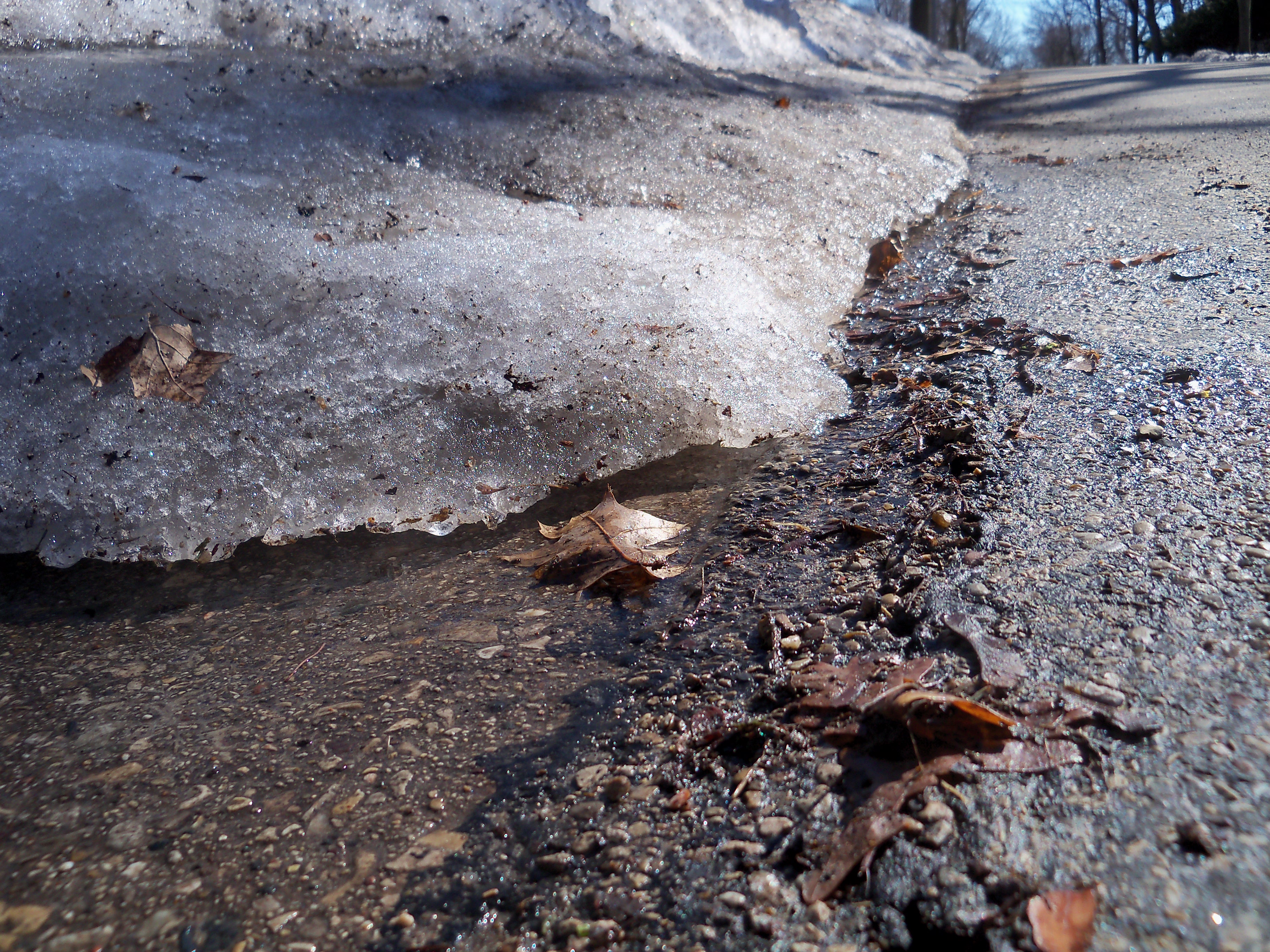
Spring thaw: Oh, happy day!

Melting ice at the curb

The snowbanks recede!

Posted in Life, Milwaukee, Nature | Leave a comment

Keith Fawkes

This post about London’s Keith Fawkes bookstore beautifully articulates what books and bookstores are all about: “possibility, playfulness, discovery and, most importantly, mess . . . . [Because] it’s good for us, as human begins, to invent that method” necessary to make sense of the disorder and “madness.”

Posted in Uncategorized | 4 Comments

The Russia–Ukraine–Syria connection (and why Turkey may be in crisis next)

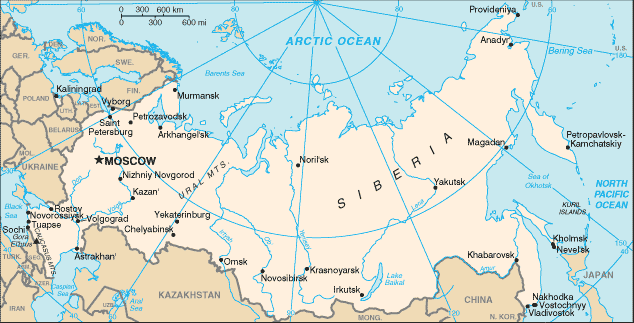
Sometimes looking at a map can tell you a lot.  Take a look at this map, for example.  It shows that Russia is a largely landlocked country.  Unless you count its far northern shores deep inside the Arctic Circle.

Public domain. From “The World Factbook,” U.S. Central Intelligence Agency (https://www.cia.gov/library/publications/the-world-factbook/geos/rs.html)

Vladimir Putin aspires to revive Russia as a world power, according to news accounts.  That may be a pipe dream.  As we found out once the Cold War ended, the Soviet Union’s power was actually kind of a Potemkin village all along—an especially apt metaphor since we’re talking about Crimea 🙂 —in the way that its breathtakingly aggressive display of military strength concealed a dilapidated economy on the verge of collapse.

Conventional wisdom holds that no nation can become or remain a world power without a strong navy to support its global interests.

Few lessons from history have remained as incontestable as the importance of  sea power to a nation’s political and economic standing.

Sea power has been the ultimate measure of global reach and influence since  the Greeks stemmed Persia’s land conquests with a naval victory at Salamis Bay  in 480 B.C. Despite having the largest and best-trained army in Europe in the  mid-1700s, France lost its overseas empire, including Canada, to Great Britain  because France could not support its colonies via the seas. Great Britain held  onto a worldwide empire where the “sun never set” throughout the nineteenth  century only because of the superiority of the Royal Navy.

(Read more: History’s Lesson: Sea Power Defines a Nation | TIME.com http://nation.time.com/2012/05/16/historys-lesson-sea-power-defines-a-nation/#ixzz2vIG3SkbX)

Now let’s take a look at another map.  This comes from Wikipedia’s entry on the Black Sea. See Ukraine at the top center?  That’s the Crimean peninsula hanging off of it.  You may remember Yalta as the site of a famous meeting between Franklin D. Roosevelt, Winston Churchill, and Joseph Stalin toward the end of World War II.  (See the Yalta Conference photograph of the three men on Wikipedia here.)  The city you need to pay attention to with respect to the current crisis in Ukraine is Sevastopol, just around the lower tip of Crimea to the west of Yalta.

Sevastopol is home to Russia’s Black Sea Fleet.  So in addition to the complex history shared by Russia and Ukraine, you have a naval base of extreme strategic importance to Russia (as it is Russia’s only warm water base).  And feelings in Ukraine toward Russia’s continued presence in Sevastopol have been conflicted to say the least.

In 2010 Russia’s lease on the Sevastopol installation was extended until 2042.  Take a look at this Reuters news clip of what happened in Ukraine’s parliament when the ratification vote was counted.

Russia will not allow its control of Sevastopol to be weakened, which goes a long way toward explaining the presence of its troops in the Crimean peninsula.  If Ukraine were to join the European Union, would membership in NATO then follow?  And if it did, wouldn’t it be exceedingly strange to see a Russian military base hosted by a NATO member!

Interestingly, Russia also has a naval refueling station on the Mediterranean coast of Syria.  Below is a great map I found on Wikipedia showing the site of this Soviet-era naval base in Tartus, Syria.  It is Russia’s only naval station in the Mediterranean.  Without it, Russia’s ships would have to travel clear back to Sevastopol in the Black Sea.  (The Crimean peninsula can also be seen on this map, almost due north and slightly to the west of Tartus.)

Russia blocked a UN Security Council resolution in early January that would have expressed outrage and condemnation regarding the Syrian government’s daily air strikes in Aleppo.  Russia also opposed a statement in December that would have condemned attacks by Syrian government troops upon civilians, and Russia (with China) blocked three earlier attempts by the Security Council to condemn and possibly impose sanctions against President Bashar Assad’s government.  It’s not that Russia loves Assad so much as Russia needs a stable relationship with Syria.

Which brings us to Turkey.  Things have been relatively quiet in Turkey lately, but here and there citizens rise up in protest, mostly against the policies (and alleged corruption) of Prime Minister Recep Tayyim Erdoğan.  Wikipedia has a really nice timeline of events in 2013-2014.  Last June I reblogged a Freshly Pressed post by Insanlik Hali, “What is Happenning in Istanbul,” about the spontaneous demonstrations mounted by thousands of citizens in Turkey’s largest city, initially against Erdoğan’s plans to demolish a popular park (with significant history, including a bloody massacre in 1977) in order to build a shopping center but quickly becoming more about unhappiness in general with life under the Erdoğan government.

Demonstrators in Taksim Square (via Wikipedia)

Demonstration outbreaks have continued to erupt in several cities, most notably Istanbul, this past December, January, and February.

Take another look at that map of the Black Sea.  There’s just one way to get from Sevastopol to the Mediterranean and, thus, out to the Atlantic and rest of the world.  The map below (once again from Wikipedia 🙂 ) shows a close-up view.

Bosphorus Strait, via Wikipedia (CC BY-SA 2.5); en:User:Interiot – en:File:Turkish Strait disambig.svg modified from Image:Vertrag sevres otoman.svg, created by Thomas Steiner.


Turkey controls this passage, and Russia needs a stable Turkey, especially a stable Istanbul.

Yet Turkey and Russia have a somewhat adversarial history, particularly with regard to Crimea.  The Crimean War of “Charge of the Light Brigade” fame (“Theirs not to reason why, / Theirs but to do and die”) was a struggle between Russia and the Ottoman Empire (in alliance with Britain and France).  Toward the end of World War II, Joseph Stalin deported a couple hundred thousand Crimean Tatars (Turks) from Crimea, allegedly because they were collaborating with the Nazis.  Over a hundred thousand of those deported died of starvation and other causes.

And now Russian troops are apparently taking over Crimea.

What is Turkey to do?  Engage in the very delicate balancing act of honoring ties to the Tatars, its ethnic and religious (Muslim) bretheren, and forging diplomatic bonds with the new Ukrainian government in Kiev—while at the same time not arousing the ire of Russia, from which it gets at least half of its natural gas supplies and against which it has historically lost many wars.

Just this past week, about 250 protesters, mostly Turkish Crimean Tatars, gathered outside the Russian consulate in Istanbul.  They want Turkey to use its influence to prevent Crimea from being annexed by Russia away from Ukraine.

Stay tuned.

Posted in History, Life, News, WPLongform (posts of 1000 words or longer) | Tagged , , , , , , , , , , , , | 5 Comments

The marketing campaign that helped The Return of the King sweep the Oscars

Today’s Variety has an interesting article about how ten years ago The Return of the King was nominated for—and won—an astounding 11 Academy Awards.  Only two other films have won that many Oscars: Ben-Hur (1959) and Titanic (1997).  Even more significantly, The Return of the King was the first fantasy film ever to win Best Picture.

The Variety article, “11 Oscars to Rule Them All: An Oral History of The Return of the King‘s Best-Picture Win,” by Alex Suskind, chronicles the decision by New Line Cinema to launch an all-out campaign to win Oscar gold for the last film in its ambitious big-screen adaptation of J.R.R. Tolkien’s Lord of the Rings trilogy.

Suskind’s article fascinates me on all kinds of levels.  I’ve read the entire trilogy (and The Hobbit) many, many times since performing in a children’s play version of The Hobbit when I was in junior high.  When I mentioned at a cast reunion a year later that I’d enjoyed reading The Hobbit, older cast members pointed me toward The Lord of the Rings.  When the films came out I loved Peter Jackson’s dynamic retelling of Tolkien’s masterpiece (even though, grumble, I felt Jackson’s decision to omit “The Scouring of the Shire” from The Return of the King ruined the trilogy’s structural symmetry and made the ending less than satisfying).

As a specialist in rhetoric, I’m intrigued by the extent of New Line’s marketing campaign to get Academy recognition.  And as a cinephile, I love reading people’s recollections in this article of what it was like to be at the 2004 Academy Awards and realize, award by award, that The Return of the King just might have a chance to win in every category.

Some of my favorite quotes from the article:

Laura Carrillo (senior vice president, creative advertising, New Line, in 2004): We had selected The Ant Farm to be the agency of choice for the entire trilogy, from audio through print. I think the flow you see within the ads comes from this agency being with us for five years as we developed the campaign.

Julian Hills (president of print advertising, The Ant Farm, in 2004):  If you look at the [campaigns for] Fellowship and The Two Towers . . . they are a bit all over the place. They will use a border for some, a different typeface for another––there is no real cohesive look to them. What we did for Return of the King, we created a look that was very specific. We created sort of a sub-brand. It was obviously Lord of the Rings, it was obviously Return of the King, but it was obviously the Academy campaign. When you looked at the Hollywood Reporter and you came to one of these ads, there was absolutely no doubt in your mind what you were looking at.

Russell Schwartz (president of theatrical marketing, New Line, in 2004): I remember the person who ended up winning for best foreign language film, the director just blurted out, “Thank God the Lord of the Rings was not in this category.”

Bob Shaye (co-C.E.O., New Line, in 2004): When Spielberg [presenting the award for Best Picture] said, “Let’s see what we got here,” and he slowly opened the Oscar envelope, and then with his inimitable dramatic pause looked up and said, “It’s a clean sweep,” that was pretty exciting.

David Tuckerman (domestic-distribution president, New Line, in 2004): We were all trying to figure out some way to celebrate this thing. I just sat there and said, “You know what? Let me find out how much it’s going to cost us to make a ring. Because it is Lord of the Rings.” And that’s what happened. We made 12 of those rings, and 12 people at New Line got them. It looks just like a Super Bowl ring, except it’s not as expensive.

With this year’s Academy Awards coming up Sunday night, it’s appropriate to remember the Oscars sweep that made it possible for genre films like Gravity and Her to be taken seriously as Best Picture contenders.

Posted in Books and reading, History, Movies and film, News, Popular culture | Tagged , , , , , , , , | 1 Comment

Sweets for the sweet?

An article in today’s Chronicle of Higher Education describes new research on embodied cognition presented last week at the Society for Personality and Social Psychology conference.

“Embodied cognition” is the idea that the nature of people’s minds is shaped by the form of their body.  Think of how disorienting it is to talk about your right hand while demonstrating with your left, which is something that a parent or teacher might do when facing the person they are trying to instruct.  Research has likewise demonstrated a connection between muscle movement and affect: smiling actually causes you to have pleasant thoughts, while frowning leads to unpleasant ones.  That great old song standard, “Smile,” gets it right:

 . . . Light up your face with gladness

Hide every trace of sadness

Although a tear may be ever so near

That’s the time you must keep on trying

Smile, what’s the use of crying

You’ll find that life is still worthwhile

If you just smile

The interesting news coming out of last week’s conference is that eating something sweet causes people to have kinder thoughts.  And sucking on something sour makes us grumpy.  You’re probably thinking we don’t need science to tell us this.  But wait, there’s more.  Apparently the metaphors we use also influence our moods.  You know the expression “warm and fuzzy” used to describe a treacly feeling of well-being?  Well, a warm and fuzzy physical object not only protects us against actual cold drafts but also makes us feel psychologically warmer, too.

So as we head into the last week of February with below-zero temperatures in Wisconsin, just remember this.  Wrap yourself in your softest blanket.  Watch a funny movie.  Eat more chocolate.

Posted in Life, Science | Tagged , , , , , , , , | 1 Comment

Sunlit Gas Flame (photo)

Anyone who lives in Milwaukee or has driven on the elevated freeway loop south of Downtown knows the Wisconsin Gas Building, a beautiful Art Deco tower topped by a weather beacon in the shape of a flame.  The flame changes color to announce the weather forecast.

  • When the flame is red, there’s warm weather ahead!
  • When the flame is gold, watch out for cold!
  • When the flame is blue, there’s no change in view!
  • When there’s a flickering flame, expect snow or rain!

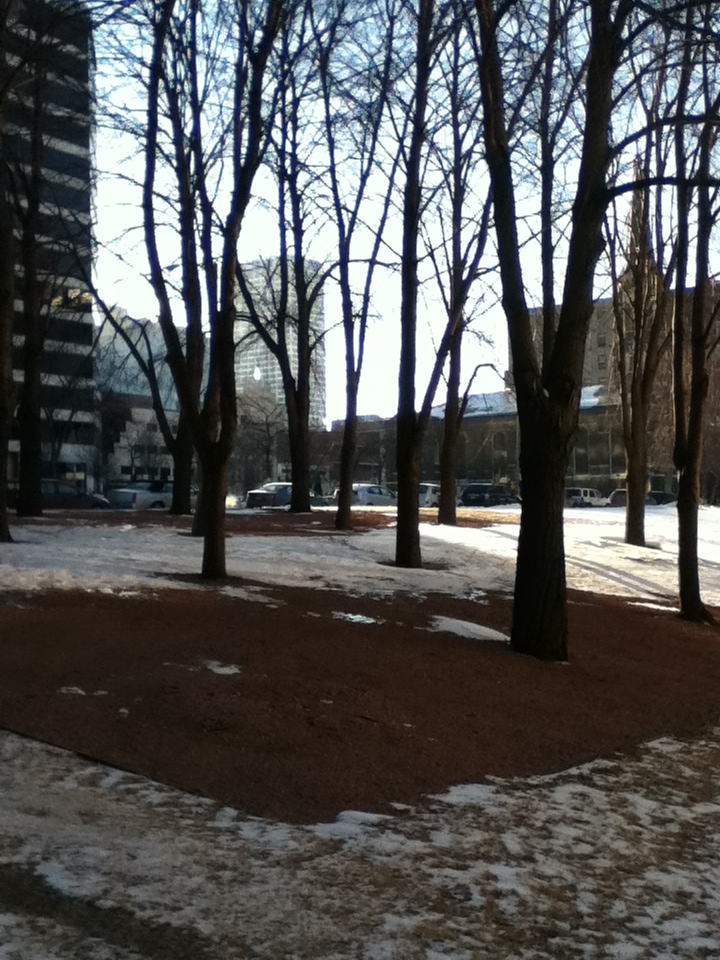
On my way back from getting coffee I happened to notice the Gas Building flame glowing in the sunlight (at center left, below, through the trees).  I believe that must be an extreme shade of gold, to signify even COLDER cold!

Wisconsin Gas Building

Posted in Milwaukee | Tagged , , , , | 2 Comments