Urban trees with a purple glow

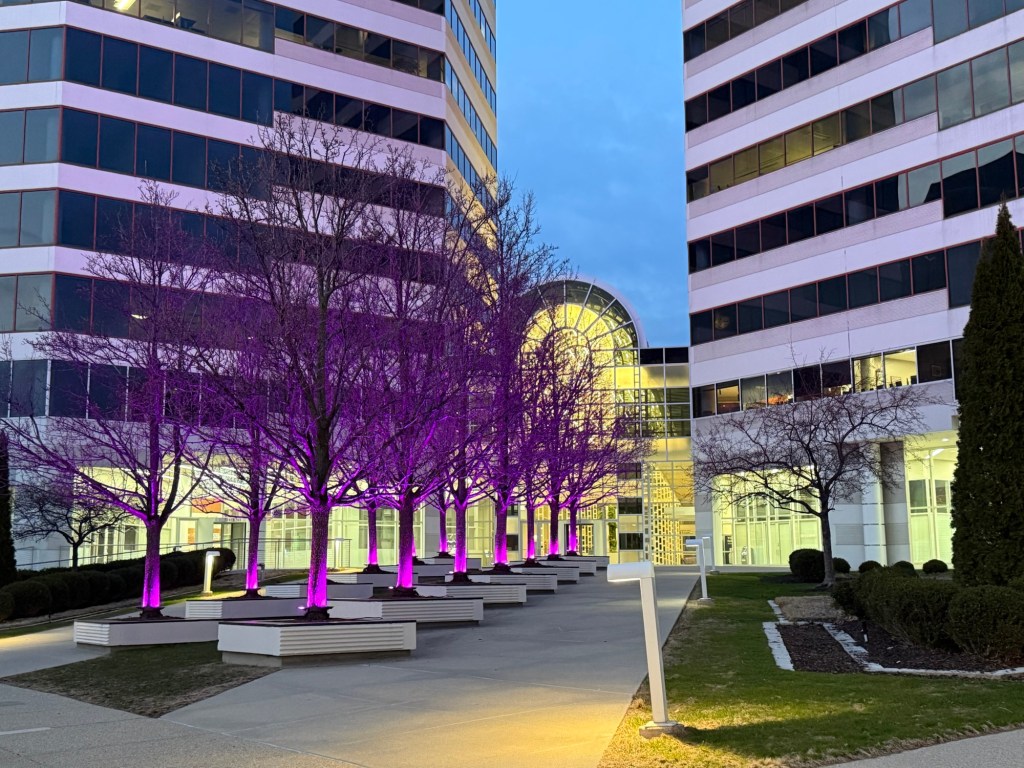
Just another photo from my day. Actually, this one is from my evening. Tonight was the MSOE Scholarship and Donor Dinner, an event where donors who fund scholarships get to sit down and share a meal with the students who receive their scholarships.

I was attending on behalf of a donor who lives out of state and asked me to be his representative. Actually, we met through my blog, probably because I often write about Milwaukee and the Milwaukee School of Engineering, where I am a professor. (In case you’re seeing this post: Hi, John! I’ll email you soon about the event 😀)

This year the dinner was held at the Milwaukee Athletic Club, which is just a few blocks away from my office in the Grohmann Museum. My walk back to the office afterward to get my briefcase before heading home took me past this office building. I guess I never walk by here at night, or at least not from the south. It wasn’t completely dark yet, so there was a little bit of that twilight haze. What do you call that? Gloaming?

Anyway, I thought that all the colors looked just beautiful together, so I stopped and took a photo before continuing on my way. And now I am sharing it with you!😀

Urban trees in an office building entrance mall with glowing purple lights

Have a good night, everyone!

Posted in Milwaukee, Photography | Tagged , , , , , , | Leave a comment

Maintenance Maintenant

Just a photo from my day. I fooled around with the colors a bit to brighten the reds and yellows and darken the shadows, and I liked the result enough to share. Hope you like it, too😀

Posted in Photography | Tagged | 7 Comments

Coat rack with moving light reflections

My office in the Grohmann Museum at Milwaukee School of Engineering gets lots of direct and indirect sunlight in the morning.

Today as I was getting ready to leave for my 10:00 class, I noticed that not only had the usual shadows of my coat rack appeared on the wall (“shadows” plural, from sunlight reflecting off multiple windows at various angles) but that there were also a series of whooshing light reflections flashing across it, reflections thrown upward off the windshields of vehicles driving next to my building on the street down below.

So I paused for a moment or two (10 seconds, to be exact) to record some of these moving light reflections on video before heading out the door.

Fun, right? I knew you’d like it!

The audio in this clip is so weird, though. The traffic sounds in the background aren’t in reality anywhere near as loud as they seem in this video. My office is on the second floor of the Grohmann Museum, and while you can always hear traffic noise from below, it usually fades into a background hum that I don’t even notice. But the microphone on my new iPhone is so powerful that not only can you can hear what sounds like wheels clunking over the twin manhole covers below my office at around 1.5 seconds in but you can also even hear me taking a nice, deep breath at around 7 seconds!

So, yep, that’s all I have for today, just a few seconds of reflected sunlight and shadows flashing on my office wall. Oh, except, I told John T. down in Florida that I’d say “hi” in my next blog post.

Hello from Milwaukee, John! 🙂

Posted in Life, Photography | Tagged , , , , | 1 Comment

Happy (slightly belated) birthday, Bob Mackie!

My daughter and I were talking about famed costume designer Bob Mackie yesterday and realized that not only is he still alive but he just had a birthday earlier this week (March 24).

I thought he must be close to 100 years old, but he’s only 86! It just feels like he should be 100 because he’s been so successful for such a long, long time. He started out working as a designer at Paramount when he was only 21 years old!

I personally first became aware of Bob Mackie through his work with Cher’s fabulous outfits on the old “Sonny and Cher” show in the early-to-mid-1970s.

Farrah Fawcett and Cher wearing Bob Mackie gowns on Farrah Fawcett and Cher wearing Bob Mackie gowns on “The Sonny and Cher Show,” CBS Television, Public domain, via Wikimedia Commons

Only later did I realize that Bob Mackie also designed costumes for Carol Burnett’s TV show. And later still that I discovered he has worked extensively, for decades, with Diana Ross, as well. However, only this week did I find out, from my daughter, that Mackie designed (or, at least, did “the initial sketch of,” according to his Wikipedia article) Marilyn Monroe’s famous “Happy birthday, Mr. President” dress, worn at the 1962 Madison Square Garden event celebrating John F. Kennedy’s birthday.

So, wow. Here’s the link to Bob Mackie’s Wikipedia article: https://en.wikipedia.org/wiki/Bob_Mackie. There’s lots of fun information in here, including (for film buffs like me) the fact that early on in his career at Paramount, Mackie was “found” (discovered?) by legendary costume designer Edith Head (Wikipedia article HERE).

My favorite Bob Mackie gown ever, was apparently many other people’s favorite gown, as well. Can you guess? It was the green velvet “curtain” dress from Carol Burnett’s Gone With the Wind sketch (titled “Went With the Wind” on the show), which I am old enough to remember seeing during its initial broadcast in November 1976.

It’s possible that young people (born, say, from 1990 on) who watch the clip below won’t “get” the humor, and if that’s the case, it’s likely because they’re unaware of the original scene referenced.

One reason Carol Burnett’s sketch was so hilarious was that the 1939 film Gone With the Wind (“born” the same year as Bob Mackie, I just realized!) was rereleased in movie theaters numerous times from the late 1960s through the mid-1970s. So almost everyone watching Carol Burnett that evening would have remembered the beautiful green velvet dress that Scarlett O’Hara made out of draperies still hanging in the ruins of Tara, the family’s plantation home, at the end of the Civil War so that wealthy Rhett Butler would believe that everything was fine in her life and she had sought him out because she loved him, not because she was destitute and hoping to trick him into giving her the money needed to pay the taxes on Tara.

No doubt, even if you’ve never seen that GWTW movie scene, the Carol Burnett dress works as a sight gag. But the humor is all the richer if you can make the instant, unspoken connection between the elegant velvet gown worn by Scarlett in the movie and the curtain-rod-with-tassled-tiebacks gown worn by “Starlett” in the Carol Burnett show.

Here is the complete “Went With the Wind” sketch. The idea for the curtain dress first enters Starlett’s mind at around the 13-minute mark, with the “unveiling” so to speak occuring at the 15:08 mark.


And below is a short clip of Bob Mackie talking about the curtain dress in an interview.


I can’t even begin to tell you how much I love that this dress is part of the permanent collection of the Smithsonian’s National Museum of American History! It brings together an unusual variety of historical threads: the Civil War, the novel Gone With the Wind, the film Gone With the Wind, Bob Mackie and his role in entertainment history, and the American television broadcast industry. All of which come together, beautifully and humorously, in this single, highly imaginative ensemble 🙂

Posted in Art, Creativity, design, History, Media studies, Movies and film, Popular culture, Television | Tagged , , , , , , | 4 Comments

Amazed by my phone (as exemplified by some paisley closeups)

I tend to hang onto my phones until I absolutely have to give them up.

Example: when my Nokia flip phone, which I ludicrously loved even more once the cover degraded to the point where I could flip it open with a one-handed flick of the wrist like a Star Trek communicator, sadly reached the point where it could no longer send or receive calls. Only then did I finally get an iPhone, at which point I instantly fell in love with the incredible camera upgrade.

That was two iPhones ago. With each of my Apple replacements, it got to the point where I couldn’t install software updates because my phone was too old. I couldn’t install apps because my phone was too old. You get my drift.

So I reluctantly got a new phone this January, and although I still haven’t figured out all its features, I am starting to understand just how good the new camera is.

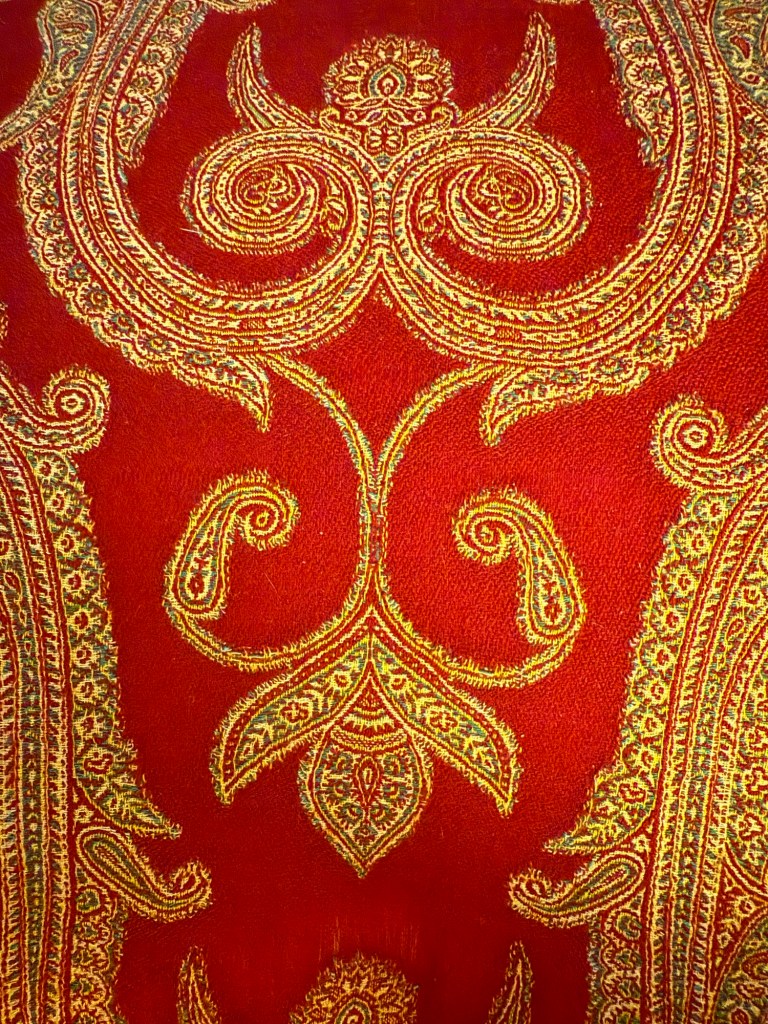
Here is part of a paisley pattern on a pillow in our living room.

See that teardrop thing, kind of in the middle of the photo, framed by what looks like it could be sepals were the teardrop to be an upside down flower bud?

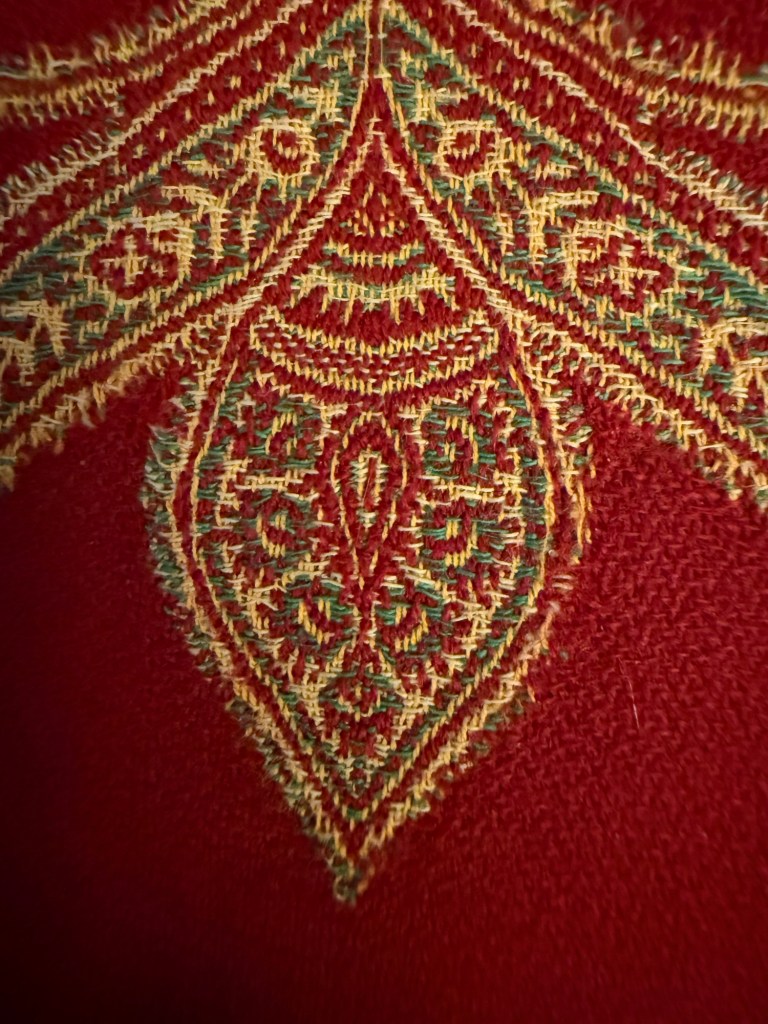
Well, here is a closer view. See the second little teardrop thing in the middle of our main teardrop?

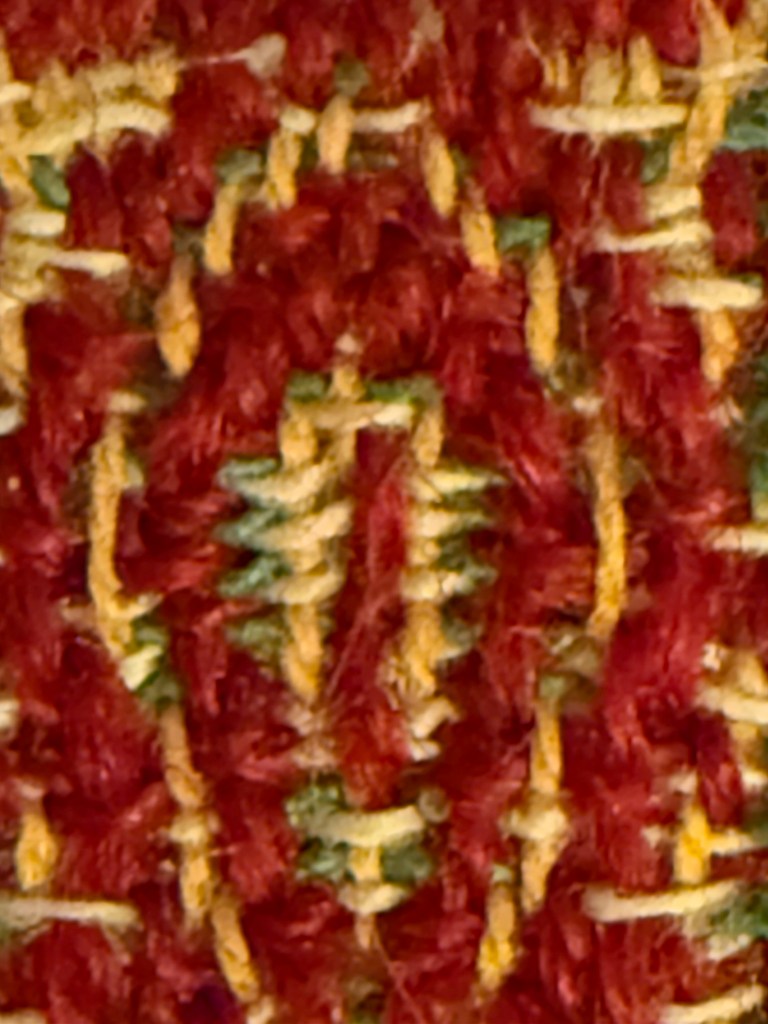
Well, have a look at this macro closeup of that inner teardrop, below.

Isn’t that amazing? That I could take such a detailed close-up photo with my PHONE???? I mean, I remember when I thought it was super thrilling to have captured a tiny, pixelated, one-square-inch image on my Nokia. And now this!

Sometimes it truly is necessary to stop and take a moment to wonder at (and appreciate) the marvels of our time.

Posted in Life, Photography | Tagged , , , | 1 Comment

Writing exercise – “Common Comrades” (a horror poem)

This poem was a response to a writing-exercise prompt for my writing group. My original plan was to submit to literary journals with hopes of publishing. I haven’t done that sort of thing in many, many years and would like to start again. The poem is good enough, I think, and on the day I shared it with my writing group, they were helping me brainstorm a list of places to send it.

So that was my original goal: to have this poem accepted somewhere and get the publication credit.

But then I thought about my photos.

Our writing group is meeting via Zoom right now because one of our members is in Florida. When I read this poem aloud to my group, they liked it well enough. But I was also sharing the document on my screen as I read aloud, and when I eventually scrolled down past the last line of the poem and got to the attached pictures on the next page, then they really liked it. Like, the photos kind of make the poem. While the language itself is evocative, you really need the images to experience the poem in full.

So although I’ve dithered quite a bit in the last two weeks about whether or not to try for publication in a lit mag, as I’d love to see this published in a legit space, I have trouble imagining who would take it and publish several of my photographs alongside it.

In the end, I wound up coming back here to my own tiny little corner of the internet, where I can have “artistic freedom” (a.k.a. complete control 🙂 ) and can see my poem published in the exact format I want it to be presented in.

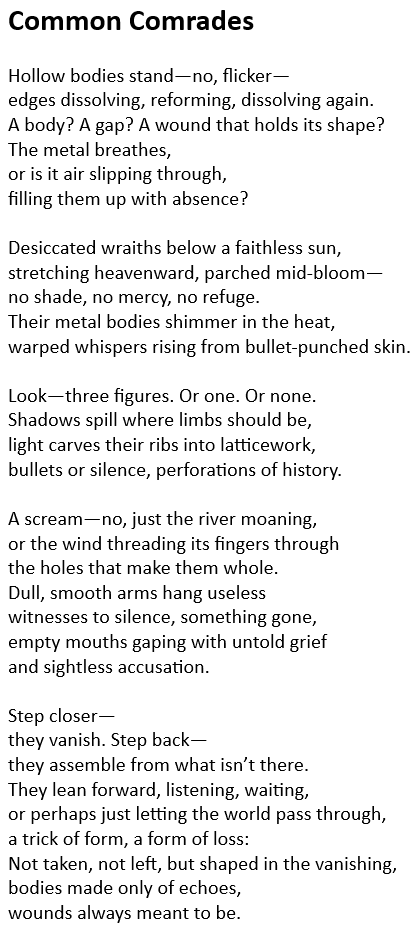
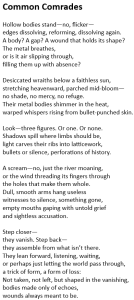
So first, here’s my poem. Photos and explanation to follow. (By the way, I’m inserting my poem as an image because I don’t like the way WordPress formats poetry.)

[UPDATE – I just looked at this post on my phone, and while the image text shows up great on my laptop, on my phone I had to click on the “image” to see the print clearly. FYI, in case you’re on your phone and the poem looks blurry. All you have to do is click on it!]
And now here are the photographs.

Except maybe I should back up a little bit first, though. The writing group exercise for the week I wrote the poem was: “Write something in response to a painting” (worded better than that, but that’s the gist of it).

However, I couldn’t find any paintings that spoke to me. I mean, obviously they spoke to me in the way that art does, but they didn’t speak to me in terms of inspiring me to write something of my own in response. So I turned my attention from paintings to photography, thinking maybe I could find a famous photo that could spark something. Or maybe, if photography didn’t pan out, a sculpture could work.

And then, out of the blue, I remembered some photos I took of a sculpture.

In summer 2019, a fellow professor and I led several Milwaukee School of Engineering students on an “art walk” along Milwaukee’s Riverwalk to view the sculptures both there and along Wisconsin Avenue. (Aside: Milwaukee has a surprising amount of public art. And further aside: You can read about our “art walk” experience HERE.)

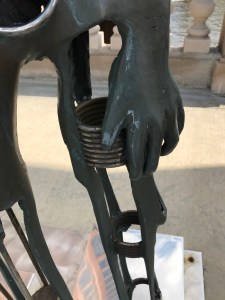
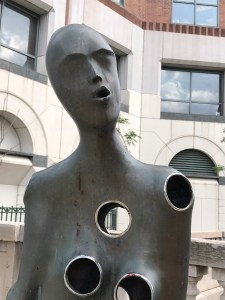
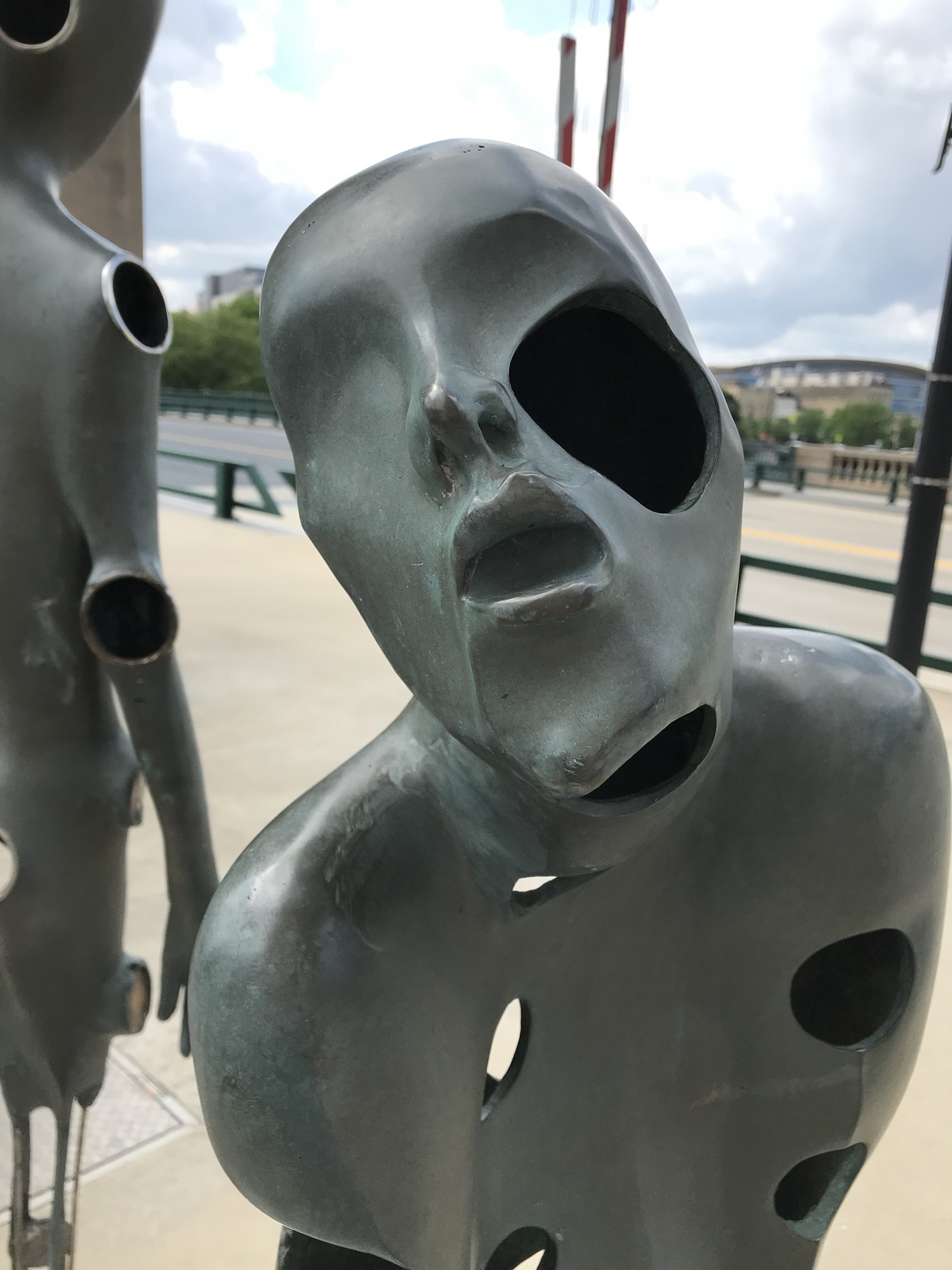
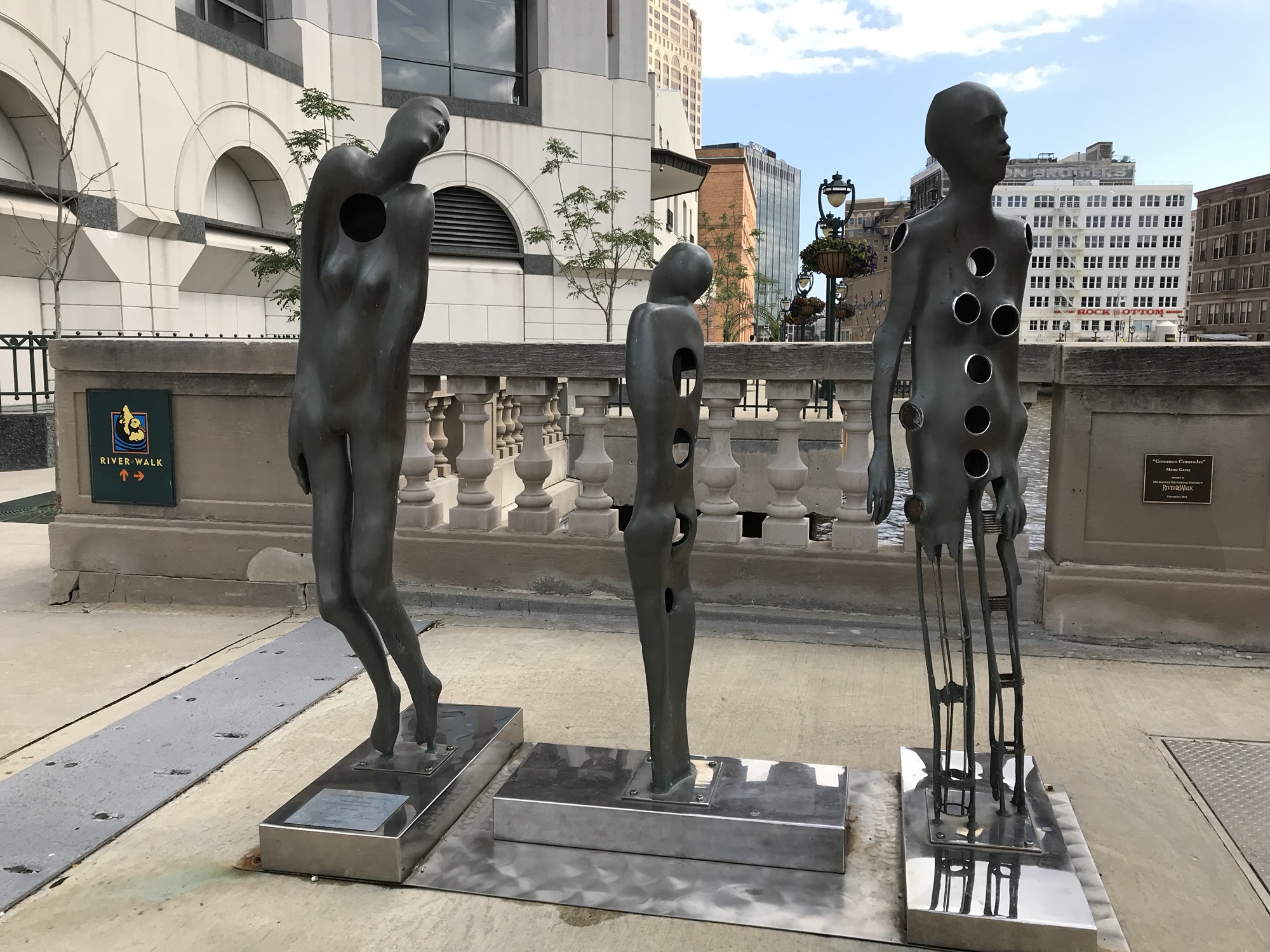
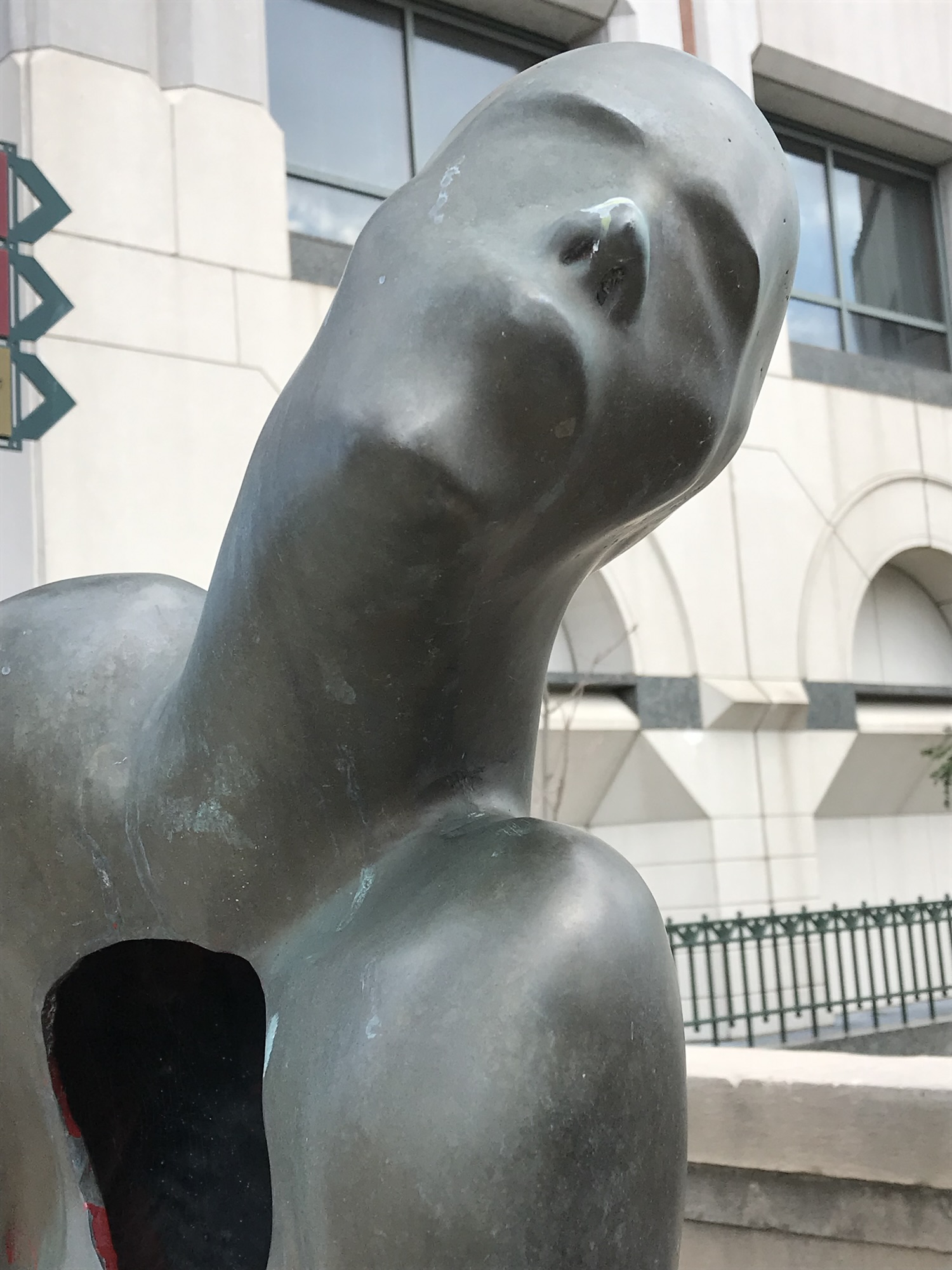
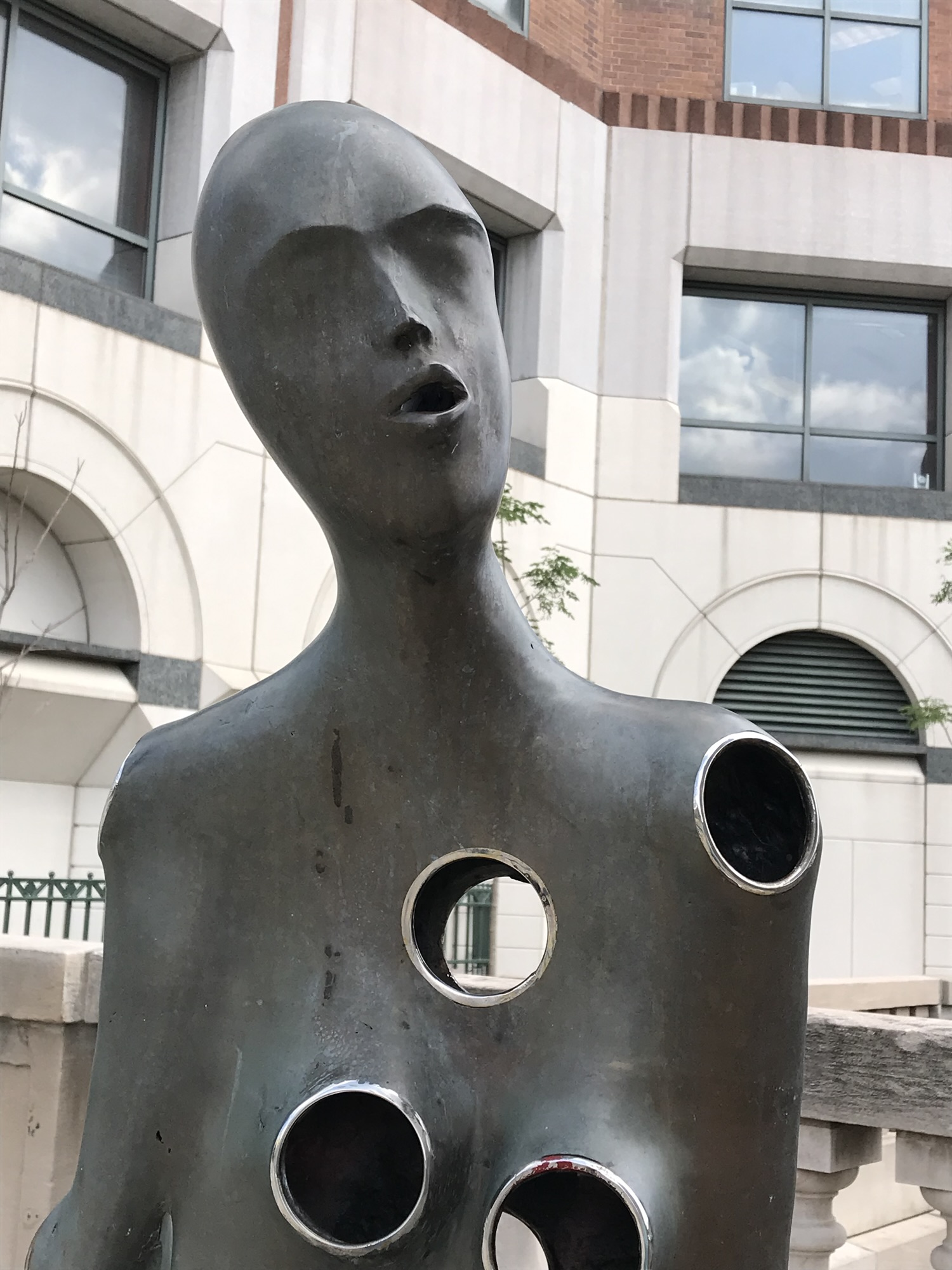
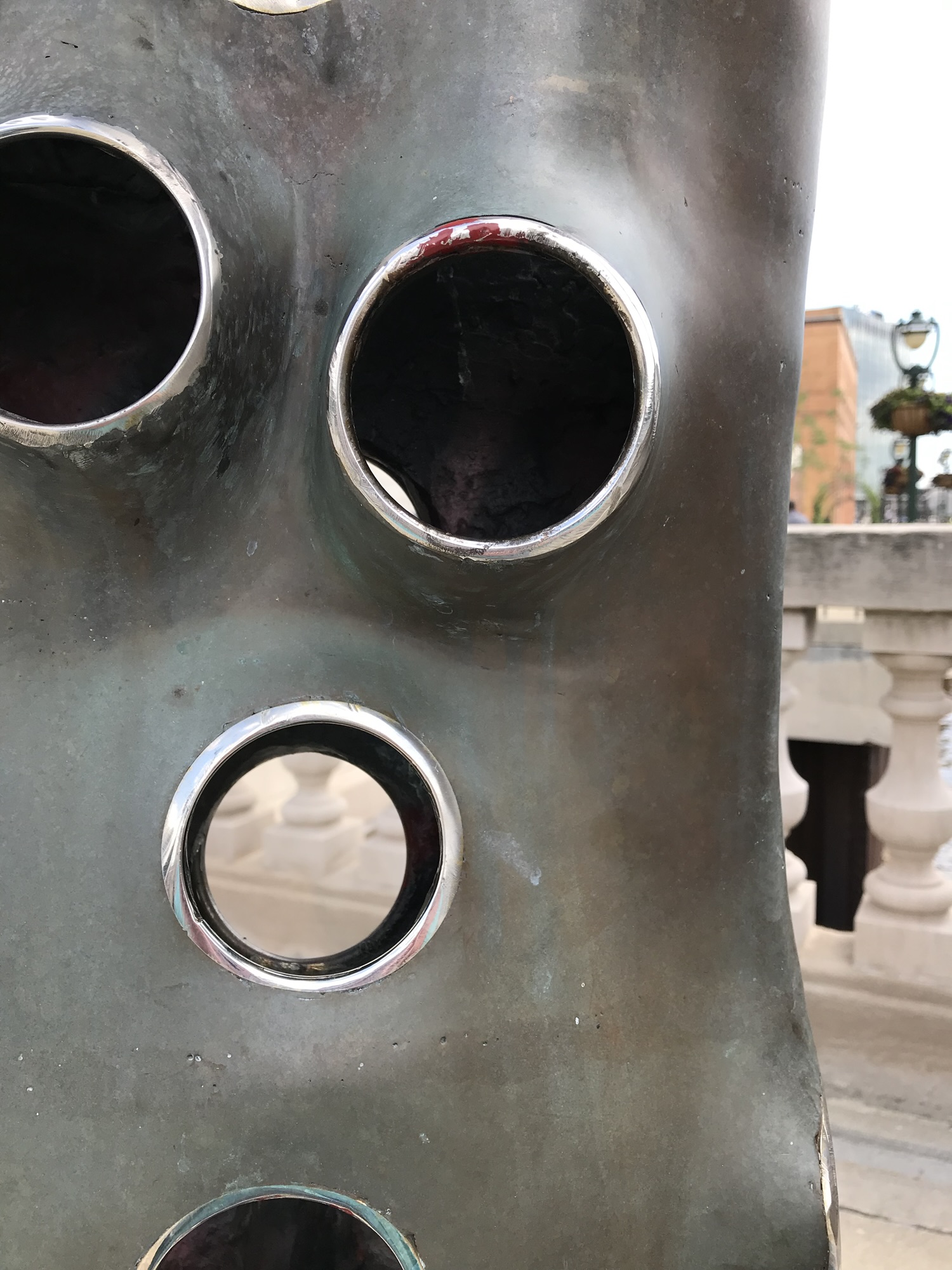
One of the sculptures we saw on our walk that day absolutely haunted me. So much so that I went back another day and took lots of photos from all different angles and distances.

As soon as I made that loose connection between photography and sculpture for my writing group exercise, I remembered photographing that particular sculpture and knew instantly what I would write. Not that the poem sprang fully formed from my forehead like Athena from Zeus, but I did have an immediate “flash” of what I wanted to say in its entirety. That is, I kind of saw the poem as a whole from the very start, albeit in a pretty vague, inchoate kind of way. It was a “feeling” that had shape, if that makes sense.

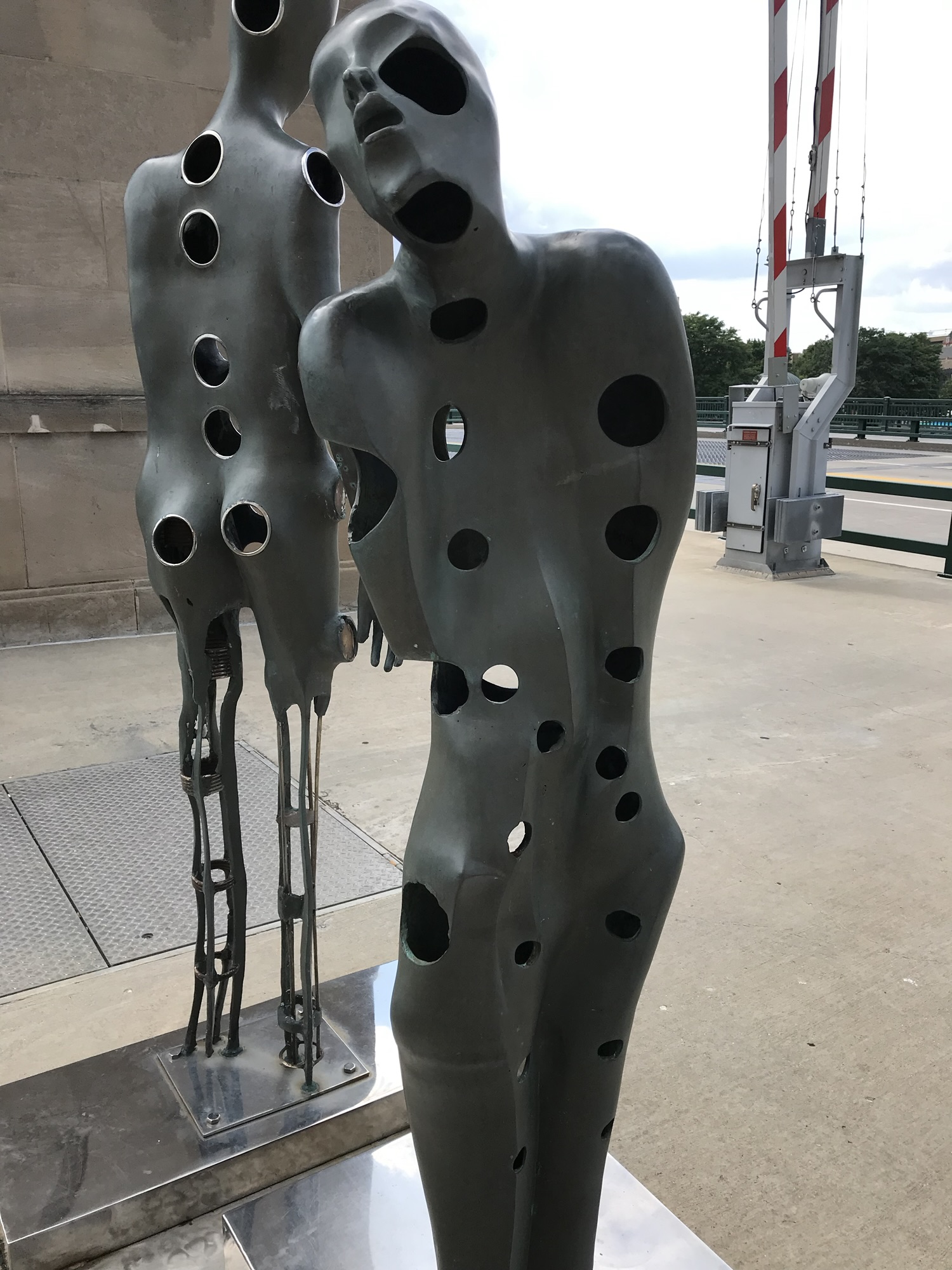
I wanted lots of mournful, haunting words, for example. And I wanted the figures to speak in some way, even if nothing more than to offer silent testimony on ideas like the emptiness of the void, the omnipresence of evil (the type so banal that we don’t even see it), and the callousness of our ignorance. The figures in this sculpture are absolutely horrifying up close. Yet the sculpture sort of fades into the woodwork (so to speak) of its busy surroundings, in a spot seemingly “tucked away” in a nook next to one of the four bridge house pillars on Kilbourn Avenue, a major east-west downtown street that hundreds, if not thousands, of people drive and walk past every day. Maybe that adds to the horror, the fact that it occurs in such an unobtrusive way in such a high-traffic setting.

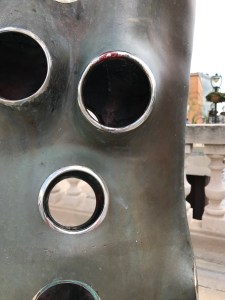
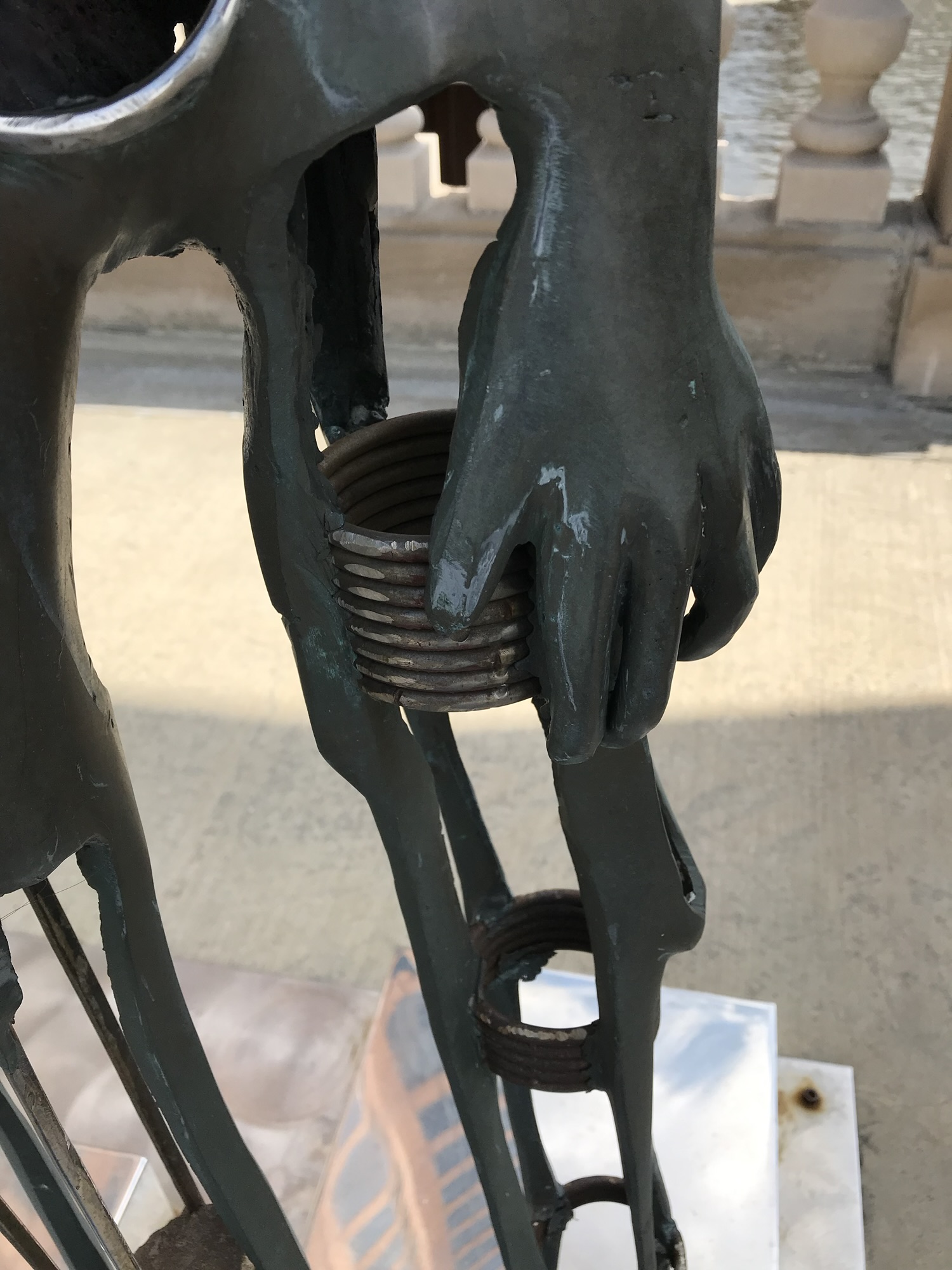
In addition to “haunting” words, I wanted my poem to have a “kaleidoscopic” feel that would mimic the experience of needing to walk all around the figures (which are different heights and are facing in different directions), standing alternately far away and then coming in close again, to view everything there is to see and to take in the sculpture as a whole. Plus, I liked the paradoxes embodied in this sculpture: sightless eyes, silent screams, missing arms and legs, and “prosthetic” arms and legs resembling crutches or braces for use with limbs that aren’t missing as these are. I liked the paradoxes, mind you, not the actual horror of sightless eyes and silent screams. Just so many details and perspectives happening all at once as you experience this artwork, which to me seems very kaleidoscopic. Always changing, always shifting perspectives.

So anyway, were this poem to be published, I knew I really wanted the pictures I took of “Common Comrades” to run alongside so that anyone reading could feel this sculpture as a “whole” experience the way I did. And because I couldn’t imagine any lit mag giving over the amount of space I thought these images needed, I decided to publish it all myself.
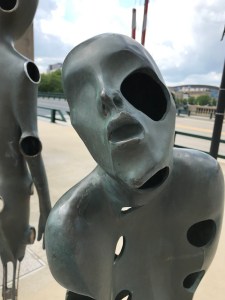
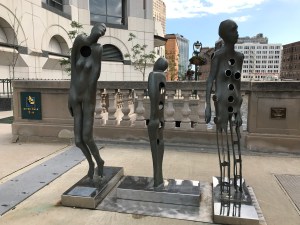
FYI, the red and white candy-striped apparatus in the background below is the arm that lowers to stop foot and vehicular traffic when the drawbridge rises to accommodate boat traffic on the Milwaukee River below.
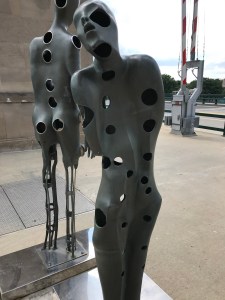
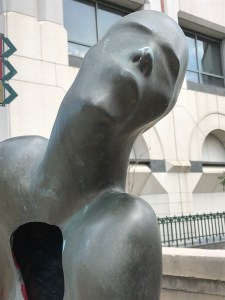
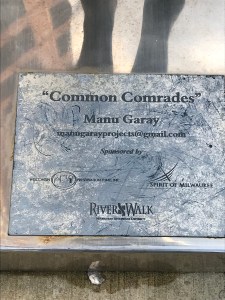
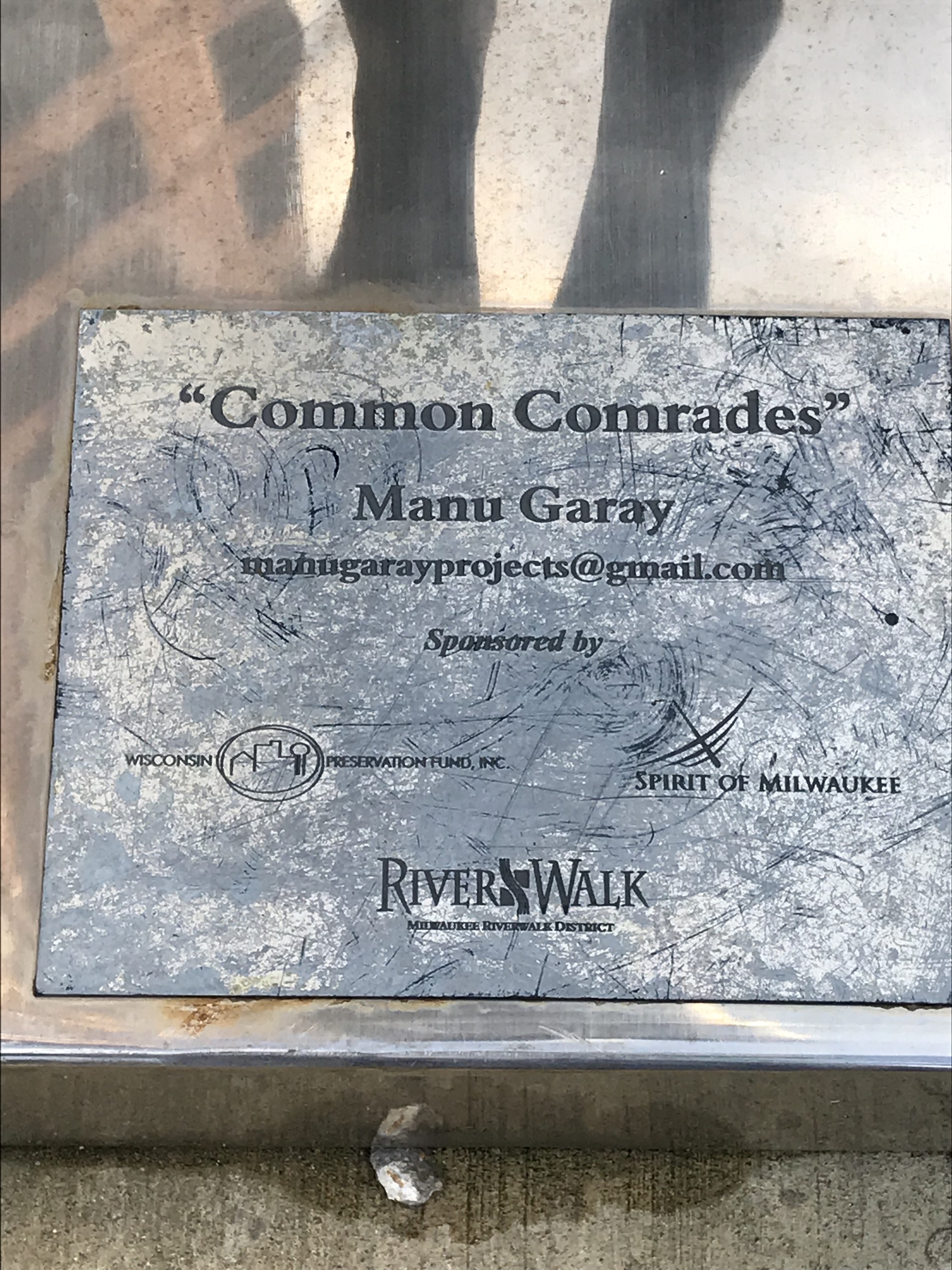
The official description of “Common Comrades” on the Milwaukee Riverwalk’s website reads: “These works, abstract versions of the female form, are inspired by the environment around us.”

Which . . . what?

To me these figures are specters of war, a chilling testimony . . .

[Aside: It’s really hard for me to use the word “testimony” in my own writing now that AI-generated texts have kind of ruined it via ubiquitous assertions that anything it’s writing about is a “testimony” to whatever. I resent that appropriation and cheapening of the word, LOL]

. . . to the millions of people killed in the convulsive horrors of the mid-twentieth-century’s ideological self-righteousness—in Germany, in the Soviet Union, in the Balkans and the Middle East. I’m sure I’ve accidentally omitted a few areas of ethnic cleansing in there, but you get my drift. The twentieth century will surely go down as the bloodiest, most murderous period in human history. (I hope, anyway. God forbid we should see worse times ahead.) The title “Common Comrades” makes me think that the figures represent all the ordinary people caught up in forces of war beyond their control, mere pawns in the stratagems of the powerful, and trapped in maelstroms of hate so all-consuming as to transcend reality almost to the level of abstraction.

Of course, my interpretation is my interpretation. Your mileage may vary. I also don’t know where that description’s language originated. With the artist? And if so, is that description intentionally vague and open ended?

One comment I saw attached to a Flickr (styled “flickr” on their website, with a lowercase “f”) photo said:

Described as conveying “…the message of inclusion for the poor, oppressed, and outcast.”

Unveiled on Milwaukee’s Riverwalk September 6, 2010.

Does it mean something that I went straight to war and ethnic cleansing in my interpretation instead of thinking of female form abstractions inspired by the context of our surrounding environment?

That gives me something to think about, truly, because why should one type of violence have come to mind more readily than others? Why did I not think about domestic violence first thing, for example? Or random street violence? What made me visualize massive violence at scale rather than small, separate incidents of violence inflicted against individuals?

And I totally did not see this sculpture as being a message of “inclusion.” Definitely the part about the poor, oppressed, and outcast, but more about the great wrongs being done to them than about a call to be inclusive. That is, I see “Common Comrades” as art that calls out crimes against humanity, and “inclusion” sounds like way too tame a response for the immense evil at work here.

Again, your mileage may vary 😀

I don’t know anything about the artist, Manu Garay. Text accompanying a flickr photograph of the sculpture mentions him as a “local artist.” I did find someone on LinkedIn named Manu Garay, based in Milwaukee, so that person may be him. His education is listed as MIAD, which is the Milwaukee Institute of Art and Design, an additional “clue” that logically seems to point toward this LinkedIn person being the creator of Common Comrades. The LinkedIn profile also lists a “freelance design” website URL, but when I clicked through, I got a “this site can’t be reached” message.

Which, if this LinkedIn Manu Garay is the Manu Garay, makes me sad. The artist who created this sculpture is amazingly talented and ought to have an online presence. But I couldn’t find anything. Maybe he’s retired or has stepped away from doing art projects.

There is that Gmail address listed on the sculpture plaque, however. Doesn’t that make you think the artist might welcome hearing from people? So I’ll try contacting him that way and send my photos and a copy of the poem. He might not care for my interpretation, but even so, if he’s anything like me, he might also be happy knowing that his work affected someone so viscerally that it created a new work of art via the energy transfer of sympathetic vibration.

Posted in Art, Creativity, Milwaukee, Photography, poetry, writing exercises, Writing, blogging | Tagged , , , , , , , , , , , | 2 Comments

Wavy Van

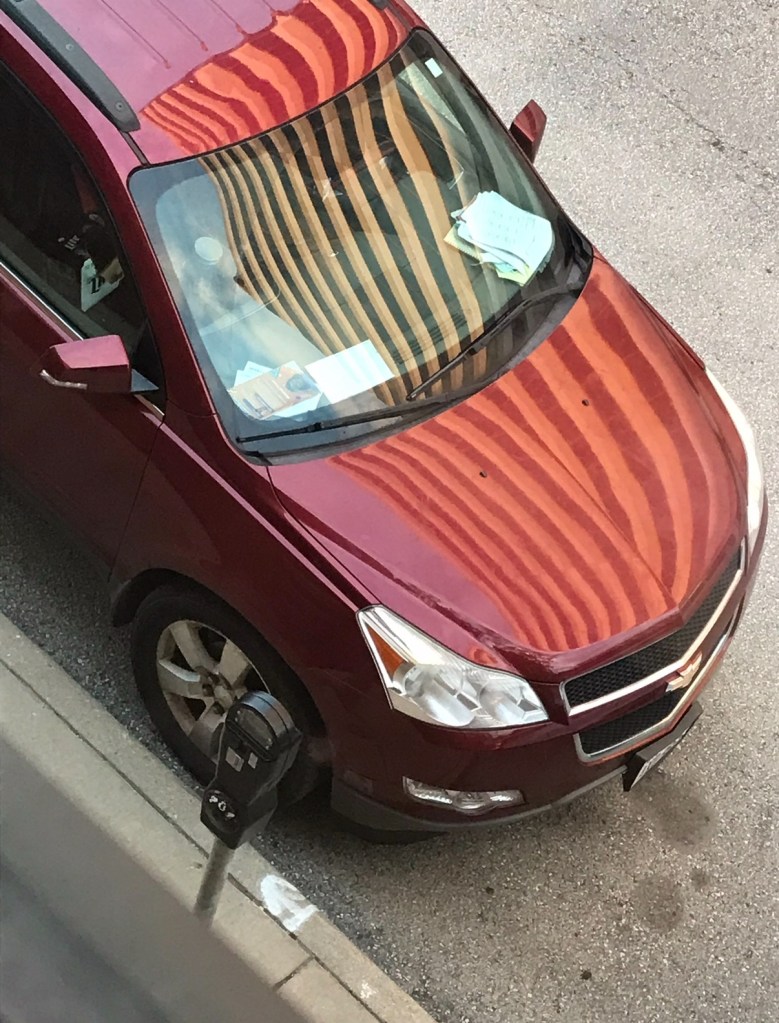
The strong horizontal lines of the building just south of my office got bent big time along the curves of this van on the street below my window. I wasn’t going to post this photo, as it’s really nothing special, except that every time I come across it in my camera roll, I stop and take a good long look at it again because it’s so striking. Which I guess makes it special in its own way😀

Posted in Photography | Tagged , | 2 Comments

Is Corned Beef Really Irish? | Smithsonian

The rise and fall and rise of the traditional St. Patrick’s Day meal
— Read on www.smithsonianmag.com/arts-culture/is-corned-beef-really-irish-2839144/

My daughter told me about this fascinating article about the close ties Irish immigrants developed with their Jewish neighbors in America. What we think of as Irish corned beef was actually meat that the newly arrived Irish could finally afford to eat (now that they weren’t starving under Great Britain’s rule), and they purchased it from the Jewish delicatessens.

Posted in History, Popular culture | Tagged , | 7 Comments

Office Building Lobby

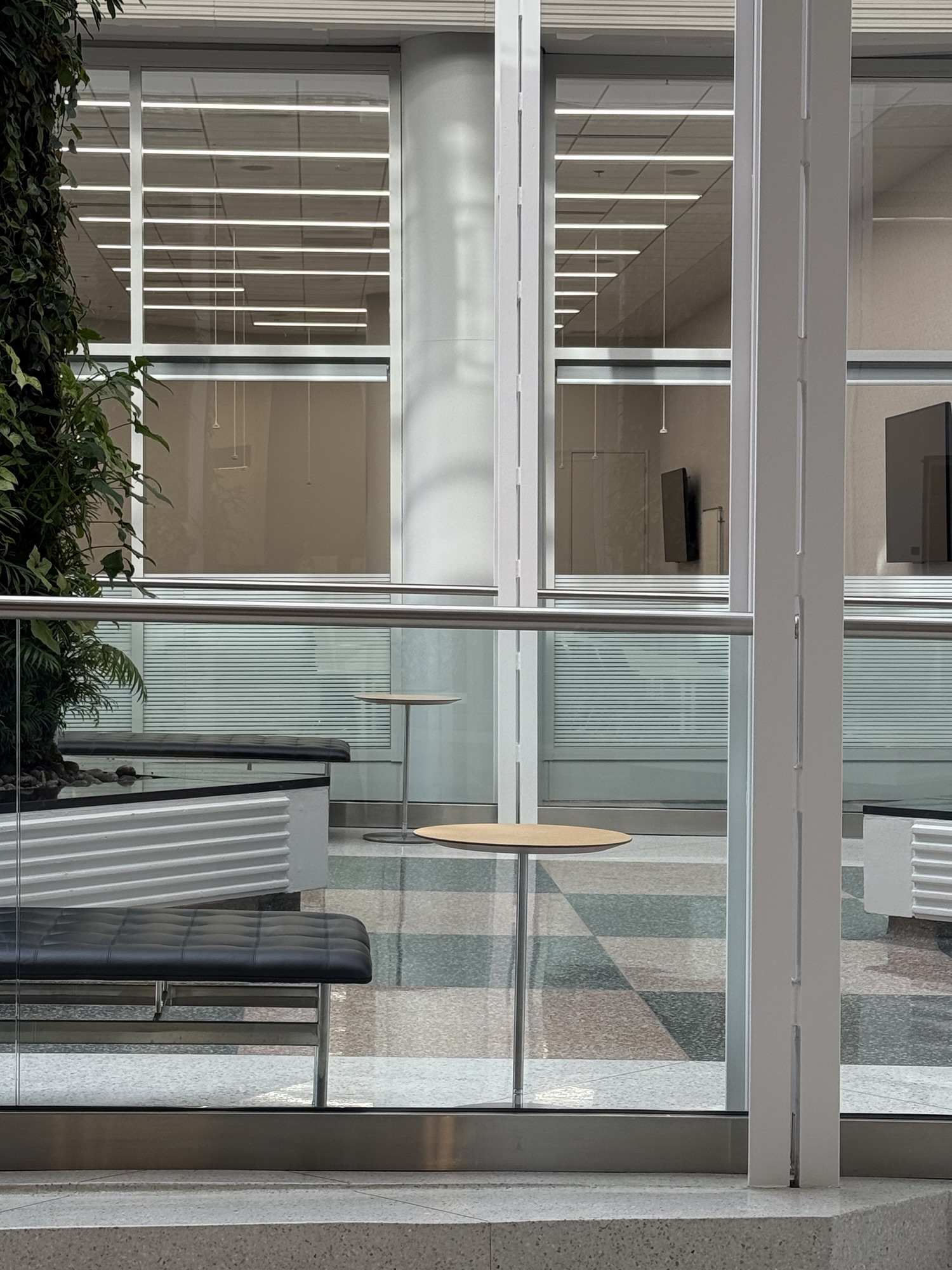
I had a meeting with a colleague this morning in a nearby office building’s large food court, which serves only coffee and prepackaged breakfast food in the mornings and is thus quite deserted during the 9:00 AM hour. While standing at the counter to order coffee, I noticed how striking the various lines of the building’s lobby were for the first time. I’ve been in this building hundreds of times (at least!) over the past 30 years, but I guess I’ve never been standing exactly in this spot, with the light (and light fixtures) being exactly as they were this morning, because it all looked “fresh” to me!

Office building lobby in silver and light green colors, with spare, minimalist furniture, lots of silver metal and glass, and many vertical and horizontal lines

I loved not only the strong vertical and horizontal lines but also the rather spare color palette of silver, black, white, and green (of varying shades, ranging from the pale green floor tiles and wall to the dark green leaves of the plant). Just a nice little moment of delightful awareness to go with my Valentine coffee (roasted in Milwaukee!) Americano as I launched into my work day. . . .

My sadly very long work day, which is only just now ending as I prepare to leave my office at 8:15 PM. But on the plus side, I managed to get a lot of BIG projects completed, so I can go to bed tonight with a clear head filled with zero worries! 🙂

Posted in architecture, Milwaukee, Photography | Tagged , , | Leave a comment

‘Chaos: The Manson Murders’ Review: All You Ever Knew is Suspect – The New York Times

My January 2022 post about Charles Manson and Dennis Wilson is getting LOTS of views today. And now I know why. There’s a new documentary on Netflix starting today, reviewed here in the New York Times: Errol Morris returns to his main obsessions — evil and delusion — in a new Netflix documentary about the famous murders.
— Read on www.nytimes.com/2025/03/06/movies/chaos-the-manson-murders-review.html

Posted in History, Movies and film, Popular culture | Tagged , , | 2 Comments