Smiley (Or, The Most Happy Staircase)

Two references to unpack in that title, but first . . .

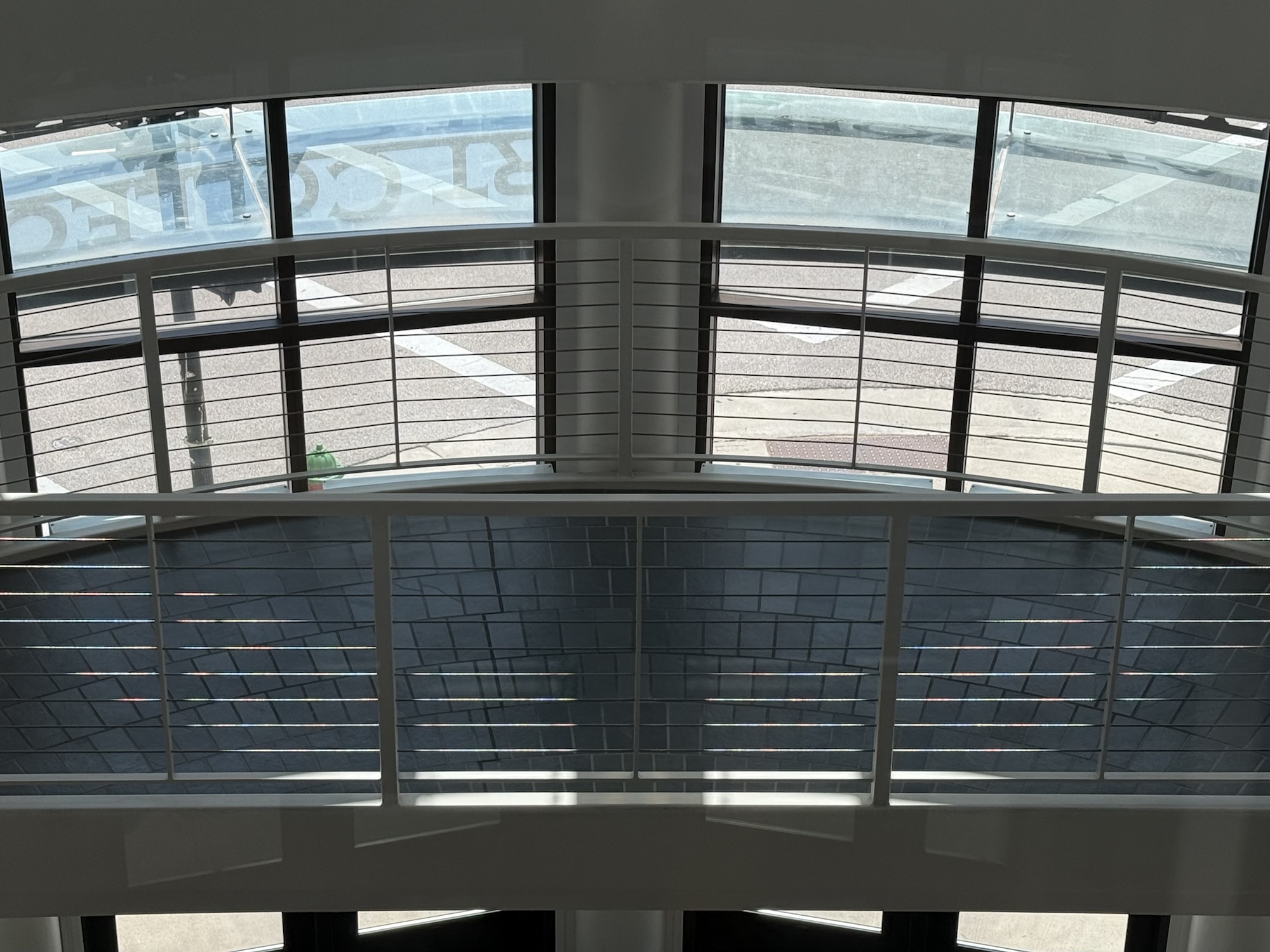
Two windows and an arch of light create a "smiley face" effect on an open staircase.

“Smiley” (Or, The Most Happy Staircase) – Anthropomorphism at the Grohmann Museum

. . . here’s a photo I took the other day around 2:15 PM of the atrium staircase at the Grohmann Museum (where my office is). If you look at it just right, taking in the two windows (eyes) and the curved “arch” of light shining on the railing’s strands of wire (smile), doesn’t this staircase landing look like a “smiley face”?

I love it when I notice stuff like this. Just a little day-brightener to add a lift as I go about my business 🙂

We all know the smiley face referred to in this post’s title—not only from the many years it has graced products from throw pillows to tote bags to coffee mugs but also (ever since the advent of digital communications and the invention of emojis) from emails, social media posts, and even occasionally more serious documents like job application letters! But, in case you’re curious to know more, like me, here’s the Wikipedia article documenting this happy little icon’s complete history (although I must add that Wikipedia calls it an “ideogram” instead of an “icon,” to which I can only say that the gradation of meaning between those and similar terms like “pictograms” and “symbols” is a little beyond my knowledge set): https://en.wikipedia.org/wiki/Smiley

The second part of this post’s title is an allusion to a 1956 Broadway musical that was apparently quite popular, The Most Happy Fella. The original production of this musical ran for 14 months, and it was also broadcast live in 1956 on The Ed Sullivan Show, on the same night that Elvis Presley made his second appearance, coincidentally.

The most famous song from the musical was “Standing on the Corner,” a really catchy tune that you’ve probably heard before if you are *of a certain age* as they like to say euphemistically.

I remember hearing this song on the radio when I was a child, although 1) I’m not quite as old as the song’s age would imply and 2) radio programming seemed a little different when I was young (or, more likely, “popular” music constituted an entirely different variety of song types than it does today). I also remember recognizing this song in the “I Love Lucy” episode where Lucy and the gang go to see “The Most Happy Fella” on Broadway.

Anyway, that’s my post for today: A smiling staircase and a cheerful song and a happy emoji here at the very end to seal it all up with good vibes before I hit “publish” and send it off into the world 🙂

Posted in Life, Photography, Popular culture | Tagged , , , | 2 Comments

“The Pianist’s Hands” – A short story, plus my start-to-finish ChatGPT creative conversation

Alternative Title: How I Wrote “The Pianist’s Hands” (When I Thought I Was Just Dashing Something Off) 🙂

Back in February or March, I began drafting a short story with ChatGPT for my writing group—just an exercise, nothing too serious. This week, when it came time to choose a piece of creative writing to share for this new blog series on AI and creative practice, I figured that story—The Pianist’s Hands—would be an easy win. A quick polish, a light intro, and done.

The idea behind the “case study” part of this “Creative Practice in the Age of AI” series is to share examples of my own creative work (short stories and poetry) I’ve written in collaboration with ChatGPT. This piece, “The Pianist’s Hands,” felt like the perfect low-stakes place to start. Just a simple, manageable story and chat duo to test the waters. I’d tidy up the first draft and hit publish. Done and done.

Famous last words.

At the time I originally wrote “The Pianist’s Hands,” I didn’t really know what I was doing with ChatGPT. Before writing this story, I’d used it mostly for generating short scenes for my novel or doing brief exercises for my writing group—basic stuff, much of which I documented in blog posts. Maybe a prompt, a response, a couple back-and-forths, and then I’d take the draft offline to revise on my own. I hadn’t yet figured out how powerful this tool could be across the full spectrum of the writing process.

“The Pianist’s Hands” ended up being one of my first real attempts at sustained collaboration with ChatGPT. It didn’t even come from a writing group prompt. I just had the idea—really more of a desire—to write short, jewel-like stories inspired by fairy tales. At the time, I’d been thinking about how much darker the original tales by the Brothers Grimm and Hans Christian Andersen are compared to their Disney counterparts. “The Little Mermaid,” in particular, was on my mind—especially the pain and sacrifice Ariel (or rather, the original mermaid) endures in pursuit of what she wants most.

That was the seed of “The Pianist’s Hands.” Then I got an exercise prompt from my writing group to do a scene in which a character says, “I dare you to tell me the truth.” So I threw that into the mix, as well.

The original version of this story was quite short, barely two pages. Terse. Very stripped-down prose. I remember feeling almost embarrassed by how slight it seemed. To my surprise, my writing group really liked it. Something in the idea itself must have landed.

When I went back to revise the story this past week, thinking it would be a piece of cake, I realized immediately that I’d need to start a whole new chat, just for it. My approach to ChatGPT has changed a lot since those early days. I now use it throughout the entire writing process—from brainstorming and early drafts all the way to polishing and word choice. One result of that deeper engagement is that I’ve learned to be more intentional about keeping my writing organized. Every project gets its own dedicated chat now.

That wasn’t always the case.

In fact, when I first started working on these multiple “fairy tale” short stories, I thought I could keep them all in one chat. (Ah, optimism.) That worked well—until it didn’t. I have a screenshot included on page 5 in the “Appendix chat” that shows what happened when I began a new story (“The Twelve,” based on The Twelve Dancing Princesses) in the same thread where I’d been working on “The Pianist’s Hands.” ChatGPT essentially wrote over the earlier story. The green text was from “The Twelve.” The red strikethroughs? Those were remnants of “The Pianist’s Hands.” Gone, unless I had saved them elsewhere.

It was around this time that I realized ChatGPT sometimes drafts in an “off-screen” way—that is, working internally rather than displaying the process in the chat window. I found this incredibly frustrating. I don’t want my drafts happening behind the curtain. If something disappears, there’s no getting it back. Since then, I’ve made a point of explicitly asking ChatGPT to write everything in the chat. I like to see the progression. I want access to every version. And, to its credit, it seems to have remembered that request ever since.

Back to “The Pianist’s Hands.”

The story didn’t change much in revision, at least structurally. But when I returned to it this week, I wanted to deepen the emotional weight of the protagonist’s decision—to really draw out the cost of choosing between career and self, art and commerce, ambition and joy..

In an ideal world, I would have let the revised story sit for a while and given it time to breathe before coming back to it with fresh eyes for a final pass. But I’ve committed to this weekly series on AI and creative practice—and I’d also committed to using this story as one of the first entries. So here we are.

“The Pianist’s Hands” may still be a bit green from revision. But it’s good enough, I think. And sometimes that’s all you need in order to move forward.

So here it is: The Pianist’s Hands. A story born from fairy tales, shaped in conversation, and offered with gratitude for what creative tools—old and new—can help us discover.

First, HERE is the PDF of my short story, “The Pianist’s Hands.”

And HERE is my entire ChatGPT creative conversation. It’s long and meandering, but it may have some value if you’re interested in seeing how I wrote the story, at least the “trail” left behind by my “chat.”

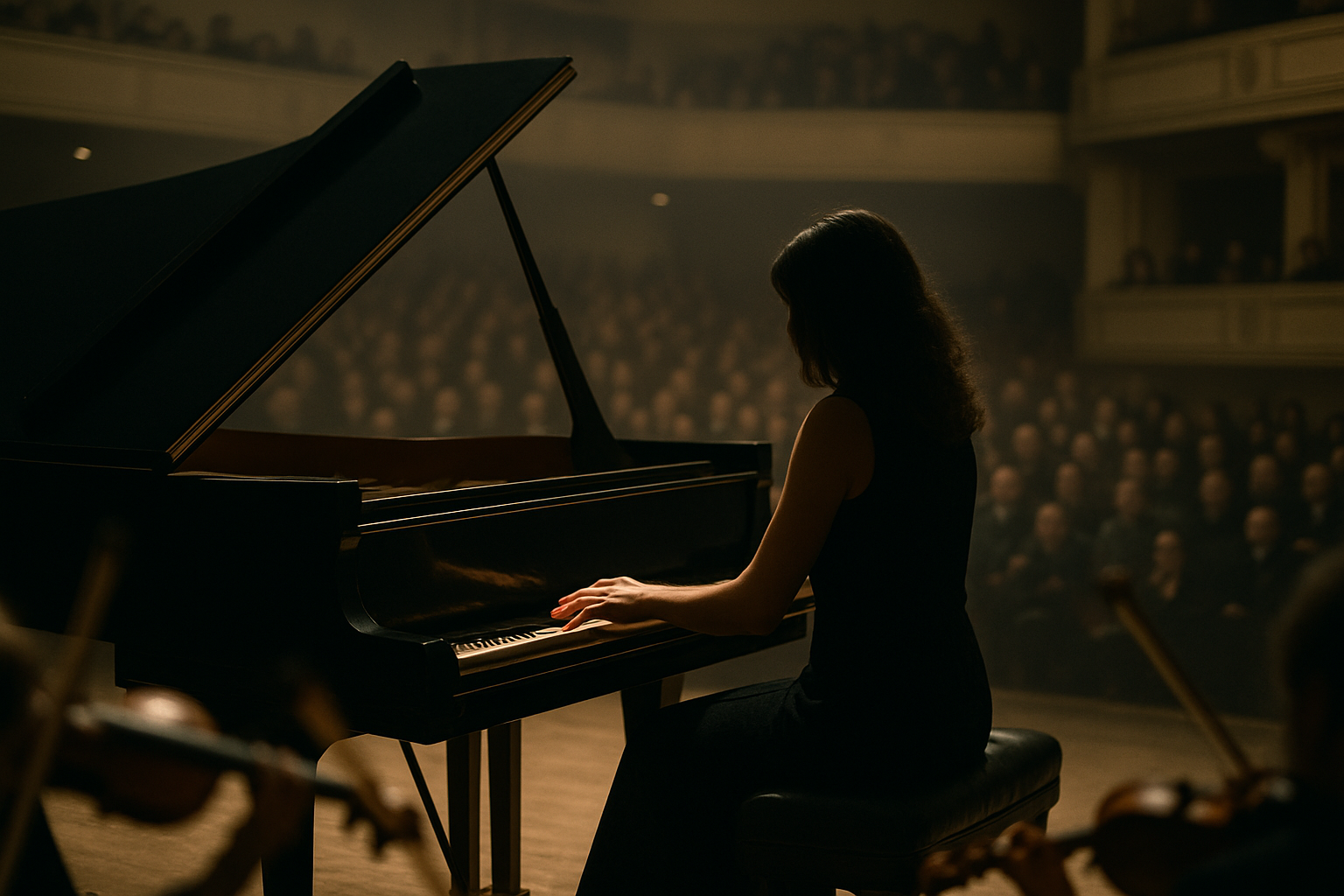
Finally, we have the beautiful image ChatGPT created to illustrate this post. (Link to the “illustration chat” HERE if you’d like to see my prompt.) Don’t leave yet, though. If you continue scrolling down past the image . . .

A pianist plays on a concert stage (ChatGPT generated) “The Pianist’s Hands,” to accompany the short story by Katherine Wikoff (with ChatGPT assists)

you’ll find this week’s . . .

Creative Exercises

Since this week’s post is about my evolving writing process with ChatGPT, as well as story development and fairy tale inspiration (with themes of transformation, sacrifice, and artistic ambition), today’s creative practice exercises are playing with:

  • collaboration with AI
  • fairy tale reinterpretation
  • emotional revision
  • storytelling structure

Here are five creative exercises related to the overall theme of “Creative Practice in the Age of AI” and, in particular, the content of this week’s post on “The Pianist’s Hands.”

1)  Trade a Gift for a Cost  Fairy tales often hinge on a deal or sacrifice. Explore what you’d give up—and what you’d gain. Prompt: Write a scene or micro-story in which a character receives something they’ve always wanted—on the condition that they give up something intangible but vital (e.g., memory, taste, color vision, sense of time, ability to feel music). Optional twist: Ask ChatGPT to generate the “bargain” based on a wish your character voices in the first paragraph.

2)  From Draft to Depth  Revisit something you wrote quickly—then deepen it. Prompt: Find a piece of your own writing you once considered “minor” or “simple”—a story, poem, paragraph, or scene. Choose one emotional thread (e.g., regret, longing, resolve) and write a revision that amplifies and explores that feeling more deeply. Bonus: Try using ChatGPT as a revision partner. Ask for suggestions to heighten that emotional tone or to reframe the piece through a more complex lens.

3)  Write Over Something  Play with layering and erasure to explore how meaning evolves. Prompt: Take a piece of your own writing—maybe an old draft or even a journal entry—and “write over it.” Keep the original visible (strike it through, fade it, or use a lighter color), and layer a new text on top. Let the earlier version bleed through or contradict the new one. Goal: Let revision become part of the art. Let the process of changing your mind show.

4)  AI as Memory Keeper  Explore your relationship with your own creative evolution—and how AI fits in. Prompt: Write a brief reflection or meta-scene from your own point of view, describing a turning point in your creative practice. Then ask ChatGPT to retell your scene—but from its imagined point of view. Compare the two versions. Where do they align or diverge?

5)  Fairy Tale in a Sentence  Capture the whole arc in miniature. Prompt: Write a new fairy tale in exactly one sentence. Include a protagonist (hero), a desire, an obstacle, and a transformation. Then ask ChatGPT to expand it into a paragraph—and decide whether it adds or loses something in the process.

Hope you enjoyed this week’s post. Have you tried using generative AI yet in your own creative practice? I’d love to hear your thoughts.

Until next time ❤

Posted in Creative Practice in the Age of AI, Creativity, writing exercises, Writing with AI, Writing, blogging | Tagged , , , , , , | 4 Comments

“Hello World!” – Creative Practice in the Age of AI

I mentioned a new project last week that I’ve been working on for the past month but wanted to run past my writing group before launching. Here it is! This is the first post in a new series reflecting on creativity in an AI-shaped world—blending essays, writing prompts, and “case studies” featuring my own AI-assisted creative work.

Although I’ve written similar posts on my blog before, that focus is now a little more “official.” My plan is to publish on this topic weekly, while also continuing to post my usual mix of photos and essays. The only real difference you’ll notice here is that every Monday (or maybe Tuesday, if I’m being realistic, as “real life” often gets in the way 🙂 ) there will be a post on this topic.

I am also publishing these same “AI and creativity” posts over on Substack and LinkedIn. Once I get things smoothly rolling on those two platforms, I’ll set up links here to let you “subscribe” or “follow” over there, in case anyone would prefer to receive only the AI-related posts in a separate email.

And now, without further ado, my new adventure!

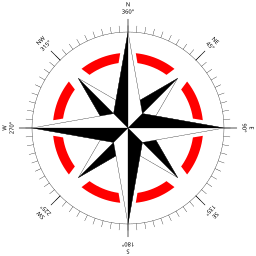
Compass rose with the eight principal winds (from Wikipedia)

Compass rose with the eight principal winds (from Wikipedia, https://en.wikipedia.org/wiki/Compass_rose)
User:Vloeck, CC BY-SA 3.0 , via Wikimedia Commons

“Hello, World!” is the phrase programmers use to mark a beginning—to test a system, send a signal into the void, and see what answers back. It’s the digital equivalent of tapping a mic and asking, “Is this thing on?” A small, ritual gesture, but also a declaration: I’m here. I’m starting. Let’s see what happens.

I’m borrowing that tradition to launch an ongoing series of posts as a space for exploring creativity in an age shaped by algorithms. This is my “Hello, World!” and I’m sending out this first signal to others who feel both curious and cautious about the rise of generative AI.

Teaching humanities and communication at a small engineering university means I spend a lot of time around students who are fluent in code and curious about creativity. Their openness to generative AI as both tool and toy reminds me that fear needn’t be the only response to something foreign and new. There’s also wonder.

In fact, my biggest surprise, personally, with this new technology has been rediscovering the sheer fun of creative practice.

My second biggest surprise? Just how polarizing the subject of AI can be. Bring up generative AI, and suddenly it’s like the relatives talking politics at Thanksgiving—some people are all in for a good discussion, others . . . not so much. The topic sparks excitement, anger, fascination, or fatigue, depending on whom you ask.

This new “AI” series is my way of staying steady and centered in that swirl. I’m not here to debate the ethics of AI or whether it should even exist. That horse is already out of the barn. What interests me more is what this technology means for creativity, for meaning-making, and for being human. As AI reshapes not just what we create but what “creativity” means, how do we keep showing up . . . and why?

Those are the questions I want to explore in this series—through essays, prompts, reflections, and conversations with others navigating this weird and wondrous terrain.

What does it mean to be a creative human being in the twenty-first century? How can we stay grounded in creative practice, even as the very definition of “creative” shifts beneath our feet?

By “creative practice,” I don’t just mean writing or painting in order to complete finished products. I mean the daily act of making, observing, shaping, experimenting—the slow, stubborn art of staying awake to the world.

For me, creativity isn’t just about having ideas. It’s about doing the work. And not even just doing the work but about being curious and noticing beauty. It’s about grappling with both art and utility, mystery and mechanism—and finding joy in the process.

Sustained creativity is a kind of wayfinding, a slow, intuitive navigation through fog without a compass, drawn forward by signals you can’t fully explain. You listen for resonance in the vast hum of the universe, tuning to the chord that sounds most like you. When you hear it clearly, even just once, you recognize it. Not with your mind, but your whole self. That unique fold in time and space that fits you exactly.

And you say: Yes. This.

In that recognition, you begin to put down roots and become anchored in a home of your own making, not on any map but in the truth of who you are, a sheltered pocket of creation that belongs only to you.

This is the work. This is the way.

I’m not a scripture-quoting person, but the gist of those words is similar to a biblical idea: “This is the way; walk in it.” (Isaiah 30:21)

Something out there (God, a higher power, “the universe”) will tell us the way if we can just quiet the noise of the world to listen for that guidance. Doing the work of creative practice is one way to find and focus on that signal. The act of work itself—in the very “doing” or “making”—is often seen as something sacred: an offering, a listening, a way of integrating the self with a higher power and the deeper currents of being:

  • In Daoism, the Way (Dao) is not a path you force, but one you follow by attuning yourself to the natural order. To “create,” in this sense, is not to impose but to respond—to move in harmony with what already is. This spirit of wu wei—effortless action or non-coercive doing—encourages letting go of ego and control, letting the work take shape without striving for a specific result. True creativity, in this view, arises not from control but from deep alignment, where presence matters more than product.
  • In Jewish tradition, the word Avodah means both work and worship, while in Christian monasticism, the rhythm of ora et labora—prayer and labor—treats ordinary tasks as acts of devotion. Spiritual practice and daily effort are not separate but integrated, entwined.
  • In ancient Greece, poets and artists called on the Muses—divine daughters of memory—not as a metaphor for inspiration (as we think of “the muse” today) but as a living source. Creativity wasn’t seen as self-expression but as receiving a gift, a visitation from something larger and beyond.

Across all these traditions, mindful work becomes a kind of devotion, an affirmation of something greater than the self. And I do find something sacred about the act of creation, something that feels like listening, like prayer. At its best, creativity connects us not only to ourselves but to something elemental, timeless, and universal.

Perhaps even a brush with the eternal.

Some mighty lofty thoughts, these. Which means it’s probably a good time to circle back to the more down-to-earth question behind this series: What does creative work look like now that AI figures into the mix?

I believe creative practice isn’t just about how we thrive. More fundamentally, it’s how we survive.

I’ve been thinking lately about what it really means to keep growing—to stay awake, to stay human. One quote that keeps echoing in my mind comes from Beat Generation writer and artist William S. Burroughs:

When you stop growing you start dying.

And here’s another, even scarier quote, also from Burroughs’ 1953 novel, Junkie (which is subtitled “Confessions of an Unredeemed Drug Addict”):

You become a narcotics addict because you do not have strong motivations in any other direction. Junk wins by default.

That second quote haunts me. If making art is how we grow, maybe it’s also how we resist the pull of passivity, numbness, and death that constitute the “junk” default of idle hands. In the absence of strong intention or purpose, inertia (or something darker) takes hold.

Creativity considered from this perspective becomes a form of resilience. Not just for poets and painters but also for educators, storytellers, and anyone else who helps others find meaning in their work.

Sustaining a creative life offers both lift and gravity—a way to rise toward possibility without drifting away from what matters. It keeps us growing, threading new insights throughout the fabric of who we are. But we also need a solid frame, a way to hold steady as the world rapidly reconfigures itself, weaving past and future into patterns we don’t yet recognize.

We are living through a complicated, transformative era where the old and the new are deeply entangled. Rather than retreat or rush to resolution, I want to inhabit that tension and let it shape my creative growth.

That’s what this new series of posts is for: making sense of this uncertainty through reflective essays and stories from my own creative life in the shared company of everyone else trying to figure out what the world just became (and is still becoming) now that AI has joined us.

In my next post, I’ll share more about my background as a writer and teacher (going back to my dissertation on plagiarism and my grad school days as a TA), how I first began working with generative AI, and why I’m committed to seeking answers to the questions creativity now asks of us.

For now, here’s how I envision the rhythm of this series. My plan is to alternate weekly between 1) general reflective essays on creativity and creative practice (like this one) and 2) my own ChatGPT-assisted creative work—short stories, poems, and discussion of the “collaborative” process behind them (like my “Blind Pig” post at the end of May).

I hope you’ll enjoy this experiment in exploring both sides of my unfolding dialogue between meaning and making.

Creative Wayfinding: Five Invitations for the Week

Each “AI and creativity practice” post will end with a set of creative prompts drawn from that week’s topic. As a starting point, here are a few invitations to reflect on your own creative practice:

  1. Signal Listening – Write or sketch something inspired by a signal you’ve been picking up lately—something quiet but persistent. A thought, an image, a fragment of melody or memory. What is it trying to tell you?
  2. Fog Navigation – Describe a time you made something (a story, a photo, a decision) without knowing where it would lead. What pulled you forward? What did you find along the way?
  3. Creative Compass – Make a short list of things—objects, places, routines, people—that help you feel most like yourself when you’re creating. What centers you? What derails you?
  4. Fold in Time – Reflect on a moment when you felt totally present in your creative work—like you had found a small, hidden fold in time and space. What made that moment possible?
  5. Creative Practice Inventory – Take five minutes to jot down your current creative habits—no judgment. What’s working? What’s missing? What’s calling to you now?

However you engage, I hope you’ll keep listening for the signal.

This is the work. This is the way.

Let’s begin❤


Posted in Creativity, WPLongform (posts of 1000 words or longer), writing exercises, Writing with AI, Writing, blogging | Tagged , , , , , , , , , | 7 Comments

Fun with Lines

Just a few “lines” photos from the past couple of weeks. Although the subject matter is a little mundane, together they constitute a fun collection of “striped” moments in my life during late June and early July. So why not? 🙂

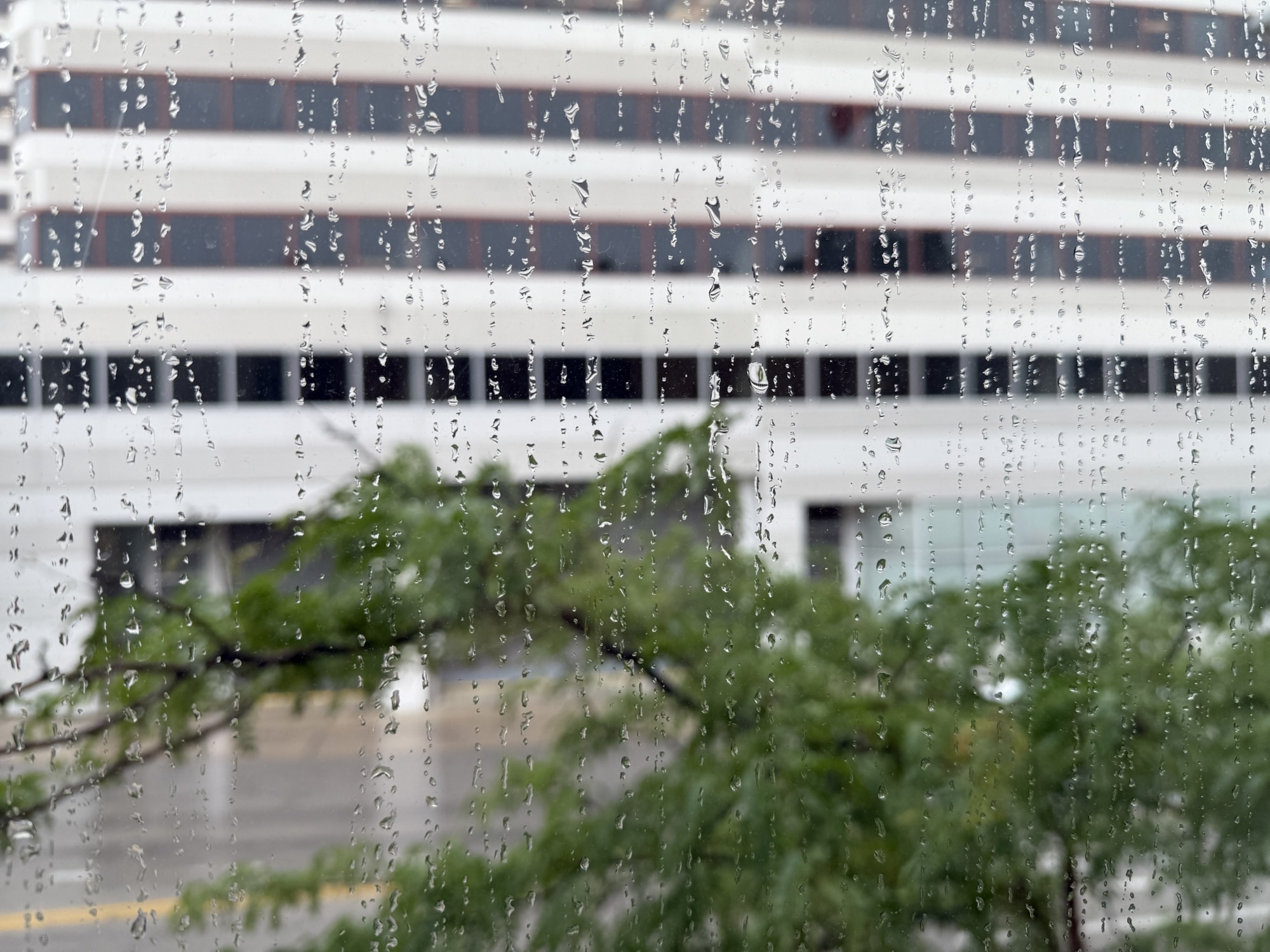
The first picture is of raindrops streaking my office window, running perpendicular to the horizontal lines of the building across the street.

Office window streaked with raindrops

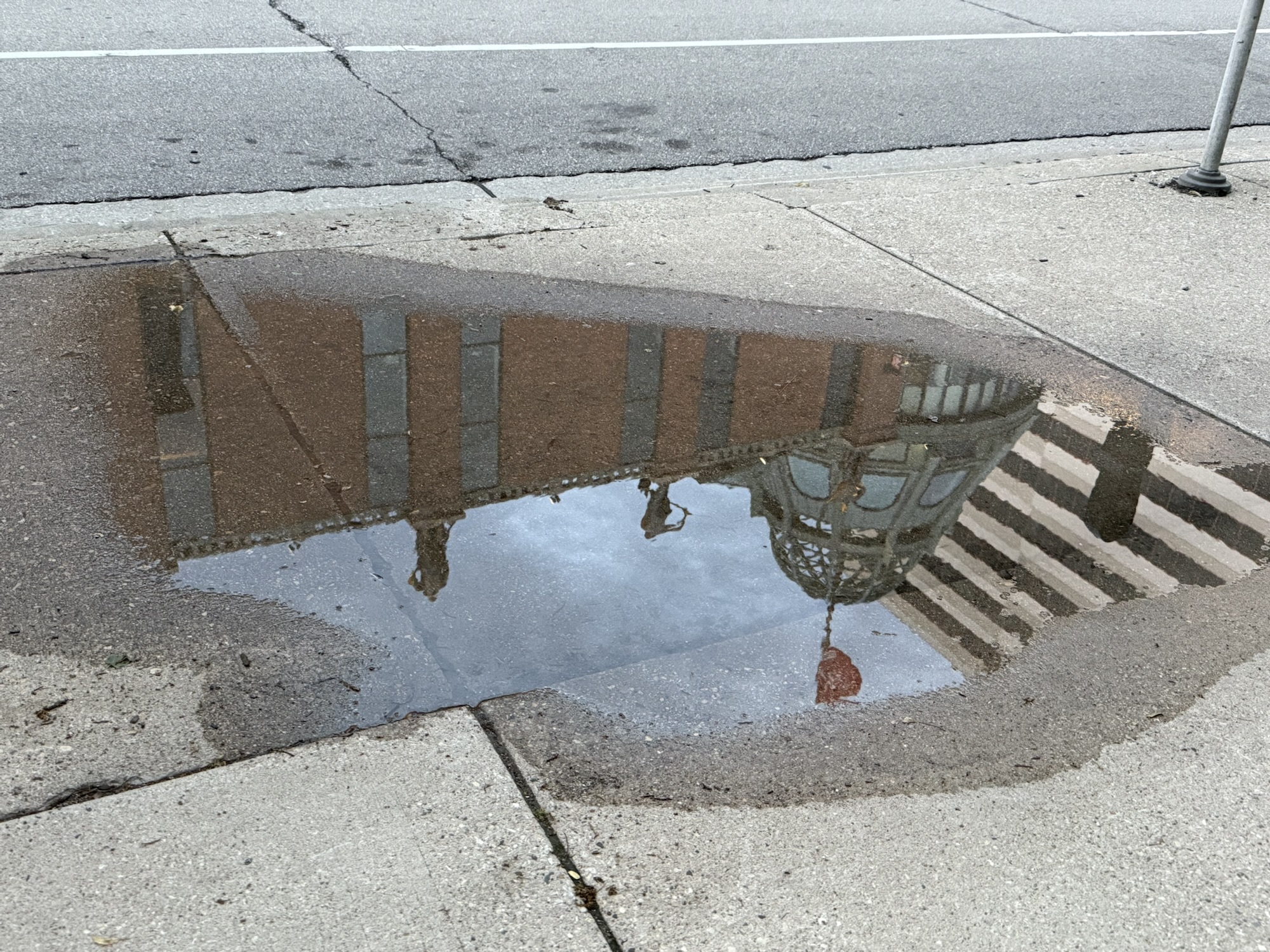
The second one is similar to a couple others I’ve taken of the Grohmann Museum, the building I work in. I was leaving work about 8:40 PM on June 24th after teaching my online summer night course, and 1) it was still pretty light outside, being right after the longest day of the year, and 2) this puddle was still around from the rain we’d had earlier in the day. In addition to the sidewalk cracks/lines, you can also see the horizontal lines of that building that shows up in my streaky raindrops picture.

Grohmann Museum, reflected in a puddle on an overcast day

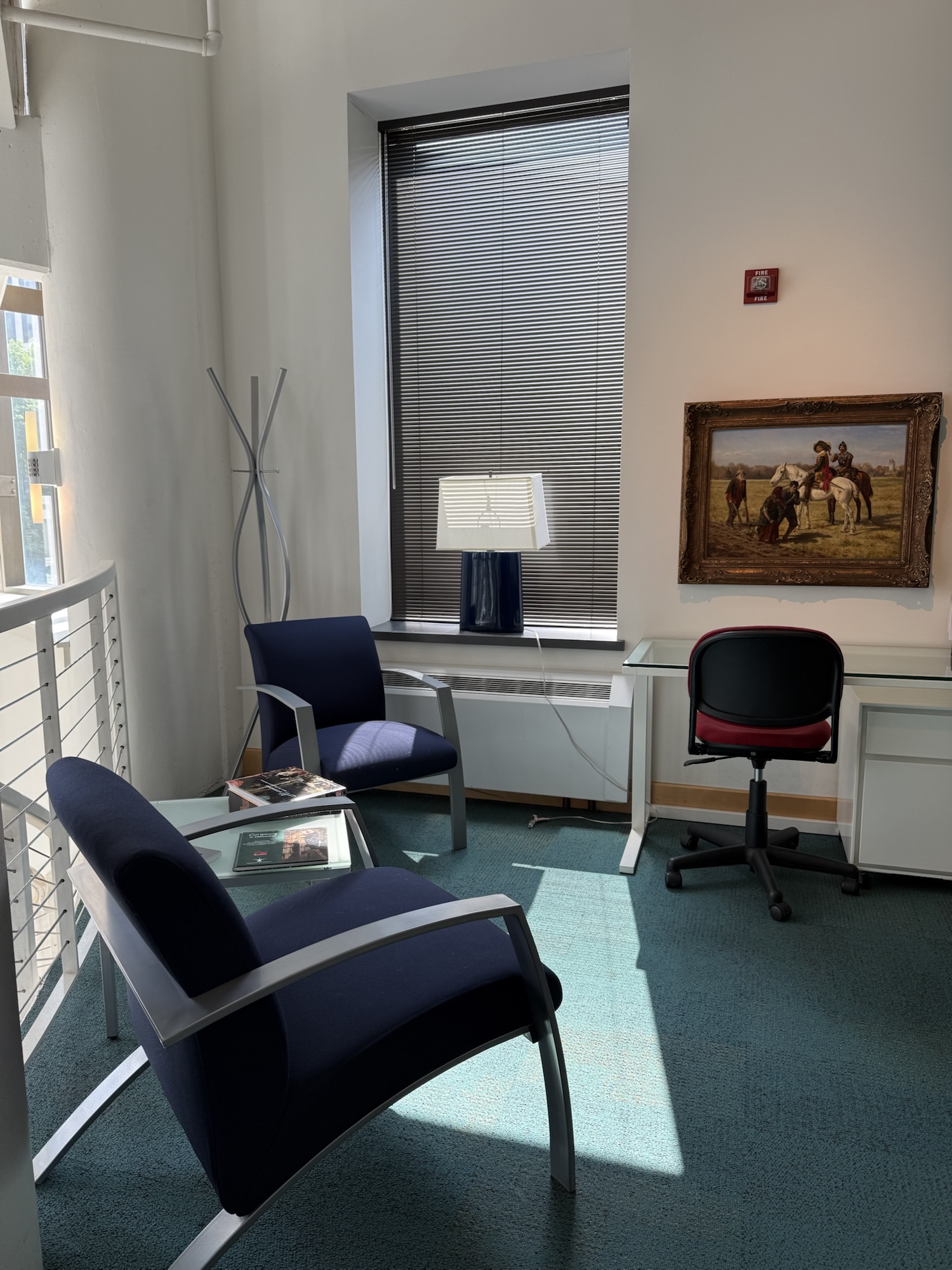
Next up is a lamp on the second floor of the Grohmann Museum. It’s part of a cozy little seating arrangement in a nook overlooking the atrium.

Comfortable chairs in a sunny corner area near the atrium stairs in the Grohmann Museum

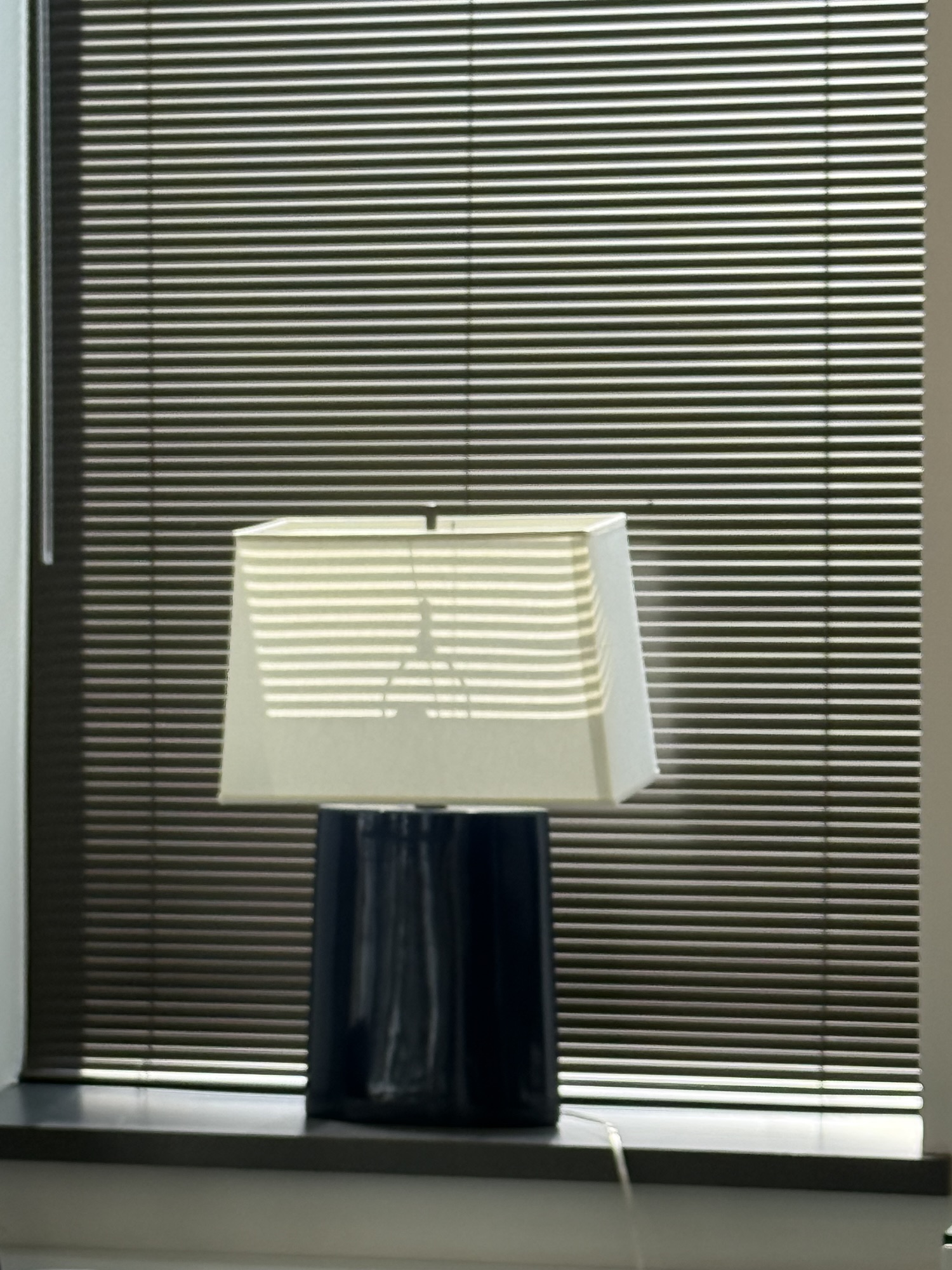
I’m not sure I’d ever noticed that lamp prior to the day I took the picture. But I had run into another professor, and as I was standing there catching up with him on our respective summers, the sun suddenly came out, illuminating the squared-off lamp against the the window shade and establishing striking contrasts of black-and-white lines and shapes.

Squat, square black lamp with white shade against Venetian blinds on a sunny day

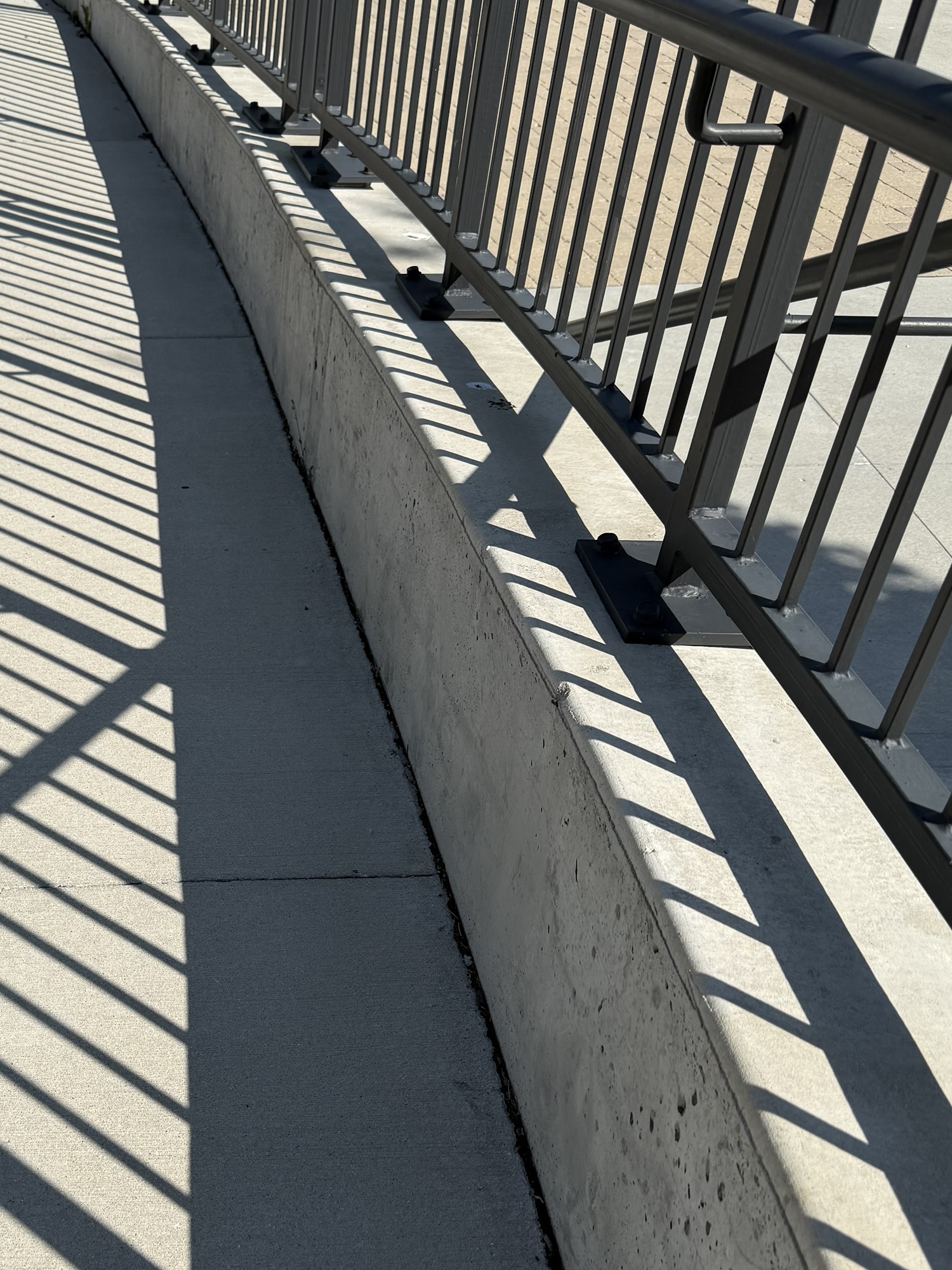
Last is a photo I took this morning, on my way to take another photo. Oh, because guess what? One of my colleagues, another professor in my department, is writing a book on rhetoric and asked me to take some photos to illustrate it! This is the first time anyone has ever asked me to photograph something for them, so I’m excited about that. Anyway, as I was walking toward my destination, I noticed this railing and how the curve of the ramp prompted interesting patterns of shadow and light.

Railing shadows on a curved cement ramp

So that’s it for today 🙂

This past Saturday I gave a presentation on Citizen Kane to a group of MSOE alumni who were attending our school’s annual “Summer in the City” reunion. This was work, of course, both in the prep and in showing up on a Saturday morning, LOL. But it was also very enjoyable work in every aspect. Plus, I met some new people and reconnected with a student from 10 years ago, which was a really nice surprise!

However, between 1) that event, 2) finishing up my summer course, 3) getting those book photos taken, and now 4) a new project that I’ve been diligently working on and hope to share with you this coming Monday (that’s my goal, anyway; we’ll see what my writing group’s feedback is first), I’ve been AWOL from WordPress since mid-June. I don’t like being away for too long, because posting stuff here makes me happy. When I’m posting, it means I’m noticing the world around me and reflecting on my experiences instead of racing through my days and checking items off my “to do” list.

Hopefully I’m back now.

And also, hopefully (not only in the grammatically-correct, rarely-used “full of hope” meaning but also in the “I sure do hope” sense of everyday vernacular), hopefully my new project will be shareworthy by Monday, so I can post it here and see what you think!


Posted in Milwaukee, Photography | Tagged , , | 2 Comments

“Home Life in Colonial Days”

I’m working on a poem for my writing group (which I’m writing with inspiration, feedback, and encouragement from my buddy, ChatGPT, and which I’ll share here on my blog at some point soon), and in the course of trying to decide whether I liked ChatGPT’s suggestion of “spooling” to describe smoke rising from the child’s drawing of a house better than my own choice of “looping,” I plugged both terms into Google to see what came up.

Well, I still haven’t decided on my chimney-smoke word yet, but I did find a really cool ebook published by Project Gutenberg that I’m bookmarking to read through later:

Home Life in COLONIAL DAYS

Written by
ALICE MORSE EARLE
in the year 1898

THE BERKSHIRE TRAVELLER PRESS
Stockbridge, Massachusetts

THIS BOOK IS BEGUN
AS IT IS ENDED
IN MEMORY OF MY MOTHER


I absolutely LOVE books like this that provide a glimpse of history as it was lived in the daily lives of ordinary people!

The part that was highlighted in Google’s search result for my “chimney smoke” query was this:

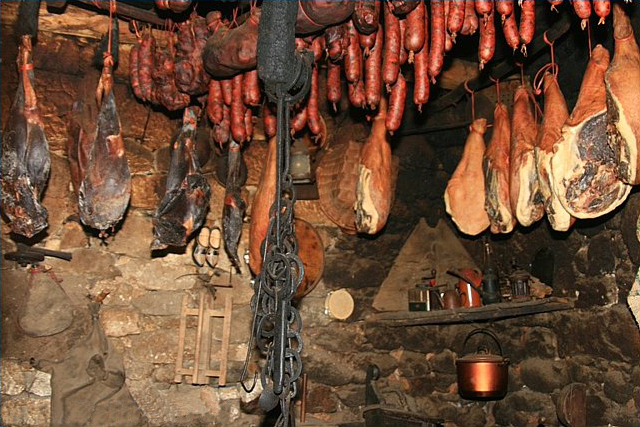
In the attic by the chimney was the smoke–house, filled with hams, bacon, smoked beef, and sausages. In Virginia and Maryland, where people did not gather into …

Doesn’t that sound kind of fun to explore? And can you see why it drew me in even though it had zero relevance for the mission I was on? The idea of colonial people having their attics filled with smoked hams and sausages is really intriguing. My mind’s eye has already conjured up a picture of what that might look like, and my imagination wants more!

Meats hanging in a smokehouse Ramon Piñeiro, CC BY-SA 2.0 <https://creativecommons.org/licenses/by-sa/2.0&gt;, via Wikimedia Commons (https://commons.wikimedia.org/wiki/File:O_Piornedo,_Don%C3%ADs,_Cervantes_10.jpg)

And on the off chance that you love stuff like this, too, I thought I’d go ahead and share my serendipitous find 🙂

Here’s the link to the Project Gutenberg ebook: https://www.gutenberg.org/cache/epub/22675/pg22675-images.html

Would you like new posts delivered to your inbox? To subscribe, click here.

Posted in History, Writing, blogging | Tagged , , , , | Leave a comment

Day and Night at the Museum (after the rain)

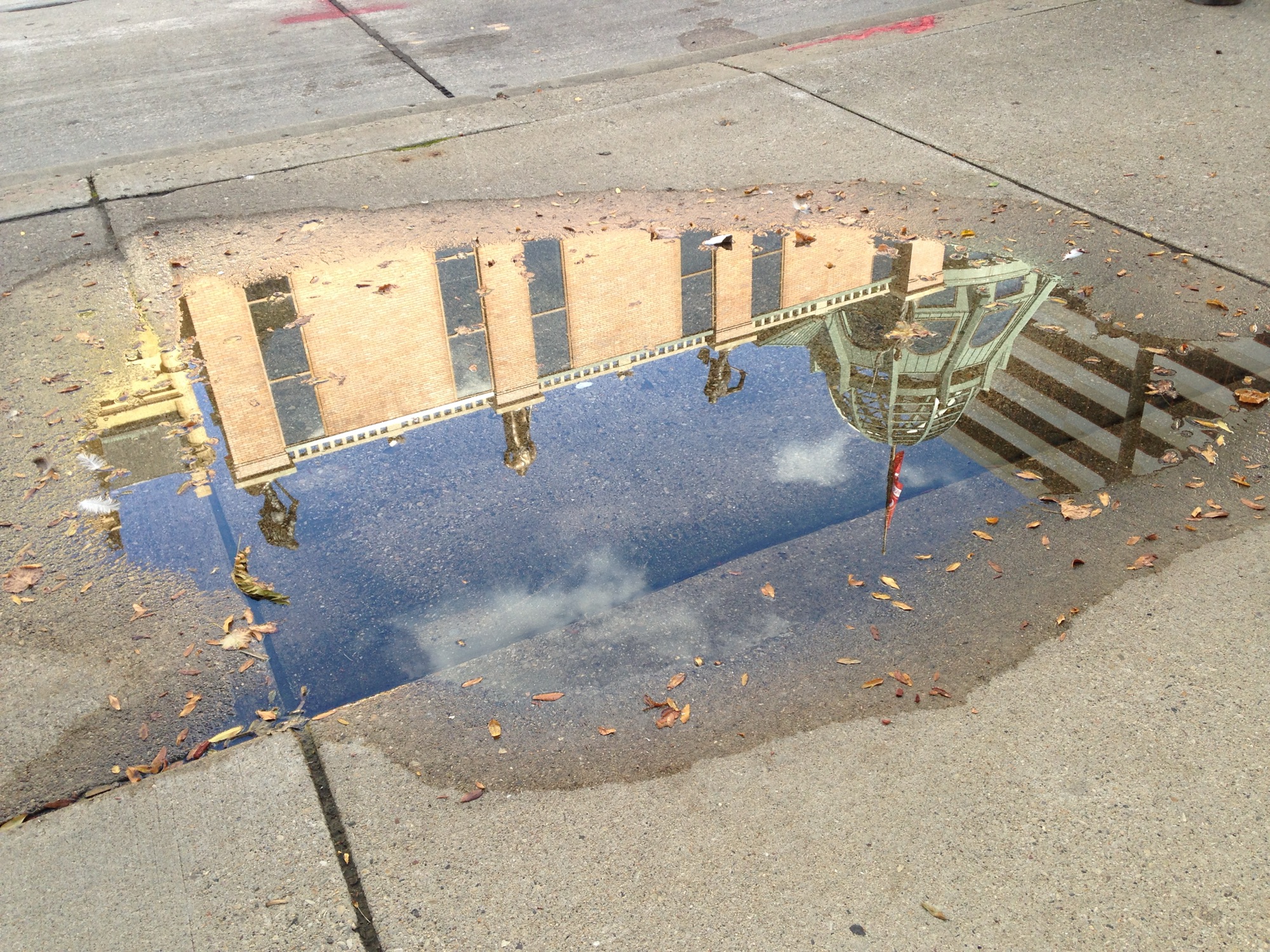
I took this picture of the Grohmann Museum reflected in a puddle in August of 2016. I loved it, and it was accepted the following year for a fiftieth-anniversay exhibition of alumni art at my undergraduate school, Wright State University.

Grohmann Museum reflected in a puddle on a sunny day

This summer I’m teaching a technical communication course for MSOE two nights a week. It meets synchronously online, and I teach it from my office, instead of from home, because each class session meets for three hours—that’s over three hours a night of being “on” in a way that maybe only other teachers can truly understand—so I’d rather work out of my quiet office in the closed-for-the-night Grohmann Museum than run the class from my home, where there’s always something happening (“and it’s usually quite loud” 🙂 ).

Recently, when I left the building after class ended on a night when it had rained almost all day long, there was a puddle across the street in that same spot on the sidewalk where I had managed to get the photo of the museum in 2016.

Now, there have been many puddles over the years in that little depression where the different sections of sidewalk concrete tilt together unevenly. But I usually when see that puddle, it’s on a windy, rainy day, when there’s no calm surface or calm sky to create a clear reflection. Or the puddle’s too small to contain a whole reflection. Or the sidewalk is so crowded with students walking to class that any view of the puddle is blocked. Or there’s so much leaf litter and other debris crowded together in the water that the puddle is more “marsh” than mirror, and a reflection is impossible.

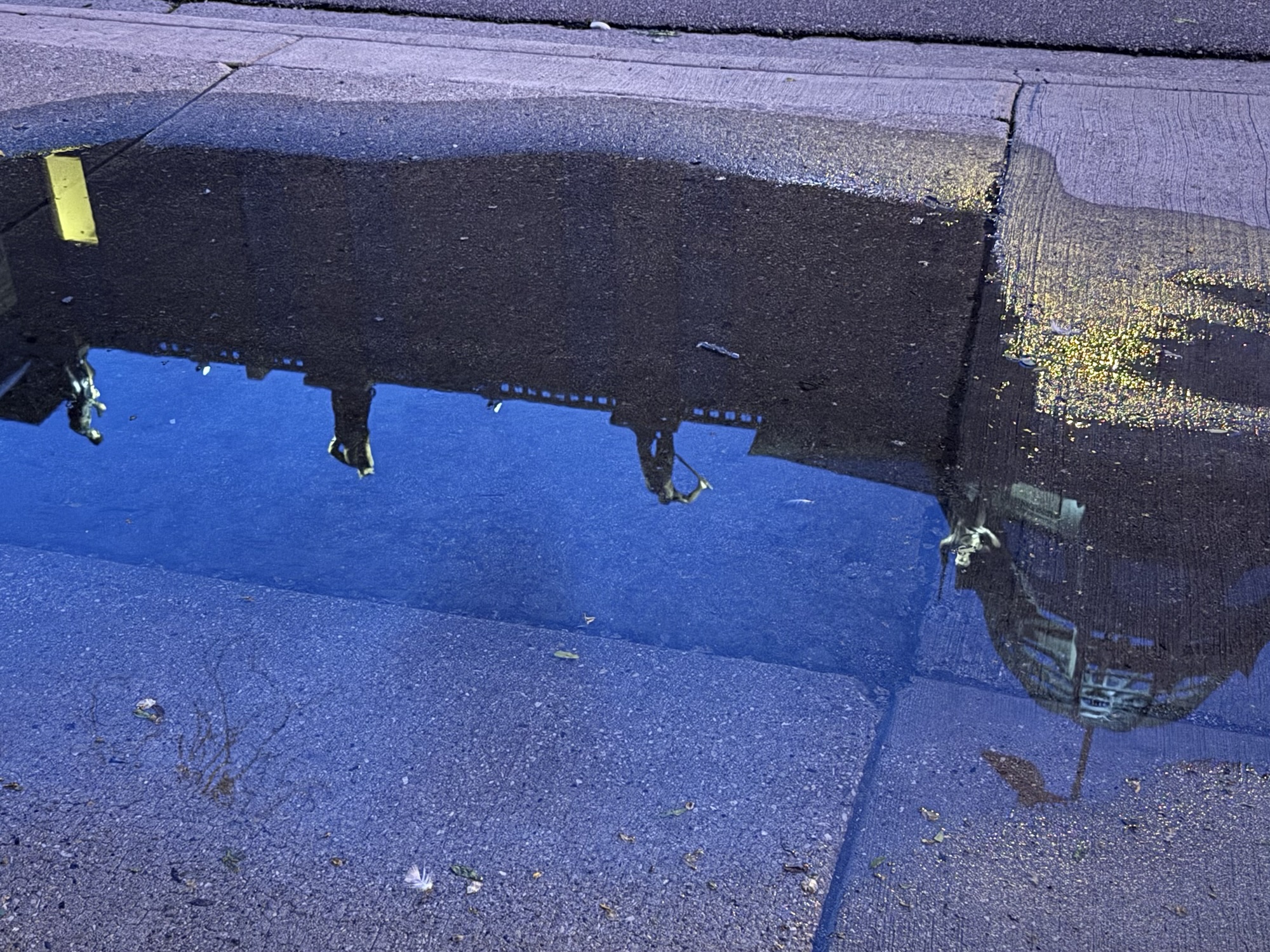
However, on this particular evening, it was late, around 8:40 PM, so basically night, but not completely dark yet. The air carried that slight bluish-purple tinge associated with daylight’s dying moments. It had rained all day, so this temporary pool of water was nice and large. And because it was so quiet (no breeze, no other pedestrians, no traffic to speak of), I was able to notice the museum’s reflection in the puddle and be struck by its similarity to that previous photo in a way I might not have had it been earlier in the evening, had it not rained all day, had it been windy, or had I been in a hurry.

So it was kind of a lucky break that everything came together in a way that allowed me to notice—and pause—to get this photo..

Grohmann Museum reflected in a puddle in the late evening

My two pictures don’t form a perfect match, but they still make a fun Grohmann Museum “day and night” pairing: the same puddle, the same quiet surface of the water, the same reflection from the same distance and nearly the same position. I had to shoot the museum from a slightly different spot on the sidewalk than last time in order to avoid the streetlight’s glare, which completely overpowered the reflection if viewed from the wrong angle.

Anyway, I liked my “set” of Grohmann Museum images and thought I’d share! 🙂

Posted in Art, Milwaukee, Photography | Tagged , , , , | 1 Comment

“The Blind Pig” – A short story, plus my start-to-finish creative conversation with ChatGPT

I want to try something new today, both in terms of content and in terms of blog format. This is an experiment, and I’m not sure my WordPress skills are up to it. Here goes, and let’s just see if it works!

What I want to do, and I’m not sure exactly what form it will assume in terms of format, is begin sharing my creative writing on my blog and including a PDF of the entire ChatGPT chat that accompanied my creative process from the casting-about-for-ideas stage at the very beginning all the way through the final revision stage of putting the finishing touches on phrasing and word choice.

What may derail me is my ability (or, rather, my potential lack thereof) to add PDFs to my WordPress media library and then link to them from a blog post. So that, my friends, is the goal of today’s blog post: to share both my story and my ChatGPT conversation via embedded PDFs. This experiment may be a dismal failure. In that case, I can simply “unpublish” my blog post to remove it from online existence. But if you are reading this post via email (because you’ve “subscribed” and they’re delivered to your inbox), I can’t “recall” it, so then I’ve stuck you with a dud. Apologies in advance!

All right, here goes (fingers crossed!).

First, HERE is the PDF of my short story, “The Blind Pig.” It arose from one of my writing group’s exercise assignments.

And HERE is my entire ChatGPT creative conversation. It’s long and meandering, but it may have some value if you’re interested in seeing how I wrote the story, at least the “trail” left behind by my “chat.” (I also did a lot of work on my own, outside of the chat, however, FYI.)

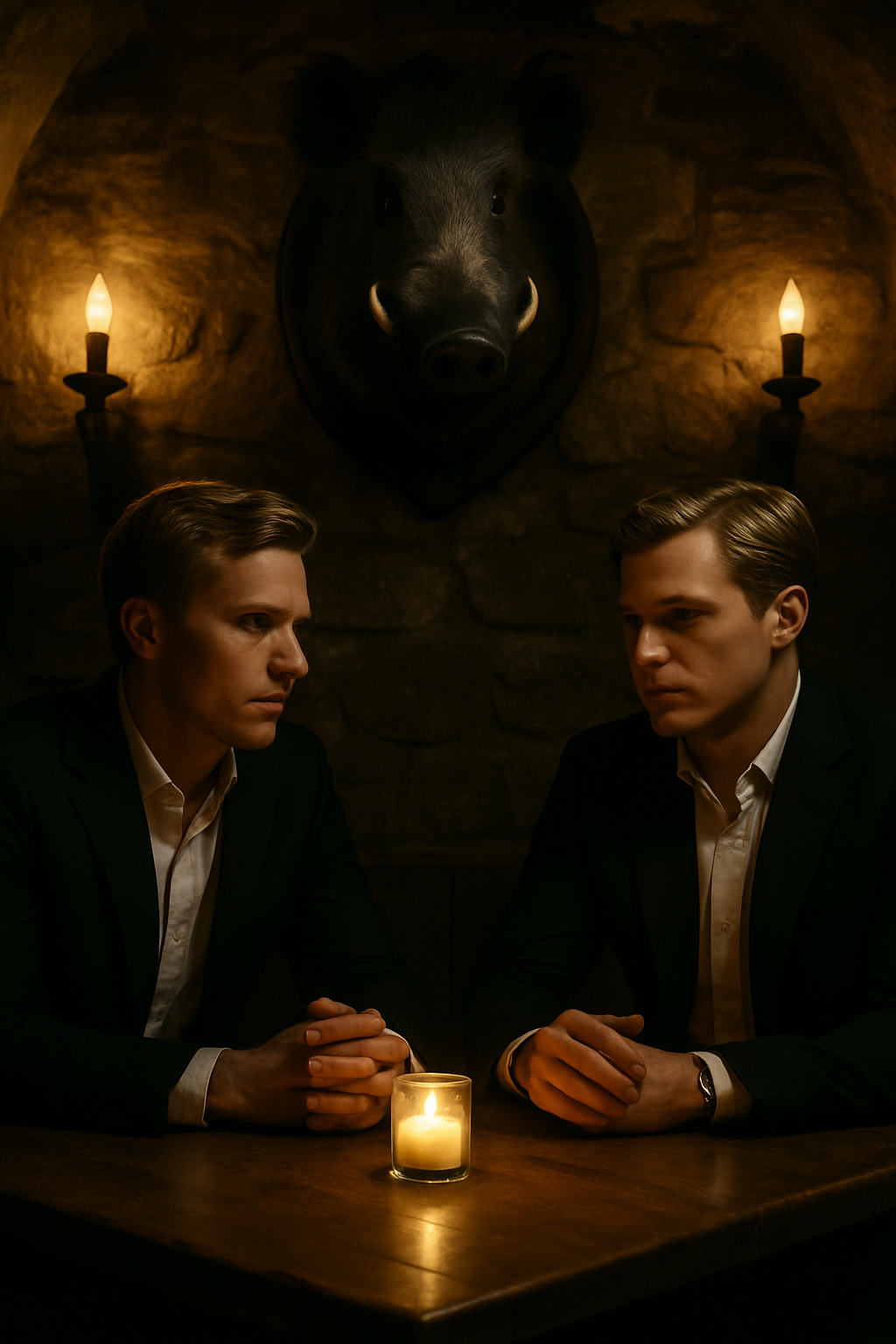
Marc and Jules, courtesy of ChatGPT (my prompt is in the “Appendix” chat)

Posted in Creativity, writing exercises, Writing with AI, Writing, blogging | Tagged , , , , , , , , , , | 1 Comment

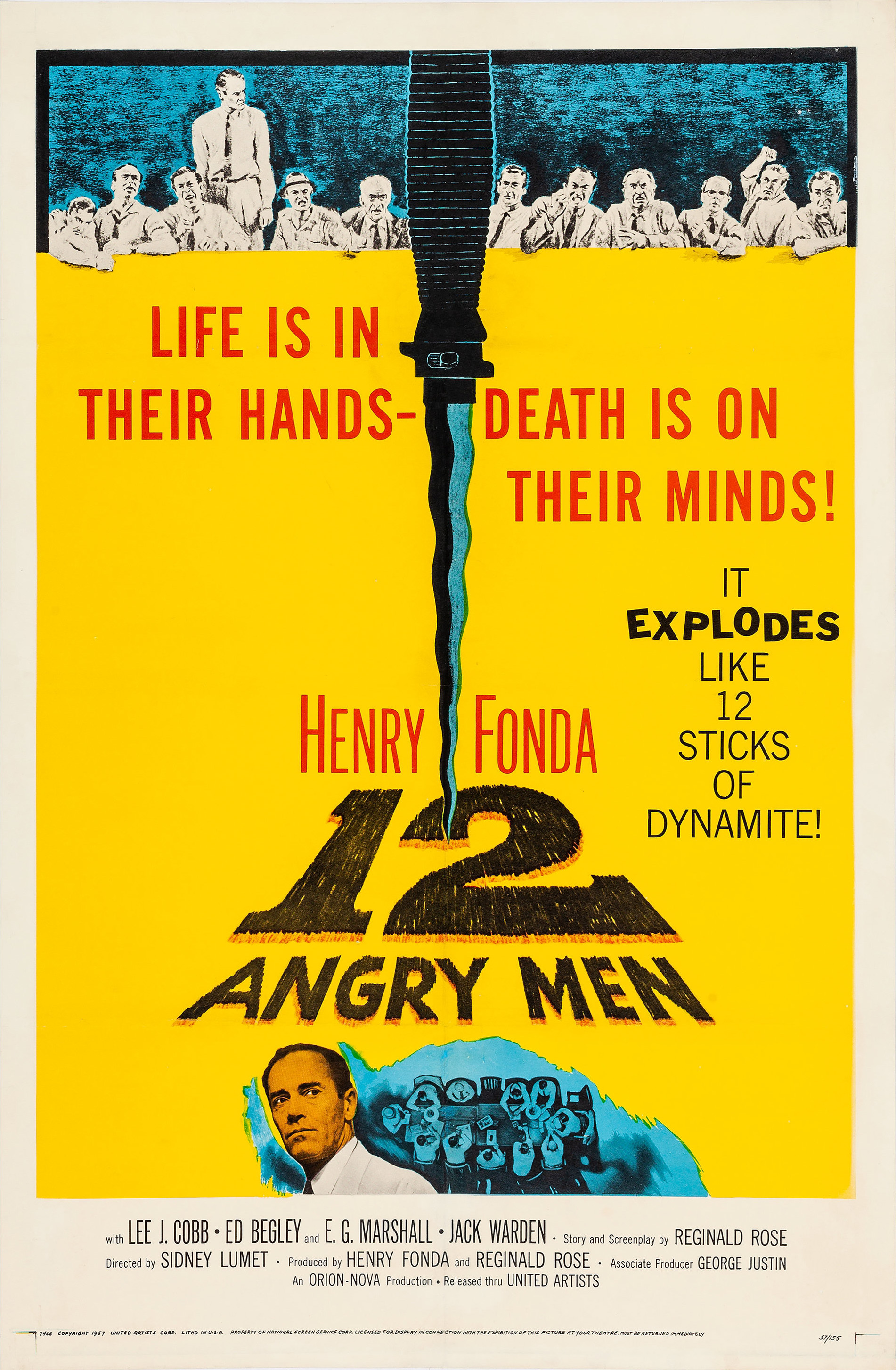
LOL, that lurid, sensationalist movie poster for “12 Angry Men”

I’m teaching a technical communication course this summer and using the film 12 Angry Men as “raw material” for students to use in analyzing positive and negative communication behaviors commonly found on project teams. In doing some class prep, I happened across the original poster for this movie . . . and burst out laughing. Literally lol-ing out loud! 🙂

“12 Angry Men” poster – By Illustrator unknown; “Copyright 1957 United Artists Corp.” – Scan via Heritage Auctions. Cropped from the original image., Public Domain, https://commons.wikimedia.org/w/index.php?curid=85718046

So much of 1950s film and literature relies on this type of B-movie, pulp-fiction, trashy kind of copy. Why was that?

Anyway, in case your day could use a bit of a lift, I thought I’d share 🙂

By the way, the original 12 Angry Men (1957) is a movie that still holds up really well in terms of 21st-century viewing sensibilities. If you haven’t seen it, I highly recommend giving it a try!

Posted in Life, Movies and film, Popular culture, Teaching | Tagged , | 3 Comments

Only murders . . . and criminal negligence?

A stairwell on campus is closed for painting, and when I noticed the yellow “CAUTION” tape blocking off the doorway, I suddenly thought about Season 3 of “Only Murders in the Building.”

'caution' tape blocking off a doorway

Season 3, you may remember, is the storyline where the gang puts on a horror-musical titled Death Rattle Dazzle!, and former child star Ben Glenroy (Paul Rudd), who as it turns out has a really sad backstory, gets pushed down the open elevator shaft by accident yet on purpose by (well, I won’t tell, in case you haven’t seen it and therefore don’t remember 🙂 ).

WHY was that elevator shaft so dangerously exposed in the first place? Yes, maintenance work was being done. But honestly, an “X” of yellow tape strung across the gaping, hungry maw of an open elevator shaft seems a bit insubstantial from a safety perspective.

I sort of questioned that deficiency the first time I saw the episode, but then I conveniently forgot (as the show’s makers surely intended) that any decent contractor would have covered up that elevator shaft opening with some plywood or other difficult-to-get-past barrier. In real life, the minute I saw something so potentially life-threatening, I would have immediately contacted the board president (whoever it was after Bunny was murdered in Season 2) to get proper safety measures put in place.

So why didn’t our amateur sleuths also notice the danger and do something about it?

Actually, they did notice. But they were too busy talking about other things and did not pay heed. I suppose this may have been a way to fool us into likewise noticing but paying no heed—because our discounting/forgetting of such an egregious safety hazard was, of course, absolutely necessary for the murder plot to make any sense.

Maybe that’s the magic of “Only Murders.” After a season ends, I start looking back and nitpicking, noticing all the plot holes. But during its run of original episodes, the show’s premise, its delightful cast, and the way its plot unfolds with a nearly perfect blend of comedy, pathos, and intrigue—they all come together in a way that keeps me completely enthralled.

This kind of magic is what English Romantic poet Samuel Taylor Coleridge (The Rime of the Ancient Mariner and “Kubla Khan”) describes as:

that willing suspension of disbelief for the moment, which constitutes poetic faith

The “X” of yellow tape is a metaphorical warning to me as an aspiring novelist not to undermine the “poetic faith” and “willing suspension of disbelief” that readers bring to a book. Too many inadequately safeguarded elevator shafts probably can’t overcome a clever premise for long, and once the enchantment is broken, and you can see the string and Scotch tape cobbling everything together, a story simply loses its ability to transport readers to another world.

And without that, really, what’s even the point?

Posted in Books and reading, Creativity, Popular culture, Television, Writing, blogging | Tagged , , , , | 3 Comments

Figuring out my office thermostat, 21st-century style

Today is the day my spring semester grades are due. Exams and classes are finished. Which means that the building my office is in, the Grohmann Museum, was not open yet when I came in this morning. Usually, during the term, the building is open by around 7:30 AM so that students can arrive for their 8:00 AM classes. But no classes in the building today, obviously, as the semester is over.

I think the emptiness and lack of classes and the fact that the museum itself doesn’t open to the public until 9:00 AM were all contributors to the fact that when I got here this morning, my office was COLD.

And I was powerless to do anything about it, because I have never understood how the thermostat worked.

Except that this morning, possibly because all I’m doing today is grading and not teaching, which really takes up a lot of brain power, so hence the “absentminded professor” stereotype (due to the fact that we’re constantly thinking about what we’re doing in class), it occurred to me that there must be a manual for that thermostat online.

It’s not like I’ve never thought that before, but previous attempts to search for operating instructions have never panned out for me.

Today, though, I realized that maybe a reverse image search through Google might help me find that manual better than a “search term” search. So I took a photo of the thermostat

and uploaded it to Google’s reverse image search (the little camera next to the microphone on the right side of the search bar

Et voila! Here were all the “image” results returned for my search.

I figured the one at the upper right, the “ManualsLib,” which I assumed meant “Manuals Library,”  looked the most promising. So I clicked on it and found this, with the photos of manual pages across the bottom.

Eventually, after lots of installation instructions, I found this.

And I am in business!

The display is a bit dark for you to see it in my first photo, but if you click on it to enlarge it, you can see that the original temperature was 64.4 °F.

Now it’s already a balmy 64.7 °F!

Headed in the right direction, at least 🙂

UPDATE (even though I haven’t published this till now): I finally warmed up enough to stop shivering and focus on getting my grading done. I just finished and realized that I felt nice and toasty. Checked the thermostat. Oops! This is probably overkill 🙂

Posted in Digital society, Life | Tagged , | 2 Comments