Updated thoughts on ChatGPT’s “literary ending” to my novel scene

UPDATE (meaning that yesterday’s “last thoughts” weren’t quite that, apparently 🙂 ) – It struck me this morning (the next day, after posting about ChatGPT’s edit of my novel scene yesterday) that my own ending was kind of upbeat and optimistic versus the ChatGPT rewrite that ended on a down note. I was going to add an update at the end of that post, but it got so long that I just decided to give space to it in a new post of its own. 

Compare my original scene’s ending with ChatGPT’s revised ending.

My ending

Just for today, Jarrett decided in that split second. Just for today, he would enjoy being around her with no guilt and no worries about the future. Today was enough. Because in the end, he thought philosophically, moving toward the first mark as he and Taryn had practiced, “today” was all any of us really had anyway.

ChatGPT’s ending

Whatever this was between them, it couldn’t last. She was too young, their lives too different. When the cameras stopped, so would this.

The thought sat like a stone in his boot, impossible to shake.

My thoughts for future revisions

Remember, my original instruction to ChatGPT was:

Review and edit the following scene. My usual fault is over writing, especially using too much introspection, too much description, too much explaining, too much purple prose, for lack of a better word. Don’t over edit this scene but make any edits necessary to help it feel more literary and less like a trashy pulp novel.

It occurs to me that ChatGPTs more downbeat ending is doing exactly what I asked for: “to help it feel more literary.” Right? I don’t know why, but many of the “literary” short stories and novels I read are like that. Maybe it’s better artistically to have that “down” vibe going? But I have to think about 1) whether I want that vibe in my novel, 2) whether it fits Jarrett’s character and character arc, and 3) whether the dramatic arc of the scene, chapter, and storyline needs an “up” beat or a “down” beat in order for me to shape what I hope the reader’s experience of the novel will be.

Each of these scene endings would, of course, take place within the larger context of where the scene ultimately falls inside a chapter and inside the overall story. The scene itself is *sort of* modular, but not really. Because of the scattered way I work on this project (stealing time whenever I can from a very packed schedule), I’m writing many of my scenes as stand-alone units, but what this particular ChatGPT session has illustrated to me very clearly is that I can’t continue with the modular thinking for too much longer.

Why? Because a novel is an organic whole. It does not consist of interchangeable units. One scene flows into another, and if one scene ends on a down note, then somehow the next plot incident should either amplify that down note or reverse it, depending on the “journey” I want readers to take. 

When I begin to construct the larger story arc for this section of my novel, I need to think about the dynamics of how each scene interacts with the others. Not only should I be thinking about the reader’s experience of moving through the plot’s action, but I also need to think more about Jarrett’s character arc. Is he an optimistic, high-agency person capable of willing himself to think/be/act in a certain way?  Or, is he someone deficient in agency, too focused on negatives, with limited ability to envision much less move toward a better future? Where do I want him to start out as a character? Where do I want him to end up? And how will he move toward (and through) this change via the story’s plot events?

I don’t think I have anything super profound to add to this, except to say that it’s even more obvious to me now what the limits of ChatGPT are for writing. It’s the writer who needs to make decisions like the ones I described above. Once the writer has assessed the ChatGPT output and made revision decisions, they then need to communicate the new plan to ChatGPT and judge how well ChatGPT has executed the task before “recalculating” (the way GPS does when encountering an obstacle in the previously defined pathway) their “vision” for the overall piece again and moving into the next phase of crafting the text.

The writer remains at the center of the writing process, at least if the final text is going to be any good. ChatGPT truly is “just” a tool. A remarkable one, and quite fun to work with, but definitely not one capable of taking on all the work that a tired writer with a deadline might like to offload onto it.

Posted in Creativity, generative AI, writing exercises, Writing, blogging | Tagged , , , , , | 2 Comments

Writing exercise – “A Friend in Need” (Working ChatGPT from the other end)

Another ChatGPT writing exercise to share today. Quick recap: Back in late September or early October, I began using ChatGPT to generate rough drafts of scenes for my novel in response to writing exercise prompts for my writing group’s bi-weekly meetings.

I’ve posted the results several times so far, always giving 1) the writing group’s assignment/prompt, 2) my prompt/instructions to ChatGPT for writing the scene, and 3) 1-3 draft iterations of the scene returned by ChatGPT. As I’ve noted, the ChatGPT-written scenes are definitely rough drafts in need of a good dose of editing and revisions on my end. But the great thing about ChatGPT is that it feels like a writing buddy, a thought partner who can take somewhat inarticulate ideas and generate a draft (a bad draft, but a draft nonetheless) at lightning speed. Then you at least have a jumping-off point that’s way farther along than you would have gotten otherwise.

This time, though, I decided to try using ChatGPT from the other direction, using it to revise my own prose. My biggest issue with writing fiction is overwriting (self-diagnosed, of course; others may find that my biggest issues lie in other areas, lol). Not only do I always feel the need to cut wordiness and streamline the text, but I also feel that my entire voice becomes too florid, too over-the-top dramatic, even to the point of melodrama. In trying to capture emotion, I end up slaughtering the mood with descriptive overkill. Nothing subtle about it at all.

So in the scene that follows, I’ll give you my own writing first, followed by my instructions to ChatGPT to please tone it (and pare it) down, and then finally the ChatGPT-edited scene at the end. 

At first, on the day of writing group, when I read the scene aloud, I was really happy with the ChatGPT version. Gone was my junky overwritten description; in its place was a nice, succinct, smoothly flowing scene, with just the right balance of action, narrative description, and character introspection. But now, in looking back over my original scene, I kind of like some of the overwritten stuff.

This is instructive. Not only do I need to revise ChatGPT-generated rough drafts, but it also looks like I need to revise ChatGPT-edits of my own rough drafts, just to restore some of the “life” that, in my opinion, ChatGPT drains out.

See what you think. The first draft below is mine. Then is my prompt asking ChatGPT to edit/revise. Then comes the ChatGPT revision. Although it’s possible I’d prefer the ChatGPT-edited version again the next time I look it over, just as I did initially upon my first review, I’m fairly confident (at least right now) that I’ll prefer to continue revising the ChatGPT version to come up with something that’s more of a “happy medium” in the end, a Goldilocks “just right” version that tones down my embarrassing propensity to overwrite yet preserves some of the characters’ emotional substance and resonance (if that’s a word that fits?) that I’m also aiming at.

The prompt for my writing group was “a friend in need.” As with my other writing group exercises I’ve posted the past few months, I’ve tried to find a way to incorporate that prompt into a scene for my novel and then also to write my scene using ChatGPT, as a fun way of immersing myself in the technology in order to gain more practice with it (because as a college professor teaching courses in writing, content design/strategy, and digital society, I am learning all this new stuff on the fly and need to develop expertise like yesterday).

First, the usual disclaimer. This is a work of fiction. Names, characters, businesses, places, events, locales, and incidents are either the products of the author’s imagination or used in a fictitious manner. Any resemblance to actual persons, living or dead, or actual events is purely coincidental.

And now, my exercise 🙂 

My prompt to ChatGPT, asking for editing of my initial (overwritten) draft

Review and edit the following scene. My usual fault is over writing, especially using too much introspection, too much description, too much explaining, too much purple prose, for lack of a better word. Don’t over edit this scene but make any edits necessary to help it feel more literary and less like a trashy pulp novel. Here it is:

Jarrett tilted the brim of his hat back and squinted at the markers lined up in the dirt. The heat of the New Mexico sun beat down, flattening the shadows and leaving no room to hide from its relentless glare.

Taryn crouched nearby, her small hands smoothing out a scuff one of the crew had left behind and replacing the beige golf tee that served as her mark. She looked so small in the harsh light, her slight frame swallowed up in a loose button-down and jeans. Fragile, like she’d blow away with the next gust of desert wind. But ten weeks into the shoot, Jarrett knew better. Taryn was one of the strongest people he’d ever seen.

“You’re still a step off here,” she said, standing and brushing the dust from her hands. Her voice was cheerful, no hint of frustration despite his inability to get it right. “Try walking it back again.”

Jarrett sighed but did as she asked, pacing backward along the imaginary trail she’d set for him, counting his steps until he hit the black golf tee that marked his own starting point. “Why does it even matter? Nobody’s looking at my feet anyway.”

“It’s not about your feet,” Taryn said, walking back to stand beside him. “It’s about timing. If you’re too late, the camera misses the turn. If you’re too early, the moment falls flat. It’s like you’re dancing with the camera.”

Jarrett raised a skeptical eyebrow. “Dancing?”

“Kind of. Except less fun and more yelling.”

Almost on cue, as if to illustrate her words, the faint sound of Cameron’s voice cut across the set, sharp and rising. Jarrett glanced over his shoulder toward the director, who was pacing back and forth, phone pressed to his ear. Even at a distance, Jarrett could see his agitation, the way he flung his free hand through the air, swatting invisible flies. The crew did a pretty good job of ignoring him and continuing their work, but even from a distance, Jarrett could feel the tension crackling in the air.

Taryn didn’t appear to notice. She simply adjusted her stance and motioned for Jarrett to follow her. “Okay,” she said. “This time, count your steps. You’ll stop here on ‘You’ve got a lot of nerve,’ and turn at—”

“‘—But so do I,’” Jarrett finished for her. He rubbed the back of his neck, feeling the weight of the sun and the lines he’d repeated so many times they’d lost meaning.

“Exactly.” Taryn beamed at him, and he felt that skittering sensation at the base of his sternum, like his heart had skipped a beat, which was becoming all too frequent lately whenever she smiled at him.

She moved in front of him, pointing to each mark in turn. “Let’s do it together. Walk with me, and I’ll count while you do your gestures and expression.”

Jarrett followed her lead, their feet crunching softly in the dry dirt. For a moment, it felt like they were two kids playing a game, her quick, light steps a rhythm he tried to match as they paced off his movements. He almost forgot why he’d been so frustrated.

He looked up as they walked, alerted as he hit the first mark by the imaginary sound of her arrival on horseback. Scowling, he stalked toward the camera, crossing his arms and tightening his jaw in outraged disbelief as he halted on the second mark.

“Now,” Taryn said, stopping with him. “Add the words.”

Jarrett conjured up a cynical smirk. “You’ve got a lot of nerve, Rose,” he drawled, injecting the line with all the cowboy grit he could muster.

Taryn tilted her head, lips pursed. “Maybe less John Wayne and more . . . just you. Mean it. Like what you told me about singing.”

Hearing his own advice turned around like that clicked. He went again, this time trying to feel the emotion and letting the scripted words roll out naturally like they were his own. Taryn’s face lit up with approval, and he felt that disconcerting flutter again.

“Beautiful,” Taryn said. “Now hit the next mark while I’m saying my lines, then grab my hand and pull me toward you the moment I’ve closed the gate.”

As they ran through it again, he was gratified to see all the various parts—the marks, the actions, the lines—begin falling into place, fitting together smoothly and naturally. It was like dancing, like finally knowing the steps well enough to transcend them and become lost in the movement.

It felt good.

Even better, it felt real.

Cameron’s voice broke through their rhythm, cutting through the set like a whip. “No, no, NO!” he shouted, and then, louder: “A friend in need is a pain in the ass!”

Jarrett froze, his boot skidding slightly in the dirt. Taryn looked up, her lips twitching. Their eyes met, and in an instant, they were both stifling laughter.

“I don’t think Cameron understands that saying,” Taryn murmured, a mischievous light in her eyes.

Jarrett snorted. “I don’t think Cameron understands a lot of things.”

They shared a conspiratorial grin as Cameron stormed off the set still arguing on the phone. Jarrett’s gaze drifted past him toward Taryn’s mother, Michelle, seated under a canopy at the edge of the set. Day after day she sat there, unmoving and expressionless, her face hidden behind oversized sunglasses, long blonde hair gleaming in the sunlight.

As Jarrett watched, Michelle raised the metal water bottle in her hand, the only movement she ever seemed to make, and took a casual sip. He couldn’t help but wonder—again—if it was spiked. He doubted there was much of anything hydrating in that bottle.

He huffed a short, humorless chuckle, grimacing at the turn his thoughts had taken. Took one to know one, apparently.

Taryn had apparently heard because he saw her look his way expectantly. 

“Is she okay?” he asked, nodding toward Michelle to avoid the scrutiny of those too-knowing silver eyes.

Taryn followed his gaze, her smile dimming slightly. “I don’t know. It’s complicated.”

Jarrett didn’t push. There was something in her voice—matter of fact but protective—that he was coming to understand. Taryn had a way of deflecting questions about her mom, like she’d built a wall around whatever was really going on.

He tried to think of a new topic, but Taryn got there first. She pointed discreetly toward the camera. “Look who’s back and pretending that whole phone debacle never happened,” she said.

Jarrett glanced over. Cameron was engaged in a quiet but serious-looking conversation with Tony, the assistant director. He must have skirted behind the building facades and trees to get there without returning the way he’d left.

“Ready to try it again?” Taryn asked, turning back to him.

Jarrett nodded, feeling the familiar tension rise. If Cameron was finished with his phone call, he’d probably be ready to shoot soon and complaining loudly to the entire set about how he’d gotten stuck with a hapless musician as his lead actor.

He hated how incompetent Cameron made him feel.

But as he and Taryn rehearsed, Jarrett felt the tension ease. Taryn’s calm, steady presence was soothing and allowed him to slow down his thoughts enough to get out of his own head. He found himself detaching, watching her more than the markers. The way her hair caught the light when she moved, the curve of her smile when she thought he’d nailed a line, the effortless way she made him feel like he wasn’t completely out of his depth. Taryn was the one person on this chaotic set who didn’t make him feel like he was failing. She didn’t have to help him with his acting—she could’ve left him to flounder—but she didn’t seem to mind. She made it seem easy, like she even enjoyed it.

“Jarrett.” Taryn’s voice pulled him back.

“Yeah?”

“You’re getting it,” she said, smiling.

Jarrett grinned back, knowing it was true. In the last run-though he’d hit all the marks, said all the lines right, and felt all his emotions in exactly the correct sequence.

“It’s like floating,” he said. “Like hitting the high note. Like great . . . “

Sex.

“Dancing,” he finished smoothly, hoping to erase the unspoken word he’d left hanging.

Thankfully, Taryn didn’t seem to notice. She gave his hands a quick squeeze, which then made him realize he hadn’t let go of hers when their scene ended. An urgent impulse to release them now seized him. But he resisted, for she would wonder why, might feel rejected and hurt. Instead, the moment lingered, and they stood in the center of the dusty corral, hands clasped, smiling at each other.

Ah, Taryn’s smile. He loved the way it transformed her already beautiful features into something even more exquisite, something magical and ethereal. There was no other way to describe it. When she smiled, she was radiant, and her strange, silver eyes shone with an otherworldly glow. Everyone liked Taryn; she had a talent for putting people at ease. Even the grumpiest members of the crew found it impossible to remain surly around her. Her cheerfulness was uplifting and made everyone want to be better, including him. No one could resist her light-filled smiles.

Lately, though, those smiles had started doing funny things to his heart.

He kept finding excuses to be around her. Although he was grateful for her help with his acting, what really mattered was simply being near her. Some mornings, when he was especially miserable about being stuck on the show, the prospect of seeing Taryn was the only thing that got him out of bed.

She fascinated him. The feathery whisper of her voice, the crisp, delicate line of her jaw. Her slender hands and wrists, encircled by their sliver-thin turquoise and silver bracelets. The auburn streaks that had developed in her long, dark hair under the New Mexico sun. Her skin had darkened, too, heightening the contrast of those silver eyes under the dark slash of her brows.

And then the discomfort settled in, like a stone in his boot.

She was just a kid. Or at least, that’s what he kept telling himself. But Taryn was everything he hadn’t known he needed: patient, kind, someone who truly saw him. He felt drawn to her despite his stern resolve to keep his distance. Her gentle inner light, the way she seemed to see beauty in everything awakened his protective instincts and made him feel things he wasn’t sure he should.

Things he didn’t want to feel. That might be wrong.

Things he didn’t want her to know.

They were still holding hands and gazing into each other’s eyes. Next week she would turn eighteen, one part of his mind rationalized, which another part of him immediately rejected with disgust. God, he was no better than Cameron!

Jarrett let go of her hands and glanced away, the realization settling heavy in his chest. What was he doing? Taryn was his “friend in need,” his lifeline in this mess of a job. Whatever this feeling was growing between them, it couldn’t last, shouldn’t even be acknowledged.

She was too young, their lives were too different, and once the cameras stopped rolling, she’d go her way, and he’d go his.

He could hardly bear the thought.

Just then, the assistant director called for quiet on the set, and everyone started getting ready for the next take. Taryn smiled encouragingly up at Jarrett as they walked back into position and surrendered themselves to quick last looks from hair, makeup, and wardrobe.

She didn’t know, Jarrett realized with sudden relief. It was a gift. He could still turn things around. He resolved to see her as the young girl she still was. They would be friends. She would continue helping him with his acting, and he would keep teaching her guitar.

“Lock it down,” called the AD. The extras took up their places behind them, lounging along the fence and beside the shed.

Jarrett glanced at Taryn. Her eyes were closed, and he knew she had gone to that place inside herself to find her character. He should be doing that, too. But the truth was, unlike Taryn, who bore virtually no resemblance to Rose, Jarrett was never anything other than himself. He wasn’t an actor; he was a musician. And no one expected anything more than that except Taryn. She seemed completely confident that he could become Sam.

Despite how much he disliked doing the show and despised Cameron, Jarrett nonetheless found himself looking forward to each day. No matter how foolish, he wanted to live up to Taryn’s earnest belief in him.

“Rolling!” called the AD.

“Speed!” called the camera operator and sound mixer in response. A crew member announced the scene and take, then clapped the slate in front of the camera. The AD called for quiet on the set, and an eerie silence descended as everyone waited for Cameron’s signal for action.

Time hung, suspended.

Just for today, Jarrett decided in that split second. Just for today, he would enjoy being around her with no guilt and no worries about the future. Today was enough. Because in the end, he thought philosophically, moving toward the first mark as he and Taryn had practiced, “today” was all any of us really had anyway.

ChatGPT said:

This scene has great potential, with strong character dynamics and an engaging setting. However, it does suffer from the issues you flagged: over-explaining, excess introspection, and a tendency to belabor descriptions or emotions. Below is a revised version with tighter prose, clearer focus, and a more literary tone, while retaining the heart of your story.

Jarrett tipped his hat back and squinted at the markers lined up in the dirt. The New Mexico sun beat down, flattening shadows and leaving no room to hide.

Taryn crouched nearby, smoothing out a scuff in the dust and resetting the beige golf tee that marked her spot. She looked small in the harsh light, her slight frame swallowed up in loose clothes. Fragile, Jarrett thought—but ten weeks into the shoot, he knew better. Taryn was steel wrapped in sunlight.

“You’re still a step off here,” she said, standing and brushing her hands. Her voice was cheerful, free of frustration despite his repeated missteps. “Try walking it back again.”

Jarrett sighed but did as she asked, pacing back along the imaginary trail, counting steps until he hit his mark. “Why does it even matter? Nobody’s looking at my feet.”

“It’s not about your feet,” Taryn said, joining him. “It’s about timing. If you’re too late, the camera misses the turn. Too early, and the moment falls flat. It’s like dancing with the camera.”

“Dancing?” He raised a skeptical eyebrow.

“Less fun, more yelling,” she replied, just as a sharp voice cut through the set.

Jarrett glanced toward the director, Cameron, pacing in the distance with a phone pressed to his ear. Even from here, his agitation was obvious—wild hand gestures swatting invisible flies. The crew worked around him, heads down, but the tension rippled across the dusty lot.

Taryn didn’t seem to notice. She adjusted her stance, motioning for Jarrett to follow. “Count your steps. Stop on ‘You’ve got a lot of nerve,’ and turn at—”

“‘But so do I,’” Jarrett finished. He rubbed his neck, the heat and endless repetition draining the life from the lines.

“Exactly.” Taryn smiled, and something skittered in his chest—a too-frequent sensation these days.

She walked ahead, pointing to each marker. “Let’s do it together. Walk with me.”

Jarrett followed, their footsteps crunching in the dirt. For a moment, it felt like a game, her light steps setting a rhythm he matched instinctively. The frustration ebbed.

He hit his first mark and scowled, imagining the camera’s frame. His lines came easier this time, the smirk more natural.

“You’ve got a lot of nerve, Rose,” he said, the drawl effortless now.

Taryn tilted her head. “Less John Wayne. Just you. Mean it.”

Hearing his own advice echoed back startled him. This time, he let the words roll out as if they were his own. Taryn’s face lit up, and there was that flutter again, maddeningly out of his control.

“Beautiful,” she said. “Now hit the next mark after I close the gate.”

The scene clicked, piece by piece, until it flowed naturally. It was like dancing, Jarrett thought. The steps melted away, leaving only the movement.

Cameron’s voice cracked through their rhythm. “No, no, NO!” He bellowed louder, “A friend in need is a pain in the ass!”

Jarrett froze, his boot skidding in the dirt. Taryn looked up, lips twitching. Their eyes met, and they stifled laughter.

“I don’t think Cameron understands that saying,” she murmured.

“Cameron doesn’t understand a lot of things,” Jarrett replied, his voice low.

Their shared grin lingered, but Jarrett’s gaze drifted to the edge of the set, where Michelle, Taryn’s mother, sat beneath a canopy. Day after day, she was a fixture, unmoving, her face hidden behind sunglasses, blonde hair gleaming in the sun.

Michelle raised a metal water bottle and took a slow sip. Jarrett’s mouth twisted. He doubted hydration was the goal.

“She okay?” he asked, nodding toward her.

Taryn followed his gaze, her smile dimming. “I don’t know. It’s complicated.”

Jarrett didn’t press. Taryn guarded her mother’s secrets like precious cargo, deflecting questions with quiet finality.

She gestured toward the camera. “Look who’s back, pretending nothing happened.”

Cameron had returned, deep in conversation with the assistant director. His earlier theatrics were wiped clean, as if erased by sheer will.

“Ready to go again?” Taryn asked, turning back to Jarrett.

He nodded, though tension coiled in his chest. Cameron would expect perfection, eager to remind everyone how unqualified the “musician” was for this role.

But as they rehearsed, the pressure receded. Taryn’s steady presence was an anchor. She didn’t just help—she made it feel easy, even enjoyable.

“Jarrett.”

“Yeah?”

“You’re getting it,” she said, smiling.

He was, he realized. “It’s like floating,” he said, wonder creeping into his voice. “Like hitting the high note. Like—”

Sex.

“Dancing,” he finished hastily.

Taryn didn’t seem to notice. She squeezed his hands briefly, grounding him, but didn’t pull away. The moment lingered, and Jarrett felt the weight of it settle, heavy and undeniable.

He stepped back, breaking the connection. Taryn’s eyes flickered with hurt, and guilt twisted in his chest.

Whatever this was between them, it couldn’t last. She was too young, their lives too different. When the cameras stopped, so would this.

The thought sat like a stone in his boot, impossible to shake.

My last thoughts

I do like the flow of the ChatGPT revision, as I said earlier. I like how streamlined it is. It doesn’t embarrass me the way my original rough draft’s overdone description does. But now I want some of the emotion and too-flowery description back. Figuring out the “good stuff” and leaving the majority behind will be a challenge.

But as William Faulkner said, you have to kill your darlings. Or murder them. Whatever he said. (Although, side note: Have you read William Faulkner? I don’t see much evidence of darling-killing in his dense prose. Imagine what it was like before the edits!)

If I ever finish my novel and publish it, you can decide for yourself how skillfully I wielded the scalpel.

UPDATE (So, not quite my last thoughts apparently 🙂 ) – It struck me this morning (the next day, after posting this yesterday) that my own ending was kind of upbeat and optimistic versus the ChatGPT rewrite that ended on a down note. I was going to add an update at the end of this post, but it got so long that I just decided to give space to it in a post of its own. Check out my new thoughts in the post dated January 31, 2025.


Posted in Creativity, generative AI, Learning, writing exercises, Writing, blogging | Tagged , , , | Leave a comment

Extinction immanent? (and imminent?) Michael Crichton on “cyberspace” dooming human innovation/evolution and forecasting the end of the species

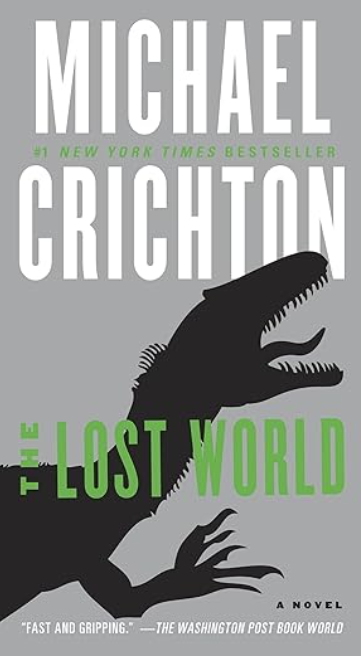
I’m teaching “Digital Society” this semester, and as fate would have it, over my holiday break I decided to read Michael Crichton’s The Lost World, a novel I’d never read before even though I love Michael Crichton and have probably read everything else he’s written.

I said “as fate would have it,” because if I’d read this book when it came out thirty (30!!!) years ago, I might not have paid as much attention to Ian Malcolm’s monologue/lecture on chaos and evolution. Crichton manages to insert this lengthy “idea” passage pretty effectively plotwise during a convenient breather in the otherwise nonstop action. Instead of pedantic background narrative, Crichton positions this “rant” as a rather endearing one-sided stream of consciousness “conversation” Malcolm has with Sarah Harding arising from the morphine haze she’s put him into while she’s fixing his injured leg (broken, I think, but that was a couple weeks ago, and there’s a lot of action, injury, and death in this book—hard to keep it all straight 🙂 ).

Ian Malcolm’s ideas seem chillingly prescient considering the massive sway the internet holds over human society today and particularly given the hyper-fast cycles of AI development we’ve seen in the past couple of years. Much to think about here, especially as we (collectively, as humans) have a vested interest in extending the duration of human existence and human reign over the planet as long as possible.

Here’s the quote that caught my eye. This passage may seem long, but it is just a fraction of Malcolm’s entire speech. Fascinating stuff. I love how Crichton can deliver such intellectual ideas in a way that feels natural and makes learning and thinking about complex topics so easy!

“[…P] ersonally, I think cyberspace means the end of our species.”

“Yes? Why is that?”

“Because it means the end of innovation,” Malcolm said. “This idea that the whole world is wired together is mass death. Every biologist knows that small groups in isolation evolve fastest. You put a thousand birds on an ocean island and they’ll evolve very fast. You put ten thousand on a big continent, and their evolution slows down. Now, for our own species, evolution occurs mostly through our behavior. We innovate new behavior to adapt. And everybody on earth knows that innovation only occurs in small groups. Put three people on a committee and they may get something done. Ten people, and it gets harder. Thirty people, and nothing happens. Thirty million, it becomes impossible. That’s the effect of mass media—it keeps anything from happening. Mass media swamps diversity. It makes every place the same. Bangkok or Tokyo or London: there’s a McDonald’s on one corner, a Benetton on another, a Gap across the street. Regional differences vanish. All differences vanish. In a mass-media world, there’s less of everything except the top ten books, records, movies, ideas. People worry about losing species diversity in the rain forest. But what about intellectual diversity – our most necessary resource? That’s disappearing faster than trees. But we haven’t figured that out, so now we’re planning to put five billion people together in cyberspace. And it’ll freeze the entire species. Everything will stop dead in its tracks. Everyone will think the same thing at the same time. Global uniformity. [..]”

― Michael Crichton, The Lost World, published in 1995

‘The Lost World’ – Michael Crichton

Posted in Books and reading, Creativity, Digital society, generative AI, Popular culture | Tagged , , | 1 Comment

Waiting (for the elevator)

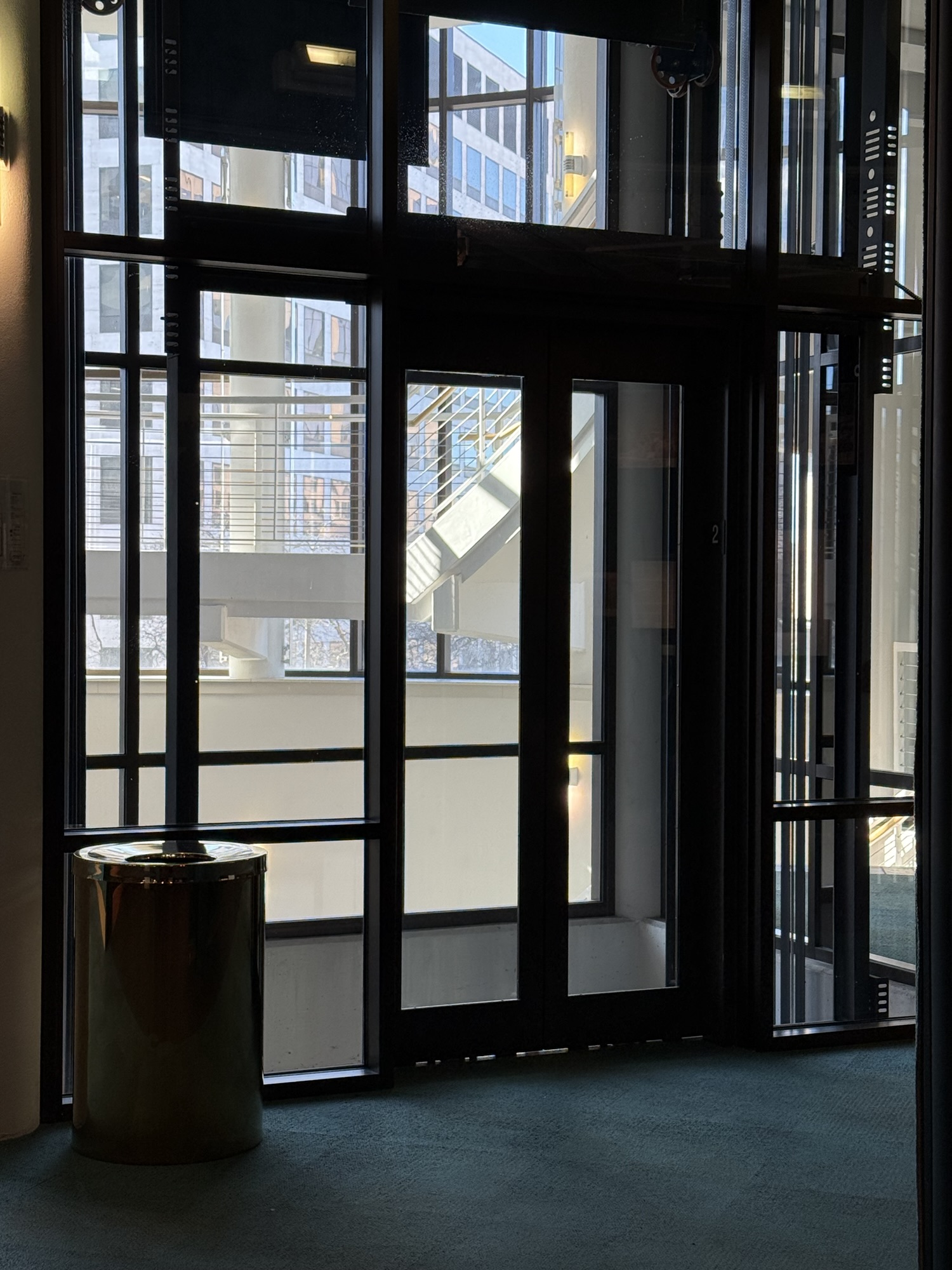
A photo I took the other day as I was walking to the printer. It’s a view looking through the glass walls of the elevator shaft into the atrium of the Grohmann Museum in Milwaukee. The strong vertical lines and contrasting colors (dark metal foreground with washed out pastel blues and whites beyond) caught my eye. That’s all 🙂 

Steel lines of glass elevator shaft looking out into atrium and beyond to office building
Posted in Photography | Tagged , , | 1 Comment

Writing exercise – “Christmas Gathering” (yes, another ChatGPT adventure)

Well, I’m starting to see ChatGPT’s tics and tells more clearly. On the plus side, this tool works well as a means of

  • casting a wide research net
  • quickly executing a rough draft
  • providing “feedback” and suggestions for oneself on a rough draft
  • showing (and “forcing”) connections between random ideas 
  • editing documents for length
  • editing documents for style

Beyond that, though, generative AI is definitely limited. There’s a reason why the early ChatGPT-written student papers stuck out so baldly (and badly 🙂 ). ChatGPT can’t write worth a damn beyond its specific and rather limited skillset. It does a poor job of following instructions, and when it takes the initiative and offers up text unrequested by the prompt, you need to approach those results with skepticism. 

On the other hand, as Karen and I agreed on Saturday (when we were the only two people able to make it to our writing group meeting), first drafts are always crummy anyway, and ChatGPT at least returns a crummy first draft with lightning speed. After you spend a fair amount of time creating a good prompt, that is.

So for this week’s meeting, I decided to keep going with my experiment in having ChatGPT write first drafts for the section of my novel I’m currently working on. And this week, the “machinery” of the technology’s “works” was on full display, a disenchantment akin to a child’s sighting of the wires underpinning a magician’s trick.

For example, as in other outings, ChatGPT ignored quite a few of my instructions, which was frustrating because I went to a certain amount of trouble of coming up with them in the first place. Ignoring instructions seems to be a common flaw in the tool, so you can’t just set things up and think you’re done. You need to be “on” enough, and know enough, to catch that the result returned is not all it should have been.

Similarly, stylistically, ChatGPT leaned far too heavily on sentimentality, similies, participial phrases, and adverbs in general. This tendancy to drift into florid prose, in fact, is one of the “tics” I referred to earlier.

In my second exercise draft, ChatGPT also completely screwed up the timeline of the Christmas gathering, having one person enjoying her gift before she even received it and having another person conversing with the other guests around the tree before he even came into the house out of the snowstorm!

One last, little thing that will continue to nag at me until I fix it is ChatGPT’s mention of the “buttery scent” of freshly popped corn that Addy and Mrs. Hudson are stringing on thread to create a garland. “Buttery” corn on a garland? I tried to fix it by telling ChatGPT that the popcorn was dry, but ChatGPT came back with “the smell of dry popcorn” in the next draft, lol, so in revising, I need to remember to switch it to something like “the smell of freshly popped corn.” Maybe plain, freshly popped corn does have a “buttery scent,” but all I could picture was greasy fingers making a slimy mess of my simple, traditional strand of popcorn and cranberries.

One observation, neither complaint nor praise: ChatGPT added an interesting “volunteer” item beyond the scope of what I’d asked for, in the form of affixing a tag/heading that read, “Christmas Gathering,” at the top of my third (and final) exercise draft.

On the positive side, I continue to delight in little surprises and moments of serendipity in the text that ChatGPT returns:

  • Mrs. Hudson worrying about Mr. Freeman and wanting to “box his ears” (a phrase I recognized as 1930s appropriate and might not have thought of myself) for his rufusing her offer of coffee in conjunction with his stubborn insistence on shoveling snow 
  • Mr. Freeman’s “usual armchair” (a nice touch suggesting backstory and context)
  • Lorna Rooney’s “quick, sharp fingers” (she’s a bank teller)
  • Mr. Delaney treating Mrs. Hudson like a waitress (“Coffee, Myrna?”)
  • Lorna’s clever quips of “advice” in the notebook she gives Addy (reminding me a bit of the old Burma-Shave road signs of that same era)

So, yes, I’m having a lot of fun with this.

In an interesting aside, my freshman composition students have done some exploratory work with ChatGPT this past semester, and while the tool definitely helped them find unusual, interesting topics and broadened their research, they have also discovered for themselves that ChatGPT is not that helpful for writing papers. That is, ChatGPT sets essays up to move along a rigid, mundane path and student writers end up feeling “trapped” in drafts they don’t have the skills to escape. It was exciting for me as a teacher to see that students could recognize how bad the ChatGPT drafts were and then conclude on their own that the tool might be more of a hindrance than a benefit, in that application anyway.

But all of that is a post for another day. For now, I just want to share my most recent writing exercise and the rough drafts generated by ChatGPT.

First, the usual disclaimer. This is a work of fiction. Names, characters, businesses, places, events, locales, and incidents are either the products of the author’s imagination or used in a fictitious manner. Any resemblance to actual persons, living or dead, or actual events is purely coincidental.

And now, my exercise 🙂 

From my email to my writing group about our prompt for this week’s exercise:

I’m supposed to send out our next exercise, so here it is. I couldn’t decide on what prompt to use. I wanted to get fancy, do something like the Ursula Le Guin exercises we did for a while, but my week has been too hectic to get a handle on that. So, I came up with three potential “word” starters that seemed related to the season and couldn’t decide on just one, so here are all three. Pick just one, use two, or mash up all three in there together. Your choice😀

  • Fizzy sparkle
  • Redolence
  • White elephant

My initial prompt to ChatGPT

This next scene continues the story of Addy. It is approaching Christmas in December 1936. The boarders have gathered around the Christmas tree on the Sunday evening before Christmas (which will be the upcoming Friday, December 25). They are having a white elephant gift exchange.

Earlier that day Mrs. Hudson popped some corn, and she and Addy sat at the kitchen table, stringing garlands of fluffy white popcorn and deep red cranberries, while they talked about life. Addy talks about her new friend, Hazel. Show a brief flashback of that earlier conversation. It is still snowing. It began snowing yesterday and has not let up. There are several inches of snow on the ground. Mr. Freeman was kind enough to shovel the front walks so people could get out to church. Addy worries because he is old, but Mrs. Hudson scoffs at that, saying Mr. Freeman is still strong as an ox and could probably still carry a load of bricks the same as any of the younger men on a job. Still, Addy notices a look of worry briefly trouble her features before she clearly and deliberately appears to shrug away the though with another nearly imperceptible flicker of expression.

Hazel gave Addy a Mason jar, with a festive plaid ribbon tied around the neck, filled with peanut butter fudge. Addy is knitting Hazel a scarf of very fine, soft yarn, with the tiniest needles she’s ever seen. Mrs. Hudson is quite the expert knitter, with a collection of yarn, needles, and a fancy, scientific looking wheel that helps you match up your yarn with the perfect gauge knitting needles. The outer rim of the wheel has holes where you stick your knitting needle in, and then you spin the bar that’s anchored with a brass eyelet at the center of the circle to see what type of yarn to use. The scarf Addy is knitting is very fine, and she is excited to give it to Hazel. Hazel is the first true friend Addy has made.

There is also a boy that Addy has a crush on. She told Mrs. Hudson while they were stringing garlands that he walked her to her locker after their class together and waited for her while she got her coat, then walked with her to the front door, where they parted ways. Mrs. Hudson told Addy she admired Addy for finishing high school, when so many children leave school after elementary school. “A high school diploma is your ticket to a brighter future, Addy,” she told her. Addy plans to give Hazel the scarf at school on Wednesday, their last day before the Christmas break. She hopes she can finish it in time.

Segueing to the gathering of boarders around the tree that evening, Addy is knitting while participating in the exchange. She and Mrs. Hudson baked Christmas cookies and gingerbread the day before, after Addy got home from work at the men’s clothing store. Mr. Delaney arrives, shaking off the snow from his coat in the entrance hall, jovially complaining about the snow and the road conditions. Addy thinks about how Mrs. Hudson will shortly return, after hanging up his things, to mop up the wet floor from the melting snow he has tracked in, and how she (Addy) would have entered through the back door to save Mrs. Hudson the trouble of cleaning up her mess. She has noticed his lack of consideration before, but no one else seems to notice or mind, including Mrs. Hudson.

Lots of inconsequential but cheerful conversation ensues as the boarders gather around the tree, listening to the radio playing quietly in the background. They eat cookies, drink cocoa and coffee (which Mrs. Hudson makes for Mr. Delaney, at his request), and exchange their white elephant gifts. Each person has a small gift for all the other boarders, and each gift is appropriate for the recipient, either as a gag or in a small, thoughtful way. Keep in mind each person’s job and personality. Lorna is a bank teller and is dedicated to her job, a team spirit kind of person. She is fashionable, has a sharp tongue, likes to suck on lemon drops. Mr. Freeman lost his wife to influenza several years ago, but he has a group of buddies, also retired from the construction trades, that he meets regularly for an evening of cards and or an afternoon of front porch conversations. Mrs. Hudson likes to knit, and she makes things for an orphanage in Huntington, West Virginia. Mr. Delaney is handsome, relatively young (early thirties), a travelling salesman, selling ladies hosiery to department stores. He is a smooth-talking flirt, a bit of a know-it-all. He has dates with an ever-changing cast of ladies in town, although some women appear to be regulars, and Addy suspects he has similar arrangements in every city he travels to. She is slightly disgusted by him, even as she is fascinated and also finds herself drawn in by his charm.

After the gift giving is over, Addy tells the others she must head upstairs to bed, for tomorrow is a school day. Before she goes, Mrs. Hudson hands her an envelope. It is addressed to her, Mrs. Hudson, and has already been opened, but inside is another envelope, addressed to Addy. It is a Christmas card from her parents, telling her in a very cheerful tone about their adventures in Mississippi and how they are looking forward to pecan pie on Christmas Eve at their favorite diner. Addy remembers that pie; her mouth waters. Then Mrs. Hudson gives Addy a box, that turns out to be filled with pecans so that Addy can enjoy a taste of Christmas with them. Mrs. Hudson tells her she will bake them into a pie for Christmas Day. Addy knows she is about to cry, so she bids everyone a hasty good night and climbs the three flights of stairs to her room. Only after she is in bed and drifting off to sleep does it occur to her to wonder why her Christmas card was enclosed inside an envelope to Mrs. Hudson.

ChatGPT said:

The snow still fell, thick and steady, as Addy and Mrs. Hudson sat at the kitchen table Sunday afternoon, stringing garlands of popcorn and cranberries. The warm, buttery scent of freshly popped corn lingered in the air, mingling with the earthy tang of cranberries. Addy’s fingers worked carefully, pushing the needle through the soft popcorn and the firm, glossy berries, enjoying the rhythmic task.

“It looks beautiful,” Mrs. Hudson said, her gaze flicking between the garland in Addy’s hands and the growing pile on the table. “Hazel will love that scarf you’re making. It’s delicate work, but you’re doing a fine job.”

Addy beamed. “I hope she likes it. She gave me fudge, you know—a whole Mason jar full.”

“With a ribbon on top, no less,” Mrs. Hudson added, her tone amused. “That girl has a good heart.”

“She does,” Addy said, a warmth spreading through her chest. “She’s the first real friend I’ve had.”

Mrs. Hudson paused for a moment, as though weighing her words. “Good friends don’t come along every day. Hold on to that.”

They worked in companionable silence for a while, the snow outside casting a soft glow through the frosted window. Then Addy hesitated, biting her lip before speaking again. “There’s… a boy.”

Mrs. Hudson’s eyes twinkled. “I thought there might be. Tell me about him.”

Addy ducked her head, cheeks flushing. “His name’s Billy. He walked me to my locker after class on Friday. Then he waited while I got my coat and walked me to the door.”

Mrs. Hudson smiled knowingly. “He sounds like a gentleman. And you sound like a girl who’s juggling school, work, and knitting but still finds time to notice the good ones. That’s no small thing, Addy.”

Later that evening, the parlor hummed with the chatter and laughter of the boarders, gathered around the Christmas tree for the white elephant exchange. The radio played softly in the background, a cheerful medley of carols.

Addy sat on the rug near the fire, her knitting needles clicking steadily as she worked on Hazel’s scarf. Lorna Rooney lounged in an armchair, idly twirling a lemon drop wrapper between her fingers, while Mr. Freeman sat nearby, regaling Mrs. Hudson with a story about a card game he’d played with his old construction buddies.

The front door opened with a gust of cold air and a flurry of snow, and Mr. Delaney strode in, stamping his boots. “Would you look at that snow? It’s like the road’s trying to swallow my car whole!” He shook off his coat, sending droplets of water onto the tiled entryway.

Addy glanced up from her knitting, thinking how Mrs. Hudson would soon be back with a mop to clean up the mess. She would never say a word about it, but Addy noticed. She’d come in through the back door herself earlier to avoid just this sort of trouble.

“Oh, Delaney,” Mrs. Hudson called from her perch by the fire, “come have a seat before you freeze. I’ll get you some coffee.”

Addy suppressed a sigh. Delaney’s charm never failed to get him exactly what he wanted.

The gift exchange was a merry affair. Lorna received a tin of lemon drops from Mr. Freeman, who chuckled as she held it aloft like a trophy. Addy gave Mr. Delaney a new tie—a bright red one, as gaudy as his personality—and received a small notebook from Lorna, the cover embossed with gold letters that read, For All Your Brilliant Ideas. When Addy opened it, she found that every other page had been pre-filled with good-natured advice, like Never trust a man who talks faster than he walks.

As the laughter died down and the last cookie crumbs were brushed from laps, Addy stood and stretched. “I’d better get to bed. School tomorrow.”

“Wait a moment,” Mrs. Hudson said, pulling an envelope from the mantel. “This came for you.”

Addy’s brow furrowed as she took it. It was addressed to Mrs. Hudson but held another envelope inside—one with her name scrawled in her mother’s familiar handwriting. She opened it carefully, revealing a cheerful Christmas card inside. Her parents wrote about their adventures in Mississippi, describing their plans for Christmas Eve at a favorite diner where they would eat pecan pie.

Her stomach growled at the memory of that pie. Before she could linger too long on the thought, Mrs. Hudson handed her a small box. Addy opened it to find it brimming with pecans.

“I thought you’d like a taste of home,” Mrs. Hudson said. “I’ll bake them into a pie for Christmas Day.”

Overwhelmed, Addy nodded quickly. “Thank you. I—I’d better go.” She clutched the card and the box to her chest and hurried up the stairs, her throat tight with emotion.

By the time she climbed into bed, the soft rustle of the snow outside had joined the steady rhythm of her thoughts. As she drifted off, a question surfaced in her mind: why had her Christmas card been sent to Mrs. Hudson? The thought lingered briefly before fading into the warmth of sleep.

I said:

Mr. Delaney should be called “Mr.” although his first name is Frank, and the other boarders and Mrs. Hudson can call him Frank. Addy thinks of him as Mr. Delaney. Mrs. Hudson’s first name is Myrna. Again, the others may occasionally call her that, but to Addy she is only Mrs. Hudson. The pecans are from Addy’s parents. The conversation between Addy and Mrs. Hudson in the kitchen should be a little more nuanced. The snow outside is not a quiet snowfall, but a blustery, windy, wet snow. Include some mention of Mr. Freeman’s snow shoveling and his meetings with cronies. The popcorn is dry, not buttered. Addy is not knitting while stringing popcorn, but she runs upstairs to retrieve the scarf to show Mrs. Hudson at some point during the garland making session

ChatGPT said:

The snow blew against the kitchen window in thick, wet swirls, driven by gusts that made the panes rattle. Inside, the kitchen was cozy and warm, the smell of dry popcorn mingling with the tang of cranberries as Addy and Mrs. Hudson sat stringing garlands at the scarred oak table.

Addy picked up another piece of popcorn, careful not to crush it as she threaded it onto the fine needle. “I hope Hazel likes the scarf. It’s taking forever, but I’m almost done.”

Mrs. Hudson glanced over her glasses, her hands steady as she worked. “Hazel strikes me as the sort who’ll appreciate the thought—and the effort. What color is it again?”

“Soft gray,” Addy said, her voice bright. “It’s the nicest yarn I’ve ever used. Want to see it?” Without waiting for a reply, she jumped up and ran upstairs. She returned moments later with the scarf, draped it over her arm, and held it out.

Mrs. Hudson took it, running her fingers lightly over the fine stitches. “This is beautiful work, Addy. You’ve got a good eye for detail. Hazel’s lucky to have a friend like you.”

Addy blushed, but the compliment warmed her. “She gave me a jar of fudge tied with a ribbon. I’ve never had a friend like her before.”

“Well,” Mrs. Hudson said, threading a cranberry onto her needle with practiced precision, “good friends are worth holding on to. Just like a good scarf on a night like this.”

Outside, the wind howled, carrying the occasional rumble of snowplows from the main street. “Do you think Mr. Freeman’s warm enough?” Addy asked, glancing toward the window.

Mrs. Hudson chuckled, but a faint shadow crossed her face. “Warm enough? That man shoveled the walks this morning like he was twenty years younger. Told me he’d worked up such a sweat he had to take his hat off. Strong as an ox, that one, even if he won’t admit his knees creak.” She tied off the end of her garland and started another. “Still, I’d like to box his ears for refusing the coffee I offered him after. Stubborn as the day is long.”

Addy smiled but didn’t miss the flicker of worry that briefly softened Mrs. Hudson’s usually shrewd features. “He’s always meeting his friends for cards or sitting on someone’s porch talking. I think he keeps going because he’s afraid to stop.”

Mrs. Hudson nodded. “You’re not wrong. Work, even if it’s shoveling snow, gives a person a reason to get out of bed.”

Addy hesitated, looking down at her hands. “That’s what you said about finishing school, isn’t it? That it gives me a reason?”

Mrs. Hudson met her gaze, her tone matter-of-fact. “It does. A high school diploma is more than a piece of paper, Addy. It’s a door. And it’s worth walking through, even if it takes effort to get there.”

Addy nodded, the thought settling over her like a second layer of warmth.

By evening, the parlor was filled with the cheerful chaos of the boarders gathering for the white elephant exchange. The Christmas tree stood in the corner, the garlands of popcorn and cranberries winding around its branches. The radio hummed softly in the background, and the table was laden with cookies and cups of cocoa.

Mr. Freeman sat in his usual armchair, recounting a story about his construction days, his voice rising and falling like the rhythms of the river he once worked beside. Lorna Rooney lounged on the settee, unwrapping a lemon drop with quick, sharp fingers. She was dressed in a neat skirt and blouse, her heels crossed at the ankles, and she laughed sharply at one of Mr. Delaney’s quips.

Mr. Delaney, or Frank as everyone but Addy called him, swept in from the hall, brushing snow from his coat and hair. “Would you believe they’ve barely touched the roads? Took me half the day to make it back from Portsmouth!” He hung his coat on the rack, leaving a wet patch on the polished floorboards.

Addy suppressed a frown, knowing Mrs. Hudson would mop it up later without a word of complaint. She would have come through the back door herself, thinking of Mrs. Hudson’s work, but Mr. Delaney never seemed to notice such things.

“Coffee, Myrna?” he asked as he settled onto the sofa.

Mrs. Hudson rose with a nod, a glimmer of amusement in her eyes. “Of course, Frank. Always coffee for you.”

The exchange was lighthearted and full of laughter. Mr. Freeman gave Lorna a tin of lemon drops, which she held up triumphantly. “How did you know?” she teased, her tone sardonic. Addy received a notebook from Lorna, and when she flipped it open, she found humorous advice penned in Lorna’s neat handwriting: Never trust a man with a better manicure than yours.

Addy’s gift to Mr. Delaney—a gaudy red tie—drew a round of laughter as he held it up with mock solemnity. “You’ve outdone yourself, Addy,” he said, winking at her. She managed a polite smile, though she felt a strange mix of fascination and unease about him.

After the gifts had been exchanged, Addy stood to leave. “I’d better head to bed. School tomorrow.”

“Wait a moment,” Mrs. Hudson said, pulling an envelope from the mantel. “This came for you.”

Addy took it, puzzled by the address: Mrs. Hudson’s name, not hers. Inside was a Christmas card from her parents, their handwriting familiar and cheerful as they described their adventures in Mississippi. They wrote about their plans for pecan pie on Christmas Eve at a diner Addy remembered well. Her stomach tightened at the memory of that sweet, buttery pie.

Then Mrs. Hudson handed her a small box. “Your parents sent these.”

Addy opened it to find a pile of pecans nestled inside. Tears pricked her eyes.

“I thought we could bake them into a pie for Christmas Day,” Mrs. Hudson said softly.

Addy nodded quickly, clutching the box and card to her chest. “Thank you. I—I’d better go.” She hurried upstairs, her throat tight with emotion. Only when she climbed into bed did it strike her as odd that the card had come through Mrs. Hudson first. But she was too warm, too tired, and too overwhelmed to dwell on it long before sleep claimed her.

I said:

I like this version much better. Can you keep it the same except add in two other prompts I forgot to insert, either the concept of or the actual words, “Fizzy sparkle” and “Redolence.”

ChatGPT said:

Certainly! Here’s the revised version incorporating “fizzy sparkle” and “redolence” into the narrative.

Christmas Gathering [Note: ChatGPT added this little “title” tag/heading.]

The snow blew against the kitchen window in thick, wet swirls, driven by gusts that made the panes rattle. Inside, the kitchen was cozy and warm, the smell of dry popcorn mingling with the tang of cranberries as Addy and Mrs. Hudson sat stringing garlands at the scarred oak table.

Addy picked up another piece of popcorn, careful not to crush it as she threaded it onto the fine needle. “I hope Hazel likes the scarf. It’s taking forever, but I’m almost done.”

Mrs. Hudson glanced over her glasses, her hands steady as she worked. “Hazel strikes me as the sort who’ll appreciate the thought—and the effort. What color is it again?”

“Soft gray,” Addy said, her voice bright. “It’s the nicest yarn I’ve ever used. Want to see it?” Without waiting for a reply, she jumped up and ran upstairs. She returned moments later with the scarf, draped it over her arm, and held it out.

Mrs. Hudson took it, running her fingers lightly over the fine stitches. “This is beautiful work, Addy. You’ve got a good eye for detail. Hazel’s lucky to have a friend like you.”

Addy blushed, but the compliment warmed her. “She gave me a jar of fudge tied with a ribbon. I’ve never had a friend like her before.”

“Well,” Mrs. Hudson said, threading a cranberry onto her needle with practiced precision, “good friends are worth holding on to. Just like a good scarf on a night like this.”

Outside, the wind howled, carrying the occasional rumble of snowplows from the main street. “Do you think Mr. Freeman’s warm enough?” Addy asked, glancing toward the window.

Mrs. Hudson chuckled, but a faint shadow crossed her face. “Warm enough? That man shoveled the walks this morning like he was twenty years younger. Told me he’d worked up such a sweat he had to take his hat off. Strong as an ox, that one, even if he won’t admit his knees creak.” She tied off the end of her garland and started another. “Still, I’d like to box his ears for refusing the coffee I offered him after. Stubborn as the day is long.”

Addy smiled but didn’t miss the flicker of worry that briefly softened Mrs. Hudson’s usually shrewd features. “He’s always meeting his friends for cards or sitting on someone’s porch talking. I think he keeps going because he’s afraid to stop.”

Mrs. Hudson nodded. “You’re not wrong. Work, even if it’s shoveling snow, gives a person a reason to get out of bed.”

Addy hesitated, looking down at her hands. “That’s what you said about finishing school, isn’t it? That it gives me a reason?”

Mrs. Hudson met her gaze, her tone matter-of-fact. “It does. A high school diploma is more than a piece of paper, Addy. It’s a door. And it’s worth walking through, even if it takes effort to get there.”

Addy nodded, the thought settling over her like a second layer of warmth.

By evening, the parlor was filled with the cheerful chaos of the boarders gathering for the white elephant exchange. The Christmas tree stood in the corner, the garlands of popcorn and cranberries winding around its branches. The redolence of gingerbread and coffee mingled with the crackling warmth of the fire, creating a festive atmosphere that made the blustery snowstorm outside feel worlds away.

The radio hummed softly in the background, and the table was laden with cookies and cups of cocoa. Mr. Freeman sat in his usual armchair, recounting a story about his construction days, his voice rising and falling like the rhythms of the river he once worked beside. Lorna Rooney lounged on the settee, unwrapping a lemon drop with quick, sharp fingers. She was dressed in a neat skirt and blouse, her heels crossed at the ankles, and she laughed sharply at one of Mr. Delaney’s quips.

Mr. Delaney, or Frank as everyone but Addy called him, swept in from the hall, brushing snow from his coat and hair. “Would you believe they’ve barely touched the roads? Took me half the day to make it back from Portsmouth!” He hung his coat on the rack, leaving a wet patch on the polished floorboards.

Addy suppressed a frown, knowing Mrs. Hudson would mop it up later without a word of complaint. She would have come through the back door herself, thinking of Mrs. Hudson’s work, but Mr. Delaney never seemed to notice such things.

“Coffee, Myrna?” he asked as he settled onto the sofa.

Mrs. Hudson rose with a nod, a glimmer of amusement in her eyes. “Of course, Frank. Always coffee for you.”

The exchange was lighthearted and full of laughter. Mr. Freeman gave Lorna a tin of lemon drops, which she held up triumphantly. “How did you know?” she teased, her tone sardonic. Addy received a notebook from Lorna, and when she flipped it open, she found humorous advice penned in Lorna’s neat handwriting: Never trust a man with a better manicure than yours.

Addy’s gift to Mr. Delaney—a gaudy red tie—drew a round of laughter as he held it up with mock solemnity. “You’ve outdone yourself, Addy,” he said, winking at her. She managed a polite smile, though she felt a strange mix of fascination and unease about him.

The white elephant gifts were modest, but the atmosphere had a fizzy sparkle, as though everyone had agreed to put their worries aside for one evening. After the last gift was opened, Addy stood to leave. “I’d better head to bed. School tomorrow.”

“Wait a moment,” Mrs. Hudson said, pulling an envelope from the mantel. “This came for you.”

Addy took it, puzzled by the address: Mrs. Hudson’s name, not hers. Inside was a Christmas card from her parents, their handwriting familiar and cheerful as they described their adventures in Mississippi. They wrote about their plans for pecan pie on Christmas Eve at a diner Addy remembered well. Her stomach tightened at the memory of that sweet, buttery pie.

Then Mrs. Hudson handed her a small box. “Your parents sent these.”

Addy opened it to find a pile of pecans nestled inside. Tears pricked her eyes.

“I thought we could bake them into a pie for Christmas Day,” Mrs. Hudson said softly.

Addy nodded quickly, clutching the box and card to her chest. “Thank you. I—I’d better go.” She hurried upstairs, her throat tight with emotion. Only when she climbed into bed did it strike her as odd that the card had come through Mrs. Hudson first. But she was too warm, too tired, and too overwhelmed to dwell on it long before sleep claimed her.

ChatGPT said:

The edits have been made to include the concepts of “fizzy sparkle” and “redolence” while maintaining the atmosphere and flow of the narrative. Let me know if you’d like any further refinements or additions!

[Note: Can’t help but smile at ChatGPT’s unflagging enthusiasm! 🙂 ]

Posted in Creativity, generative AI, Higher education, Learning, Teaching, WPLongform (posts of 1000 words or longer), writing exercises, Writing, blogging | Tagged , , , , | Leave a comment

Moonlight in Vermont

Listening to this song tonight, which I’ve always liked, I suddenly realized that its verses are haikus

I always sensed that its structure was different from most other songs, and I’ve also always found the lyrics evocatively poetic. But never till this moment did it occur to me that I was hearing a haiku. I was talking about Japanese death poems with a colleague at work this past week (Wikipedia article: https://en.wikipedia.org/wiki/Death_poem), or more to the point, he was talking to me, as he’s an expert who has translated many of them into English, so I probably had haiku and similar poetic forms on the brain tonight. Anyway, give a listen to Frank Sinatra, and see if you agree!

Posted in Creativity, Music, poetry | Tagged , , | Leave a comment

Grohmann Museum, Friday, December 13, 2024

At 2:38 PM, to be precise 😂

My office at Milwaukee School of Engineering (MSOE) is on the second floor of the Grohmann Museum. Today was the last day of regular classes before final exams begin next week. My last class of the day finished at 2:00 PM, after which I went back across the street from my classroom to my office, where I began grading and catching up on email. After about half an hour of this, however, I was ready for a break and took a quick walk through the galleries on my floor. I took the photo because I loved how those fingers of afternoon sun stretched across the floor from the atrium staircase.

There is a really cool exhibition of train photographs and paintings at the Grohmann Museum right now titled

Gil Reid and Friends: Working on the Railroad
Sept. 6 – Dec. 22, 2024

Gil Reid was a watercolor artist who, among other things, painted images of trains for Amtrak, especially for their calendars. The “friends” in the show include such luminaries as O. Winston Link and David Plowden. Many of the Gil Reid materials came from Chris Burger, a friend of Reid’s in real life and collector of his work. Burger is described this way in the museum’s write-up on the exhibition:

A railroader and rail executive for 39 years, Chris is perhaps best known locally for managing the Chicago & North Western’s Wisconsin Division, where he was the moving force behind the railroad’s “Good Will Ambassador” steam program in the 1980s. 

I really like Chris Burger’s photos—which, as chance would have it, hang on the very wall being spotlighted by the sunbeams in my picture today. I’ve stopped to study his photography several times since this exhibition opened a couple months ago, and his work, to my eye, is equally as good as the work of O. Winston Link and David Plowden. When I tried to find out more about Burger, though, I really couldn’t discover any more than what appears to be his usual description of “retired railroad executive.” His train photos have been included in multiple exhibitions, and as I said, I think his work is quite good. If you live in Milwaukee or plan to travel through anytime in the next week or so, you should try to catch this show before it closes.

Posted in Milwaukee, Photography | Tagged , , , | Leave a comment

Awaiting Restoration

Took this photo on the drive home from work tonight. I believe this building was once a theater and suffered fire damage at one point, and now a nonprofit is redeveloping it and its neighbors on the block.

Brightly colored boards and a mural adorn a decrepit brick building

Actually, I just looked it up. The structure was originally built as a 1000-seat movie theater in 1915, and it lived through many incarnations, including a music club that booked some very big acts in the 1980s, before falling on hard times, becoming vacant, and finally suffering a fire several years ago. Here’s a link to the story about it in Urban Milwaukee:

(Aside: Milwaukee had an amazing music scene when I first moved here in the early 1980s, so it shouldn’t have surprised me to see that U2 and the Police played this club back then. But the passage of time mutes memories and pushes them into the dark corners until something like this pulls them back into the light. Funny, and also kind of sad, how that works.)

(Further aside: I guess the “dark corners” and “light“ references sort of fit the aesthetic of this photo, as well. It was dark during the drive home tonight, but thanks to the magic of the iPhone camera, I was able to get a pretty bright picture of the mural and colorful boards, even so!😀)

Posted in Milwaukee, Photography | Tagged , | Leave a comment

Me 🎵 and my shadow 🎶

Just an image I liked from my week😀

Posted in Milwaukee, Photography | Tagged , , | 2 Comments

Writing exercise – “Bridges” (brought to you by ChatGPT and me!)

Lately, I have been trying two things as an experiment with my writing group exercises. First, I’ve been using every prompt as a jumping-off point to initiate a scene for my novel. Second, I’m setting every scene up with a prompt in ChatGPT as a booster for my ideas and as a quick way to generate a (very) rough draft. I’m having fun with this.

Writing as an act of discovery has taken on surprising new dimensions. I love putting ideas together and seeing what happens. The ChatGPT output is definitely “rough,” but reshaping it and crafting those scenes into finished passages will be a behind-the-scenes, painstaking, and time-consuming job, although certainly satisfying in its own way, and I look forward to sharing my story in final form someday.

Meanwhile, I’m enjoying the “discovery” phase of writing these scenes immensely. Working with ChatGPT is like having a really smart, quick-witted partner who can synthesize your ideas and execute them quickly so that you can, equally quickly, reject the things that aren’t right and amplify the things that are.

Some ChatGPT background for you if you haven’t yet tried this tool. When you start a new project, you basically begin a new “chat,” similar to a string of text messages on a phone or a conversational thread on a social media platform.

All of these scenes with Addy, the 1930s era in my novel, are part of one long “chat.” Each time I write a new scene, I just add a new section of conversation to the same thread of previous prompts and ChatGPT-returned results. What’s kind of neat about this is that in writing this week’s scene, ChatGPT reached back to my earlier prompts and took background information from them to build out today’s scene. For example, I mentioned a conversation that happens among the boarders at the rooming house where Addy lives, and ChatGPT remembered information from a discarded prompt (I didn’t like the scene and asked for a rewrite based on a new prompt) to supply the other boarders’ names and even added context based on their occupations.

My original plan was to introduce Addy and then murder her. Not in any direct, graphic way; we’d simply find out in the 1970s and the contemporary portions of the novel (via local lore and via microfilm newspaper articles) that Addy fell victim to a 1930s serial killer. But now that I’ve met Addy and gotten to know her, I’m too attached. Killing her off feels like a betrayal, like a bait and switch where I introduced a likeable character and tricked readers (including me!) into caring about her, and then BAM! She’s dead. Karen and I had a great conversation about this at our meeting today, searching for alternatives that could keep her alive. We didn’t figure out any specifics, but maybe some other shantyboat girl will die in her place, some cipher of a character that we can feel sorry for but not actually grieve too much!

Karen asked me today if I felt like using ChatGPT was cheating, and I told her no. I told her about some of the fragmented, theoretical “lenses” I’m using to frame my thinking, which she was kind enough to listen to and act as a sounding-board/alpha reader for. I want to start posting that discussion in mini-installments, maybe thinker/idea by thinker/idea at first, to keep the posts manageable, and then once I’ve done that, I can put it all together in one long post or article. Anyway, as (I think) I’ve said before, my dissertation topic was plagiarism (“The Problematics of Plagiarism,” in case you’re curious, which for an academic dissertation is a nice, short title, not to mention alliterative 🙂 ), and I’ve been deeply curious about the relationship between plagiarism and originality for years. Generative AI is something different from plagiarism, in my opinion. It’s a new kind of originality. Badly-written student ChatGPT papers that result from lazy misuse of the tool may reflect academic dishonesty, for sure, but thoughtful, well-informed use of the tool is something else again.

But that’s a discussion for the coming week, or whenever I feel like my grading is under control enough again that I have time to write those posts.

Meanwhile, below is the string of prompts and resulting drafts of the latest scene from the 1930s era of my novel. I haven’t thrown in my usual writing-exercise disclaimer in a while, so here it is, as well. This is a work of fiction. Names, characters, businesses, places, events, locales, and incidents are either the products of the author’s imagination or used in a fictitious manner. Any resemblance to actual persons, living or dead, or actual events is purely coincidental.

And now, my exercise, incorporating both this week’s writing group prompt of “bridges” and my ongoing ChatGPT chat on the 1930s portion of my novel.

1)  My initial prompt, for today’s first draft

Write a scene in which Addy is sitting in the kitchen with her landlady eating her warmed up stew. Addy has just returned from her job at the menswear store. It is about a 20-minute walk to the boarding house where she lives.

Addy and the landlady are talking about a conversation that had happened the previous weekend. It is Monday night, and on the previous Saturday, Addy had been eating dinner with all the rest of the borders, when a conversation ensued that Addy hadn’t really understood. It was about bridges. The new bridges that were going across the Ohio river up and down stream. Mr. Delaney, who was a traveling salesman, said, “it’s all about the bridges. If you keep an eye on the bridges, you’ll understand what’s coming.” Addy does not understand, but Mrs. Hudson, the landlady had seemed to understand and had carried on quite an involved conversation. The other borders seemed as befuddled as Addy. She knows Mrs. Hudson is extremely intelligent, and Addy wants to understand. Mrs. Hudson explains that the bridges are a sign of progress, and progress leads us into the future. The future of Adell Ferry does not look good because no one crosses by ferry anymore, they drive to the bridges. It is not good for Adell Ferry that it is at a bow in the river. The distance between two bridges would be much shorter with a road connecting them directly, rather than along the meandering river road, leaving their town cut off, with no reason for anyone to stop there anymore. The future is going to leave Adell Ferry behind, the landlady tells her. In the course of talking about bridges, the landlady also says that the river itself is going to change. This is progress, taming the water and making it work for us, taming nature, taming the rivers. Just look at all the dams they’re building up and down the Mississippi, the landlady says. Look at the Tennessee Valley Authority and the dams they are building. Think about that gigantic dam they are building on the Columbia River in Washington state. That is the future. She tells Addy that “your parents are so lucky they got to live your father’s dream before it got taken away by the future.”

Addy is upset and confesses that she is very concerned for her future. She doesn’t know what to do or where to go. “I think my father is dying,” she tells the landlady. “My parents sold everything to live on that boat, and my father’s cough is getting worse and worse.” Addy begins to cry. “I don’t know if I’m ever going to see him again,” she says. The landlady comforts her and tells Addy that, like her, she is a survivor. You know what it is to work hard, she tells Addy. You will always do what is necessary to survive. Ignore variations in spelling in this prompt. The two characters are Addy and Mrs. Hudson. The town they live in is Adell Ferry. Two themes to emphasize in this scene are safety and survival. Mrs. Hudson is safe, her kitchen is warm, there is always delicious food to eat. Addy used to be hungry on the shantyboat. The future is frightening, Addy’s parents’ situation is precarious, progress is an imperceptible enemy–or is it? Mrs. Hudson has survived her husband’s death, her own scary financial situation, and also the shame of the bank failure. But she didn’t lose her house and she is facing the future with grit. Addy works hard. Mrs. Hudson believes in her. The warm kitchen, the filling stew, and Mrs. Hudson all make her feel safe. Regarding survival, Addy feels guilty that she stayed in Adell Ferry. She is working five hours a day 4:00 – 9:00 PM on school nights and 8 hours on Saturdays. She’s seventeen. But she might never see her father again. Mrs. Hudson tells her that survival is a choice, and in her opinion it is always the right one.

ChatGPT said:

Addy sat at the worn wooden table in Mrs. Hudson’s kitchen, the warmth from the stove filling the small space. Her raincoat hung on a peg by the door, dripping faintly onto the tiled floor. She had walked home from the store in a steady drizzle, her shoes damp, her hair frizzing slightly around her face. The room smelled of stew—carrots, onions, and beef—and the familiar scent made her stomach growl. Mrs. Hudson placed a steaming bowl in front of her, followed by a plate of thick slices of bread.

“Eat up, girl,” Mrs. Hudson said, sitting down across from her with a cup of tea. Her wiry frame seemed smaller in the soft light of the kitchen, but her sharp eyes sparkled with their usual intelligence.

“Thank you,” Addy murmured, dipping her spoon into the stew. The first bite warmed her from the inside out, and she felt her body begin to relax.

They ate in companionable silence for a while, the rain tapping lightly against the window. Addy couldn’t help but think back to Saturday evening, when all the boarders had gathered for supper. The conversation had been lively at first—Mr. Freeman sharing tales of his days as a mason, Lorna Rooney complaining about a demanding customer at the bank—but then Mr. Delaney had made his comment about bridges.

“It’s all about the bridges,” he’d said, his tone conspiratorial as he pointed his fork in the air. “If you keep an eye on the bridges, you’ll understand what’s coming.”

Addy had glanced around the table, puzzled. Mr. Freeman had looked equally mystified, and Lorna Rooney had raised an eyebrow, but Mrs. Hudson had leaned forward, nodding as if she understood perfectly. She and Mr. Delaney had talked for a good ten minutes, their words flying too fast and heavy for Addy to follow. She’d felt like an outsider, trying to grasp the meaning of something just out of reach.

“Mrs. Hudson,” Addy said now, setting down her spoon. “On Saturday, you and Mr. Delaney were talking about bridges. What did he mean?”

Mrs. Hudson set her tea down and gave Addy a long, measured look. “He meant progress,” she said simply.

“Progress?” Addy repeated, frowning.

“Yes. Bridges are more than just things that span a river. They’re symbols of the future. Adell Ferry is named for the ferry that used to carry folks across the river. But who needs a ferry anymore? People drive to the bridges now. They’re faster, more convenient. And that’s the problem for this town. We’re at a bend in the river, and the bridges are upstream and downstream. There’s no reason for anyone to stop here anymore.”

Addy leaned back in her chair, the words settling heavily. “So… Adell Ferry’s being left behind?”

Mrs. Hudson nodded. “That’s the way of things. Progress doesn’t wait for anyone. And it’s not just here. The river itself is changing. They’re building dams up and down the Mississippi, controlling the water, taming it. Look at the Tennessee Valley Authority. Look at that massive dam they’re building on the Columbia River out west. The world’s changing, Addy, and it’s not going to stop.”

Addy stared down at her half-eaten stew, her appetite fading. “My parents are so lucky,” Mrs. Hudson continued, her tone softening, “that they got to live your father’s dream before it was taken away. The river as he knew it is disappearing. It’s progress, yes, but it’s also an end.”

The mention of her parents made Addy’s throat tighten. “I think my father’s dying,” she blurted, her voice barely above a whisper. She looked up, her eyes filling with tears. “My parents sold everything to live on that boat, and now his cough just keeps getting worse. I don’t even know if I’ll ever see him again.”

Mrs. Hudson reached across the table and took Addy’s hand in her own. Her grip was firm, steady. “Addy, you’ve survived so much already,” she said. “You’ve worked hard, you’ve kept going. That’s what survival is. It’s a choice. And it’s always the right one.”

Addy shook her head, tears slipping down her cheeks. “But what if I shouldn’t have stayed? What if I should’ve gone with them? I’m working, I’m going to school, but—” Her voice broke. “I feel like I abandoned them.”

“You didn’t abandon anyone,” Mrs. Hudson said firmly. “Your parents wanted this for you. They wanted you to have a future. Staying here, finishing school, working—that’s not abandoning them. That’s honoring their sacrifice.”

Addy swallowed hard, the words sinking in. The warmth of the kitchen, the solid feel of Mrs. Hudson’s hand, the taste of the stew—they were all small reminders that she was safe, that she was surviving. She took a deep breath, trying to steady herself.

“You’re a survivor, Addy,” Mrs. Hudson said. “Just like me. Life knocks us down, but we get back up. We keep going. And one day, you’ll look back on this moment and see how strong it made you.”

Addy nodded, wiping her eyes. She picked up her spoon again, the stew now lukewarm but comforting nonetheless. Mrs. Hudson leaned back in her chair, sipping her tea, and the rain continued its steady rhythm against the window. The future still loomed, uncertain and frightening, but for now, the kitchen was warm, the stew was filling, and Addy felt just a little less alone.

2)  My follow-up prompt, for today’s second draft

Very nice! But maybe a bit too heavy on the survival emphasis. Mrs. Hudson is a little too direct in her pronouncements about the future. Please write another draft and tone those two elements down a bit.

ChatGPT said:

Addy sat at the kitchen table, a steaming bowl of stew in front of her, the savory aroma filling the small space. The warmth from the stove made the air cozy and soft, a stark contrast to the cold drizzle she’d walked through on her way home. Her raincoat hung on a peg near the door, its hem still dripping faintly onto the tiled floor. The kitchen had become her favorite room in the boarding house, with its mismatched chairs and the steady hum of Mrs. Hudson’s presence.

Mrs. Hudson, thin and wiry, sat across from her, sipping tea. Her sharp eyes darted to Addy’s plate. “Eat, child. No sense in letting good food go cold.”

Addy smiled faintly and lifted her spoon. The stew was rich and filling, the kind of meal that felt like it stuck to your ribs. She chewed slowly, letting the warmth spread through her, but her mind wasn’t on the food. “Mrs. Hudson,” she said after a moment, setting her spoon down. “On Saturday, at dinner… when Mr. Delaney said that thing about the bridges… I didn’t understand what he meant. But you did.”

Mrs. Hudson tilted her head, her expression sharpening. “Oh, the bridges.” She tapped a finger on the table, as if sorting her thoughts. “Well, he’s not wrong. The bridges tell a story if you know how to read it.”

“What story?” Addy asked, leaning forward.

Mrs. Hudson sighed and sat back, her tea steaming faintly in the light of the overhead lamp. “Bridges are about connections. They bring people together—or take them past you. Adell Ferry used to be a stop for everyone. You needed the ferry to cross the river. Now? Folks just drive to the bridges. They don’t stop here anymore. Progress is like that—it changes everything, sometimes for the better, sometimes not.”

Addy frowned, her thoughts swirling. “So… the bridges are why Adell Ferry is struggling?”

“That’s part of it,” Mrs. Hudson said. “But it’s more than that. Progress has a way of leaving places behind. We’re at a bend in the river, and that’s not where people want to be anymore. It’s easier to drive straight across on a bridge than to come through town. That’s just how things go.”

Addy stirred her stew absently, watching the flicker of shadows on the walls. “It’s strange,” she said softly. “The river was everything to my parents. It felt like freedom, like possibility. But now it feels like… something else.”

Mrs. Hudson nodded, her expression unreadable. “The river’s changing, too. They’re taming it, building dams and locks. The water’s not wild anymore—it’s being controlled, put to work. That’s progress, too.”

Addy hesitated, her throat tightening. “I’m worried about my parents,” she said, her voice barely above a whisper. “My father’s cough keeps getting worse. They sold everything for that boat, and now… I don’t even know if I’ll see him again.”

Mrs. Hudson reached out and placed a bony hand over Addy’s. Her touch was cool but steady. “They’re doing what they thought was best, Addy. Just like you are. It’s not easy, any of it, but they wanted you here, safe and building your future.”

Addy’s eyes filled with tears, but she blinked them away, embarrassed. “I feel guilty,” she admitted. “Like I should have stayed with them. I hate thinking of them out there, and I’m here in this warm kitchen.”

Mrs. Hudson’s lips pressed into a thin line, her eyes softening. “Guilt doesn’t change anything, child. Your parents made their choice, and you made yours. You’re not abandoning them by being here—you’re doing what they hoped you’d do.”

Addy nodded, though her chest still felt heavy. She picked up her spoon again, the stew now only lukewarm but comforting in its own way. Mrs. Hudson sat back and sipped her tea, her gaze drifting to the window where the rain blurred the world beyond.

“Keep eating,” Mrs. Hudson said gently. “The rain’s not letting up, and you need your strength.”

Addy smiled faintly, the warmth of the kitchen seeping into her bones. The future still felt like an unknown, full of shifting currents and bridges to nowhere. But here, in the moment, the stew was good, the kitchen was warm, and Mrs. Hudson’s quiet strength made her feel just a little steadier.

3) My third prompt:

Good, but emphasize that if someone built a road connecting the bridges upstream and downstream, the straight line between them would completely isolate Adell Ferry. And progress likes straight lines, not a meandering highway along the riverbend

ChatGPT said:

Addy sat at the kitchen table, a warm bowl of stew in front of her, its aroma filling the small, tidy kitchen. Her coat dripped faintly from its peg by the door, the steady patter of rain outside mingling with the low hum of the stove. Mrs. Hudson sat across from her, cradling a mug of tea in her wiry hands, her sharp eyes glinting in the light of the overhead lamp.

Living here felt like a compromise, Addy thought—a step toward being on her own, but with someone looking out for her. And tonight, the warmth of the kitchen wrapped around her like a quilt.

“Eat your stew,” Mrs. Hudson said, nodding at Addy’s spoon. “No sense letting it go to waste after I kept it warm for you.”

Addy obeyed, taking a slow bite, savoring the way the flavors filled her. She stirred her spoon idly for a moment before speaking. “On Saturday, when Mr. Delaney said that thing about the bridges… I didn’t understand it. Something about keeping an eye on them?”

Mrs. Hudson gave a wry smile and leaned back in her chair, her mug resting on the table. “Ah, Delaney’s a talker, but he’s got a point. Bridges tell you a lot about where the world’s headed.”

Addy frowned, setting her spoon down. “What do you mean?”

Mrs. Hudson’s gaze drifted toward the window, where the rain blurred the darkness outside. “Progress likes straight lines, Addy. The road from one bridge to the other—it should run straight. But it doesn’t, not now. It winds through Adell Ferry, following the riverbend. For now, that’s what keeps us on the map. But someday, someone’s going to build a road that goes straight between those bridges. And when they do? There’ll be no reason for anyone to come through here.”

Addy felt a chill unrelated to the rain outside. “But the town… it’s always been here.”

Mrs. Hudson’s mouth tightened into a thin line. “So’s the river. But they’re taming it now, Addy. Dams, locks, reservoirs—progress doesn’t care about what’s been. It cares about what’s next. And straight roads are what’s next. One day, people will look at a map and see two bridges connected by a single line. Adell Ferry? It’ll just be a dot they don’t stop for.”

Addy looked down at her bowl, her appetite waning. “That’s awful,” she murmured.

Mrs. Hudson shrugged, her expression practical. “It’s just the way things go. When progress comes, you either figure out how to keep up or you’re left behind. I know this house feels solid, but I’ve had to fight to keep it standing.”

Addy thought about her parents on the shantyboat, drifting with the currents, and how her father’s cough had sounded the last time she saw him. “I don’t even know if I’ll see them again,” she said suddenly, her voice trembling. “My father’s so sick, and they sold everything for that boat. If something happens…” Her words trailed off as tears threatened to spill over.

Mrs. Hudson set her mug down and leaned across the table, her hand resting lightly on Addy’s. “They’re doing what they thought was right for them. And you’re doing what’s right for you.”

“But it feels wrong,” Addy said, her voice barely above a whisper. “Like I left them behind.”

Mrs. Hudson’s grip tightened just a fraction. “They wanted you here, Addy. Safe. Building something for yourself. That’s not leaving them behind—it’s honoring what they worked for.”

Addy blinked back her tears, trying to hold on to Mrs. Hudson’s words. She picked up her spoon and took another bite of stew, its warmth grounding her.

Mrs. Hudson leaned back again, her gaze soft. “You’re strong, Addy. You’ll figure it out, one step at a time. You don’t have to have all the answers tonight.”

The rain continued its steady rhythm outside, but inside the kitchen, it felt still and safe. Addy wasn’t sure what the future held—for herself, for her parents, or for Adell Ferry—but for now, she focused on the meal in front of her and the steady presence of Mrs. Hudson.

4) My fourth and final prompt, as I could see no real improvement was being made:

This is good, but not quite right yet. Include the dinner scene with Delaney, Rooney, the other boarders. Take out the “living here felt like a compromise” section. Don’t have Mrs. Hudson call Addy “child.”

ChatGPT said (and you will note that my request to include the actual dinner conversation was ignored):

Addy’s spoon clinked against her bowl as she stirred the stew Mrs. Hudson had kept warm for her. The kitchen was quiet except for the soft patter of rain against the window. The scent of simmering vegetables and broth filled the room, blending with the faint smell of damp wool from her coat hung on the peg by the door.

Mrs. Hudson sat across the table, her teacup resting in her hands. The lamplight above cast long shadows on the walls, making the small kitchen feel both cozy and fragile. Addy took a bite, savoring the warmth that spread through her, but her thoughts drifted to Saturday night’s dinner with the other boarders.

“I’ve been thinking about what Mr. Delaney said,” Addy said, setting her spoon down. “About the bridges.”

Mrs. Hudson raised an eyebrow. “He does like to get people talking, doesn’t he?”

Addy gave a small smile. “He said, ‘It’s all about the bridges. If you keep an eye on the bridges, you’ll understand what’s coming.’ I don’t understand what he meant, but you seemed to.”

Mrs. Hudson leaned back in her chair, the corner of her mouth tugging into a knowing smile. “That’s because he’s right, in a way. Progress does like bridges. They’re not just crossings—they’re signs of change, of what’s to come.”

Addy frowned, her mind circling back to the conversation. She’d glanced around the table that night, hoping someone else would ask what he meant, but Lorna Rooney had simply nodded along, and Mr. Freeman had muttered something about not trusting anything that replaced a good ferry.

“Delaney was talking about the bridges upstream and downstream, wasn’t he?” Addy asked.

Mrs. Hudson nodded. “Those two bridges are like anchors. They connect towns, people, trade. But look at where Adell Ferry sits—right in the bend of the river. That bend forces the road to wind through here. If someone builds a straight road between those bridges, cutting across the land, it’ll bypass the bend entirely. No reason for anyone to stop here anymore.”

Addy felt a cold pit settle in her stomach. “But… that would leave the town isolated.”

Mrs. Hudson’s face softened. “That’s exactly it. Straight lines are the future. They’re faster, more efficient. And progress doesn’t care much for meandering rivers or the towns that grew up alongside them.”

Addy stared at the steam rising from her bowl, the thought sinking in. “But this town—these people—what happens to them?”

Mrs. Hudson shrugged. “Some will move on, others will stay and make do. It’s happened before, in other places. It’ll happen here.”

Addy thought about her parents, adrift on their boat somewhere downriver, their world as fluid as the water they traveled on. “You said something else Saturday. About the river itself changing.”

Mrs. Hudson’s eyes flickered. “The river’s not free anymore, not like it used to be. Dams and locks, reservoirs and levees—they’re taming it, making it work for us. It’s progress, Addy, for better or worse.”

Addy looked out the rain-speckled window toward the darkness where she knew the river flowed. “My parents are out there,” she murmured. “They sold everything for that boat, and my father… his cough is worse every time I see him. I don’t even know if I’ll see him again.”

Her voice cracked on the last word, and she bit her lip, trying to hold back tears. She hadn’t let herself cry on Saturday when they’d said goodbye. Not when her mother had clung to her and whispered, “My baby,” over and over. Not when her father’s watery eyes had said everything he couldn’t bring himself to.

But now, in the quiet warmth of the kitchen, the tears came.

Mrs. Hudson didn’t rush to speak. She let Addy cry, her gaze steady and patient. When Addy wiped her eyes, sniffling softly, Mrs. Hudson finally leaned forward.

“Your parents gave you this chance, Addy, because they believed in you. And they were right to. You’ve got grit. You’ll figure things out.”

“I don’t know,” Addy whispered. “The future feels so big and uncertain. Everything feels… fragile.”

Mrs. Hudson nodded slowly. “It is. But fragile things can still hold up if you take care of them. This town might struggle, but some folks will stay. And you’ll find your way too, no matter what happens.”

Addy looked up at her, searching for something to hold on to. “Do you really think so?”

Mrs. Hudson’s eyes were firm but kind. “I do. You’re stronger than you think.”

The rain drummed softly on the roof, a steady rhythm that matched the thrum of her thoughts. Addy picked up her spoon again, the warmth of the stew grounding her as she took another bite. For now, she let the safety of the moment anchor her, even as the river and the future waited just beyond.

Posted in Creativity, generative AI, Learning, writing exercises, Writing, blogging | Tagged , , , , , , , , , | 1 Comment