
I took this photo of our birch tree this week on a sunny early evening as I arrived home from work.
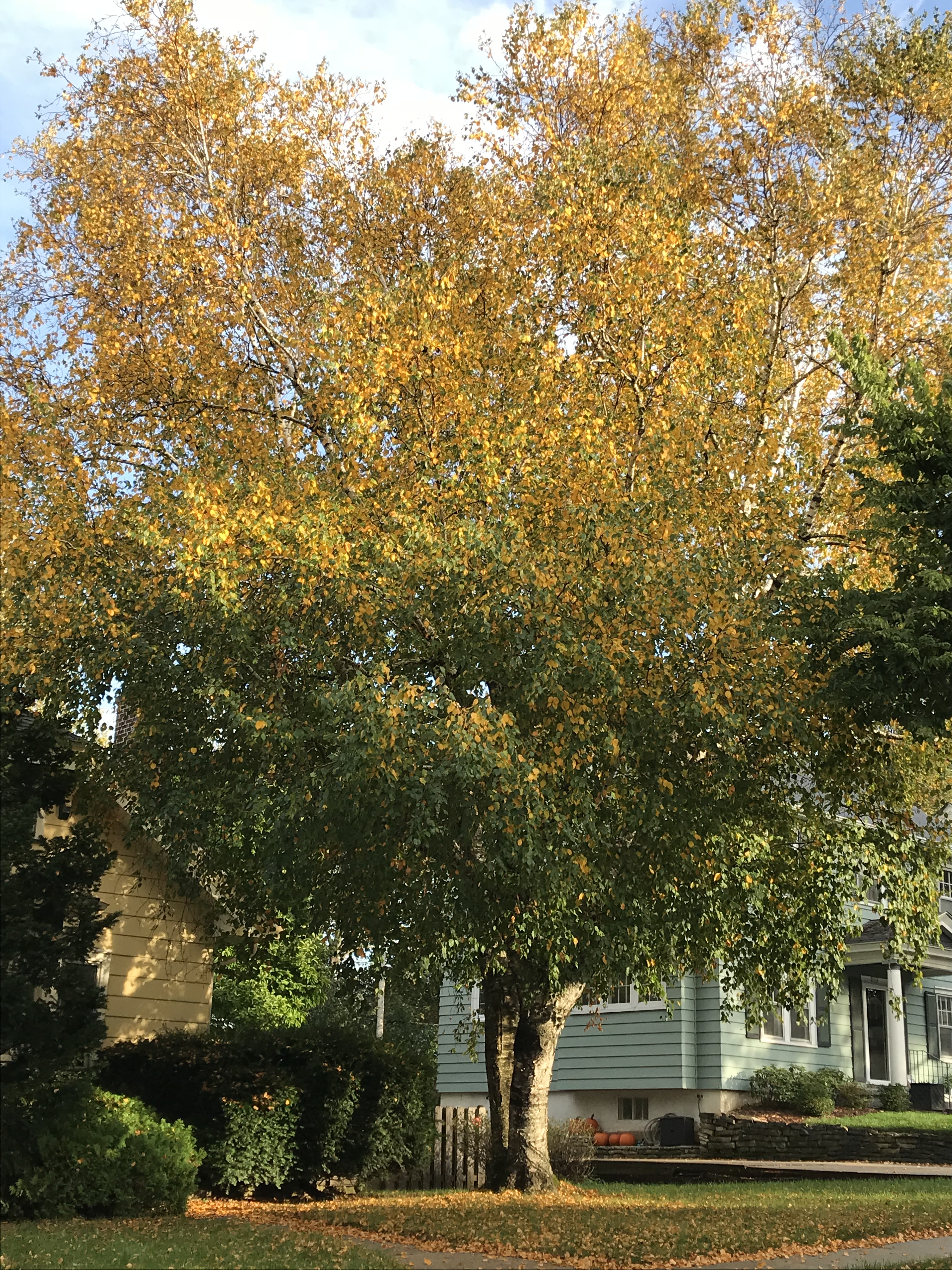
Trees die from the top down, something I learned from the arborist years ago when our birch tree was attacked by birch borers. Most of the uppermost center branches lost their leaves, many small branches themselves started to fall, and the entire crown started looking very sparse. That’s when we began to take serious care of all our trees, and the birch tree most of all. Birches are very fragile, which is why you rarely see one as large (and old) as ours. They need plenty of water during hot, dry spells, and they need to be fortified against insect infestations regularly.
A couple more interesting birch tree facts.
First, birch trees are highly allergenic. Not only will the pollen itself make you miserable every spring (runny nose, sneezing, etc.), but it may also lead you to have allergic reactions to FOOD. This is actually a thing! So let’s assume you’re not particularly allergic to a certain food, say walnuts. A birch tree can cause you to become temporarily allergic. That is, if you eat walnuts anywhere near a birch tree during its pollen-producing phase, you might have an allergic reaction to the walnuts BECAUSE of the birch pollen. Isn’t that crazy?
Second, birch trees do an amazing job of removing contaminants from soil, especially heavy metals and petroleum products like diesel fuel or crude oil. A scientist I used to know from UWM (University of Wisconsin–Milwaukee) told me about that, and I just now looked it up online to confirm that my memory (from like 15 years ago) was accurate.
Anyway, since trees die from the top down, I guess it makes sense that their “little” deaths each autumn would occur in the same manner.









 Katherine Wikoff