It still kind of shocks me to read or hear people using that phrase to describe positive buy-in to a new idea. As in, “We’re extremely excited about our company’s new product. Everyone has been drinking the Kool Aid, and the entire sales team is really pumped.”
Apparently it takes fewer than 40 years for a phrase’s original meaning to be lost. On this date 38 years ago (November 18, 1978), more than 900 Americans died in a mass murder-suicide after drinking cyanide-laced Kool Aid at a religious commune in a Guyana jungle. More than a third of these people were children. Although some drank it voluntarily, many others, including babies, were forced to drink the poisoned liquid. We know the details because of the few people who managed to escape into the surrounding jungle.
The photos of the dead still haunt me. Bodies scattered like litter around the compound. I don’t want to post any of the pictures here. They make me too sad. But you can find them online easily if you do a search for “Jonestown.”
What was going on in America during the late 1970s and early 1980s that led people to join religious cults like Jim Jones’s Peoples Temple [sic]? I’d forgotten all about this strange period of our history before thinking about the Peoples Temple today.
I can personally recall seeing people selling flowers all summer at the northeast corner of Water and Wisconsin in downtown Milwaukee during the early 1980s—haggard-looking young men and women surrounded by white buckets of flowers, chanting over and over: “A dollar a bunch, a dollar a bunch, any bunch one dollar.” They were in a cult, everyone told me, Hare Krishna.
And who could forget the Rev. Sun Myung Moon and his Unification Church and the mass wedding ceremonies he performed (like the 1982 Madison Square Garden wedding of 2,075 couples).
The various” cults” (which was the word used in the media; perhaps it would be more accurate and less biased to call them “churches” today?) were very aggressive in their proselytizing. In fact, “brainwashing” was a term commonly associated with cults.
The movie Airplane! (made by Milwaukee natives Jim Abrahams and David and Jerry Zucker 🙂 ) is funny even if you don’t get any of the many, many satirical references. But to really appreciate it, you practically need footnotes—like reading a Shakespeare play. There are the homages to the 1970s-era airplane disaster movies and way-too-many-to-count references to popular culture (Saturday Night Fever), to politics (Howard Jarvis and the Proposition 13 tax revolt in California), and to cults and their aggressive proselytizing.
One “cult” reference is found in the inclusion of two Hare Krishna passengers on the plane (one of whom is David Leisure, later famous for playing Joe Isuzu in television ads and Charley Dietz in the television comedy “Empty Nest”).
The other is in this introduction to Robert Stack’s Capt. Rex Kramer, a no-nonsense tough-guy called in to help land the plane after the pilots are sickened by bad fish. Although the impatient, violent responses establishing his character no doubt elicit laughter on their own, only knowledge that public places in the 1970s were rife with such aggressive proselytizers provides the context that elevates slapstick to satire.
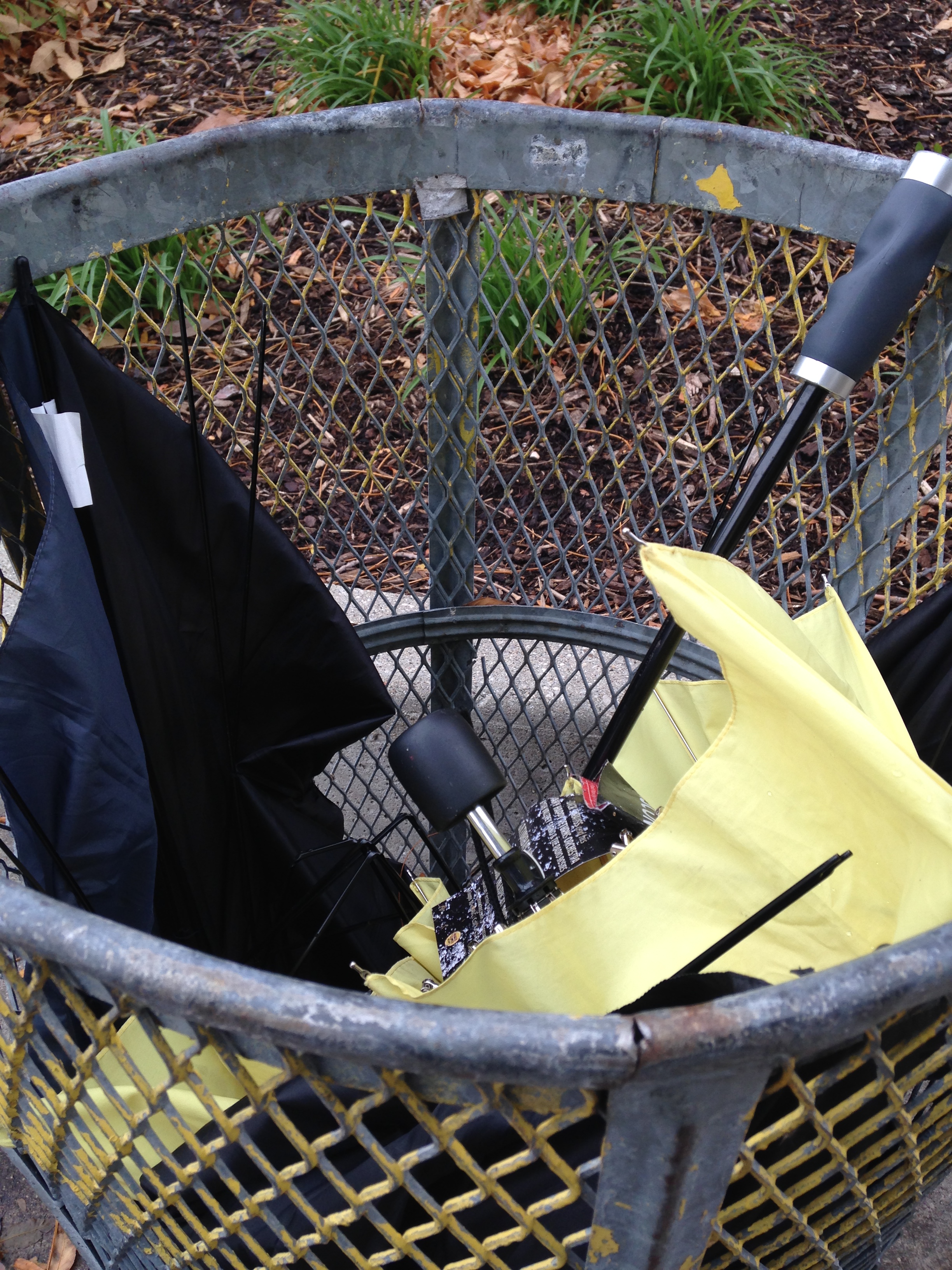
It rained all day long in Milwaukee yesterday—so windy that umbrellas turned inside out or were wrenched away. Lots of people, like me, gave up and decided to brave the elements in raincoats alone. Yes, I felt like an idiot walking down the street getting drenched while carrying my highly noticeable and very large tightly furled umbrella. But my bumbershoot, though battered, should be good for a couple more showers. So there’s one good thing. Because others didn’t make it 🙂
I actually prefer some of my other attempts in terms of composition, but in the end I decided to go with this photo because of that lone leaf whirling into the frame at the very moment I snapped the shutter. (Or whatever term is correct for the “Enter” button on an iPhone when taking a picture 🙂 )
First of all, is it “Crabapple,” “Crab Apple,” or “Crab-Apple”? I grew up thinking of it as a one-word tree name, but I see it spelled all three of these ways and could probably find even more variants if I searched for them. I think I’ll stick with “crabapple.”
It stormed last night in Milwaukee. If you were watching the Wisconsin–Ohio State football game on television (or, would that be the “Ohio State–Wisconsin” game?), you saw the rain passing through Madison and Camp Randall Stadium (which is built on the site of what actually used to be a Union army camp named for the governor at that time, Alexander Randall, during the Civil War). Speaking of the WI–OSU/OSU–WI game (I have divided loyalties😄), what a hard-fought contest that was!
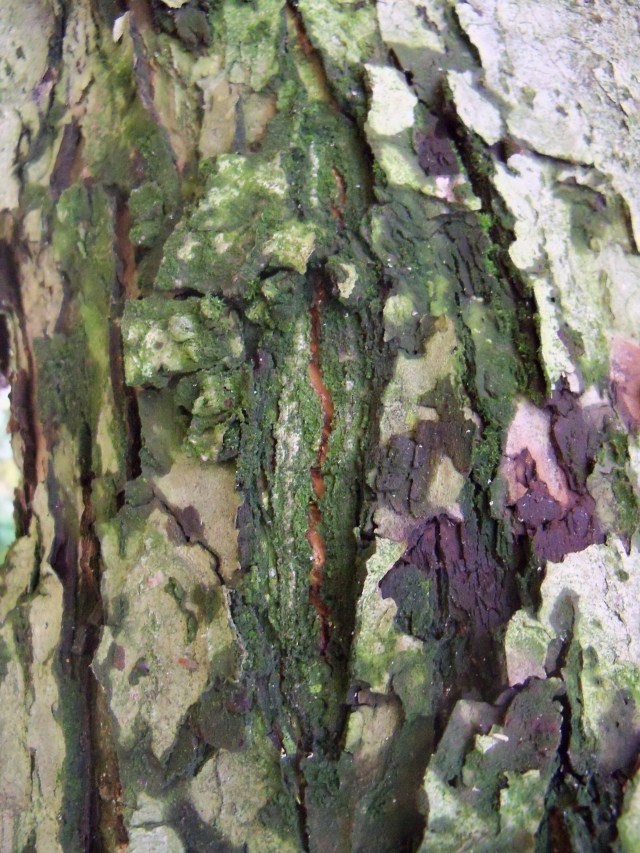
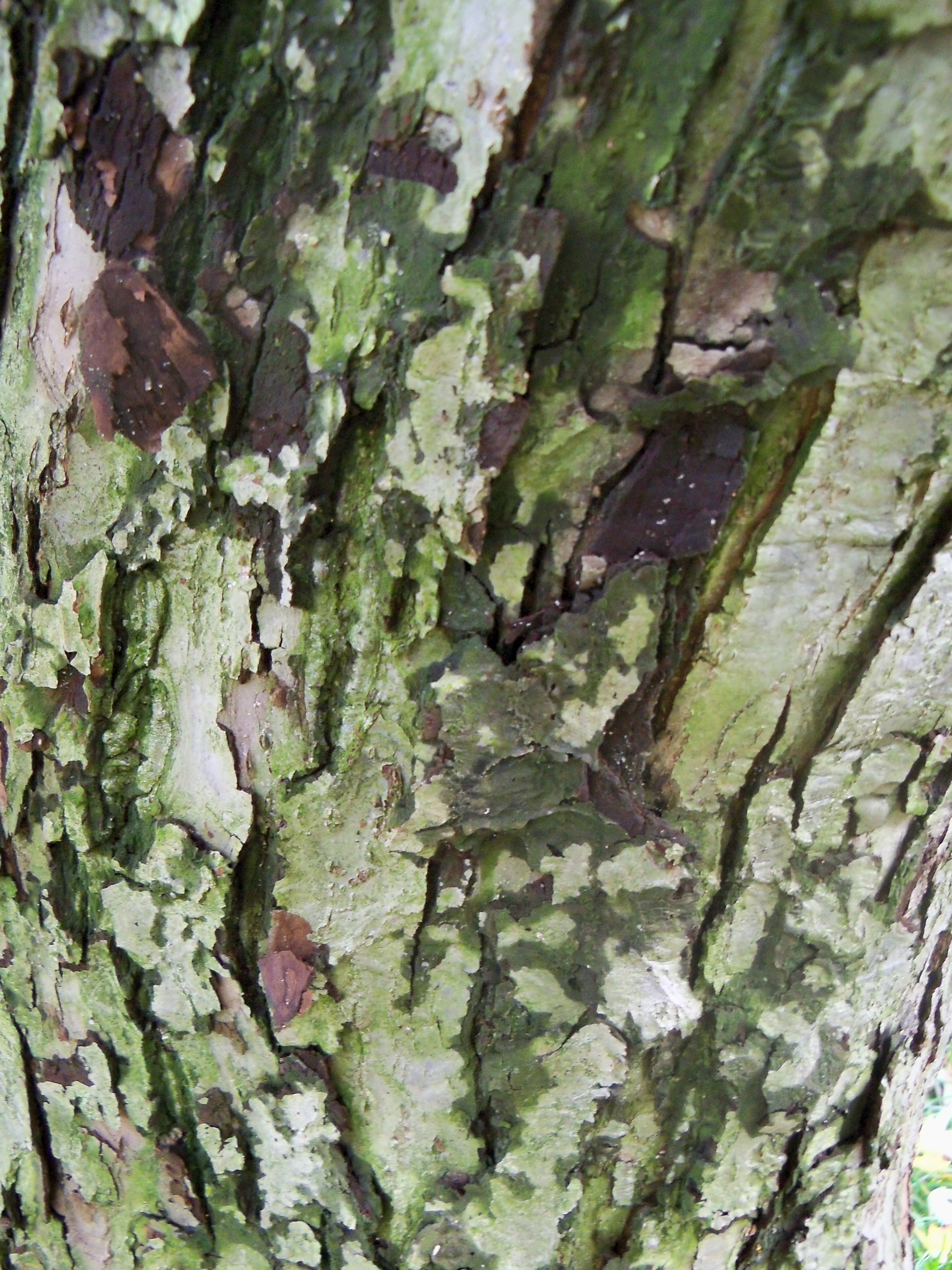
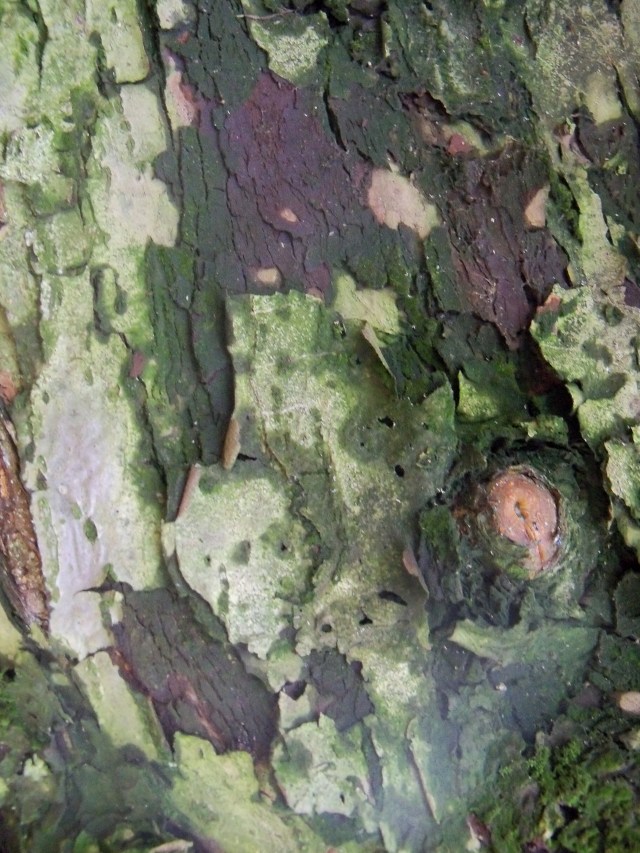
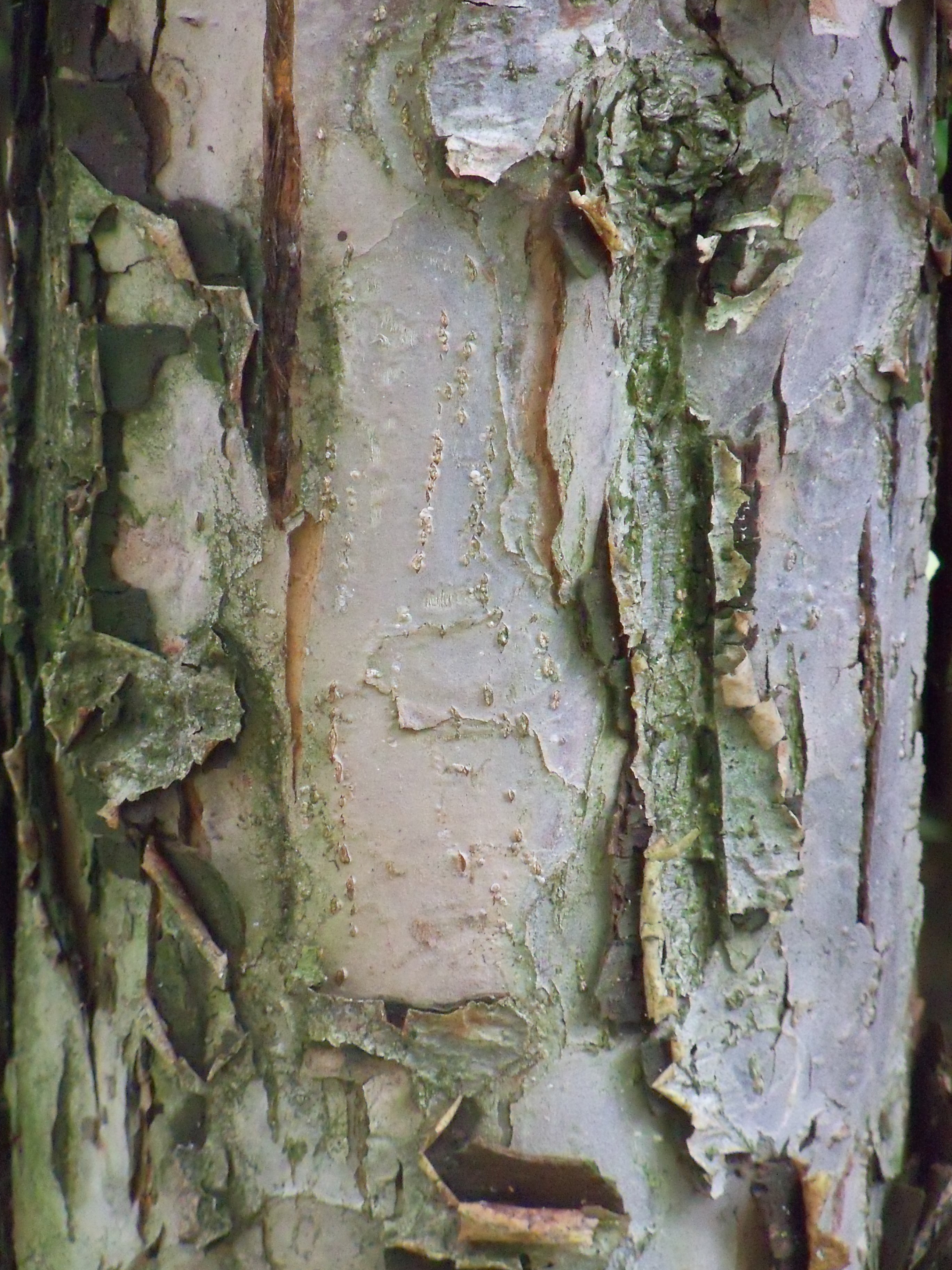
Anyway, back to my tree bark. As I was taking out some recycling a few minutes ago, I noticed how strikingly textured and colorful the crabapple trunk looks while partially damp from last night’s rain.
So I took a few pictures and decided to put them on my blog. Hope you like them!
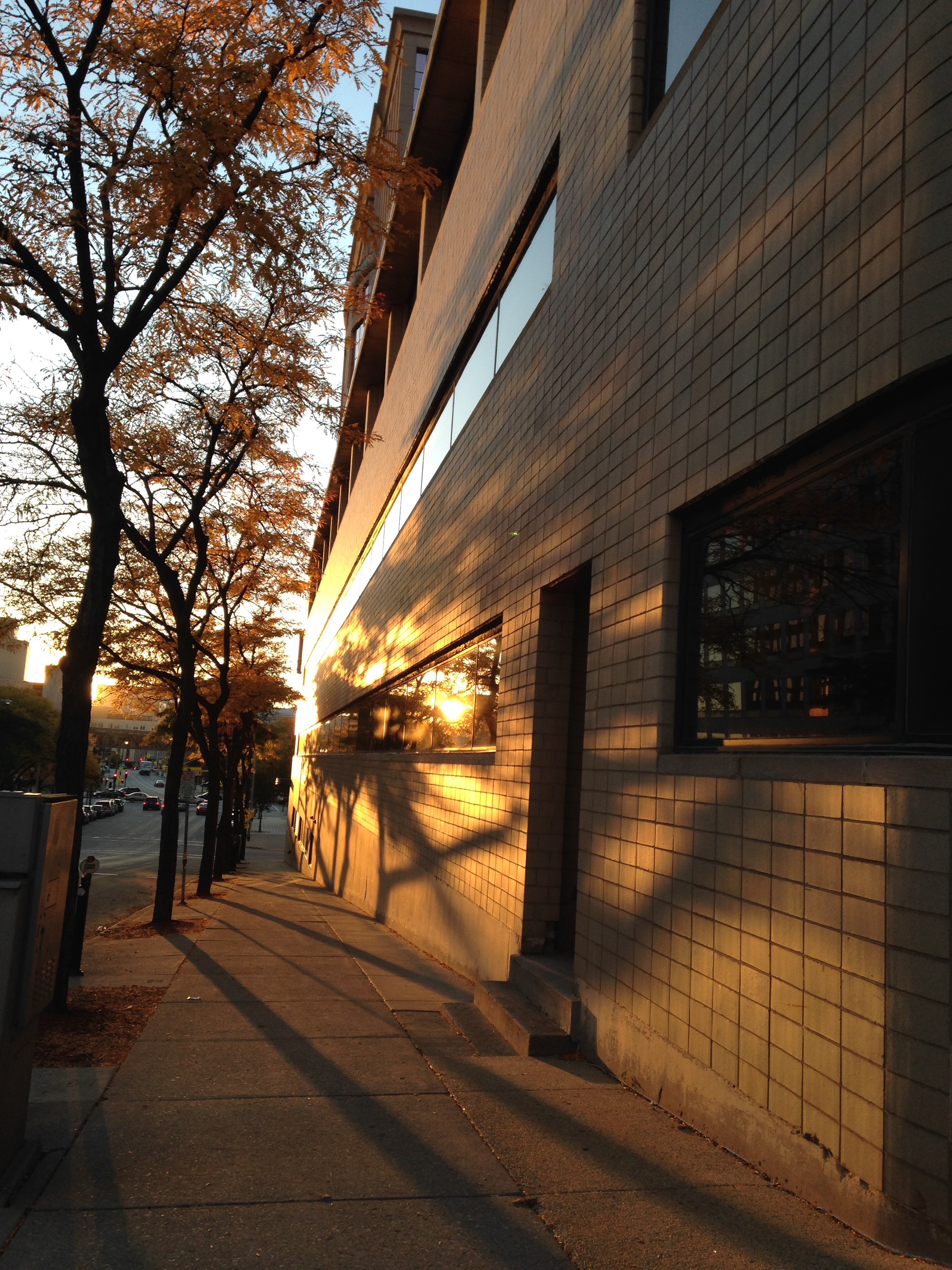
This is the changing quality of light that people talk about in northern climes. At least some of what they mean. The light slants from a lower place in the sky as the Earth’s tilt positions us farther away from the sun. There’s less moisture in the air to refract the light, and a different color palette in nature (trees, flowers, grass) to filter and reflect it.
Autumn is my favorite time of year. The air may be cool and crisp, but the light becomes warm and soft.
When my daughters were young, a picture book we checked out of the public library faithfully every fall was When Will the Snow Trees Grow, by Ben Shecter. Such a sweet, gentle story of a boy and his bear friend doing autumn chores to prepare for winter in what looks like rural New England. My girls tracked down a copy a couple years ago and gave it to me as a Christmas present.
I think it’s about time for me to warm up some cider, wrap myself in a quilt near the fire, and lose myself in this book’s enchantment once again.
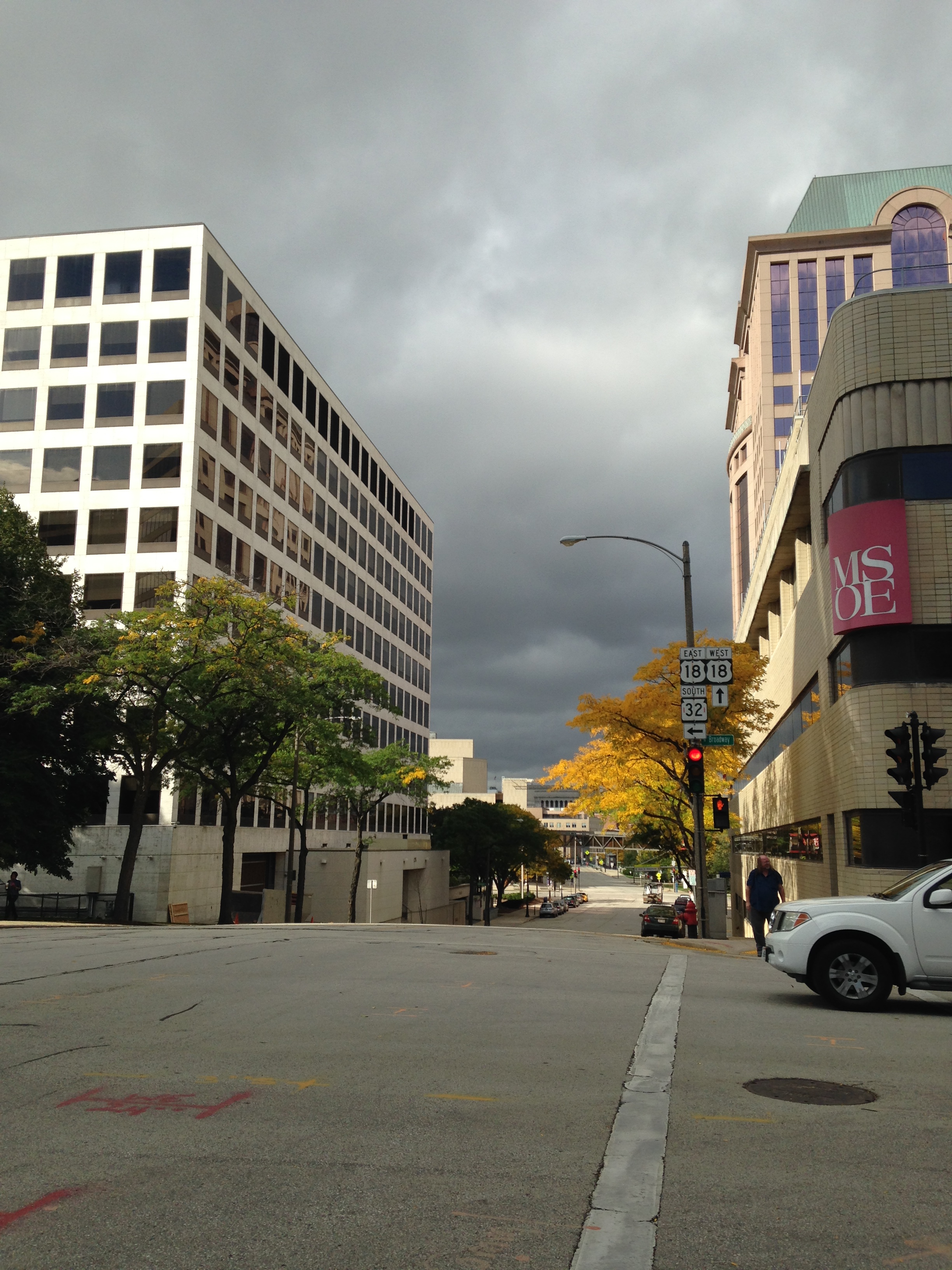
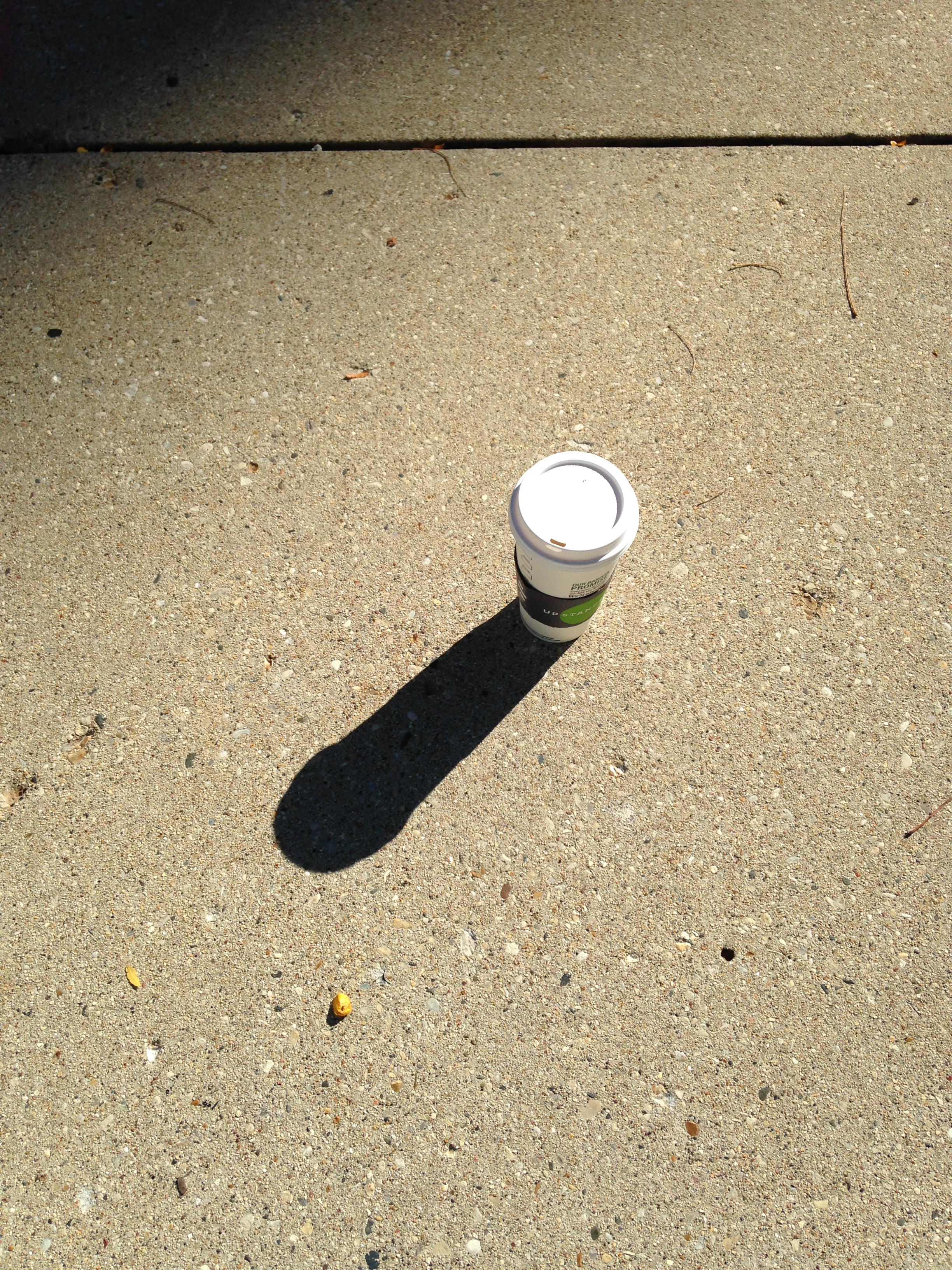
Yesterday morning was bright, but by about 10:00 rain was pelting down. You can see the contrast in weather systems, as well as the strange juxtaposition of sunlight and dark skies, in this photo I took around 8:30 or so on my way to (guess where?) Starbucks. Life is like that sometimes, isn’t it? Sunny and stormy all in one day. It can be hard to prepare for getting out and facing the world. So many decisions to make: what to wear, what to pack, whether to crawl back into bed again and just wait until tomorrow to start fresh 🙂
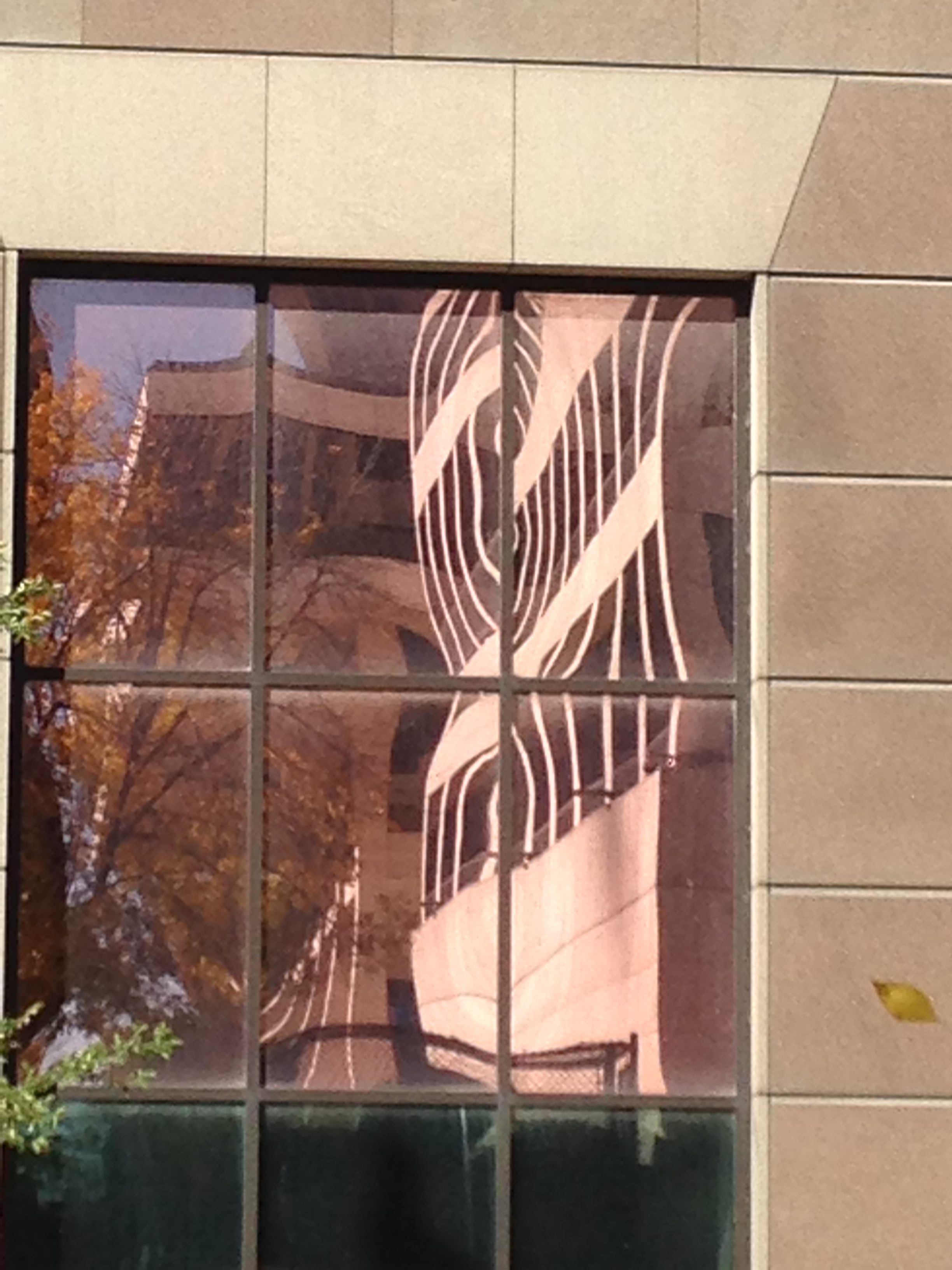
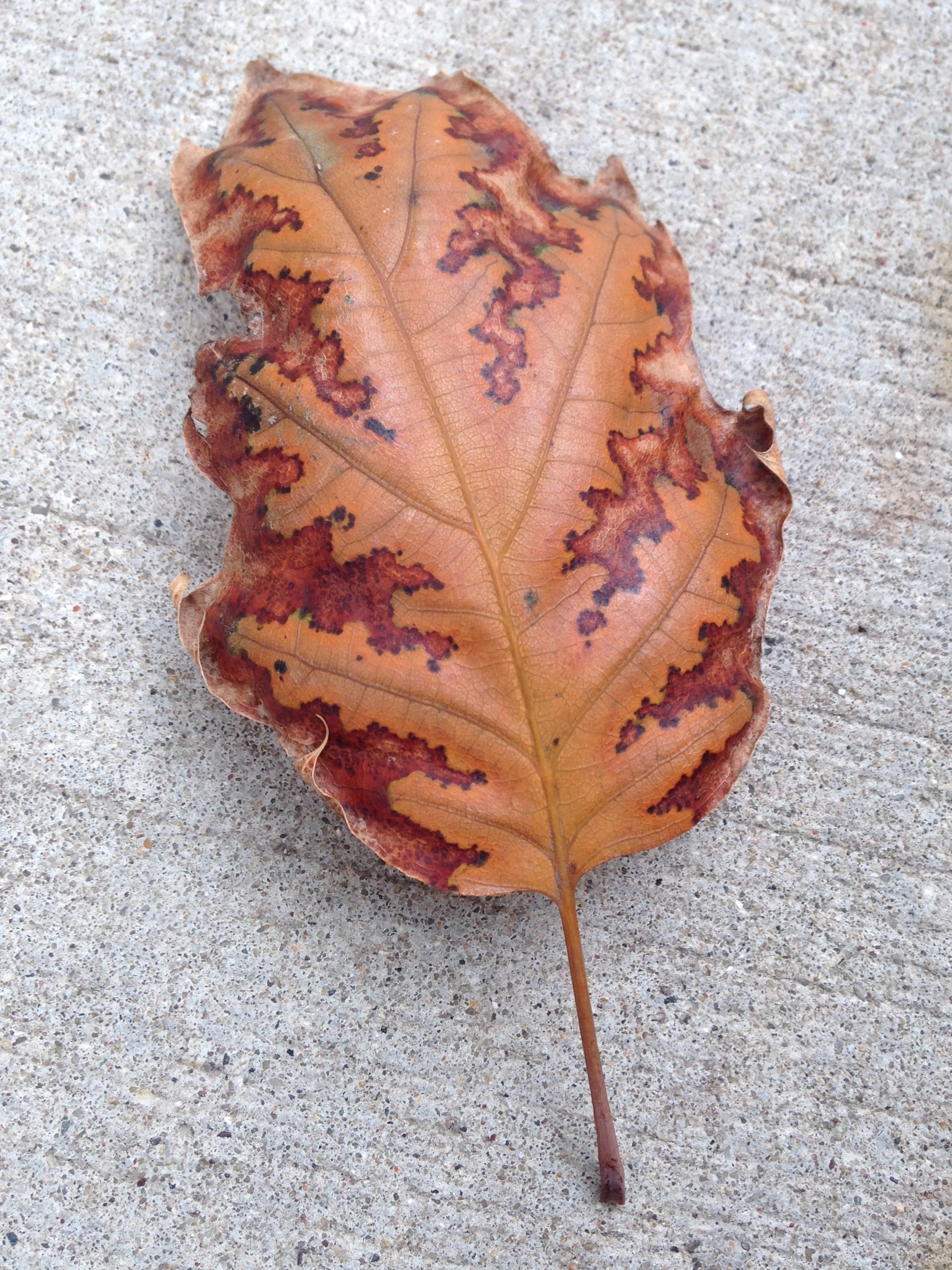
Usually I am looking up and noticing things like clouds and reflections in office windows. But lately I seem to be looking down and noticing things like the sidewalk moss last week and this leaf today. I don’t think there’s any sadness or depression metaphors going on there. Just a slight shift in perspective, I guess😄
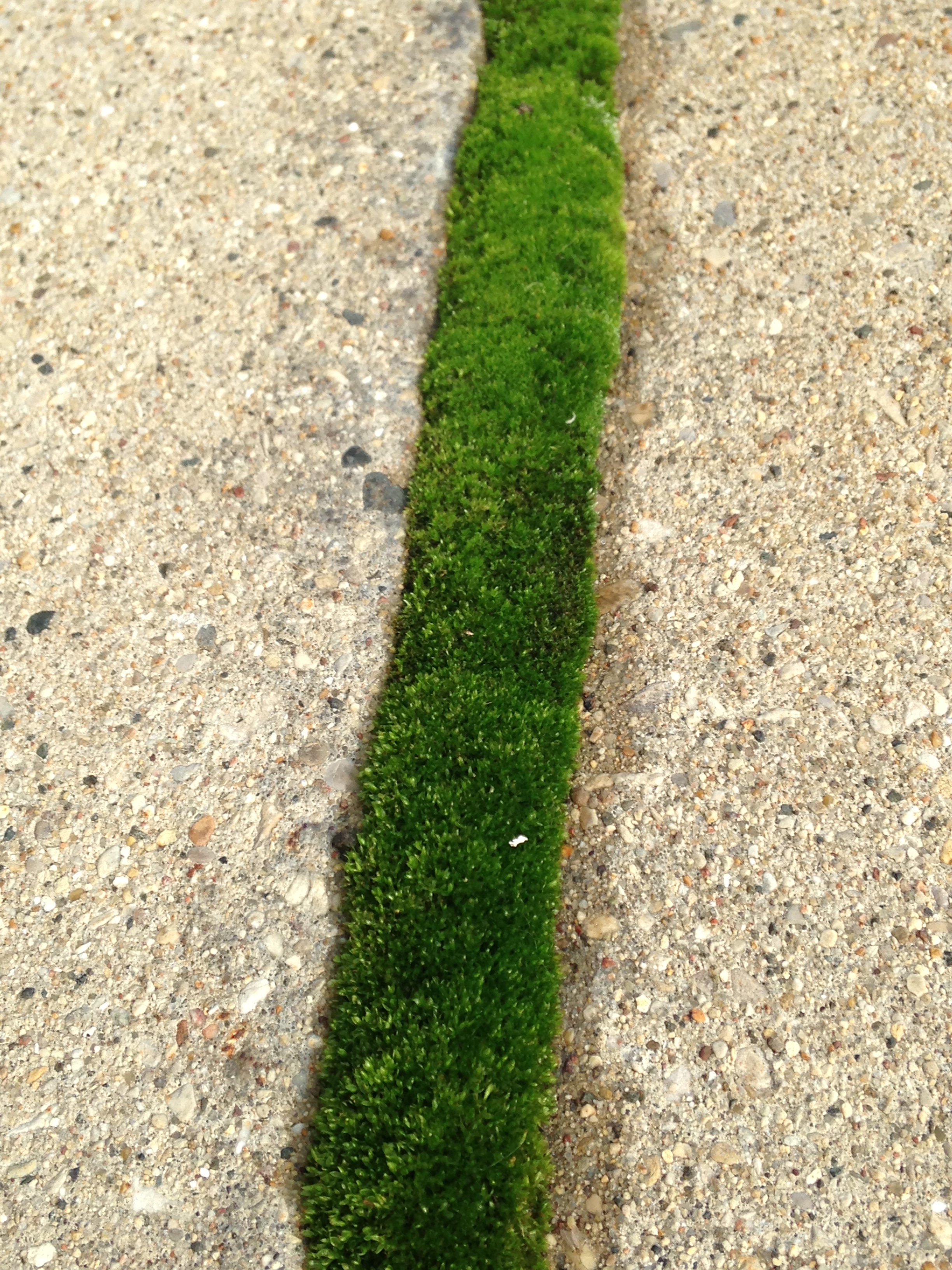
. . . I’m crouched down on the sidewalk with my iPhone trying to get a close-up of this plush stripe of moss growing in between the cracks.
I’ve tried several times to capture the lush, jewel-like green, but somehow it always looks more drab in photos than in real life. Today I tried standing on the opposite edge of the sidewalk, with the sun to my back. It seemed to make a difference.
Sorry I’ve been gone for so long and that all I have to offer today is moss. My job has kept me really busy the past month. Plus we had to put down one of our dogs in August, and as every pet lover knows, that’s like losing a member of your family. RIP, Sammy. You were a good boy!

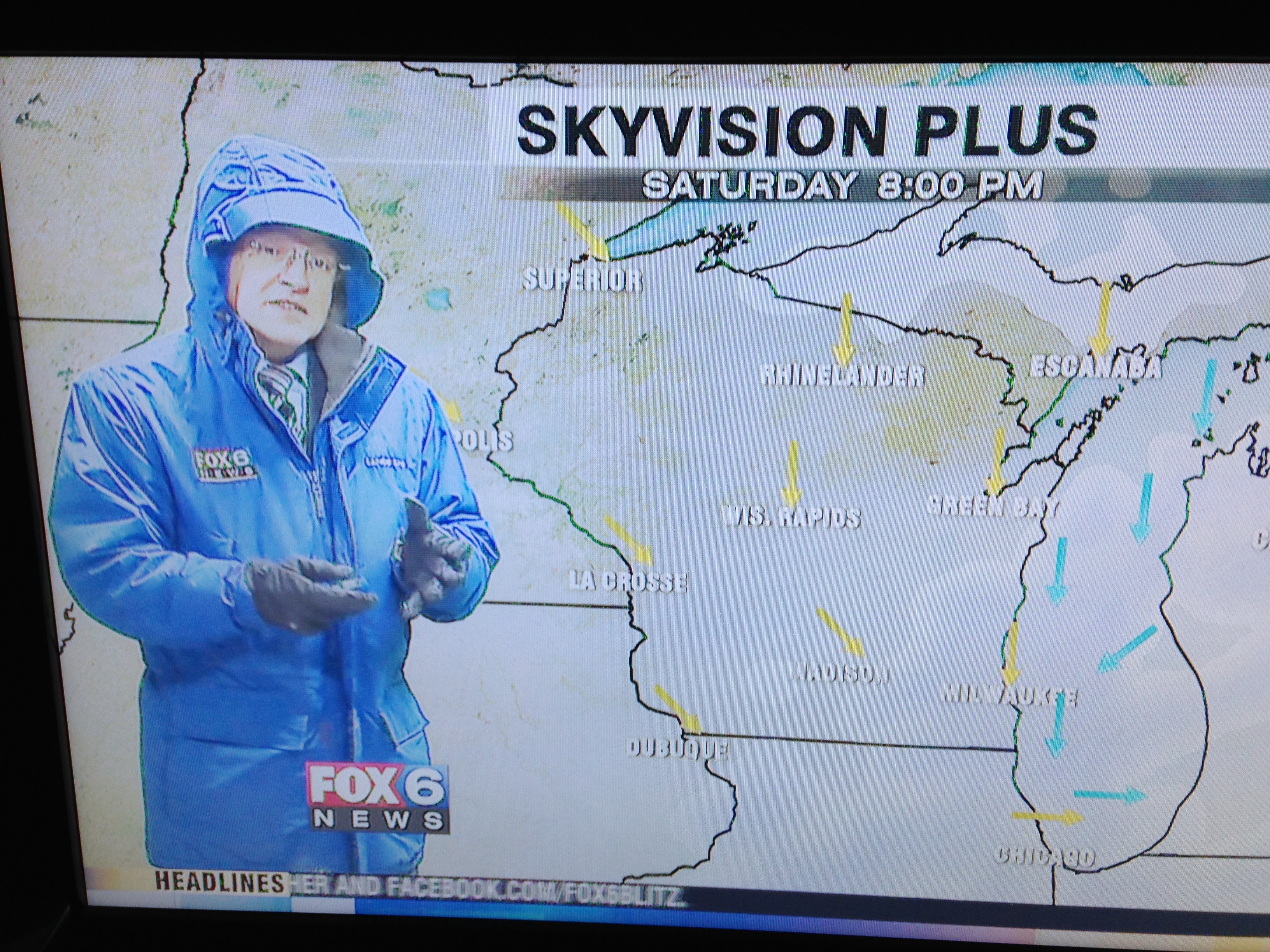 Milwaukee’s Fox 6 meteorologist Rob Haswell walks the talk😄